
Chapter 19: Sailing.
Just the journey to Bere Island is an adventure. After driving to South Wales, the connection to the sea started with the long ferry trip from Swansea to Cork, which took about six hours. Then the sailing club provided a minibus to take a few people from Cork to Castletownbere where we took the small ferry across to the Island. The island is an empty boggy rock 10km by 3km with around 200 inhabitants. It has some history as a naval base during the Napoleonic and both World Wars, so there are abandoned gun emplacements and military buildings scattered around the island. The sailing club occupied a few buildings in a bay close to the ferry landing stage, and all our sailing took place within the protected waters of the bay. The sailing course was full of people mostly a few years younger than me, but not all Irish, there were a couple of other Brits there, and one Frenchman.
I was a complete beginner to sailing and had to learn everything from scratch, and I was at the right place to do that. The dinghies we sailed were big, ancient, and made from heavy wood. Every morning we had to carry these things down a ramp to the sea, and then every evening we carried them back up. The problem was that there was not much to grab hold of along the gunwales. There was an overlap just wide enough to get your fingers underneath, and it hurt to carry that much weight just on your fingertips. A week after returning from the holiday my finger joints froze, and they took a couple of weeks to free up properly again.
The people on the course took it in turns to help the cook to make dinner and I had to take my turn one night. There was always a party in the evening, and we went to the islands only pub a few times as well.
I really enjoyed the sailing and impressed the teachers enough that they let me progress to a small, light, plastic 'Topper' dinghy towards the end of the week. Some of the students were not so natural though. The boats were big and robust because they were regularly crashed into each other and into rocks and harbour walls. One particular girl had to be rescued because she could not turn the boat and headed out towards open water on her own.
On the trip back I was given a lift by a couple of girls who had parked their car on the mainland. I was treated to a typical Irish dinner at their house which consisted of three types of potato and mountains of other vegetables. I did not know at the time that this was normal. After a night's sleep I was dropped off at the ferry port and caught the ship home.
I resolved to continue dinghy sailing and soon bought a 'Laser 2', which was a small plastic 2 man racing dinghy. Mark had found a club at Netley on the south coast to sail at, so off we went and joined. I think we spent two seasons there, sailing in the bitter winds blowing up the Solent.
I must say that I found that sailing a small plastic dinghy at speed with the spinnaker flying is a very scary experience. You seem to be always on the edge of disaster because you must always be balancing the boat in the sweet spot for the wind, and if you don't, then you could easily capsize in an instant. What makes it a challenge is the changing strength of the wind combined with the waves on the water turning the boat away from the sweet spot. So, the helmsman is constantly adjusting the tiller, the main sail, and his own weight to maintain the balance, not just for speed, but to stay upright. The crewman is also part of the system, at speed he is standing on the side of the boat while attached to it by the trapeze wire. He is also in charge of the spinnaker and the foresail as well as his own weight. All this combines to a very intense and challenging experience which often went wrong. Sometimes I have watched dinghy racing on the television, perhaps during the Olympics, and after having experienced the environment myself, I am full of awe at the skills of those guys and when one of the capsizes, then I know their pain.
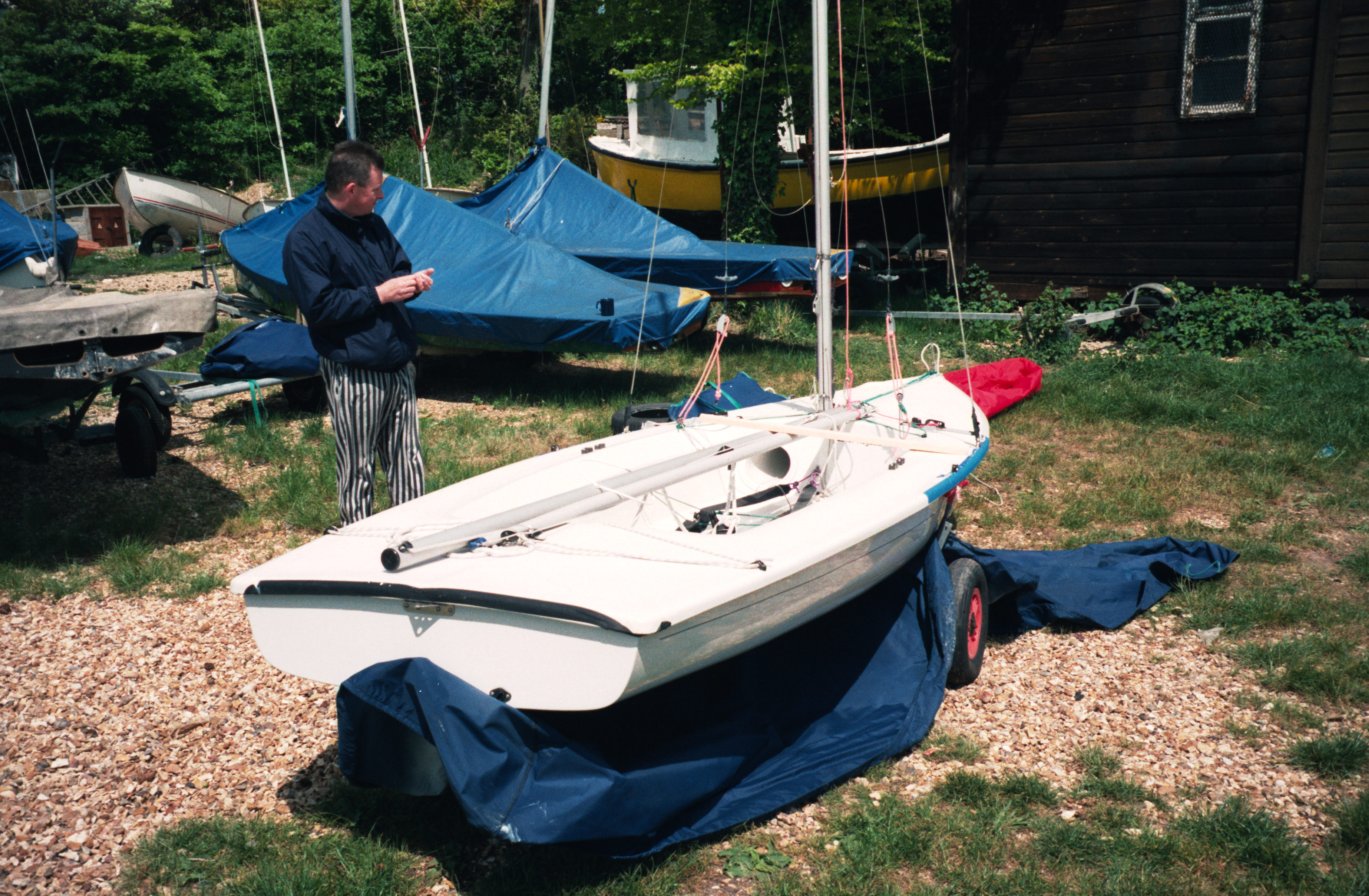
The Laser 2 parked at Netley. Mark in attendance.
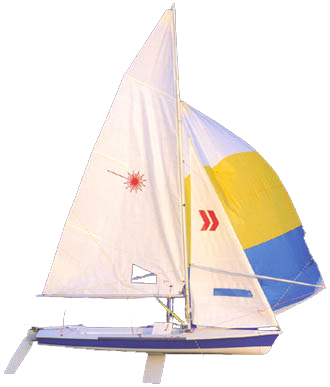
What the Laser 2 looks like with full sail
After a season of fun but unsuccessful dinghy racing Mark came up with another interesting suggestion. He had spotted an advert in a magazine which offered a sailing course which led to taking part in the 1995 Fastnet race, which is a 720-mile race for yachts that started in the Solent and proceeds along the south coast to Lands' End and then across the Irish sea to the Fastnet rock, which is off the Southwest coast of Ireland, and then back to the finish at Plymouth. To qualify to enter the race you must have done several smaller qualifying races and covered more than 300 offshore sea miles in the past 12 months. Sunsail is a sailing company based in Portsmouth that charter boats and offers courses, such as the Fastnet one. So, we signed up and off we went.
I missed the first weekend sail due to broken ribs from skiing, so I was allocated to a different boat to Mark. This was not ideal, and I don't know why Mark did not voice this concern at the time but when I arrived for the second weekend, I had to join a different boat. My boat was named Sunsail Bravo, and Marks was Sunsail Alpha. Even with me on board our crew in Bravo was one less than the Alpha boat, so swapping over would be tricky since this would overcrowd one boat and leave the other short. Ultimately this was not a big problem since my crew were all good guys that I got on very well with. Having said that, I cannot remember a single name.
I had not sailed in a cruiser before this course, so almost everything was new. I did have the experience of sailing dinghies which was all good skills for the actual sailing side of things. The weekend that I missed was an acclimatisation and learning session in preparation for the second trip which was a cross-channel race. So, when I turned up it was straight into the deep end for me.
Luckily the weather for my first race was benign, we had good winds and a dead calm sea. Our skipper, who was the only experienced sailor on board and was employed by Sunsail, was amazed at the conditions, and had never known it to be that windy on such a calm sea.
All of these build up races followed the same pattern. One or two nights away at the weekend, sailing along the coast or over to France and back. The weather and sea state were always our largest concerns, after that came warmth and food. I learnt quite quickly that I could not survive below decks for very long while at sea in choppy conditions. I never actually got sick, but I had long periods of feeling queasy. Others on board were less lucky.
We all took it in turns to do the various roles on the boat. I gained a reputation for being a helmsman. On several occasions I took over from one of the other crew and as soon as I touched the tiller the speed jumped two or three knots.
Sailing a yacht is actually quite easy but sailing one efficiently and fast is very difficult and is learnt through years of experience and with a deep knowledge of the way sails and the wind works. We were all beginners on our boat, so we were under no illusions as to our chances in any of these races, however we were surprised that we regularly finished in the middle of the field.
The time came for the main event, which as with all races we prepared for in the supermarket. We had six days at sea and seven mouths to feed so it was important to stock up well, and we ended up with an enormous amount of food and drink which only just fit into the skipper's car.
The start of the race was both scary and fabulous. More than 300 yachts were taking part, and the Solent was packed with them. It was all we could do to not crash into one. Suddenly all the yachts turned and pointed in the same direction, and we were off. The skipper had been on the helm before the start so that the most experienced hands were steering the boat, but now we started to rotate the task through the crew. Luckily there was a southerly blowing so there was little need to tack, which made avoiding other boats much easier.
In truth we were not really racing, we were in it for the experience and bragging rights. The Fastnet race was still in people's minds from the disastrous 1979 race where 15 people died when a storm hit the Irish Sea. For us, to say that we'd done the Fastnet race implies danger and daring.
We didn't see the danger as we relaxed into the routine of watches, food, sail changes and the almost impossible task of sleeping. We had only experienced one night at sea in a couple of the qualifying races, but here we had to do up to six nights in a row. With the boat pitching in the waves and tacking from side to side it was almost impossible to sleep at all. We just lay fully clothed in bunks or wedged between sails in the bow locker. This race is a test of physical endurance due to sleep deprivation as much as a test of sailing skills.
On the third night we were approaching the Fastnet rock. Suddenly the sea was full of the lights from boats converging in the pitch darkness at this single point off the Southwest coast of Ireland. The sea state was a little choppy, but a gentle breeze was blowing, so we cruised sedately around the enormous rock, and we could see the keepers standing at the door of their lighthouse admiring the spectacle. I remember it being strangely quiet even though everyone was on deck as we rounded the rock. Around us we could see the lights on the other yachts, and on their decks you could occasionally catch glimpses of their crews silently looking up at the rock just like we were. This is one of those moments in my life that I hope will stick with me to the end. Then we heard on the radio that our sister boat Sunsail Alpha was in trouble. They were having a problem with their main halyard and had to send someone up the mast to un-jam it. We could see them after we rounded the rock and were sailing back. Sure enough, there was somebody at the top of the mast with a torch in his hand in a lumpy sea in the dead of night. Now that's a dangerous job.
After rounding the rock, we settled into the watch routine to get us back to Plymouth. The weather was with us and two days later we approached the harbour in the middle of the night but with no wind. It took an excruciatingly long time to crawl past the finish line but eventually we made it and opened a couple of bottles of champagne to celebrate.
It was around 2am and we were all exhausted. After motoring to our berth, I flopped into a bunk and went to sleep. A couple of the guys just collapsed and slept on deck. Apparently, there was a bar open all night in the harbour, but we were too tired to notice. Some hours later, after a shower and some pasties for breakfast we still had to get from Plymouth back to Port Solent, so we set off under sail and motor to get back as quickly as possible.
Would I do it again? I think the answer would be no. It is just another one of those things I had to get from under my skin.
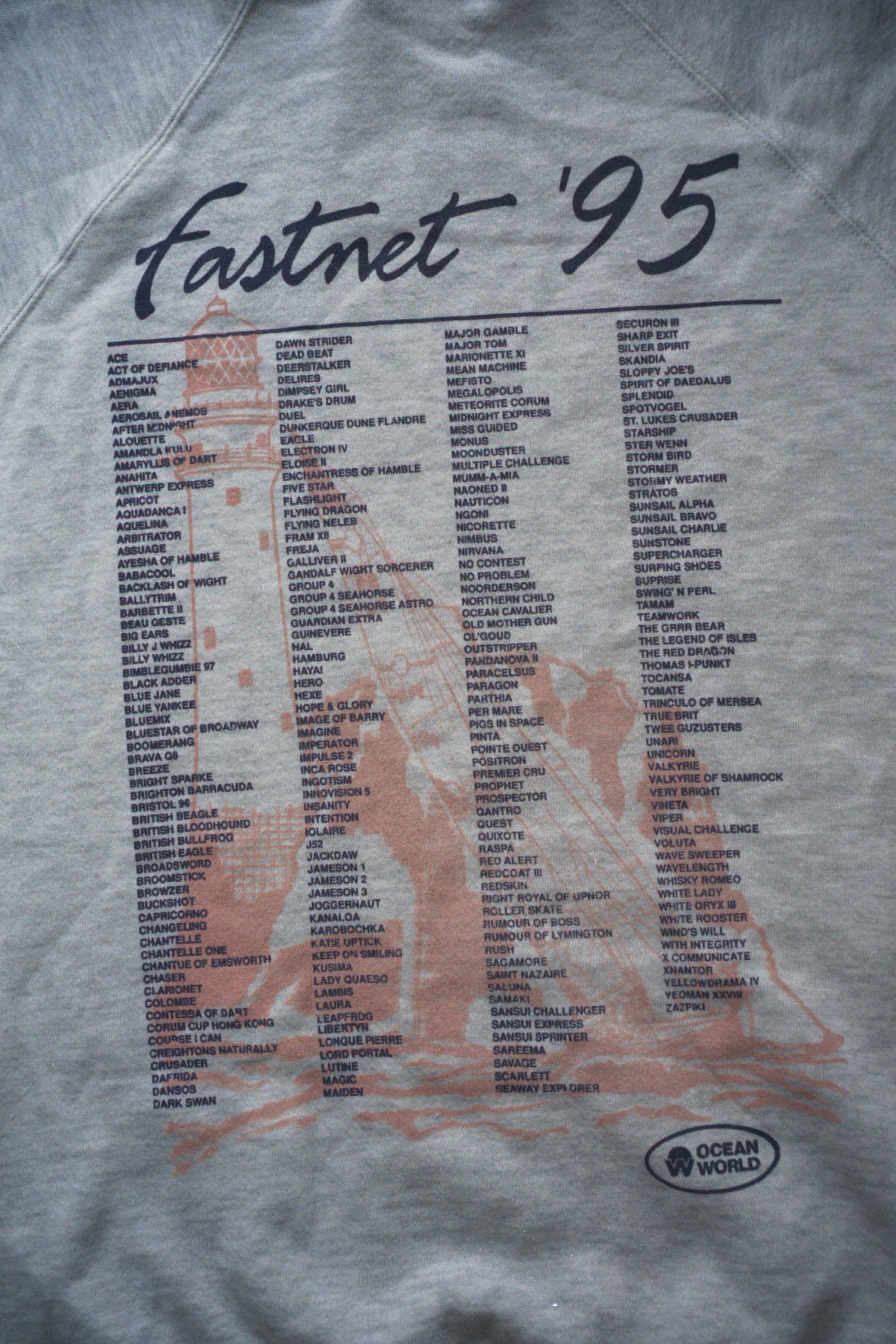
I bought the sweatshirt
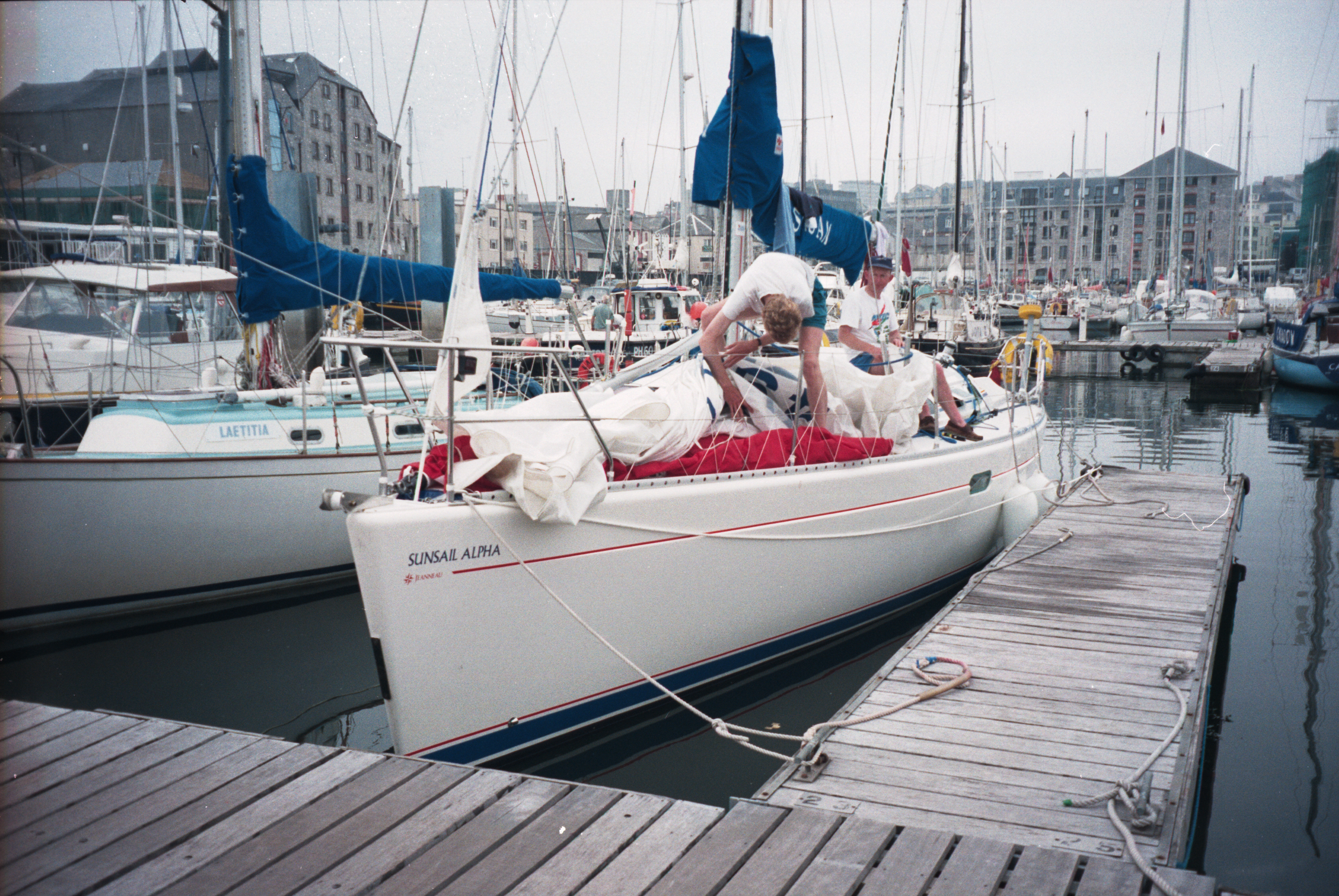
Our boat, Sunsail Alpha
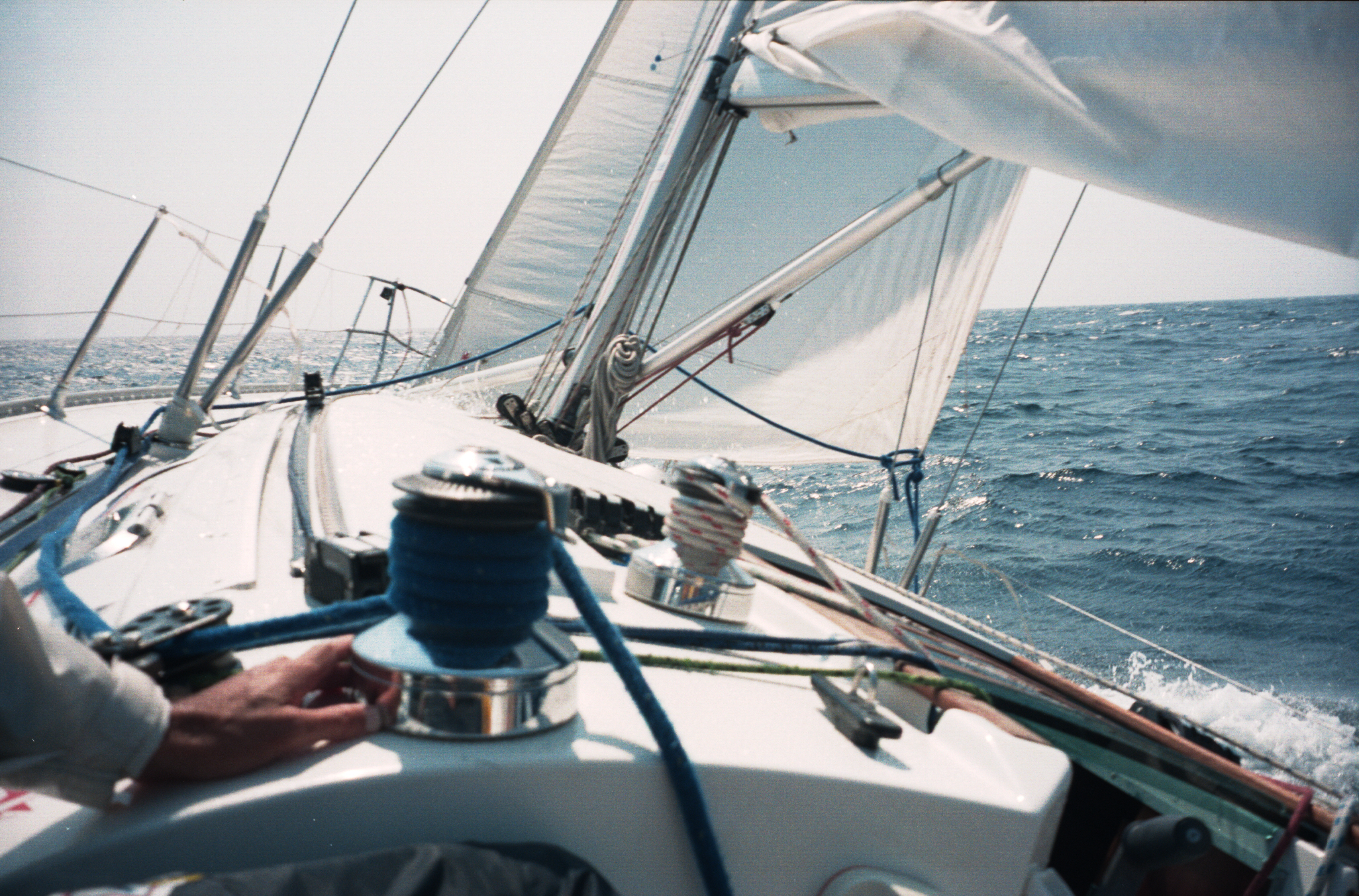
At sea
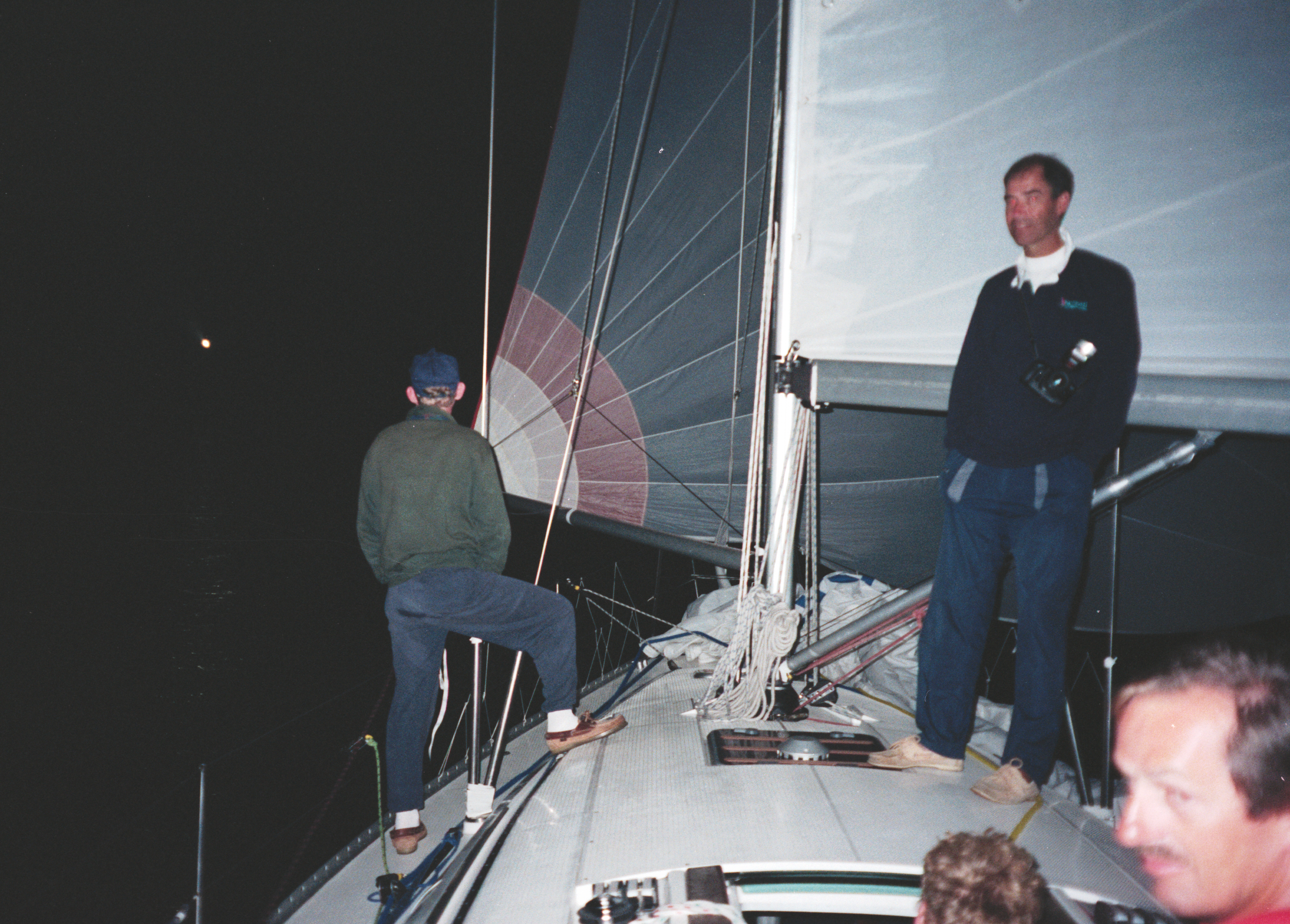
Rounding the Fastnet rock at night
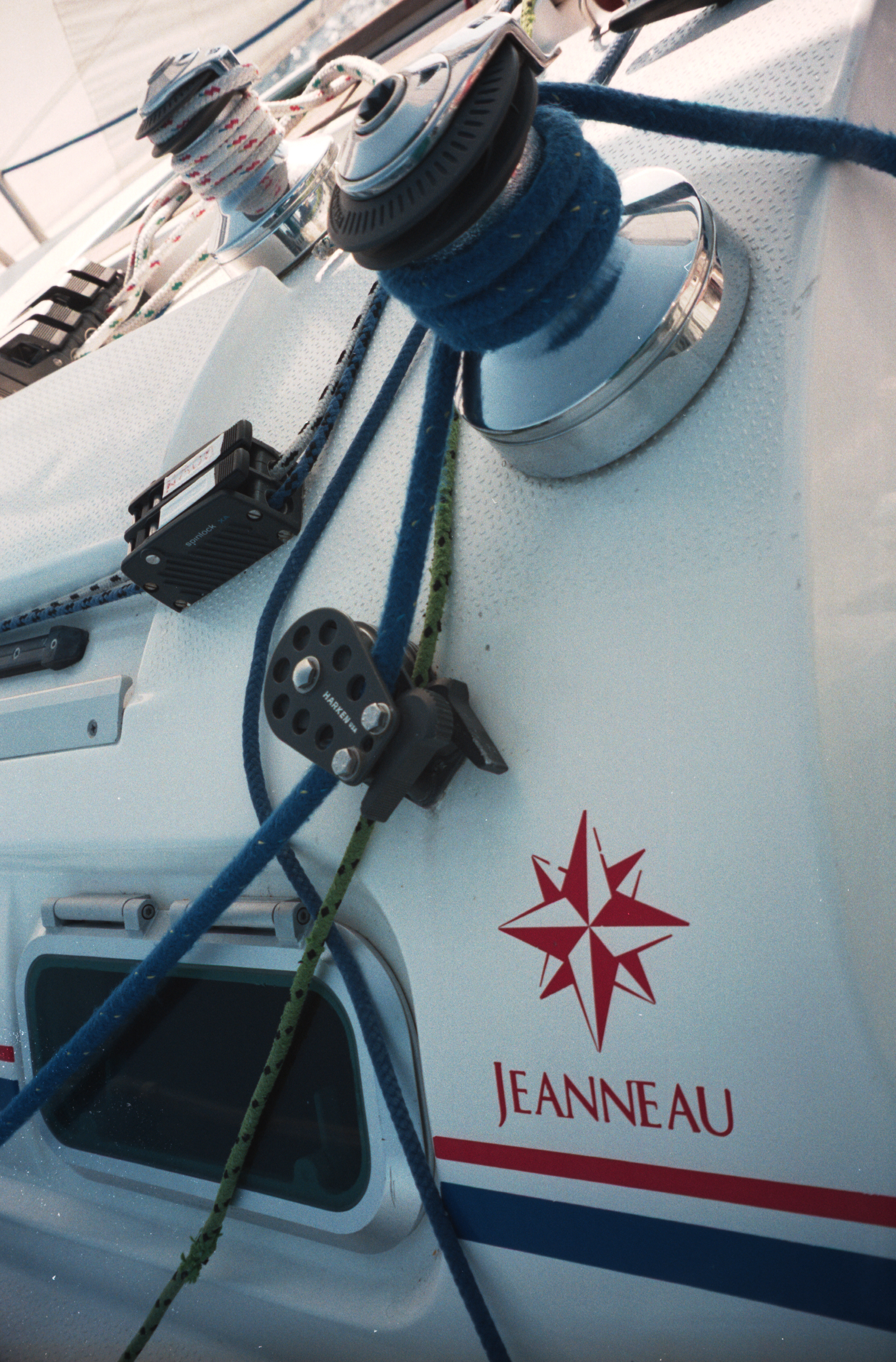
I used to know what all these ropes did
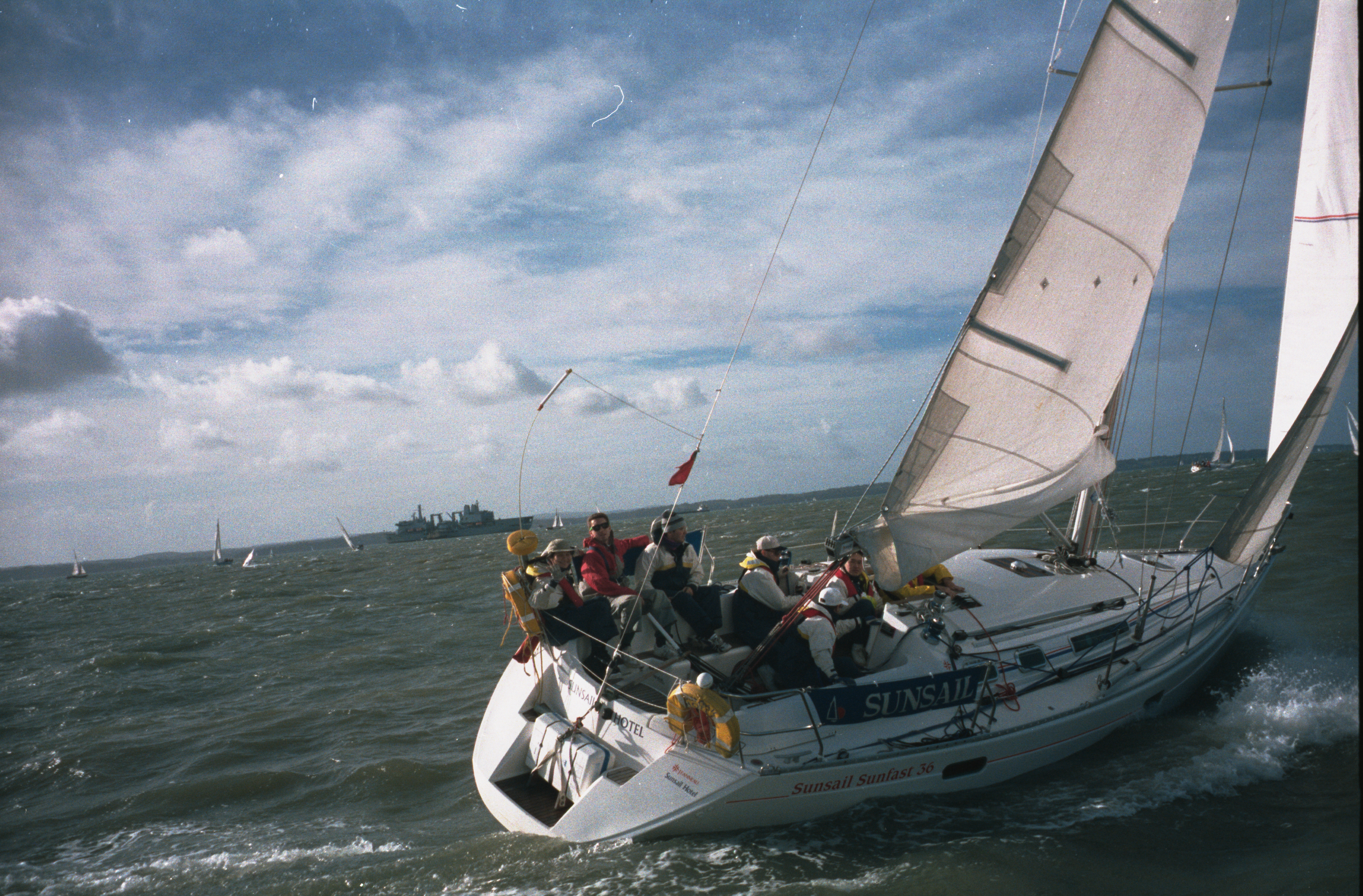
Our sistership Sunsail Hotel
It was a year after the Fastnet that somehow Mark had contacted a guy who has a proper racing yacht and after a weekend sailing with him we asked if we could take it to Cork week the following year, and he agreed. Cork week is a sail racing regatta which takes place every two years just outside Cork harbour. We got a crew together from people who were on Sunsail Alpha with Mark, plus a guy that the boat owner knew.
During the winter I did a day skipper theory course at a local college which armed me with more knowledge I really should have had already. I then followed it up with the practical part of the course on a boat in the Solent, there were five of us on the course, three girls and two boys. I am afraid that the girls were all pretty useless, but I did see one of them a few times after the course. I passed the course which made me fully qualified to skipper a small yacht in familiar waters by day.
So, it was now springtime of 1997 and Cork week was approaching. Cork is almost as far from the Solent as the Fastnet rock, so we resolved to move the boat in stages. The weekend before the event we sailed the boat from Cowes to Penzance, which was the closest harbour to Lands' End. We then took the train home and left the boat there all week. The following weekend we took the train back and sailed the boat over to Cork. The same process was used on the way home. This saved a lot of continuous sailing time on a very uncomfortable stripped out racing yacht.
Cork week was a succession of incredibly close races, by close I mean touching. This was not like the Fastnet race where all the yachts soon separated on the water, this was a couple of hours on a small piece of sea with boats everywhere. After four days we had built up a lot of experience of judging distances and speeds due to the need not to crash into something. Back on shore there were parties every night, so by the end of the week we were tired and glad to be on our way home. Needless to say, we never threatened the top ten on any of the results boards.
We did a few more weekend sails now and then, mostly using Sunsail boats. I think we had had enough of thoroughbred racers. I had done what I set out to do in sailing, which was the Fastnet race, everything else was a bonus. So, after the winter break I didn't pick it up again, except on one or two occasions when I was invited by friends.
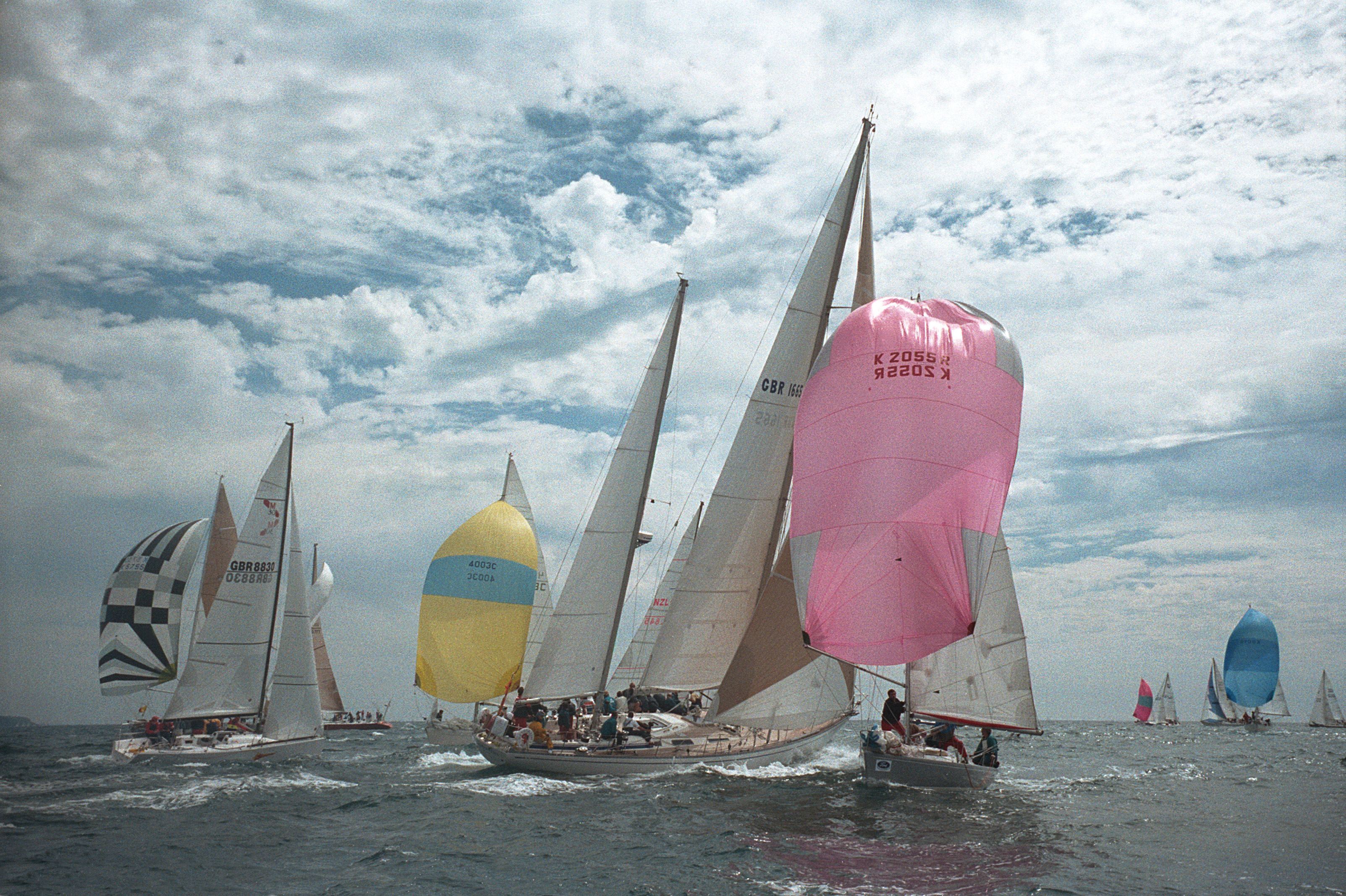
Tight racing at Cork
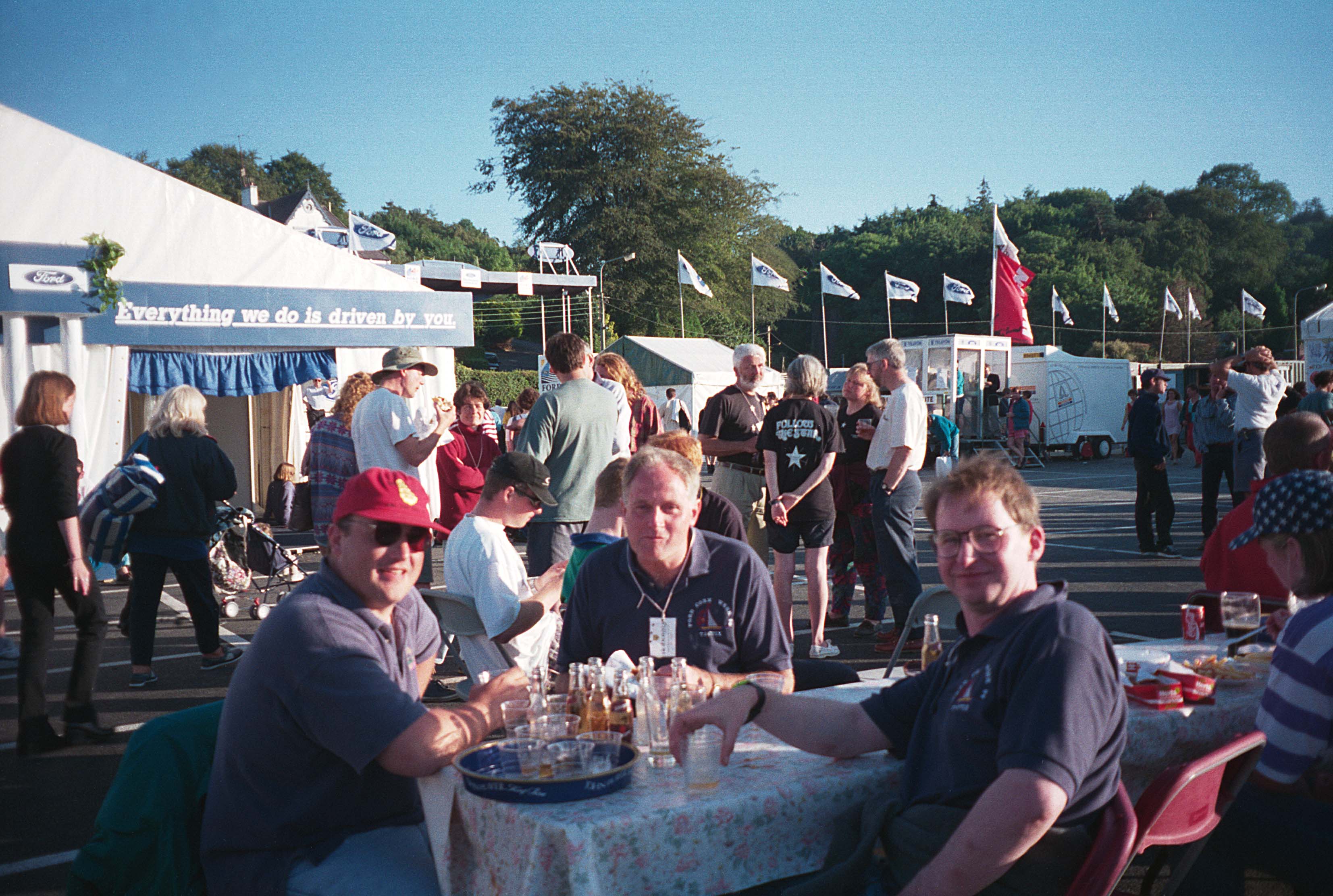
Me on the right with a couple of the crew
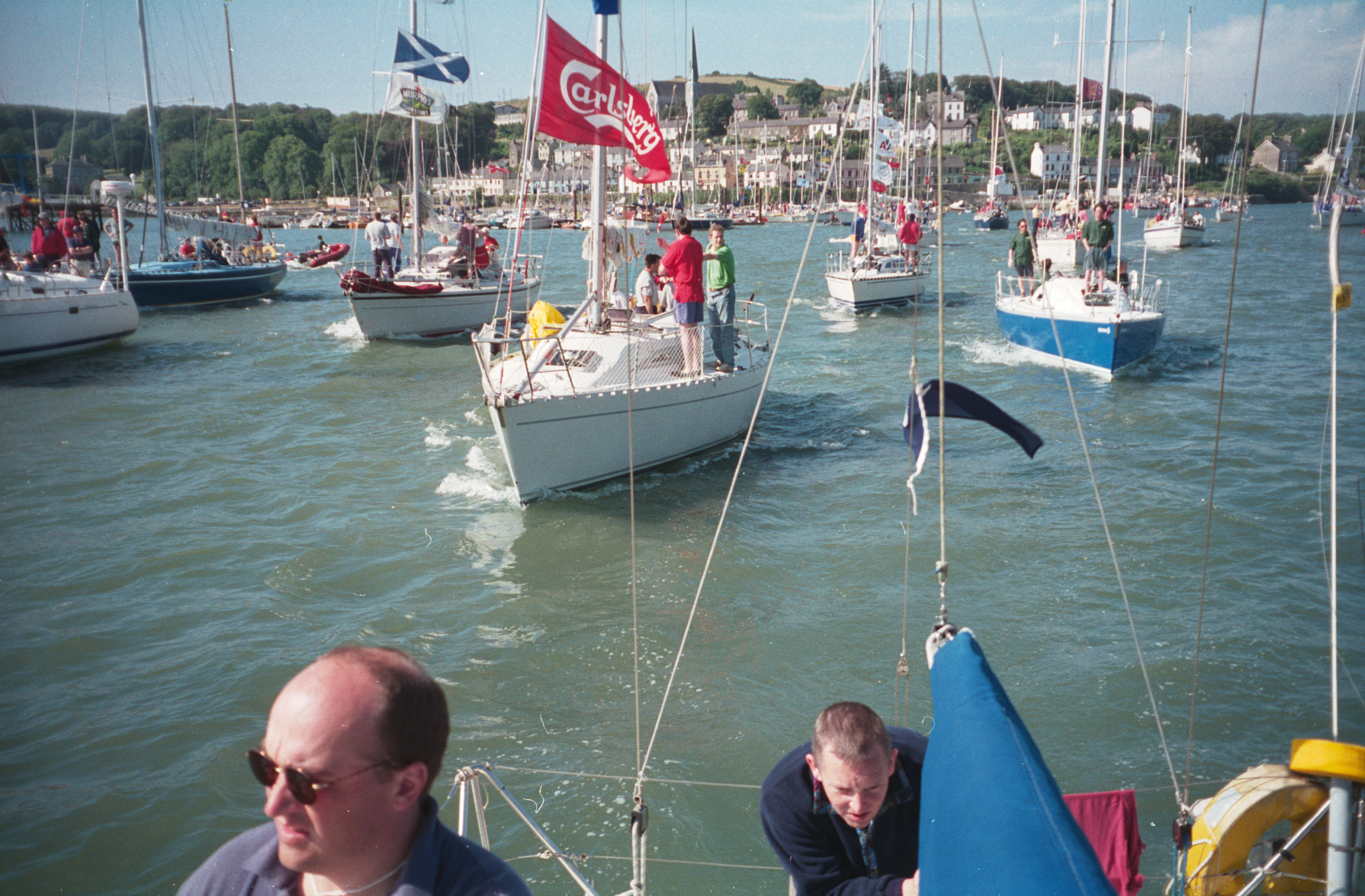
Lots of boats at Cork week.
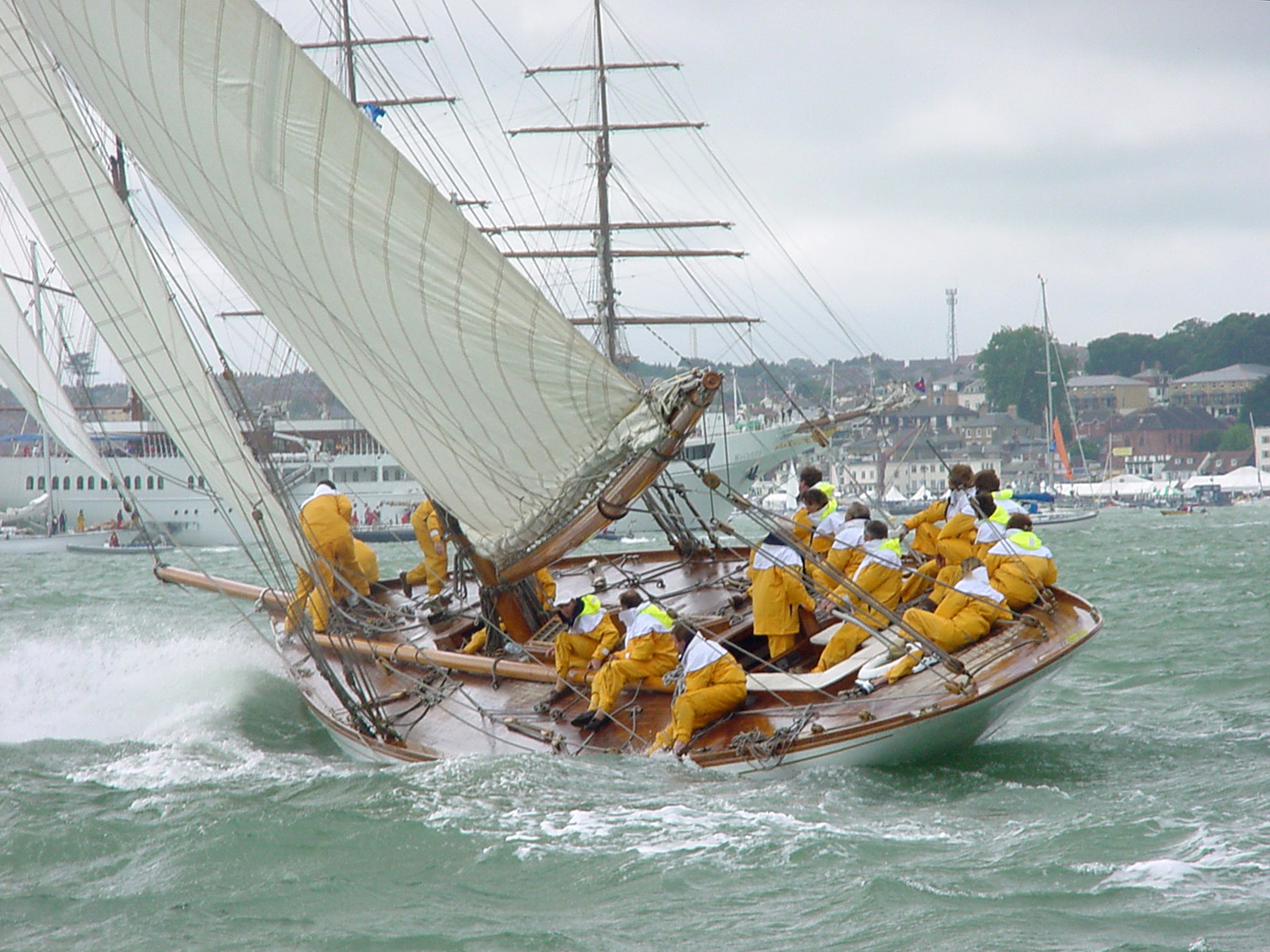
A fabulous boat in the Solent