Chapter 14: The Grand Tour
Larhive instantly arranged a contract with Thorn Security who were based in a tall triangular building just next to the M3 in Sunbury. I was here for 4 months and quite enjoyed using the new Hewlett Packard ME10 CAD software to design plastic cases for gas and electric meter boxes which could be read from a van passing in the road using an antenna. This was a remote reading technology in the days before Wi-Fi and the internet. They also had a seat of the first 3D CAD package that I had seen, called ME30. It was crude but at the time was a revelation.
In the office, I bumped into two people who I used to work with at BCC. There was also another guy there who I bumped into again thirty years later in another job. The mechanical design world is a small place.
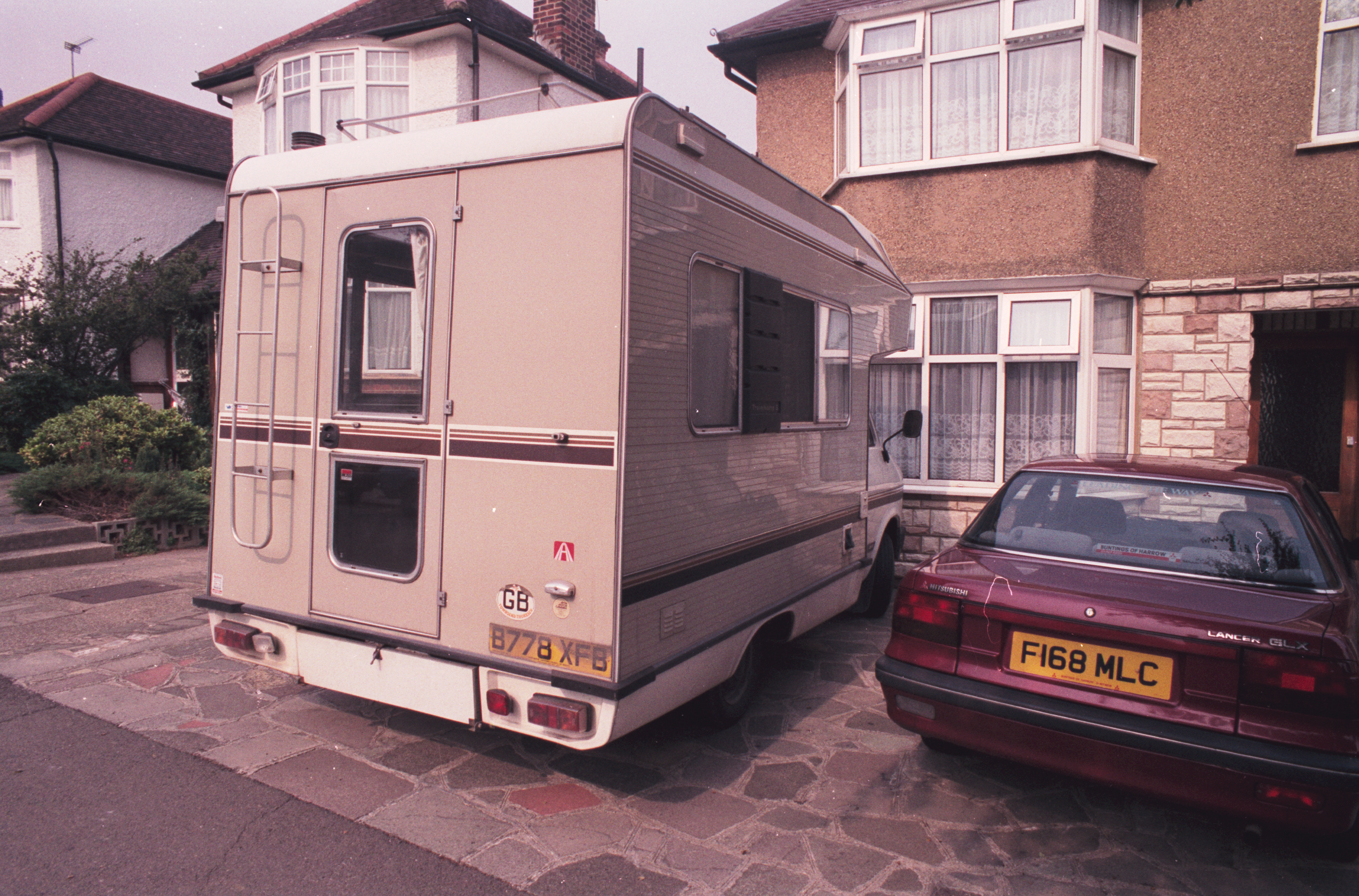
While at Thorn I planned and prepared for my trip. I bought a Bedford CF2 camper van, which was bigger than I intended but my dad put some money in. He thought that he might borrow it occasionally, but he never did.
Thorn was my only experience of contracting, which suited me at the time, but I was not really contracting material, as I have said previously, I liked certainty and did not like the idea of looking for a new job every 6 months.

The Bedford CF2 van.
I only had a vague idea as to what I was going to do and where I was going to go on the tour, but I knew the sort of things I wanted to see. Cities, museums, and historical sites, and perhaps a beach or two. My plan was to do a circular route through France, Spain, Italy, Greece and then through Eastern Europe and Germany on the way home. I had no fixed length of time to do it either, as long as I got back before the winter set in.
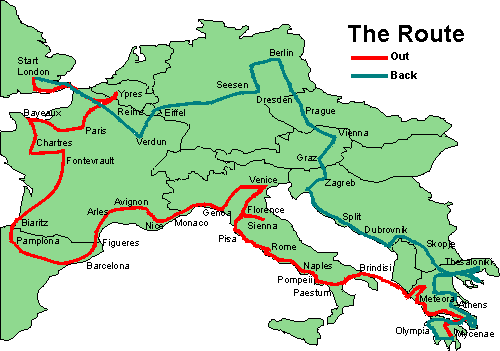
The map of my trip
To prepare the van I firstly needed to change the alternator since it was not charging the batteries, then I added a couple of extra gauges to the dashboard so that I could monitor the electrics. I also created a secret compartment at the back of one of the cupboards where I hid my passport, a spare credit card and any extra money. I bought several Blue Guidebooks so that I could get a historical perspective of the places I visited in France, Italy and Greece. Specifically for Greece, I brought The Iliad, Herodotus, and Thucydides History of the Peloponnesian War. Other more touristy guides could be picked up along the way.
For money I would use my credit card to get cash from a bank in whatever country I was entering. There was no Euro at that time, so I needed local currency wherever I went. My parents would then pay the credit card bills when they arrived at the house back home.
My main navigation aid was a big thick road map of Europe. This was particularly useful since it located all the major campsites. I was able to pick up additional maps with more detailed information along the route. Finally, I brought a book that I could write a daily journal in to document my odyssey.
I set off on Saturday 14th of April 1990. I was going to leave on the Friday, but superstition got the better of me. I don't remember much about the actual departure, but my plan was to stay two nights in the UK to make sure everything was working before crossing the channel to France. My first night was somewhere on the south coast and it rained so hard overnight that most of the tents around me were gone in the morning. The advantages of a nice waterproof van. I discovered that I had forgotten a number of things and had to do a bit of shopping. I also blew a fuse on the battery which I fixed, and it continued to worry me for a lot of the trip. I then stayed for the night on a cliff top camp site above Folkestone with a spectacular view of the sunset over the channel before catching the ferry in the morning.
I stocked up on duty free on the boat and made plans for the next few days. I rarely looked in detail more than two or three days ahead throughout the trip. My plans for northern France hinged on a curiosity about the battlefields of the First World War and I had a list of a few places that I thought I must visit, Ypres, Passchendaele, and the Somme. It is strange driving through the French and Belgian countryside which at one time were wastelands and battlefields just over 70 years previous. It looked so ordinary, but scattered here and there was the evidence that this was not an ordinary place.
I did not want to exchange any money into Belgian Francs, so on the first day I did a day trip into Belgium to visit Ypres and Passchendaele. Just outside the town of Ypres they were excavating an enormous area of ground down to about 20 feet. It transpired that before building new housing they had to remove all the unexploded shells from the ground underneath, hence the big hole. I stopped by the side of the road in a couple of places to look through any broken ground. I easily found parts of rum bottles and bits of metal such as barbed wire supports and shrapnel. The earth was still full of the evidence of warfare. Sometimes you would come across a pile of metal by the side of the road, mostly old shells that the farmers had ploughed up. The authorities would come around and pick these up for disposal. I managed to extract a brass driving ring from one of these shells. Brass was only used at the beginning of the war; it was soon replaced with aluminium since it was a lot cheaper.
On my way out of Belgium as I approached the border I could see some guards standing around but they did not wave at me so I slowed down but didn't stop. Well, after I had gone past, I could see them jumping around in my wing mirror so I stopped quickly at the side of the road. I pleaded ignorance since I had not needed to stop on the way in, and they had a look around the van before letting me go. My first night in France was at Authuille, which was right on the Somme front line just near Albert. I stayed here for a couple of days and explored the area. I managed to pick up a couple of guides in Albert which were very useful.
I did one more stop off at Vimy Ridge where I had a personal tour of the underground tunnels from a helpful Canadian student, and then headed towards Paris.
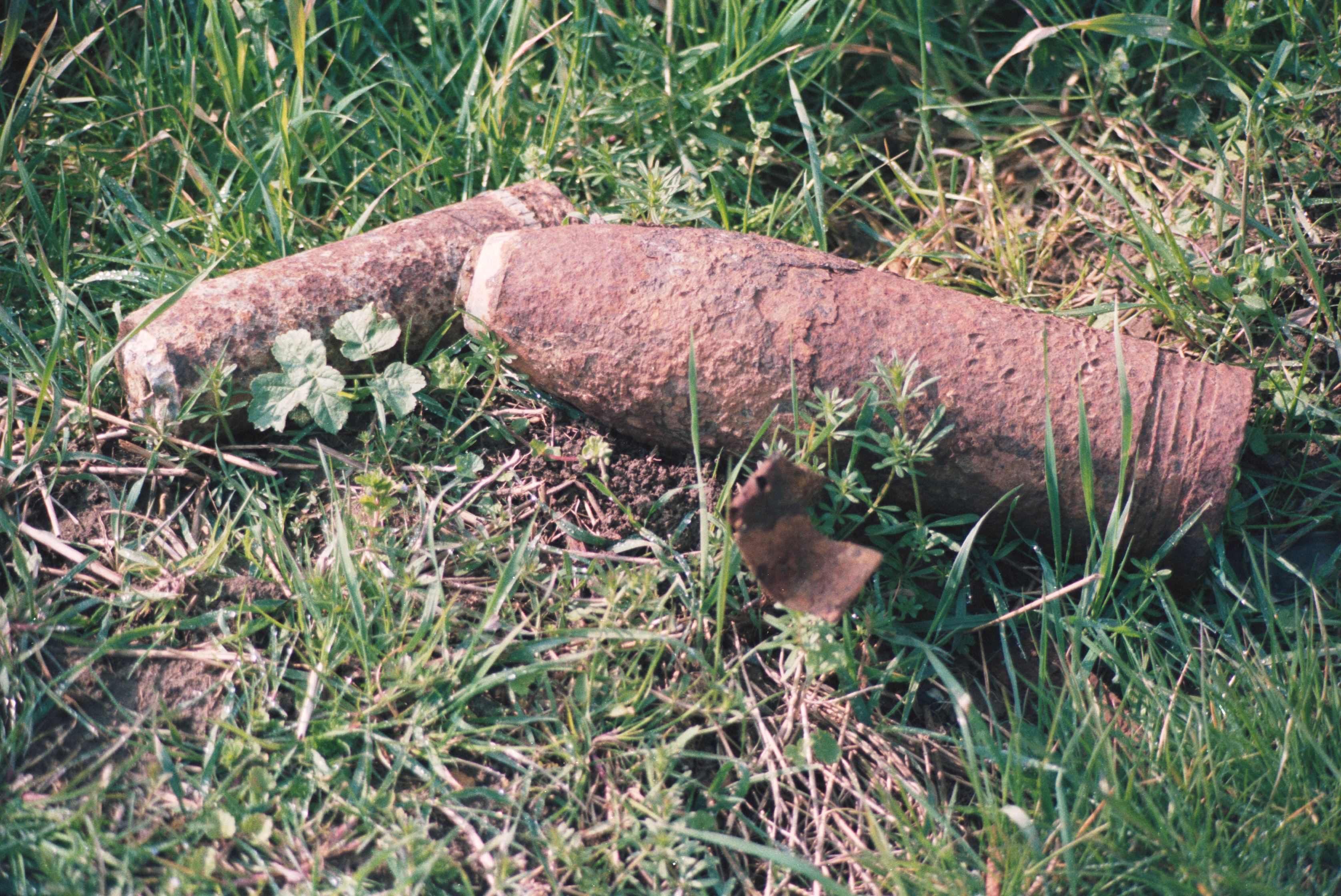
Shells by the roadside
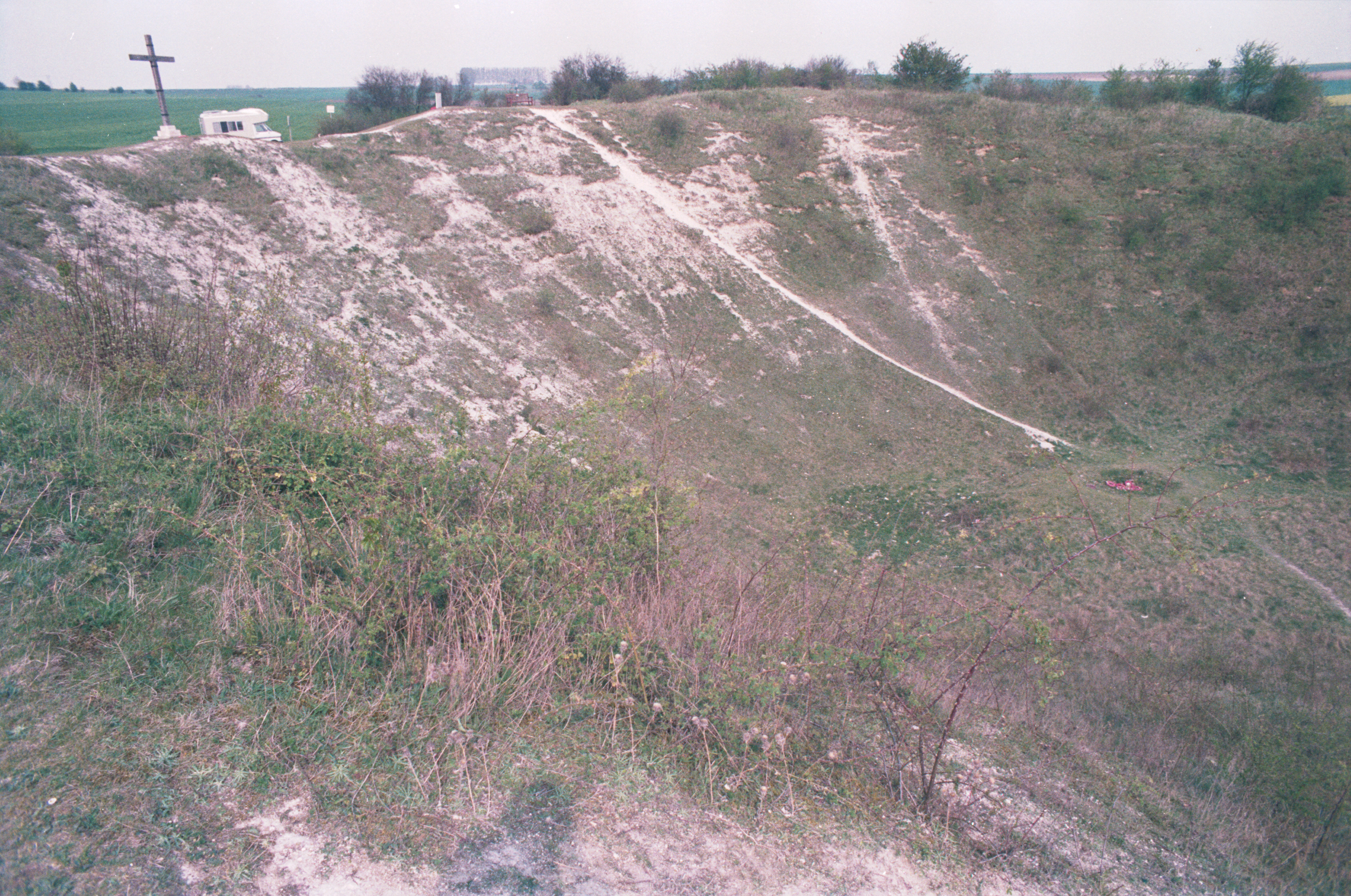
The Lochnagar mine south of the village of La Boisselle.
The van is in the top left for scale.
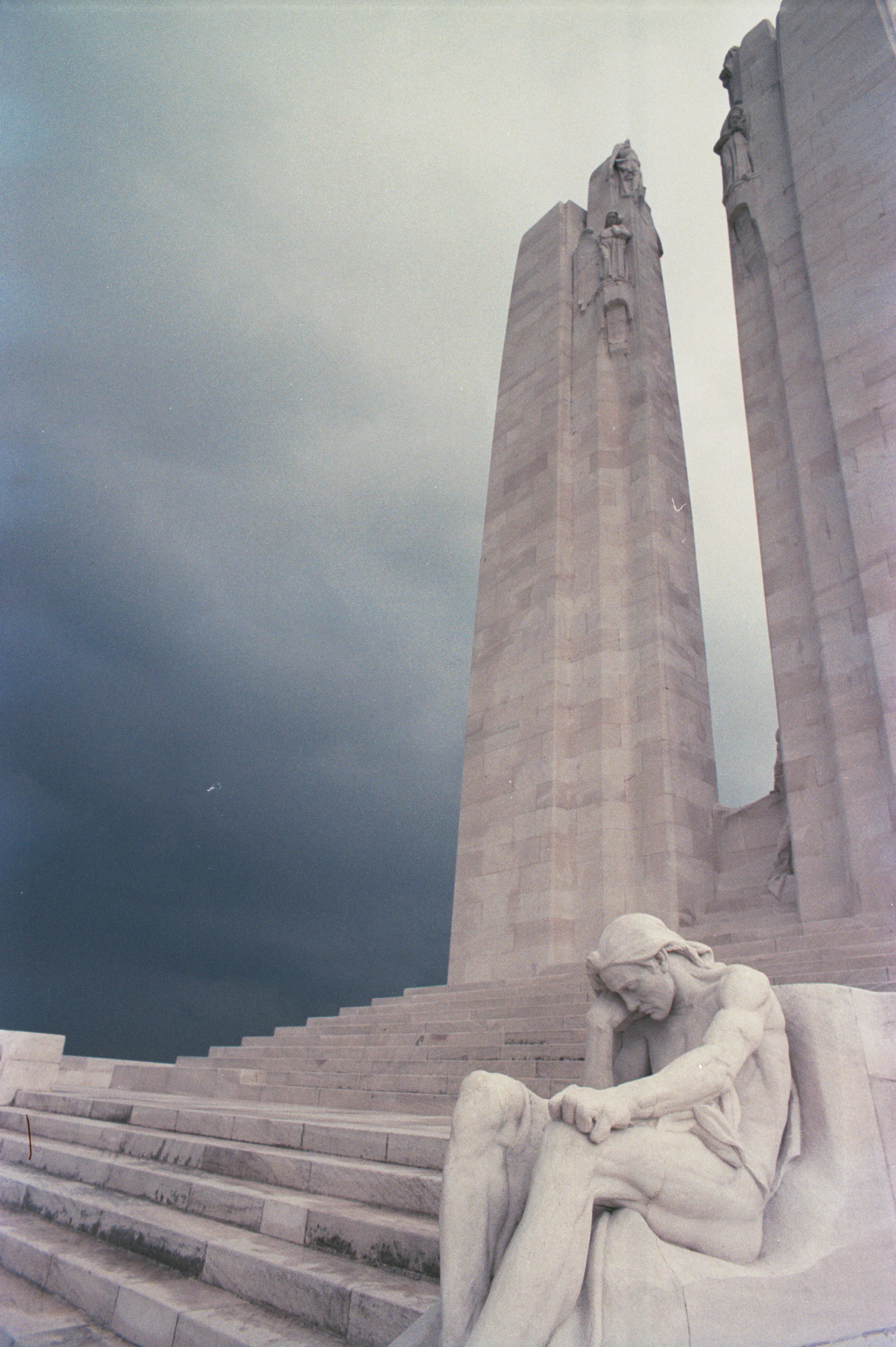
The memorial at Vimy ridge.
I parked the van in a camp site at Maison Laffitte, just to the northwest of the city and spent the next week commuting in by train. I saw the lot; Eiffel Tower, Louvre, Les Invalides, Musee d'Orly, Notre Dame, Montmartre. Paris became the template for future cities in that I camped outside and took public transport to the sites. I learnt that all campsites outside cities had good transport links. The disadvantage with public transport was that you had to ensure that you did not miss the last bus or train. There were some places where the transport ended quite early, so I never saw the city at night. Actually, after walking around for a full day I often did not have the energy to hang around into the night as well. For food I either made a sandwich for lunch and took it with me in a Douwe Egberts coffee tin or resolved to buy something cheap in the city. For evening meals, I generally shopped in a supermarket or a little shop before finding the campsite in the evening.
Throughout this trip the evenings in the campsites were the most difficult time to fill. After I had made or acquired something to eat, I generally just relaxed in the van where I wrote about the day in my journal and planned the next one. I brought a small shortwave radio with me which I listened to most evenings. I could always get the BBC world service wherever I was, although it was a bit repetitious. Whenever there was entertainment at the campsite I generally joined in, but in these early days there were very few people on the road so all was quiet on the site. I often read from one of the books I had brought with me and had a glass of duty-free Port. No more than one, I had to make it last as long as possible.
One of the highlights of Paris for me was the Pere Lachaise Cemetery. Here all the great and good of Paris society were buried, as well as other famous notables like Oscar Wilde and Jim Morrison. When looking for Jim Morrison's grave I found the area where it was since all around it were flowers and graffiti, but for some reason I could not identify the actual grave. There were two girls sitting on a stone nearby and I asked them "Have you seen Jim Morrison?" They gave me a funny look and replied, "No we haven't seen him." It was at that point I realised that they thought I was asking if they had actually seen him, and not the grave. I beat a retreat without seeing the physical grave.
After a week in Paris, I planned to make my way through western France to the Spanish border at Biarritz. A week turned out to be enough time to do the major sites in any city. I resolved to do no more than 100 miles per day so that I had time to stop places and take in the surroundings, so every evening I looked at the guides and the maps and picked a campsite to aim for, and a site or two to visit along the way. I went via Normandy, to see the D-day beaches, then Chartres, Fontevraud, Bordeaux and a few other stops before finally reaching Biarritz. I picked my stopping points from the Blue Guide, so in Chartres I saw the cathedral, in Fontevraud, I went to see the tombs of the Plantagenet Kings, and then Biarritz because I had heard that name before and associated it with rich and exotic people. The best thing about Biarritz though was this is where the sunshine started, and it was here in the campsite above the town that I lay on the grass next to the van and did my first sunbathing.
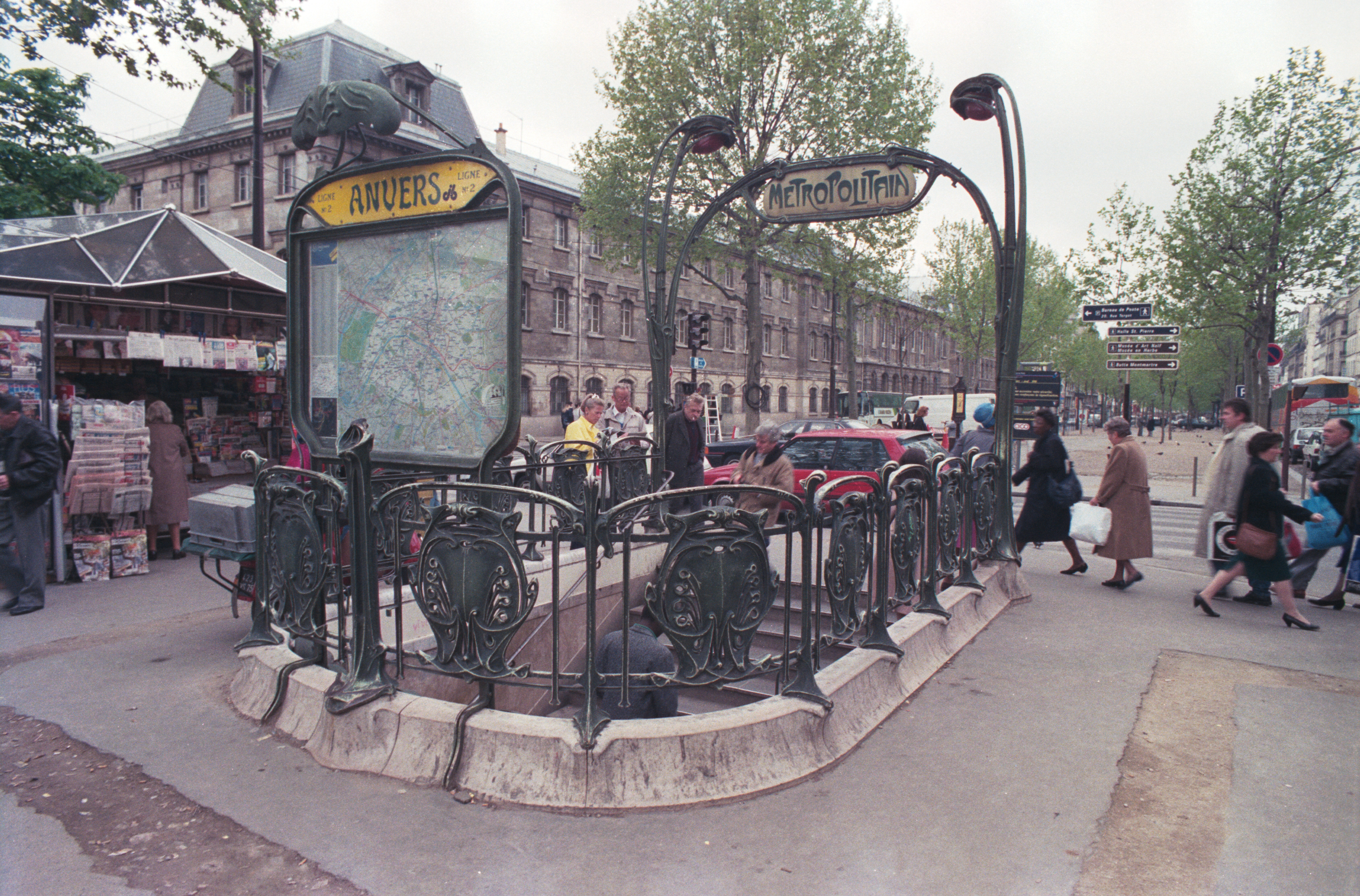
Anvers metro station
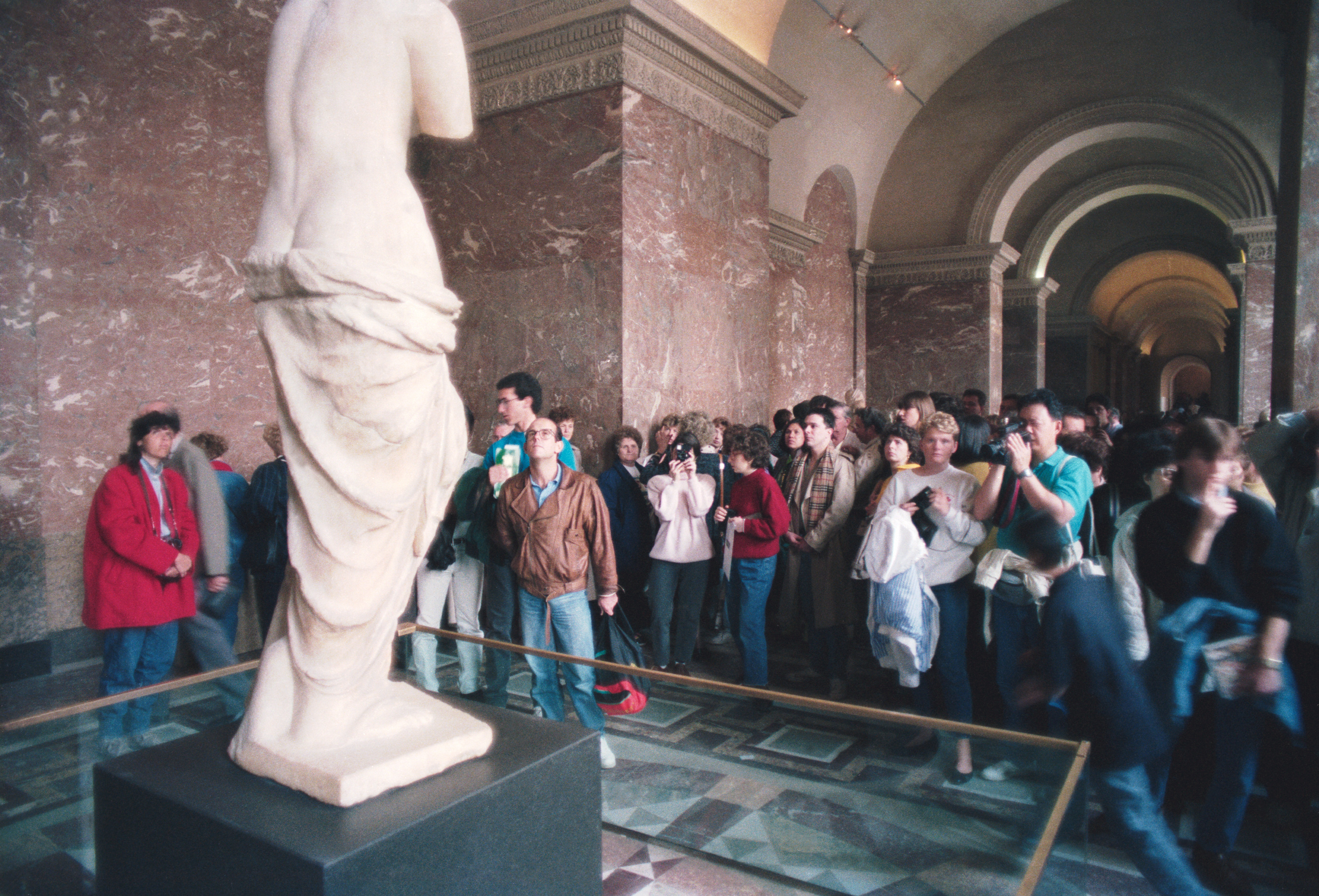
Venus de Milo in the Louvre
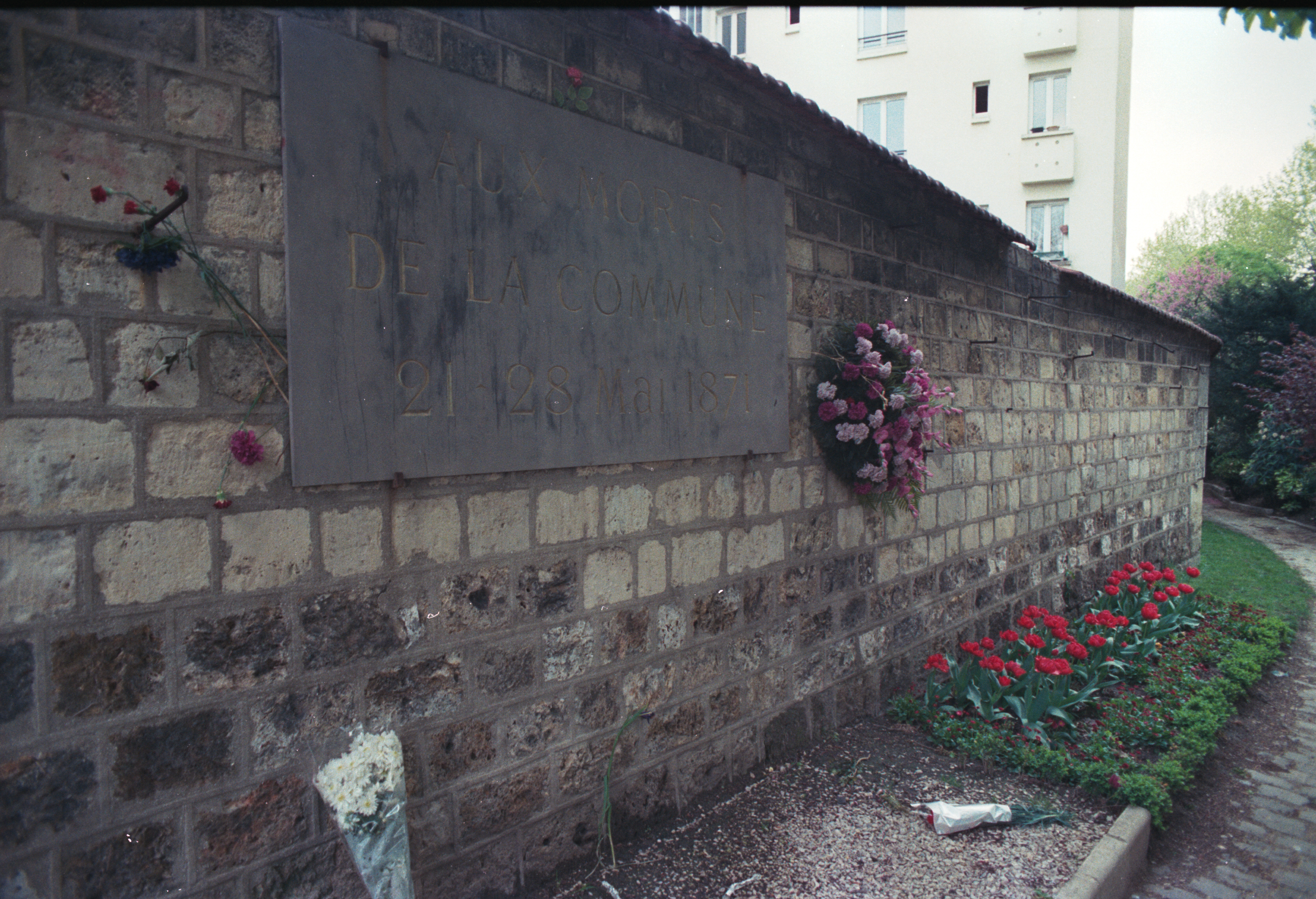
The Communards' Wall at the Pere Lachaise cemetery
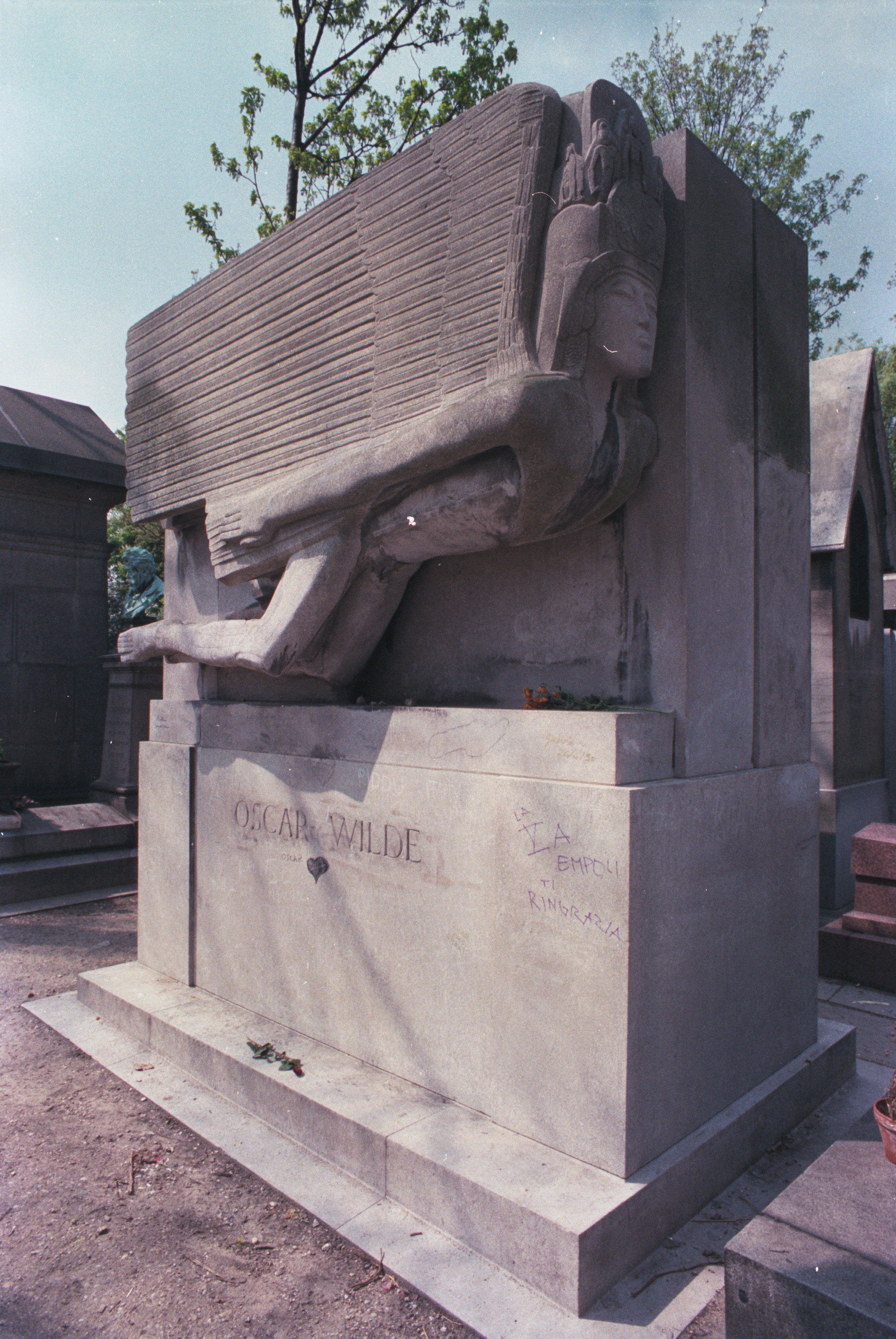
Oscar Wildes tomb at the Pere Lachaise cemetery
It was on the 8th of May that I crossed the border into Spain near Biarritz. There was a bank just on the border, so I stocked up on Spanish currency for my stay. I cannot remember why I decided not to drive all the way down to the south of Spain, probably because I could not see sufficient cultural targets to aim at. Spain did not have a Rome or Athens, so I planned a route that drove parallel to the Pyrenees towards Barcelona. My route was Pamplona, Olite, Tarragona and then to Barcelona, staying one night at each destination. Pamplona was not a city to take a camper van, because the streets of the old town were not made for them, although all the roads were in theory open to all traffic. Olite was pretty but Tarragona was unmemorable. I intended to stop and have a look at Barcelona but after a long time trying to find somewhere to park, I gave up and drove out in a northerly direction following the coast to Girona where I stayed the night. From Girona I had two destinations, Fugueres and Empuries. I visited Fugueres for its famous Dali Museum where many of his surreal creations are housed. Very interesting. And finally for Spain there was Empuries, which is a ruined Greek city founded in the 6th century BC. This was the first of many ancient archaeological sites that I would visit on my trip. There was something evocative and romantic about wondering around a ruined ancient city in the warm sunshine that I really enjoyed.
Spain was a disappointment for me. I never felt at home there, the language was harsh, and the country was vast and a complete mystery to me. It could have taken me months to explore and appreciate it properly. There were no cultural or historical targets for me to aim for at the start, so I suppose I just wanted to tick it off my list.
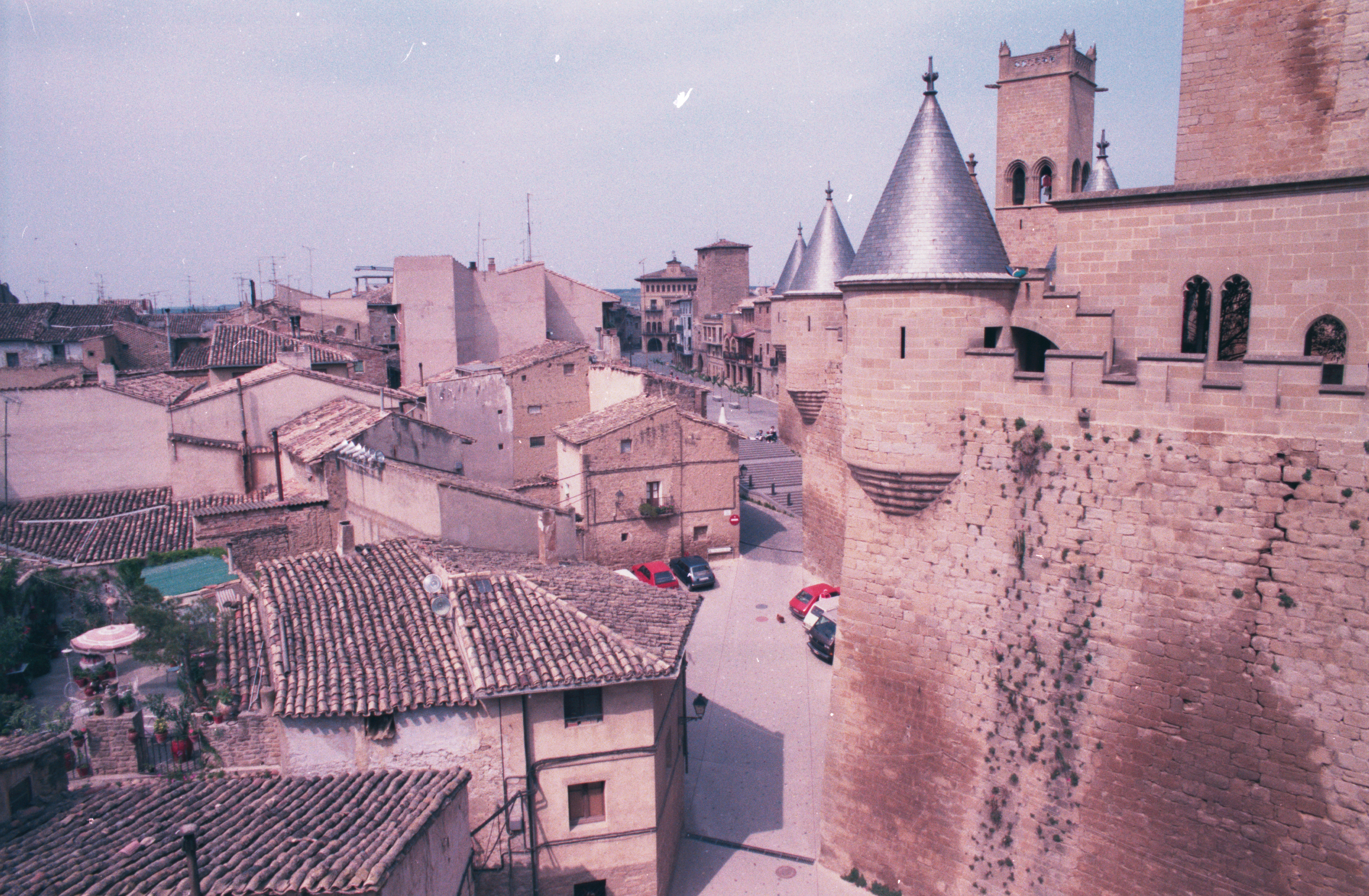
Olite
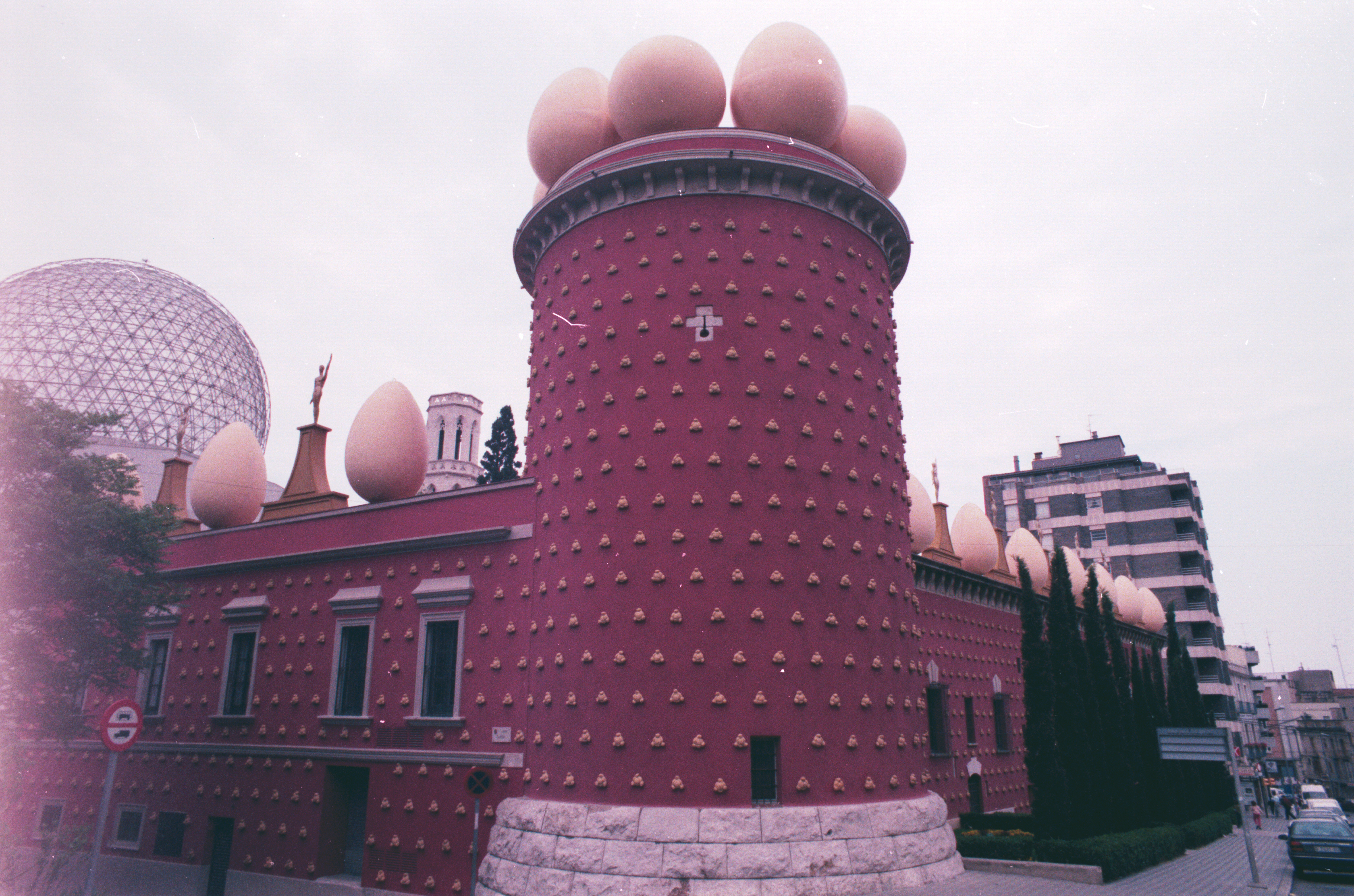
Dali museum at Figueres
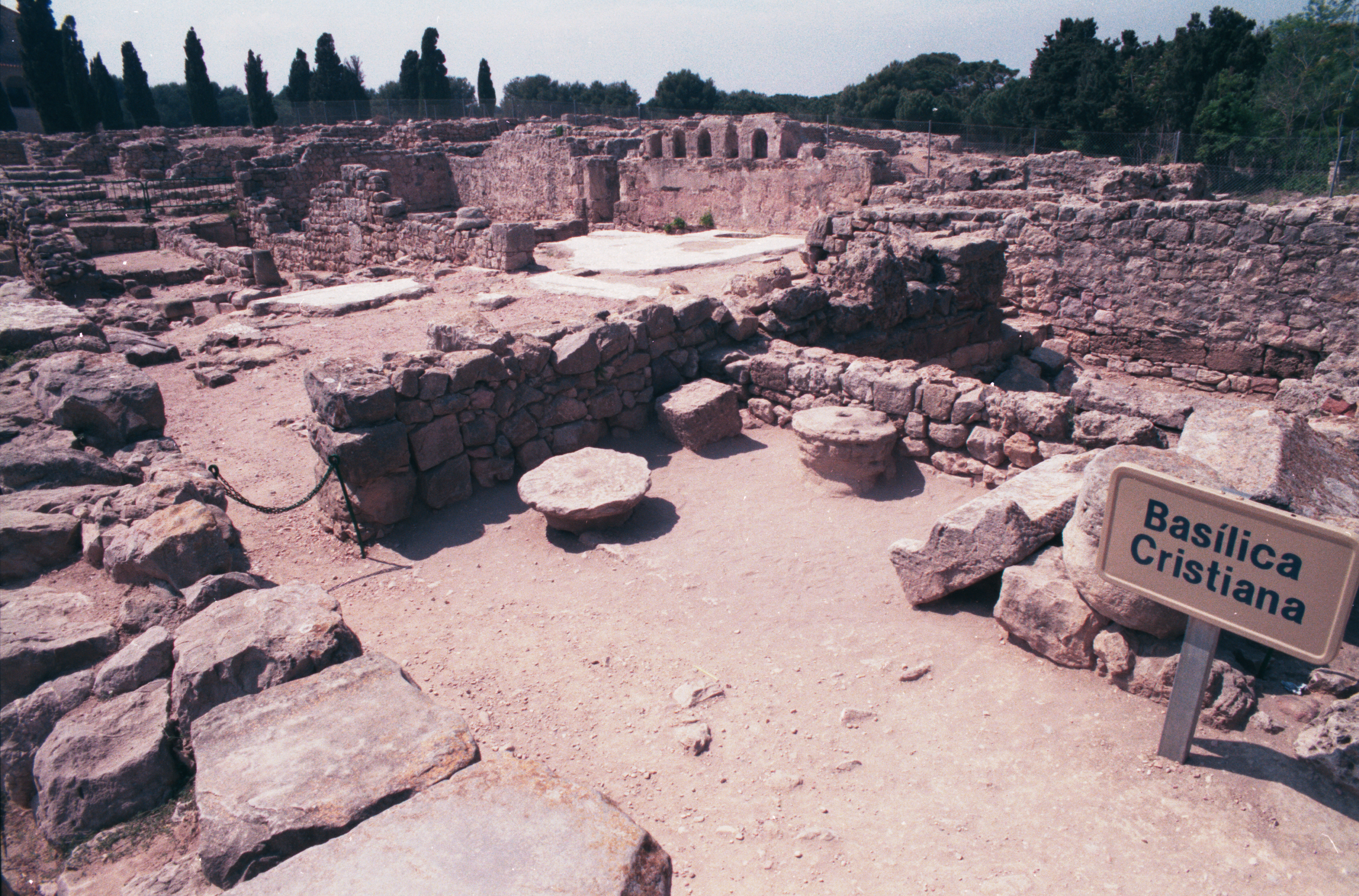
Empuries Greek ruins
Popping up from Spain into the south of France was a delight. My route through the south of France went via Arles, Avignon, Gorges-du-Verdon, Nice and Monaco. The highlight in Arles was the roman amphitheatre which was to be the best preserved one on my trip. In Avignon it's the papal palace, which was closed when I visited, so despite two visits to Avignon I still haven't been in the palace. The Gorges-du-Verdon was a spectacular detour recommended by my Blue Guide. I saw just a fraction, but what was there was memorable. Monaco was also amazing. To be walking the streets of the formula 1 racetrack seemed unreal. They were preparing for the Grand Prix at the time so all the stands and the advertising on the corners was in place, but traffic was moving through the town normally. I managed to park the van, and I walked the whole course.
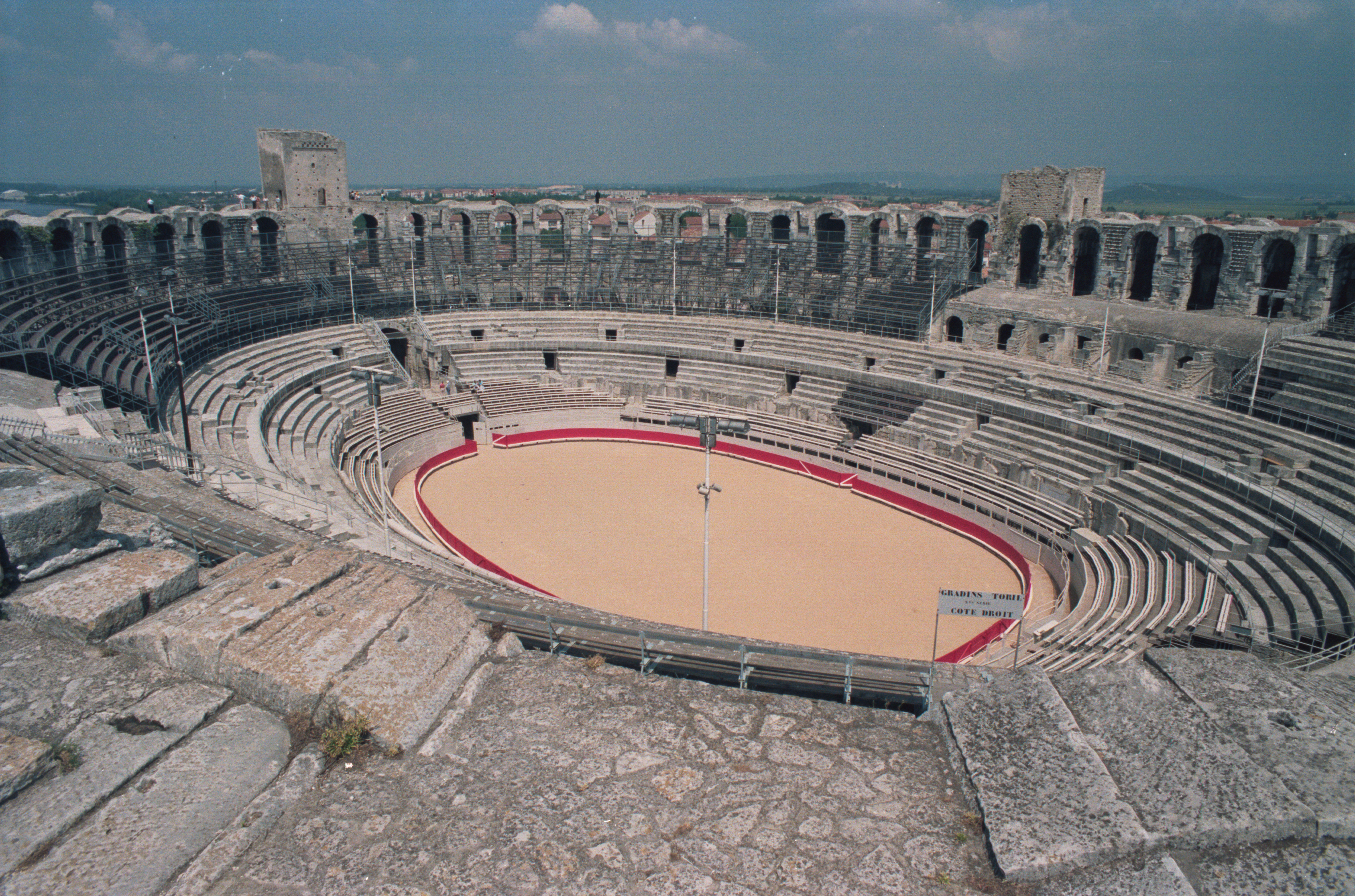
Arles
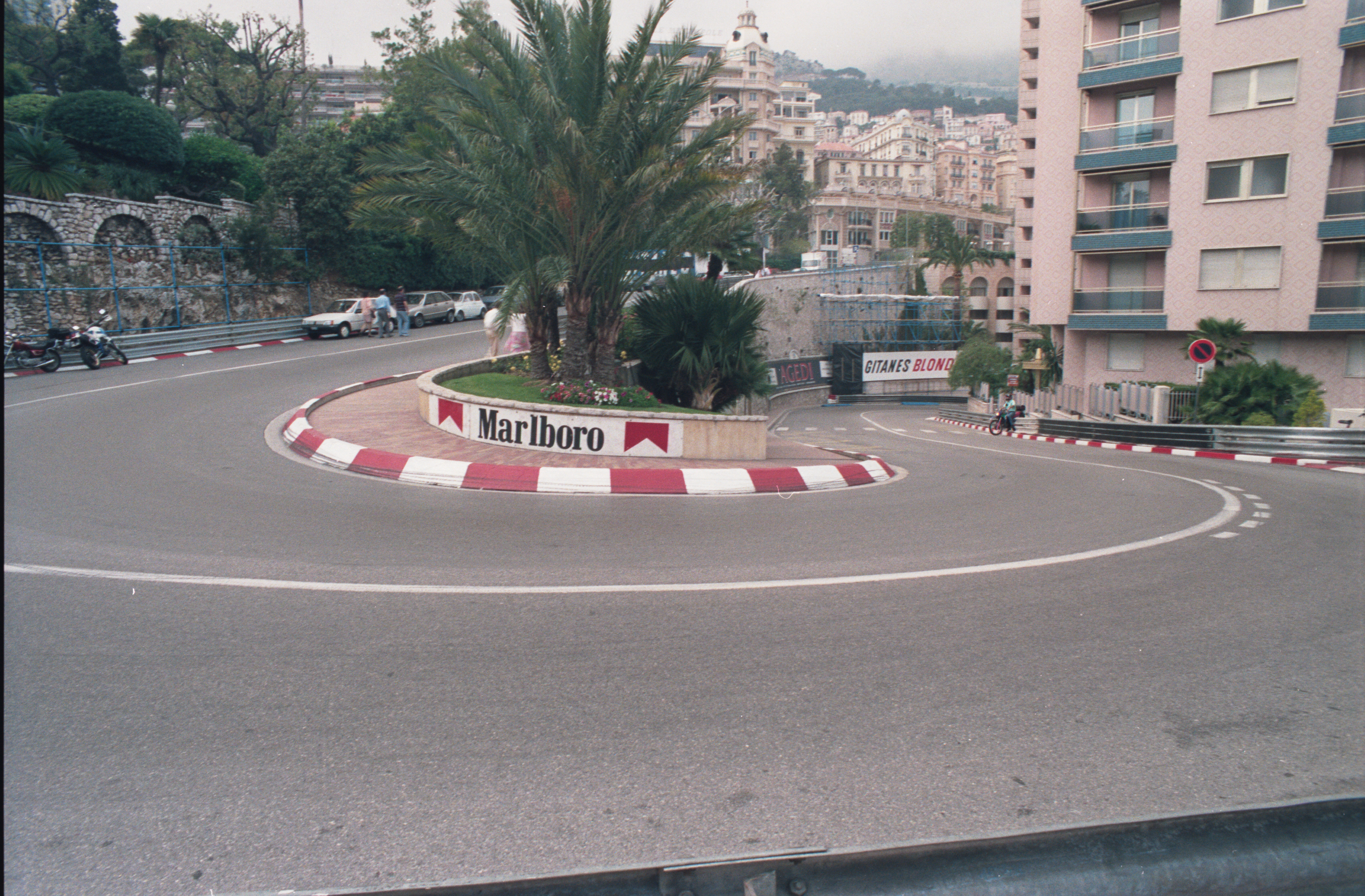
Monaco
After Monaco I crossed the border into Italy where my first real stop was Genoa, then Parma (nice campsite in the citidel) Mantua and Verona. The highlight in Mantua was the Palazzo Ducale which was the astonishingly well-preserved palace of the Gonzaga princes.
Whilst camped near Mantua I walked into the town at night to see the sights, it was rare that I could find a campsite close enough to visit the town after the public transport had stopped, so off I went. Sadly, I was a bit disappointed in the Italian nightlife, nobody seemed to be around. Even the cafes seemed a bit dead. I managed to eat somewhere and then set off back to the campsite. By now it was pitch black and there was a distinct lack of street lighting. I made it about halfway and then suddenly there was nothing under my left foot and I was falling. I instinctively snatched my hands from my pockets to try and grasp something as I fell. The hole I had fallen into was about 3 feet deep and I hit the ground with a thump, closely followed by a rain of coins that were in my hands at the time. For a couple of seconds I didn't move, I was looking for broken bones but luckily, I didn't find any. I had bruises and grazes but otherwise I was OK. I slowly got up and looked around. Nobody had seen me fall and the hole I was in was in front of what looked like an empty house. If I had really injured myself, I would have been in serious trouble. The biggest concern to me then was how I was going to recover the coins that I had thrown in the air as I fell. I had to explore all around by feel, since the pit was completely black. I gave it a good go, but I am sure I left some behind.
Stored at the back of my mind were a few places that I knew were special goals for the trip. Top of the list was Venice. There is no describing the atmosphere of the place. Every street and corner hold mystical and historical significance. I was mesmerized for a whole week. Every day I walked the streets and sailed the canals in the water taxis. The best way to explore Venice is to walk perpendicular to the throng. You are soon on your own in far more interesting streets. However, do not under any circumstances miss St Marks or the Doge's Palace. St Marks was built using the spoils from the sack of Constantinople in 1204. Many pillars and statues were originally from the palaces of the Emperors of Byzantium including the four horses seen at the front, however the horses outside are not the real ones, they are inside for their own protection. I have studied a lot about this era since my trip and I must return one day to fully appreciate it. Venice was one of the cities I never saw at night because of the timings of the public transport, and since most sites and museums closed at midday you had to get up early, so my poor feet were killing me anyway.
After a week in Venice, the next stops were Ferrara and then Bologna where despite explaining that I understood no Italian I was entertained to a complete tour of the church of St Domenico by a guide, which included a rare view of the skull of St Domenic hidden in a niche behind an altar. Even though I am not religious, it was difficult not to be impressed by the history and art on display.
Florence was another of my unwritten goals. I remember thinking to myself that maybe I should retire there one day. As with Venice, no description will do, I have not the words to describe the history and beauty which was above my head and beneath my feet. I think my favourite building in the world is here, St Miniato al Monte. This is a church situated on a hill above the town. The interior is perfect and the view of Florence from the terrace is unforgettable.
It was while on a similar terrace above the town that I was targeted by some robbers. I was waiting for sunset and my camera was resting on the wall next to me. I was not on my own, there were a few other tourists on the terrace. I became aware of a scooter pulling up behind me. The passenger got off, but the driver remained there with the engine running. The passenger slowly moved towards the wall next to me. I left the camera where it was on the wall but turned towards him and stared into his face. He tried not to look at me, but I could see he was uncomfortable. After less than a minute he got back on the scooter, and they left. I am sure he wanted to grab the camera and run, but I would have hurt him really bad if he had tried, and he knew it.
The next stop was Sienna where The Campo was the main highlight, The Campo is a large ovoid open area in the centre of the town. It is most famous for the bi-annual horse races between the various medieval areas of the city, called Contradas, but that wasn't happening during my visit, so I had to make do with admiring the surroundings and quenching my thirst in the many fountains. The next day was Pisa. Pisa consists of the leaning tower and the Duomo, and not much else. It was in Pisa however that I noticed that the football World Cup was on that year. That day, Cameroon had won a game, and several cars drove by with people shouting and waving Cameroon flags.
I then decided to have two weeks off from travelling and headed to a beach camp site at Principina al Mare where I worked on my suntan in earnest and started to watch the world cup matches in the clubhouse in the evenings. Every night I also took delight in walking to the beach and throwing tent pegs into the sea, which the Germans had used to reserve sections of the sand for themselves.
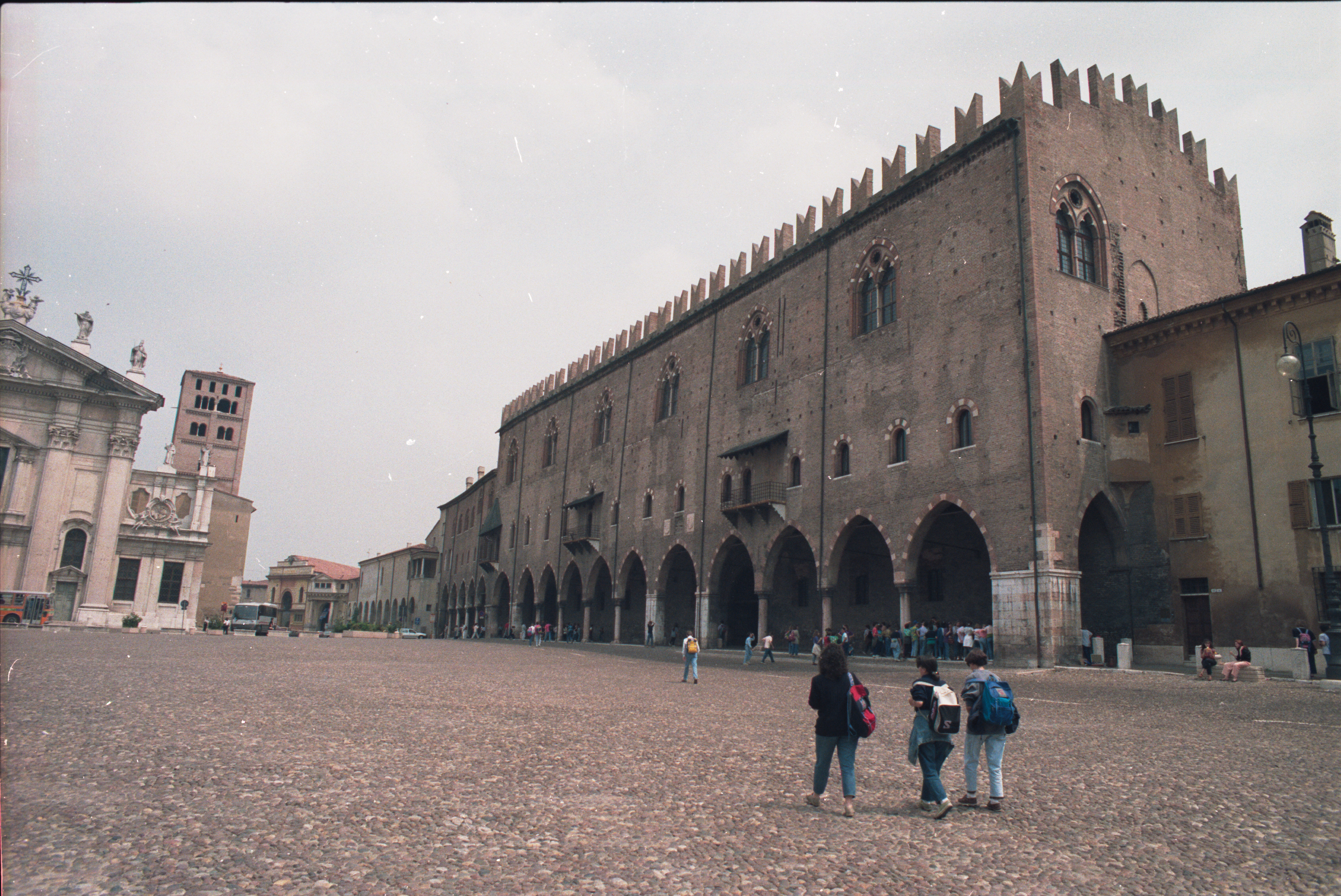
Mantua palace
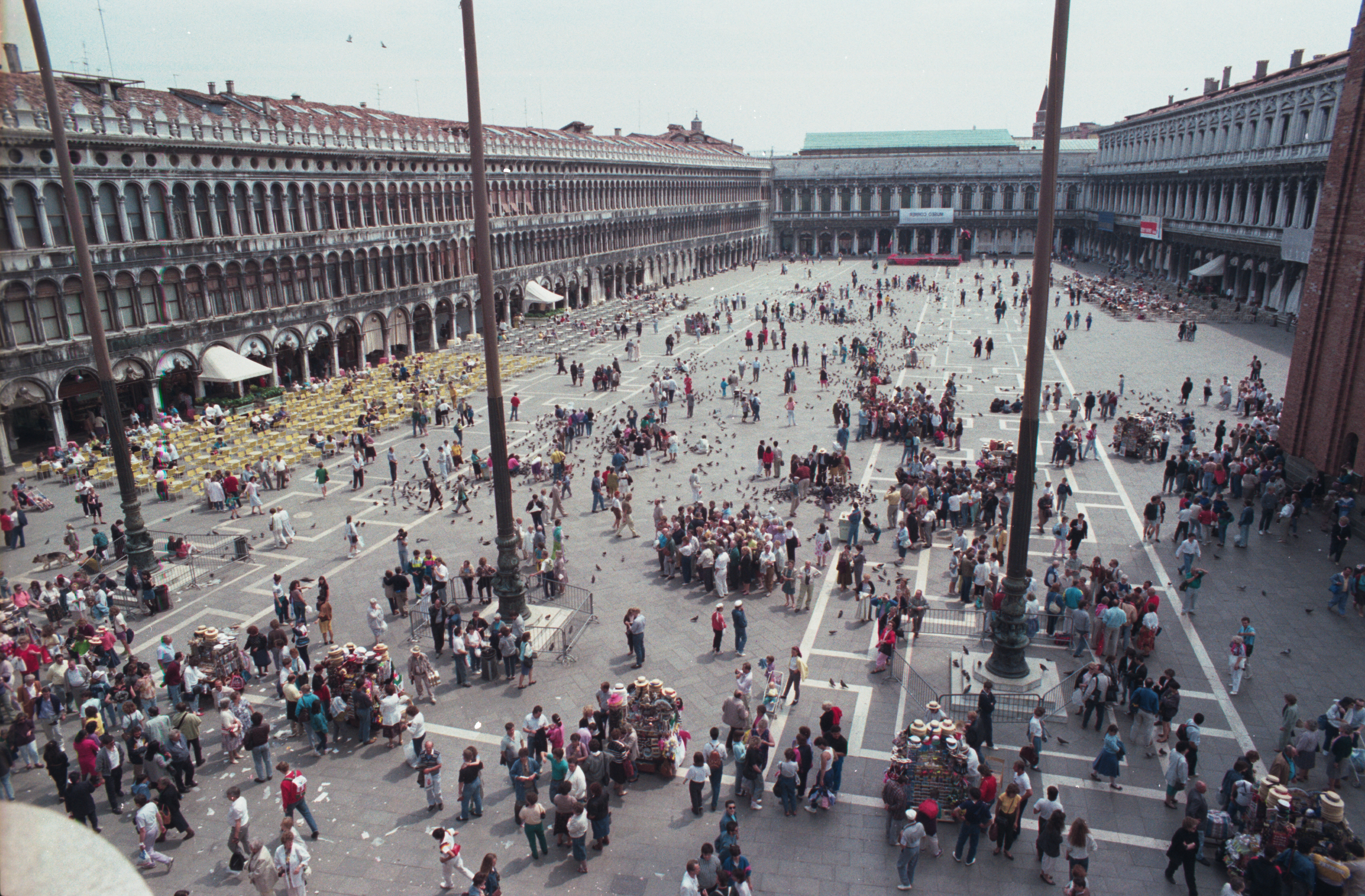
St Marks Square in Venice
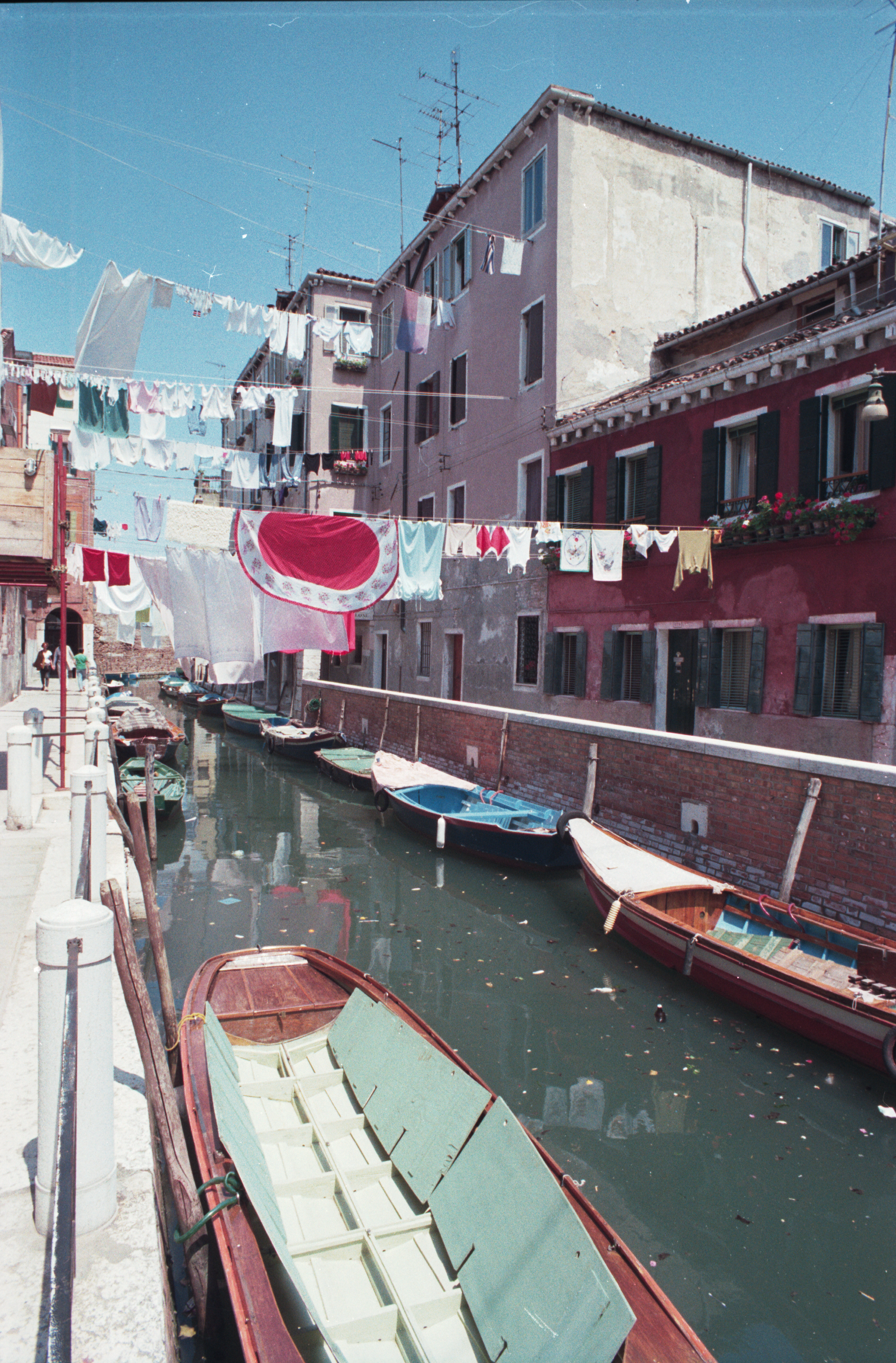
A back street in Venice
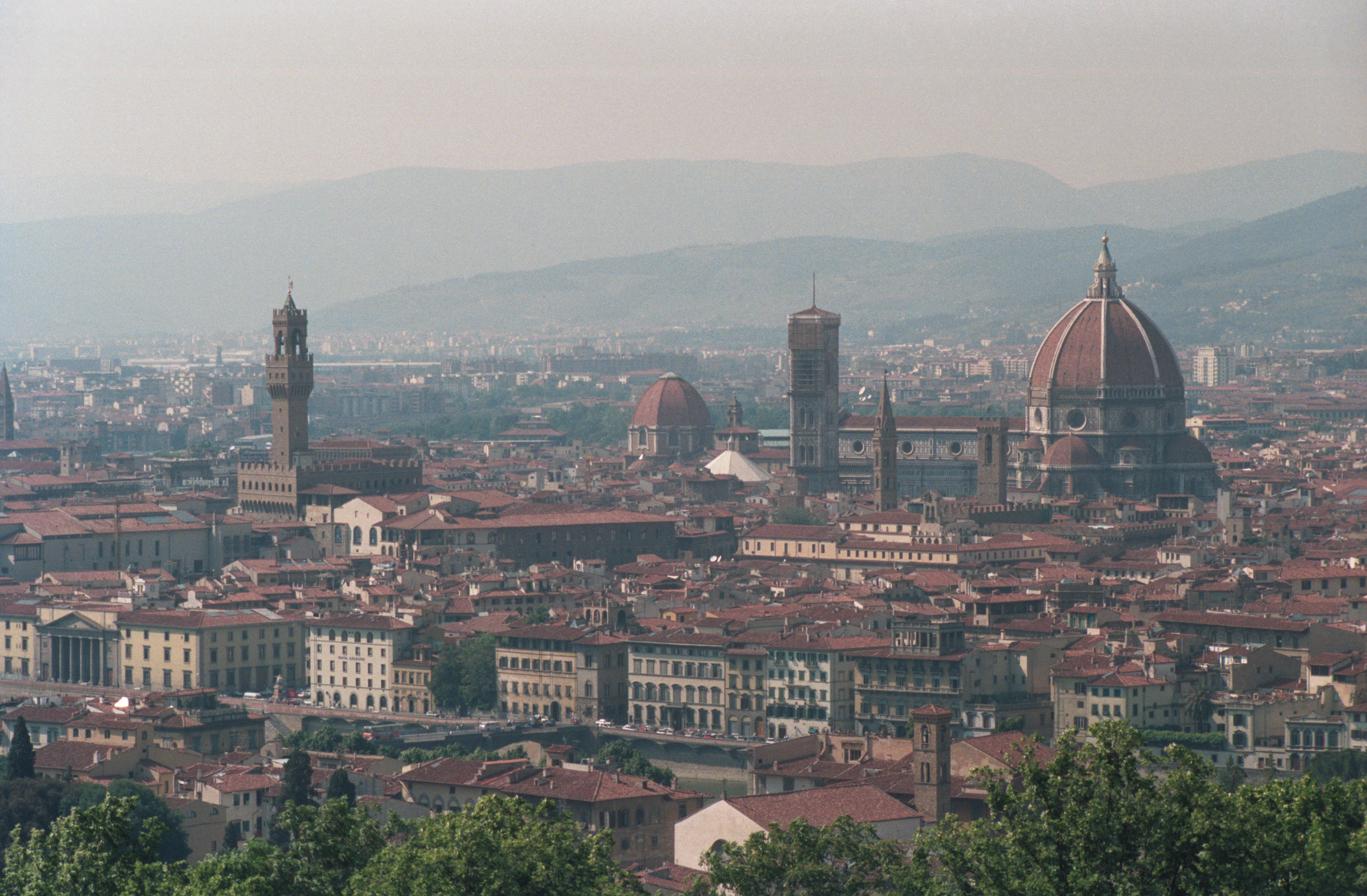
Florence from near the campsite
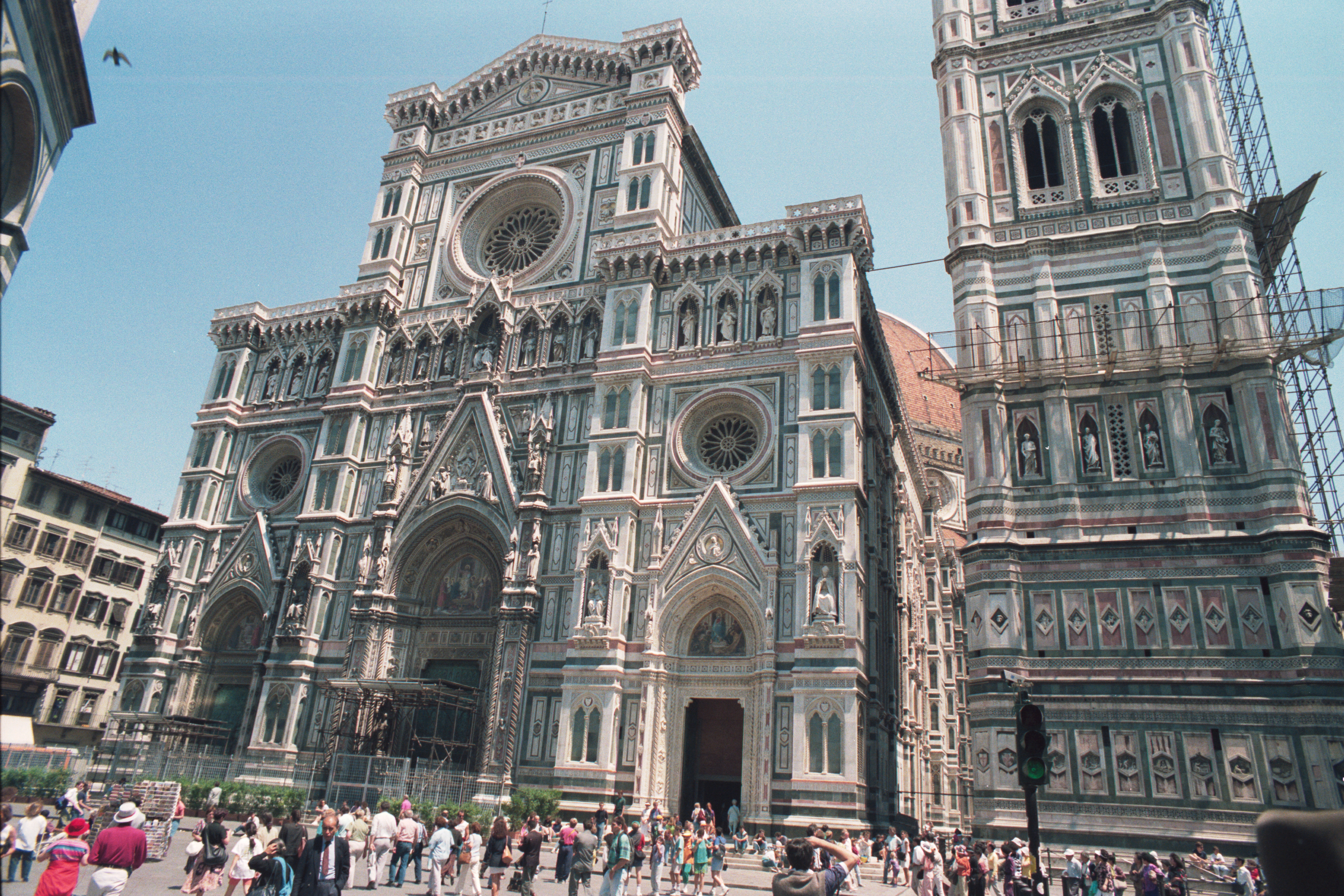
The Duomo in Florence
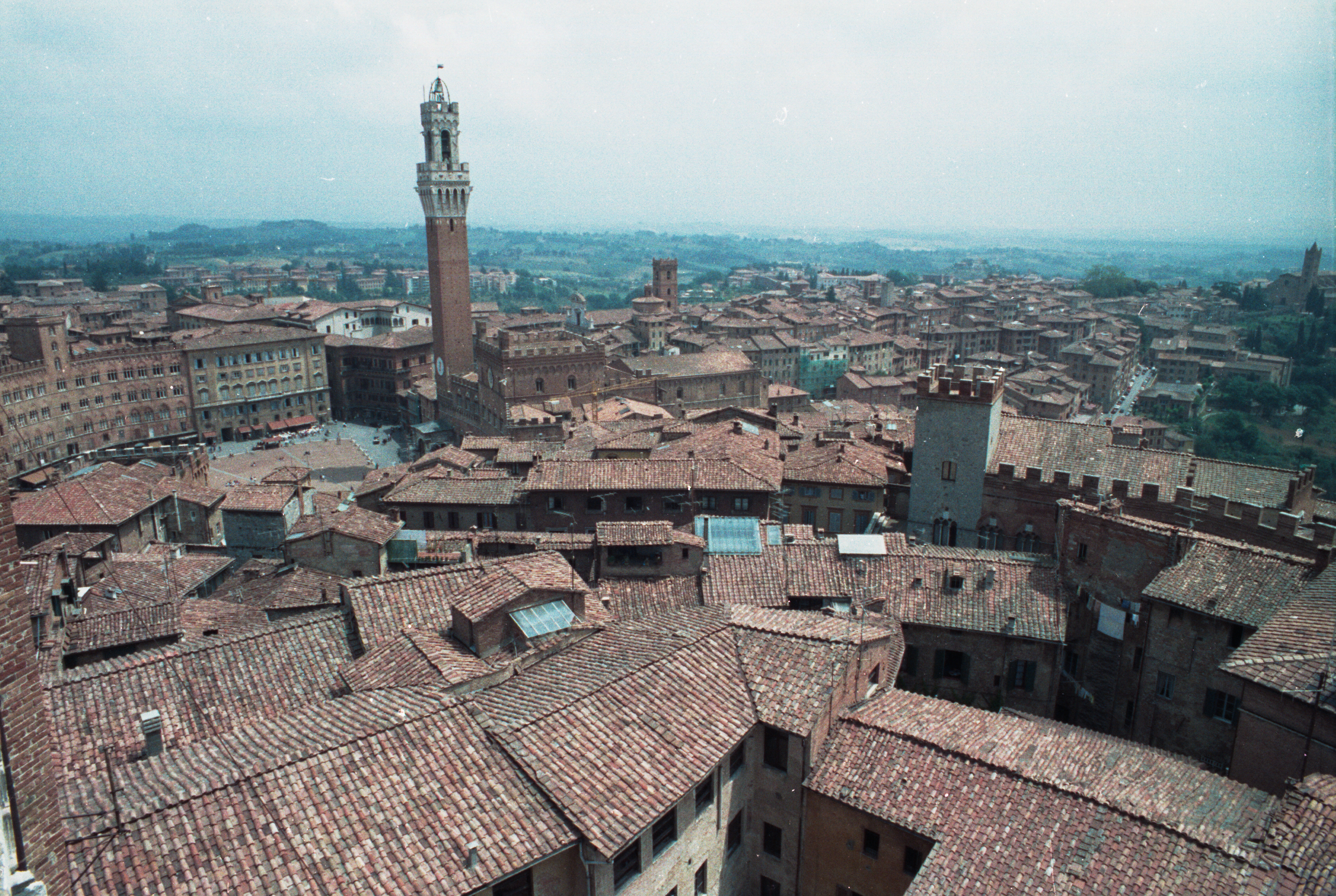
Sienna with the Campo is on the left.
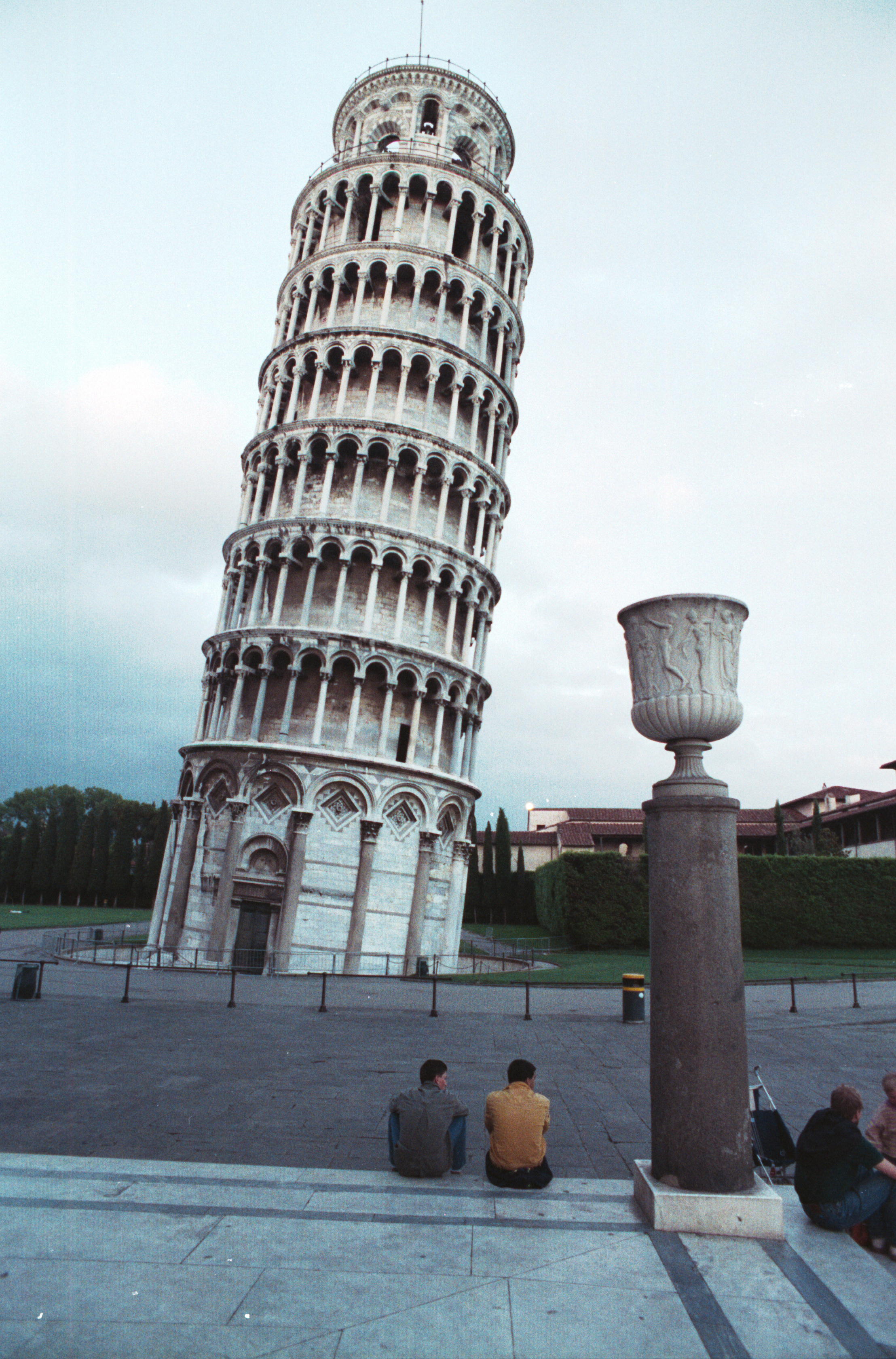
Pisa
Rome was the third of my unwritten destinations. As usual, I parked at a campsite in the suburbs and caught the train into town each morning. I did a lot of walking in Rome, and by now it was hot, luckily Rome is dotted with many drinking water fountains where you can fill up a bottle rather than spending loads of money buying it from a shop.
I did all the usual sights; The Colosseum, Pantheon, Castel Sant'Angelo, Spanish Steps, Trevi fountain. My favourites were the Vatican and the Roman Forum. The Vatican Museum was full of the most amazing artworks and statues that I have ever seen in one museum. From the museum you are then ushered through the Sistine chapel, where despite no photography being allowed, I took several photos of the ceiling. From the chapel the next stop is St.Peters church itself. As I approached up the steps there were groups of tourists hanging around looking glum. I noticed that they were all wearing shorts, and the girls were in tops with their arms showing. I had learned by now that you had to dress appropriately to visit churches in Italy. Long trousers for men and covered arms for the women. I sat down on the steps among them and took out my green lightweight trousers from my rucksack and put them on over my shorts. I heard American accents around me complaining that they had not done the same. Even though it was very hot, they should have done their homework after coming such a long way. The Vatican and St Peters can all be done in one very long day. Another long day is the Roman Forum. My Blue Guide gave me a very useful in-depth explanation of almost everything I was looking at. I was amazed that the Curia still stood, and the site of Julius Caesar's tomb was very atmospheric. I could not help but think about all the emperors, royalty and famous people that would have stood exactly where I was then. This is another place I would like to re-visit because of extra information I have picked up since.
I never saw Rome at night due to the train that I had to catch from the Piazza del Popolo, and exhaustion of course. One thing I started to notice was that the camp sites were beginning to fill up. On the way down through France there was a couple of occasions where I was the only person on the site. I was now able to talk to a few people on the camp site, and even in the city. While I was looking at an archaeological site with my Blue Guide, a Chinese girl approached me and asked if she could tag along because she said that I seem to understand what I was looking at whereas she didn't have a clue. I read the notes in the book to her for a while and she thanked me and left. I must have been so boring.
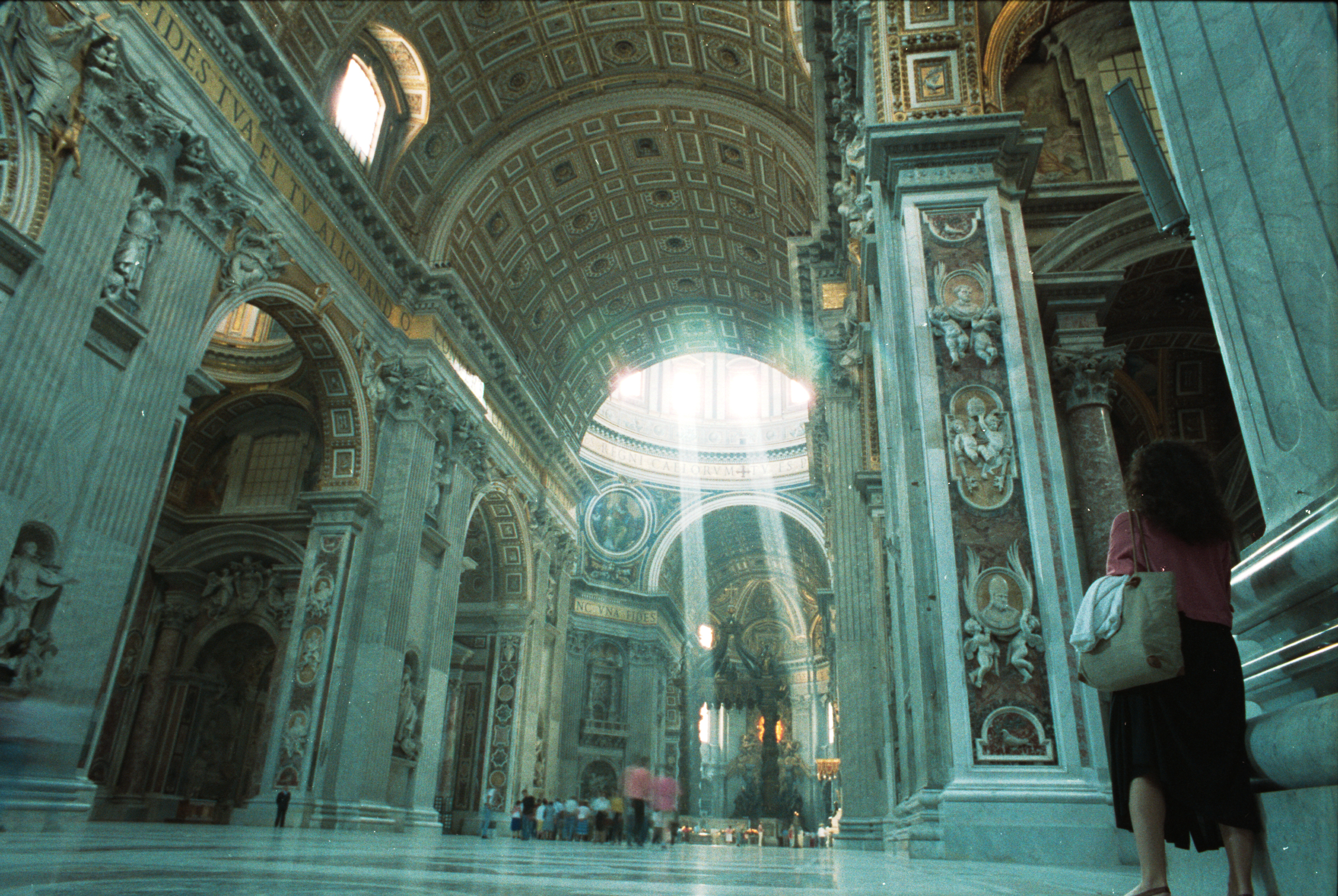
Inside St Peters
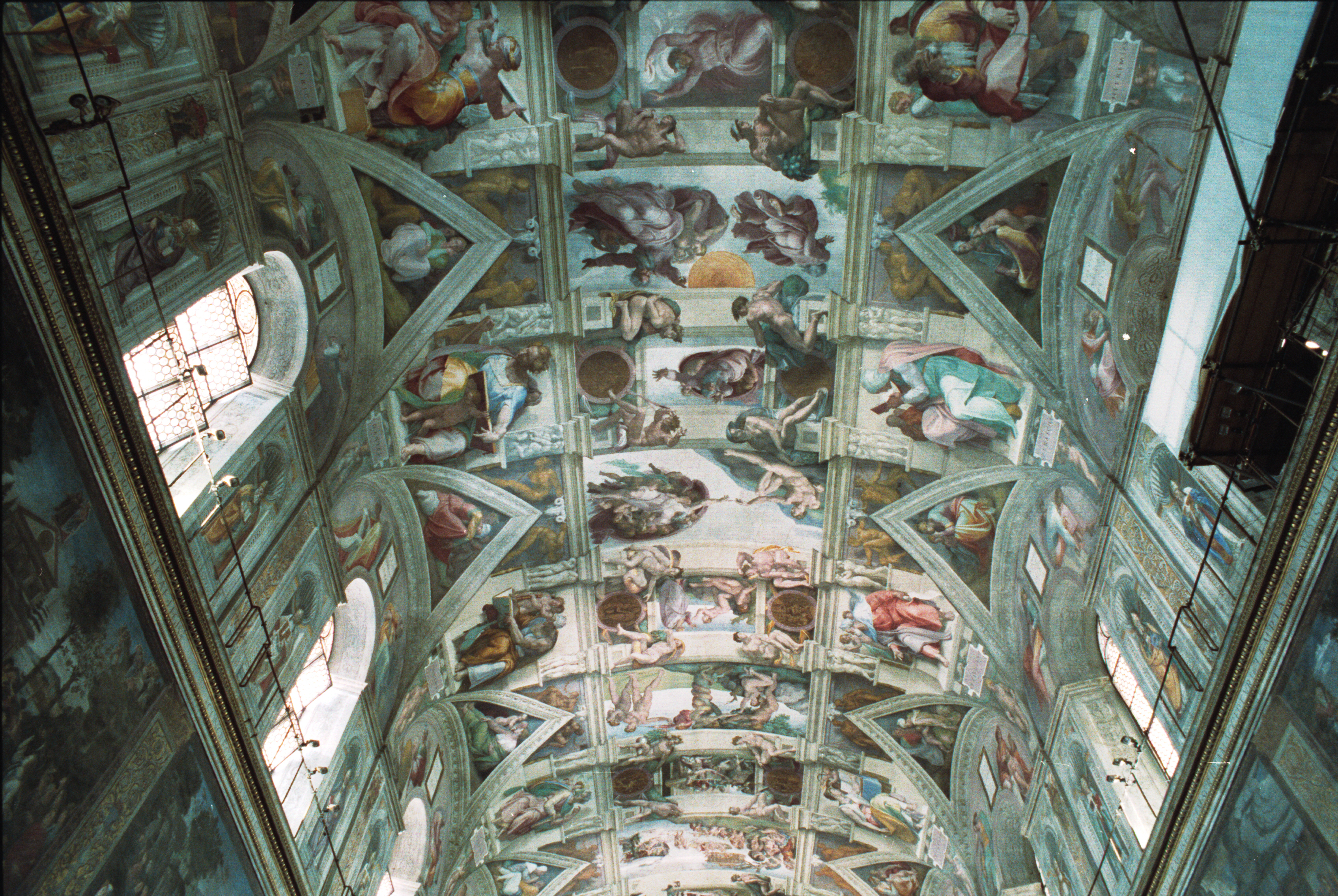
The Sistine chapel ceiling
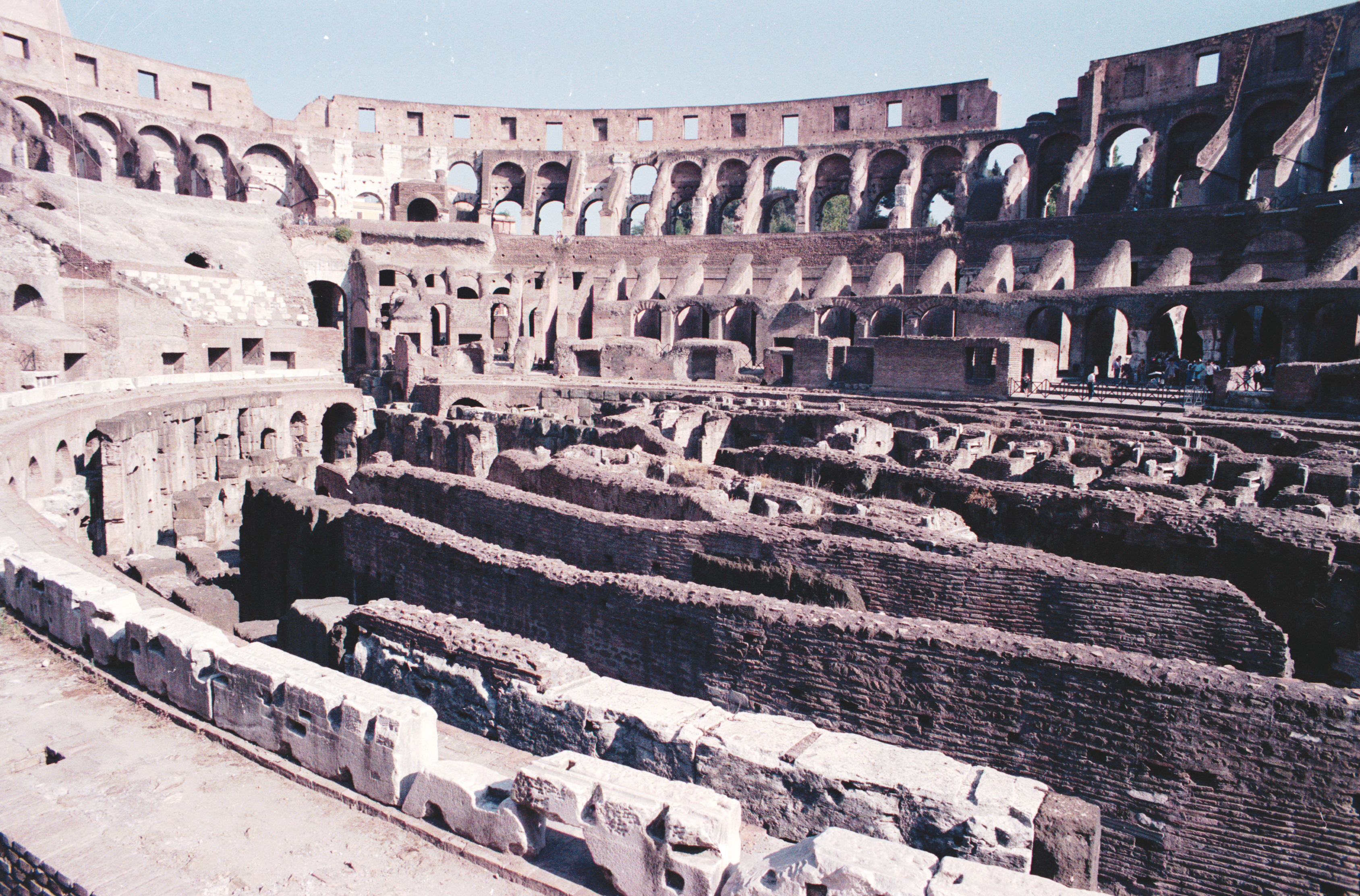
The Colosseum
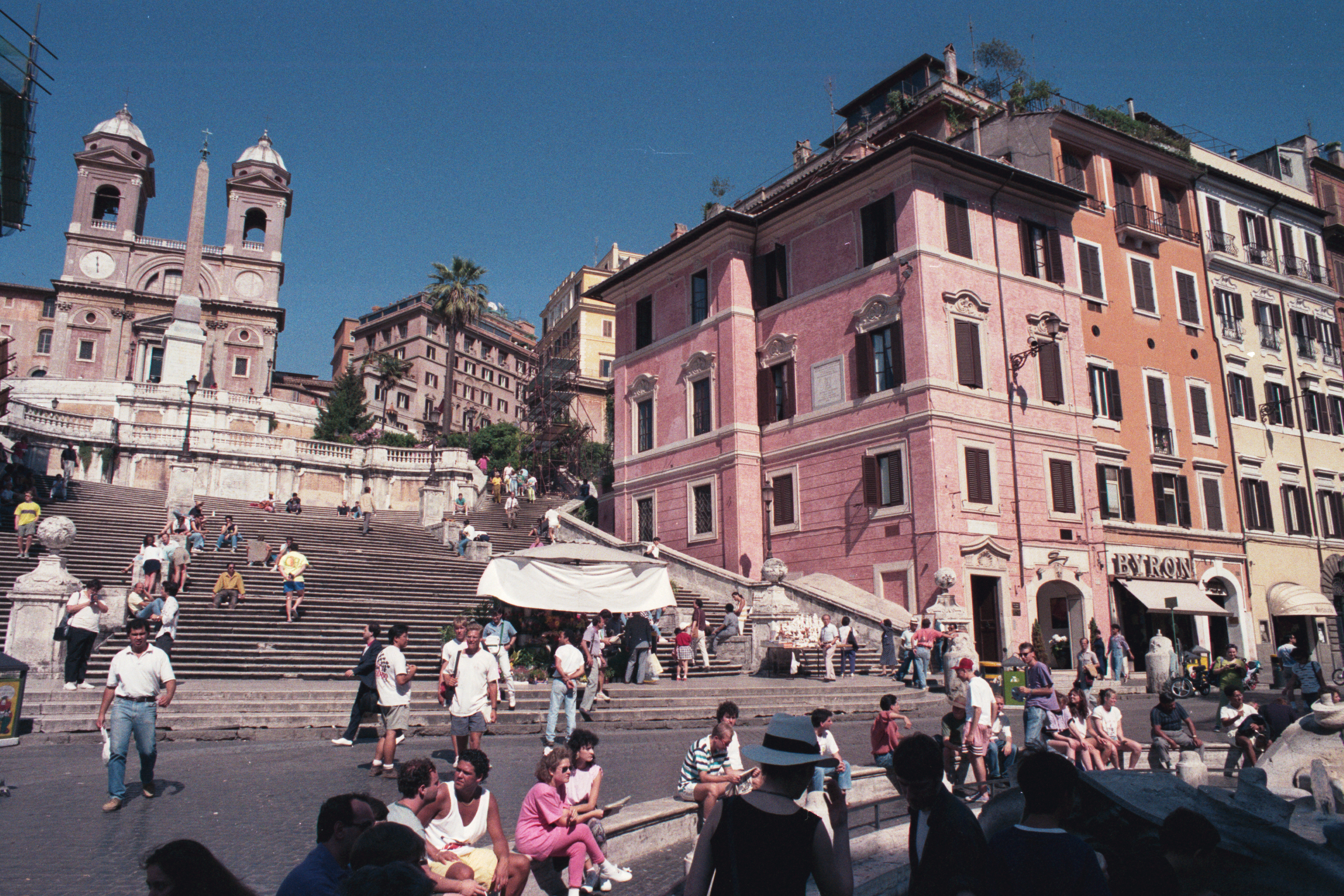
The Spanish steps
Once south of Rome the atmosphere changed, the towns seemed more run down, and the roads were bumpier. I made a stop at Cassino to see the site of the famous Second World War battlefield. I started to walk up a path to the monastery on top of the hill for a while bit it didn't take me long to realise it was much too far in the heat, so I stopped for a rest before starting back down. While I was sat on the rock a black snake slithered out from under it and shot behind a nearby bush. I did not stop for another rest on the way down. Next it was on to Naples and Pompeii.
I started by visiting the Naples archaeological museum which was pretty scary because it was not in the best part of the city, and afterwards I was surprised when my van was still where I parked it. I got out quick. Pompey was as spectacular as I expected it would be. So much is still standing, and you could really get into the atmosphere of an actual roman town. I heard that it was busy but not when I visited. I cannot remember how long I spent there but I was thrown out when it shut.
A little further south is the ancient Greek town of Paestum which has two very impressive well preserved 6th Century BC Greek temples which have been used in lots of films including Jason and the Argonauts.
It was 1990 and the World Cup was in progress, so I found myself watching a fair amount of football which was always on the television at the campsites. The Italians really took their football seriously and I wish I could have understood a little during those heated shouty evenings. There was one campsite that didn't have a television, but I knew there was an important game on because I could hear shouts and cheers in the distance. Suddenly there was a big shout and I could hear gunfire as the Italians celebrated by firing into the air with, what I hope, must have been shotguns. There were three of these shooting events, which must have meant that Italy scored 3 goals.
I had now spent some weeks in Italy so decided not to go down the toe or heel of Italy but did one final ancient site visit at the 5th century BC city of Metapontum, home of Pythagoras, before making for Brindisi where, after much pushing and shoving on the jetty, I got on the ferry to Greece.
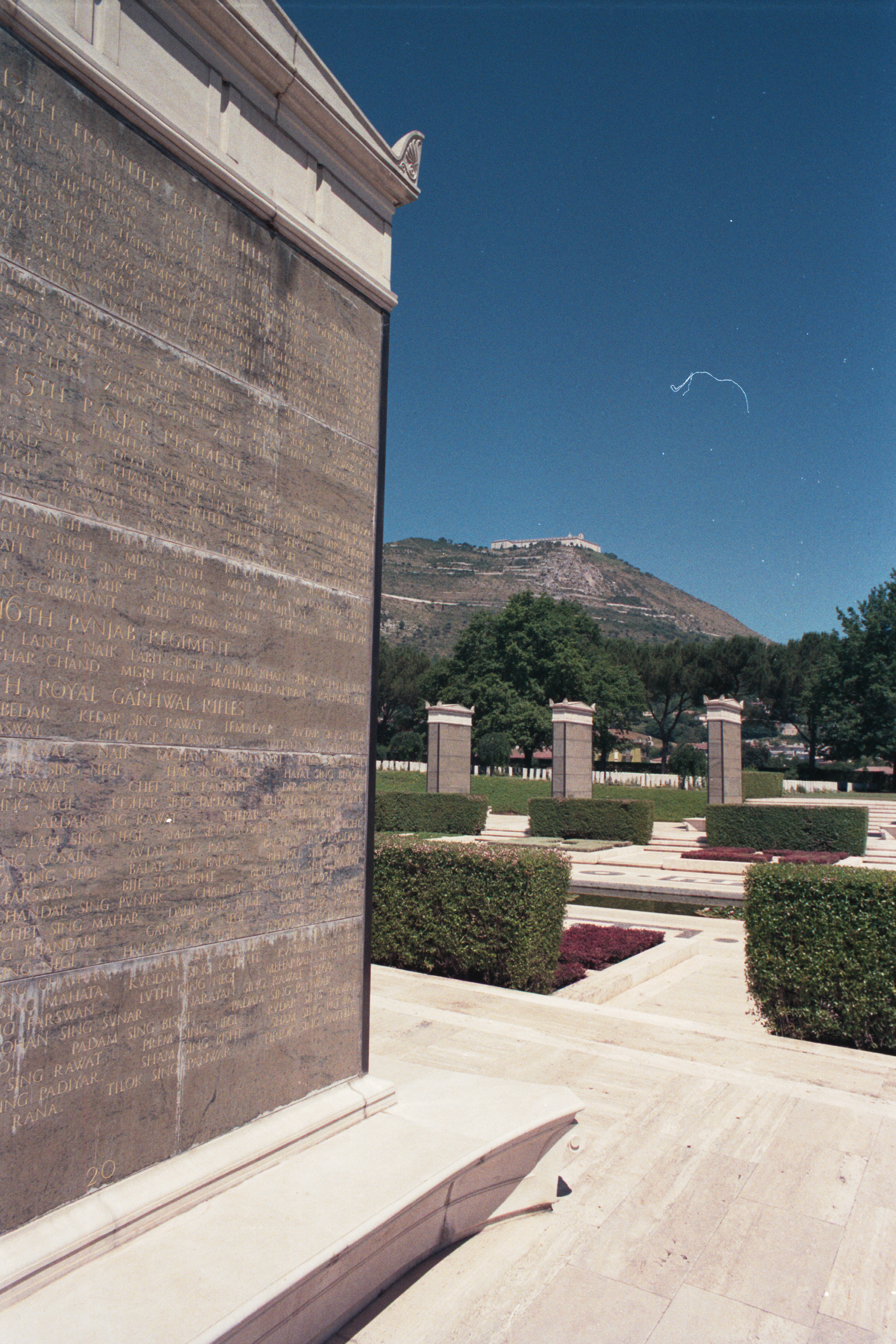
Cassino memorial with the monastery in the distance
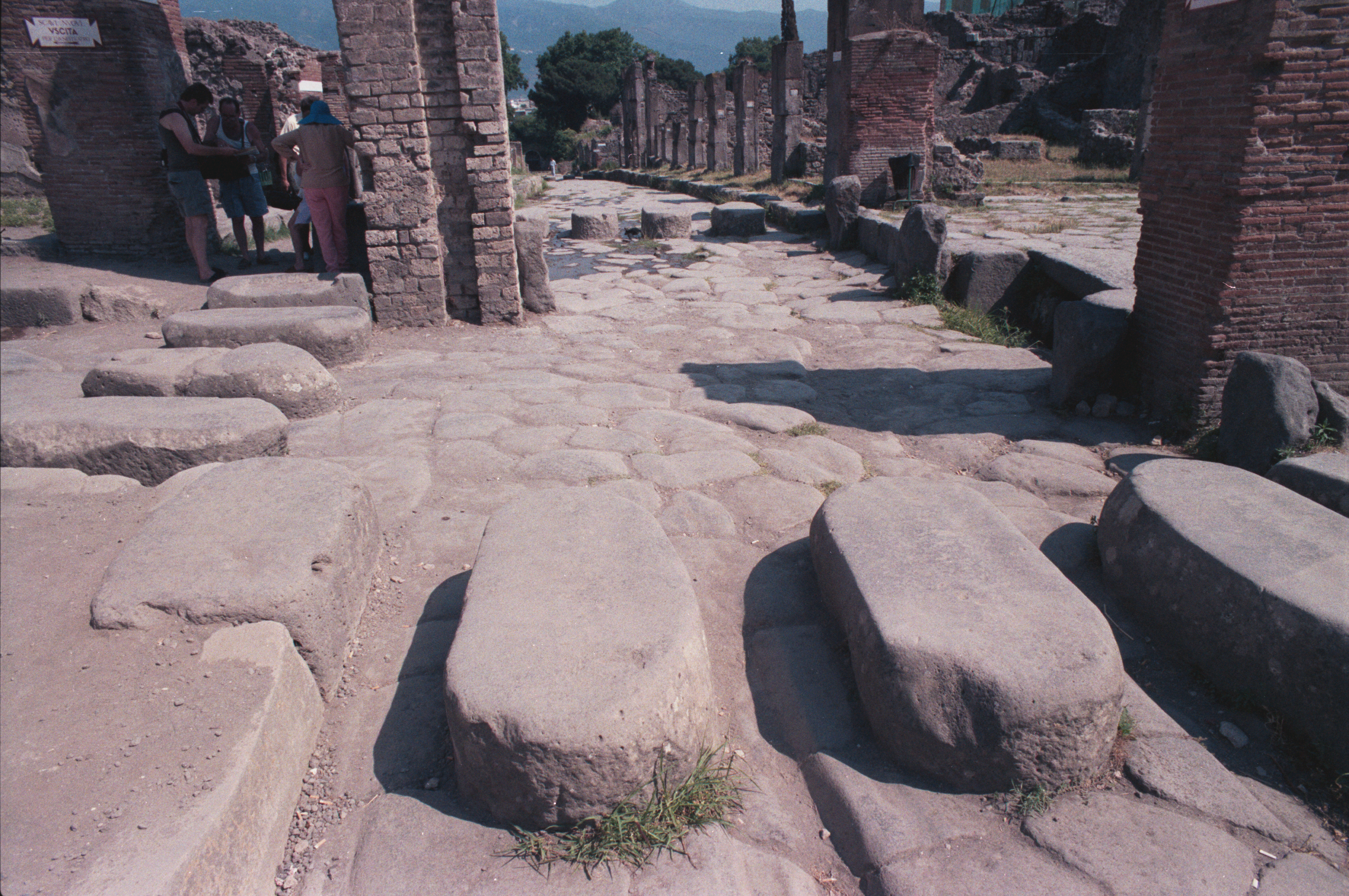
Pompeii
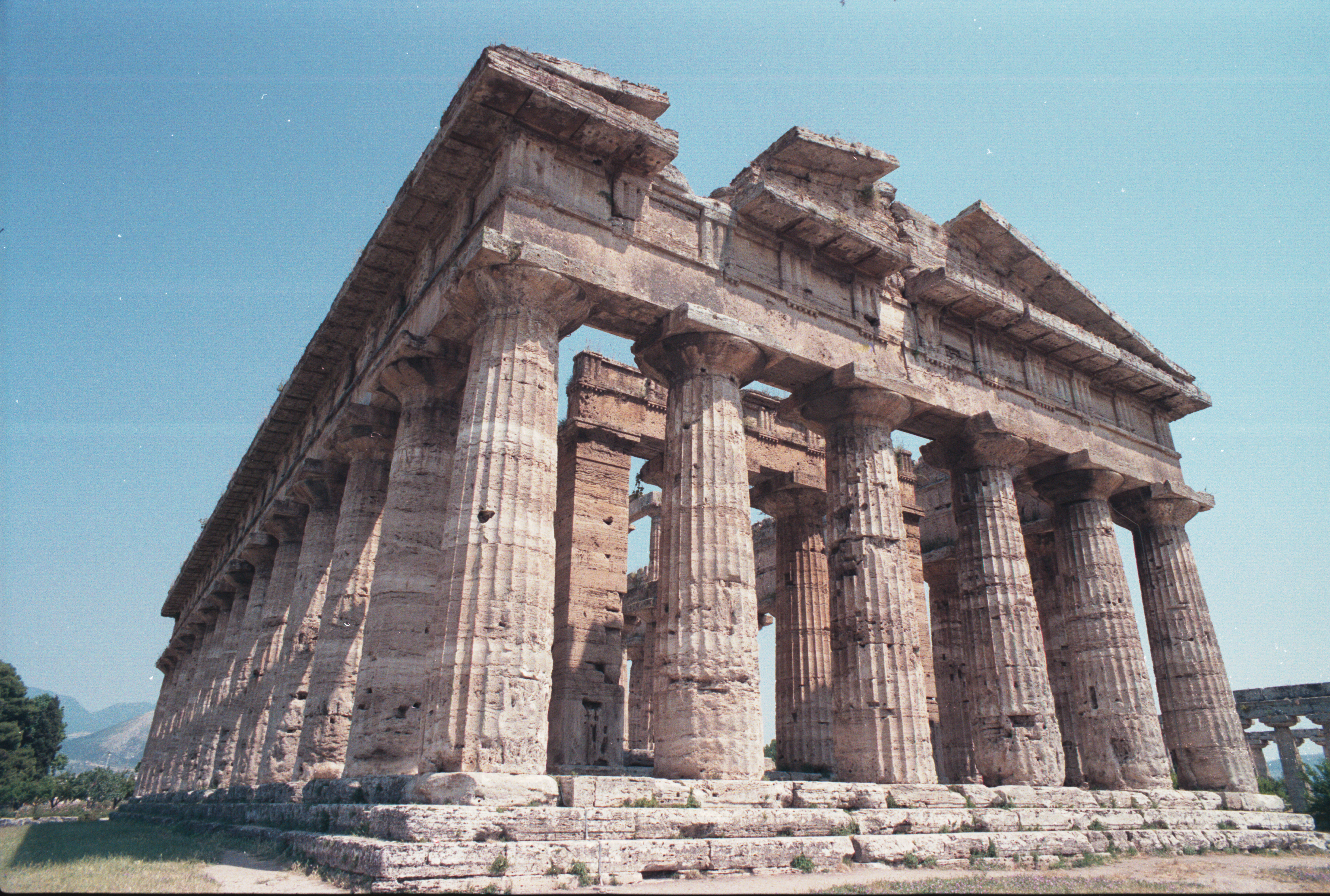
Paestum
The nine-hour voyage to Greece across the wine dark sea was beautiful and restful. I spent the whole voyage on deck watching the gulls and then I slept for a while on a bench listening to the hum of the engines. While there, I watched the people around me quite a lot, and one particular tableau stood out. I saw an Italian mother being shouted at and casually punched by her son. I wondered at the time whether this was a normal state of affairs in Italy, that sons were allowed to bully their mothers, and that mothers were not allowed to respond. It did shock me and has stuck in my mind ever since.
After a short stop at Corfu, the ferry made landfall at Igoumenista on the northwest coast of Greece, and it was so hot that I had to head straight for the beach for a swim. Then I drove Inland to Ioannina for the night. The roads in northern Greece wind through mountains and hills and are lined with little shrines to dead motorists. Once at the campsite I realised just how hot it was. I had to have three cold showers during the evening in an attempt not to overheat. I knew then that being inland in high summer in Greece was not a good idea.
In the towns there is an immediate difference noticeable between southern Italy and Greece. In Italy everything in the shops is protected behind grills and bars. You needed to ask to see anything. In Greece everything is on display in the street in front of the shop. There is definitely a friendlier more trusting atmosphere here.
My guides for this trip were The Blue Guide to Greece, The Iliad, Herodotus and Thucydides history of the Peloponnesian war. I found it far more interesting standing amongst a few broken stones in a place that was written about in the Iliad than at any large tourist trap. So, on with the journey.
Just south from Ioannina brought me to Dodona, the site of the oldest oracle in Greece and mentioned in the Iliad. It has a fabulous theatre overlooking a beautiful long valley. This is where I really started to feel at home in Greece. I loved to just wander around the ancient sites during the day and then eat something swimming in olive oil in the evening while drinking Retsina wine. For years to come it was my favourite wine with which to reminisce. It was also watermelon season, and I was able to regularly stop at roadside stalls and buy cheap fresh fruit each day.
My target from here was Delphi via Cassope, Zalonga and Kalydon. At Cassope, another Greek archaeological site, I bumped into a couple from the UK who were also doing the rounds in Greece in a camper van. I would meet them again two more times on my travels.
It was hard to imagine Delphi as the city of gold that it once was. Without my Blue Guide it was just a jumble of stones. It is said that it was from here that the four horses which I saw at St. Marks in Venice originated. They were plundered by the Romans and set up in Constantinople before the Venetians took them in 1204. Delphi was the location of the most famous oracle and is mentioned everywhere in the Greek histories and Homer. The local campsite had a fabulous swimming pool which I spent the whole evening wallowing in while admiring the view across the olive groves in the valley below.
My route then took me to Orchomenos, Heronia and then Gla, which was an unexpected gem. It was once a fortified island in the middle of a shallow sea and is also named in the Iliad as a city that provided many warriors for the Trojan War. The sea was drained in antiquity but Gla itself is still an evocative place with its cyclopean walls, and the fact that I was the only person there. I decided to leave visiting Athens until after I had been through the Peloponnese, so I drove via Eleusis and the Corinth canal onto the Peloponnese and to Corinth itself, where I stayed overnight and visited the ruins.
Close to Corinth, the cities of Mycenae and Tiryns were already ruins in the Greek classical period. Even in 500BC they were regarded as belonging to an ancient time when gods walked the earth. Mycenae has all the romance of the Iliad because this is the realm of Agamemnon, but Tiryns is impressive in its own way since it has the most complete and gigantic pre-classical walls I saw on the trip.
From Tiryns it was south and then to the West coast. This took in Nauplia, Argos, Githio and Sparta. The Spartans did not build in stone. All their buildings were in wood, so very little remains except for the theatre.
At that time I did not know much about the Byzantine period of history, so any sites from that period were not high on my visit list, but the blue guide recommended a well-preserved Byzantine town called Mystras. It looked like many other Greek towns in the mountain areas that had been abandoned recently, not a thousand years ago. Two highlights saved the visit for me. The first was when I sat down for a rest in the sun and noticed a loose stone on the side of some steps with something behind it. I moved the stone and was confronted with a complete human skull and bones packed into the space under the steps. For a moment I contemplated taking the skull as a souvenir, but quickly changed my mind. The second event happened soon after when by chance I saw a small spider on the edge of a hole. The hole had a trapdoor, so this was a trapdoor spider. Suddenly a black wasp appeared, and a battle started between the spider and the wasp. I watched the contest and was rooting for the spider but in less than a minute the wasp prevailed, and he gathered up the spider and flew off. It was sad to then look down on the beautiful home with its precision trapdoor crafted by the now recently dead spider.
Very close to Pylos on the coast is the remains of a Mycenaean palace which is said to be Nestor's palace. Nestor was a King who helped Ulysses' Son Telemachus to find his father. There is even a terracotta bath here very much like the one written about in the Iliad. From Pylos, up the coast to Olympia, home of the Olympic Games. The site was full of people looking for the place where the Olympic torch is lit, and then running up and down the track in the stadium. There is a very worthwhile museum here. I also bumped into the couple in the camper van again in the local camp site. Also, while in the camp site I was sitting in my van when it shook a bit. I thought it was some kids who were playing outside but when I stuck my head out there was nobody nearby. It was only when I talked to the couple later that evening that they said, "Did you feel the earthquake?" that I realised why the van shook. My first earthquake.
After spending a glorious week on the beach, I set my sights on Athens. I spent 6 days there doing everything. Athens is a hot and dirty city but has amazing charm and the most evocative ruins. The Acropolis and its museum are a must.
I met two interesting people in the Athens camp site. The first was an ex-army guy from the UK who lived in Thailand. He had come to Greece, bought a camper van and was bumming around. The second was a retired Woman from America who was on her fourth trip to Europe, where she spent most of her time in Greece. What she did was to fly to Germany where she bought a new camper van, she then drove it around for six months, after which she could import it into the USA tax free and resell it at a profit, which paid for the whole trip. She was with a Greek friend of hers, and the friend invited us all up to her house in the mountains somewhere in Attica. We had a very pleasant afternoon eating food and drinking Retsina on the patio high above the heat of the city. Her friend had connections to the Junta of Colonels who staged a coup against the Greek government in 1967. She told us stories of those times, and there were photos of men in military uniforms all around the house.
Back at the campsite I learnt that the army guy was trying to sell his van and go home to Thailand and was having no luck. He had also run out of money, so that was my cue to move on.
I found out in the camp site that I needed to get through Yugoslavia before the Turkish workers rush back to Germany in a few weeks after their holidays or wait another month. Consequently, I set off from Athens after 6 days in order to time my arrival to miss the clogged-up border posts into Austria. I headed east along the coast road to the temple of Poseidon at Sounion where Byron carved his name (amongst many others). The temple here was where, according to legend, Jason placed his ship, the Argo, as an offering after his successful voyage to get the Golden Fleece. From Sounion it was on to Marathon and Amphiaraion, which was a spectacular little site with a cosy little theatre. Then Eritrea, Thebes, Thermopylae, and a stop at a beach where I saw sea horses in the sea grass just on my diving depth limit.
From the coast I headed inland to Meteora, the 'Monasteries in the sky'. One of the James Bond movies had a scene filmed here. It was spectacular but quite hot and touristy.
On the way back to the coast I stopped at Vergina. This was the capitol of Alexanders Greece. It was here that Phillip, Alexanders' fathers' tomb was discovered. Most of the finds from here were displayed in the museum at Thesaloniki, my next stop.
Following Thucydides descriptions of the Peloponnesian war, I visited Mount Athos and the canal that King Xerxes built across the Isthmus. It is still just visible but now well above sea level due to the number of earthquakes raising the land in the 2,500 years since it was built.
Greece has been the highlight of the whole trip, maybe it was the purpose of the whole trip. I think in comparison, from now on, everything else had a lot to live up to.
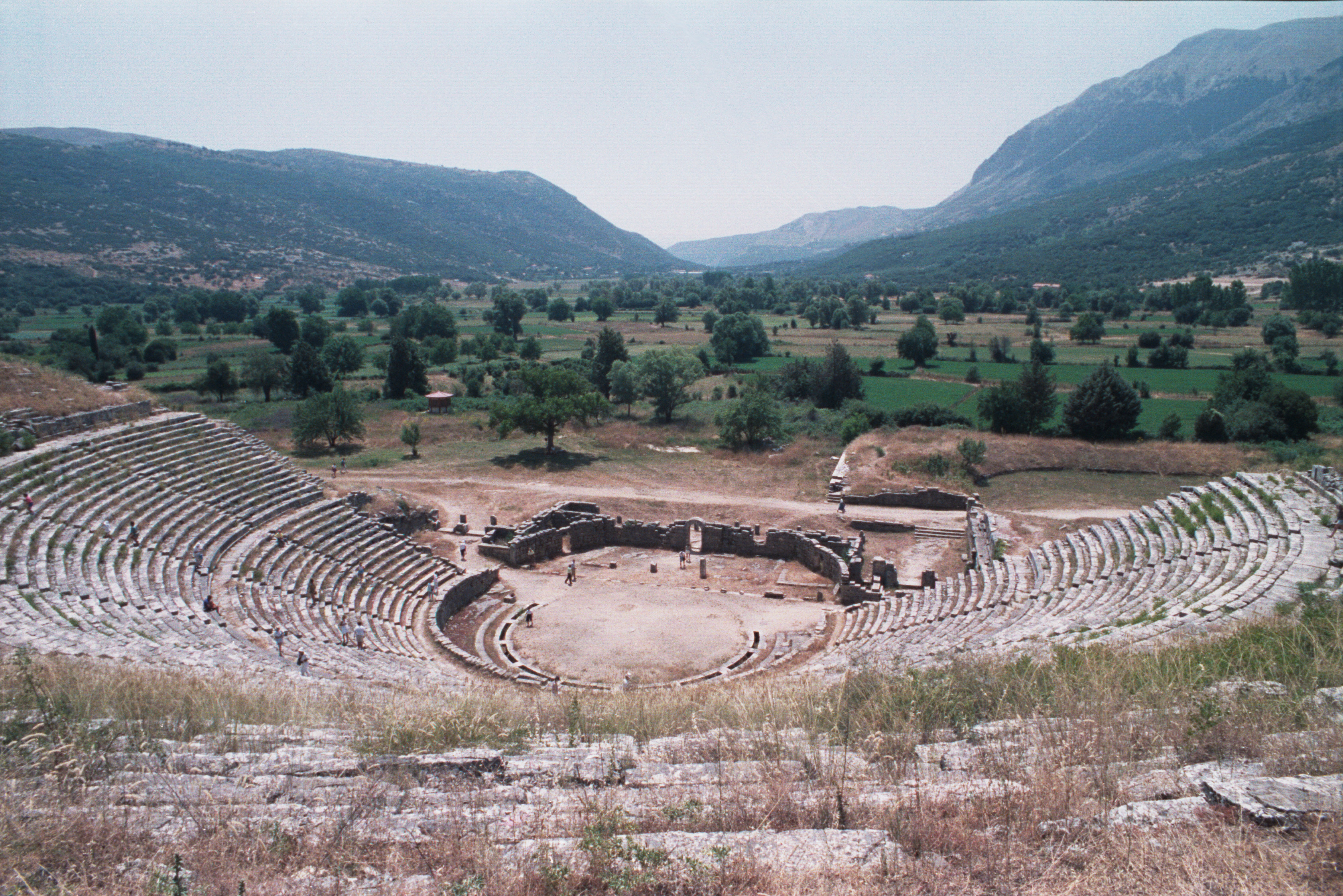
The theatre at Dodona
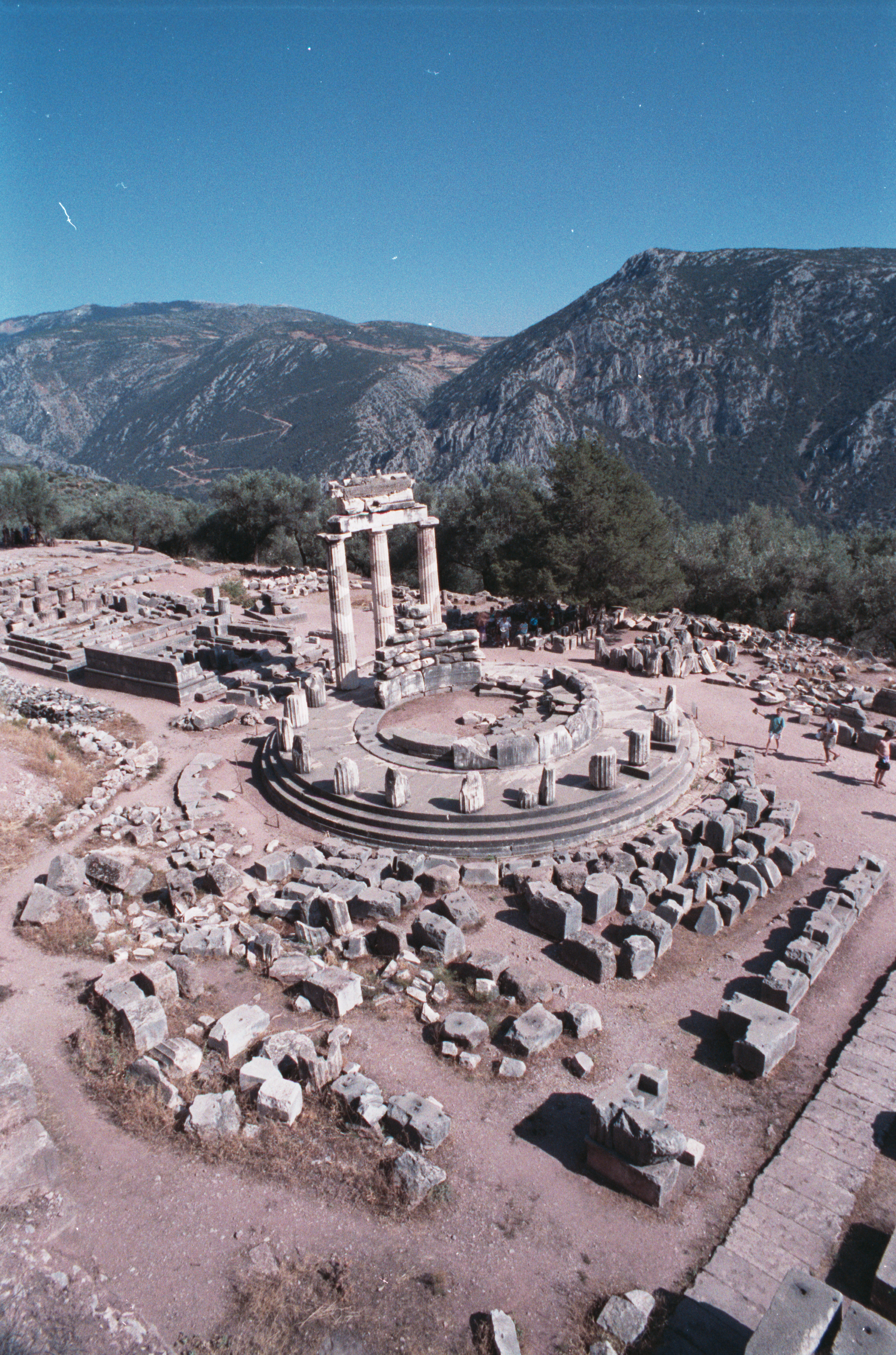
Delphi
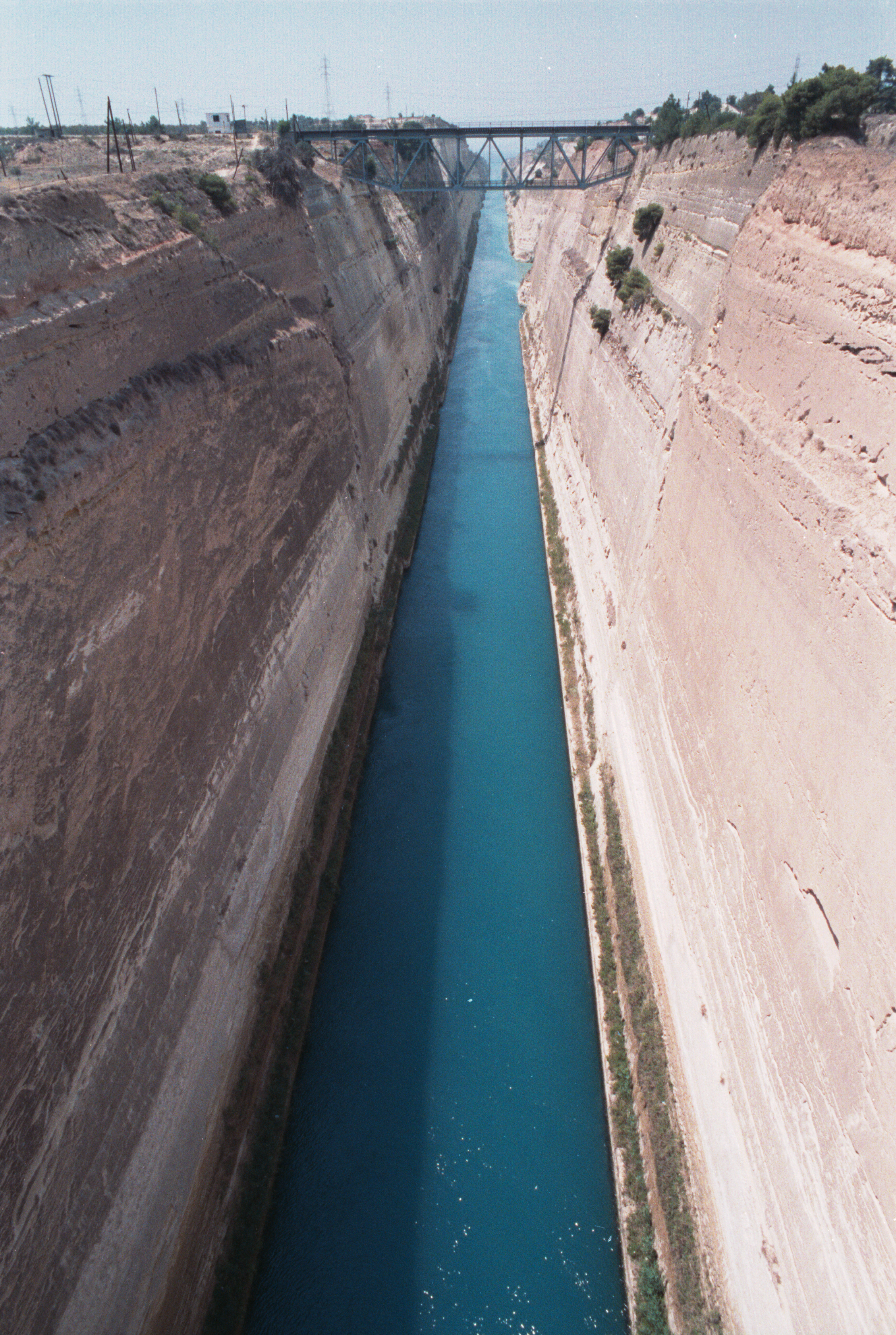
Corinth
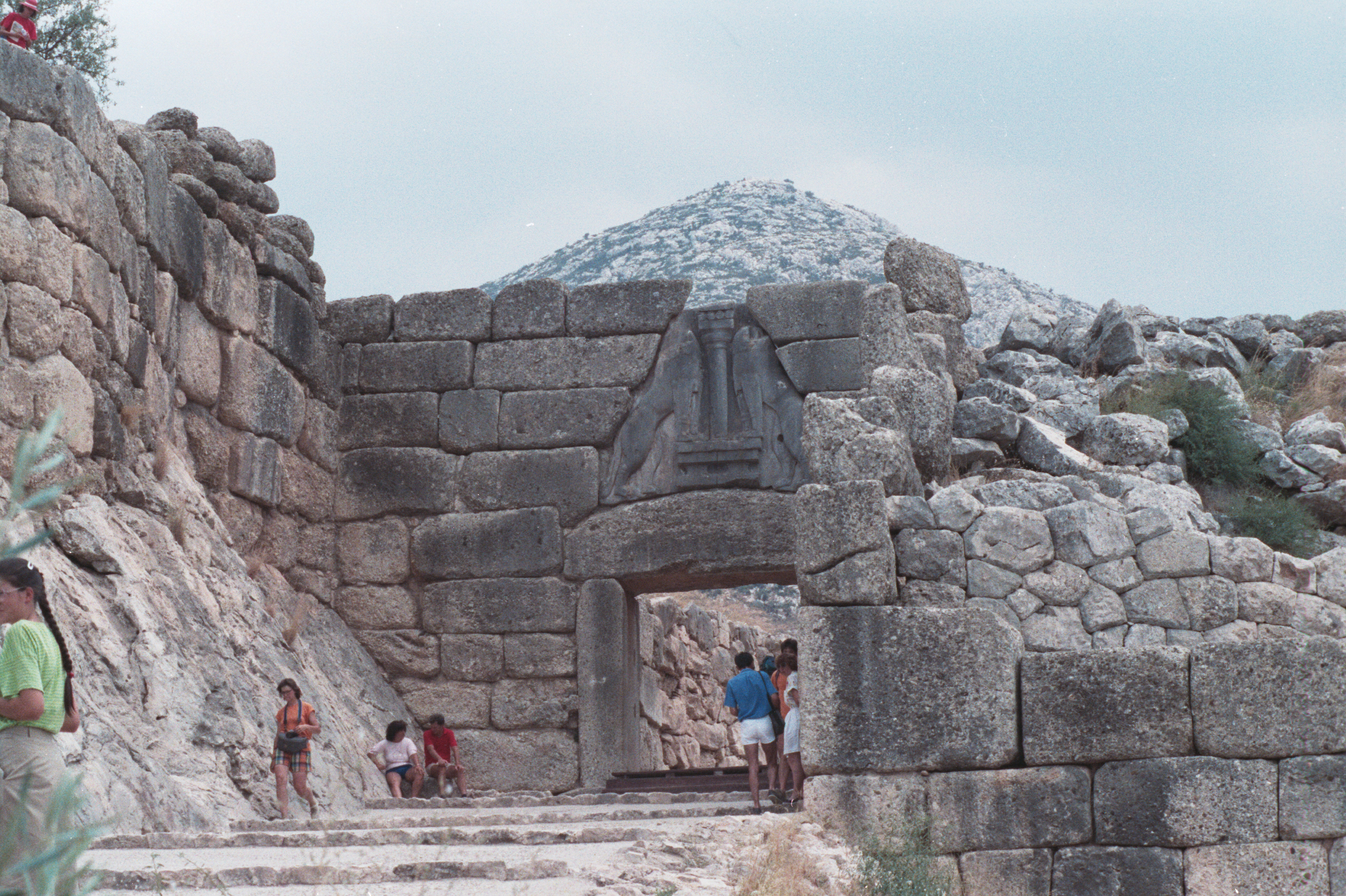
The lion gate at Mycenae
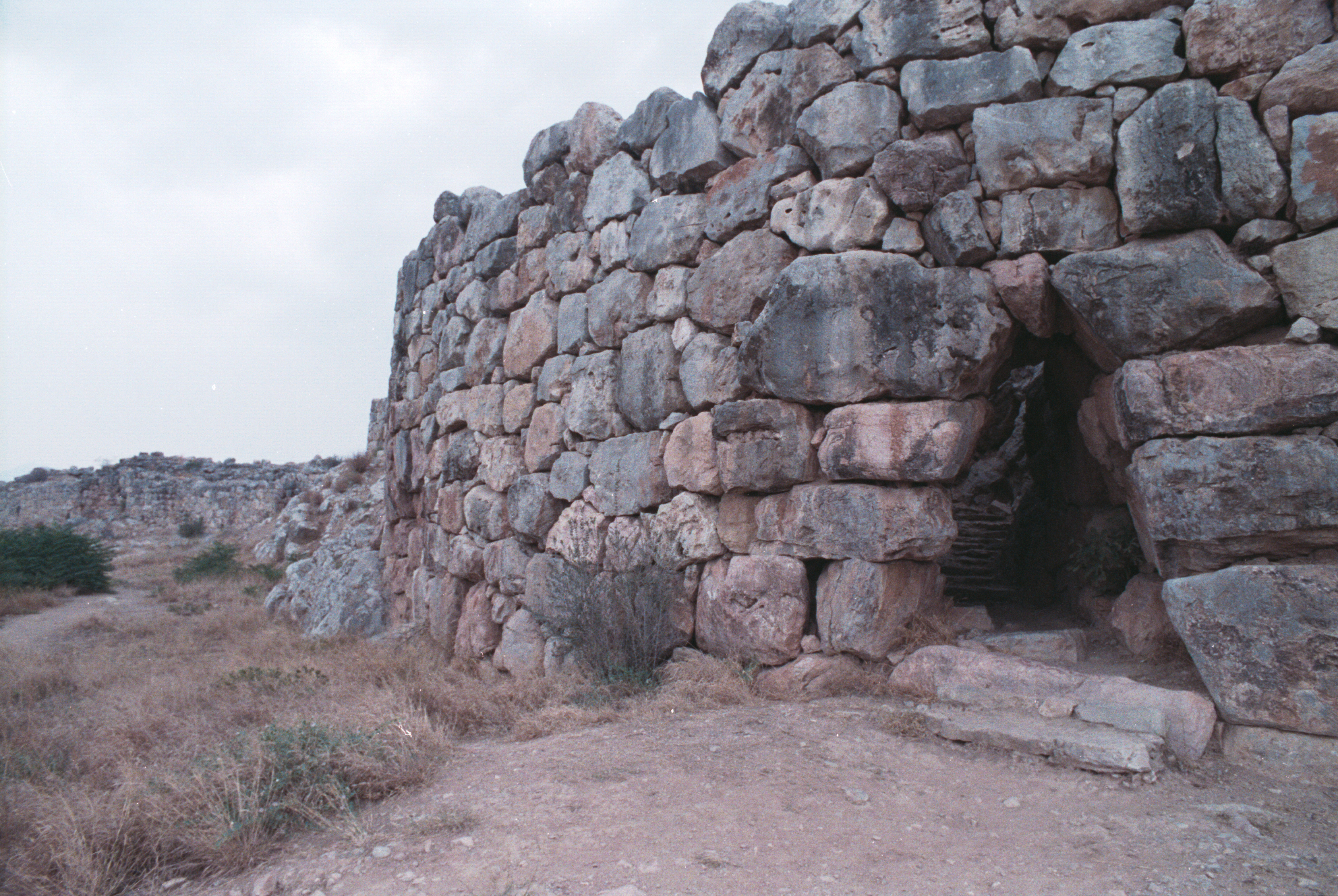
The walls at Tiryns
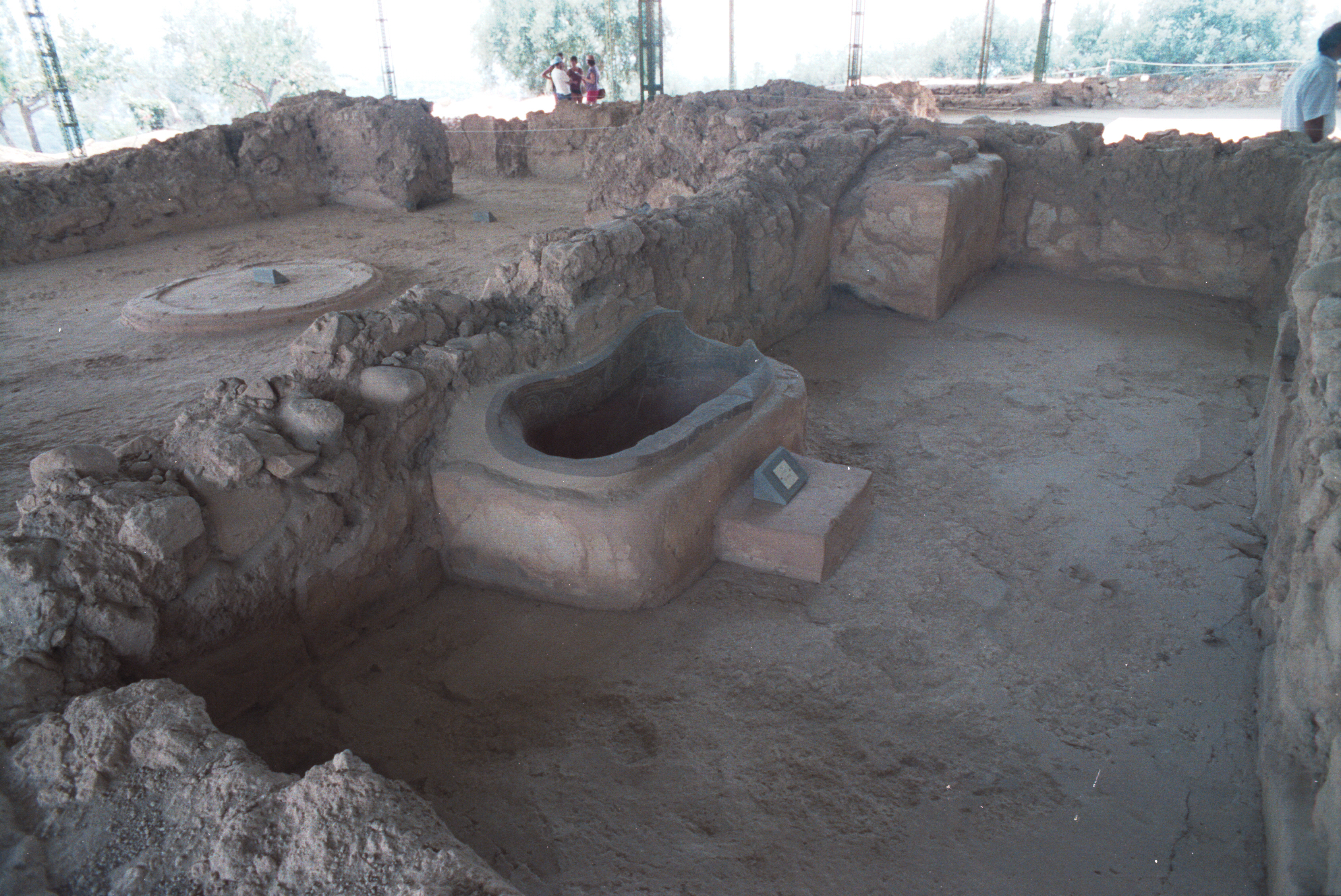
The bath at Pylos
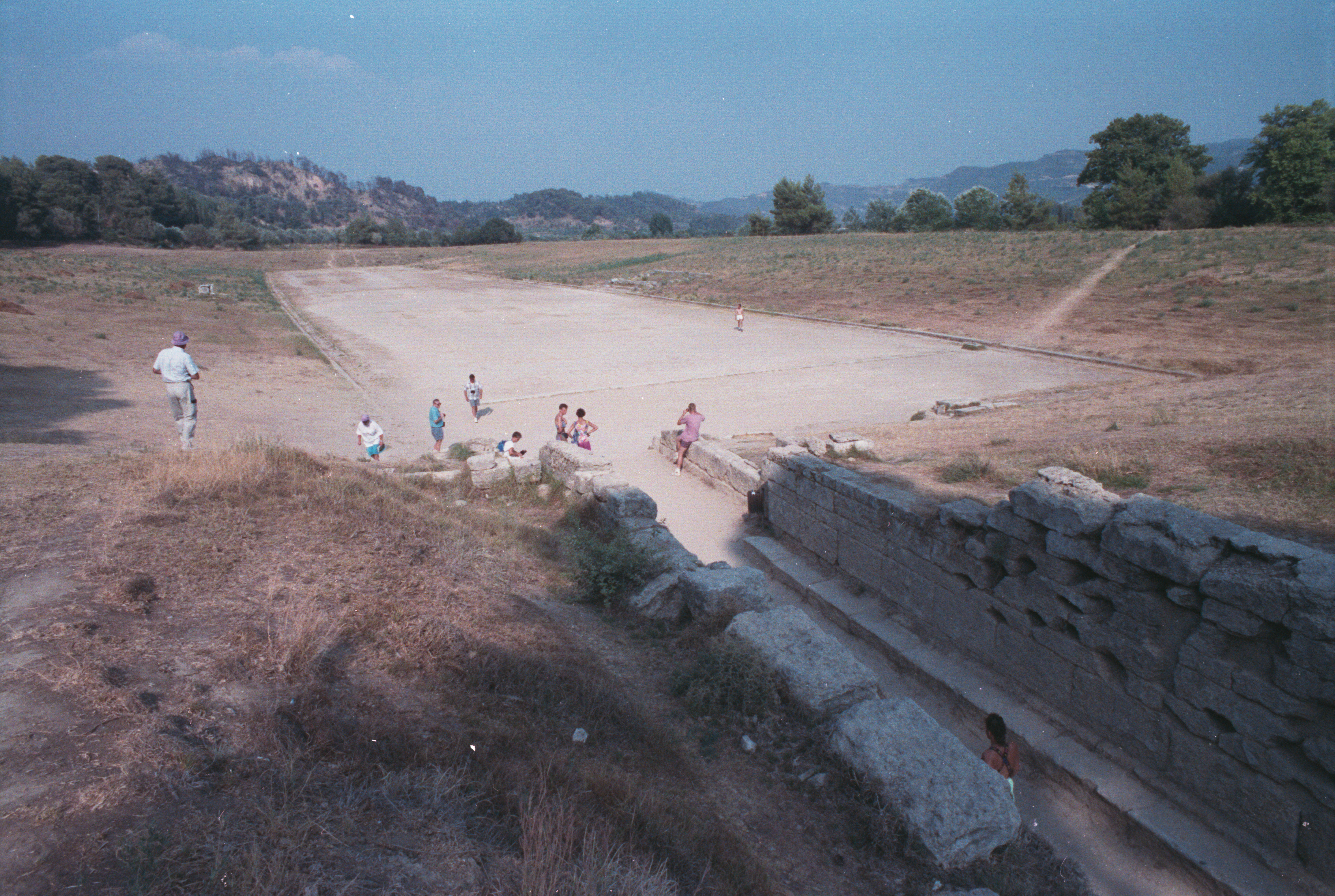
The original running track at Olympia
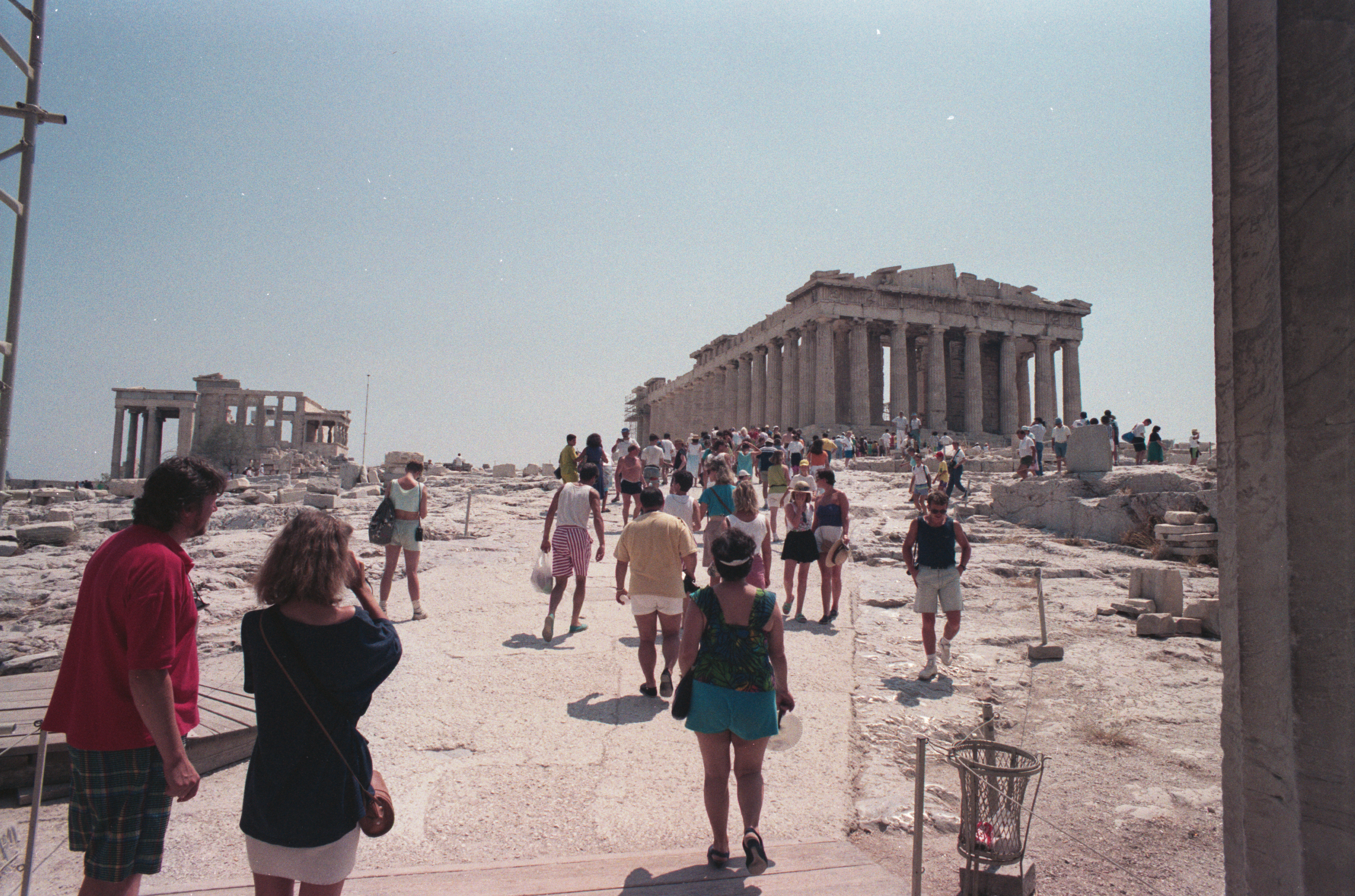
The Acropolis in Athens
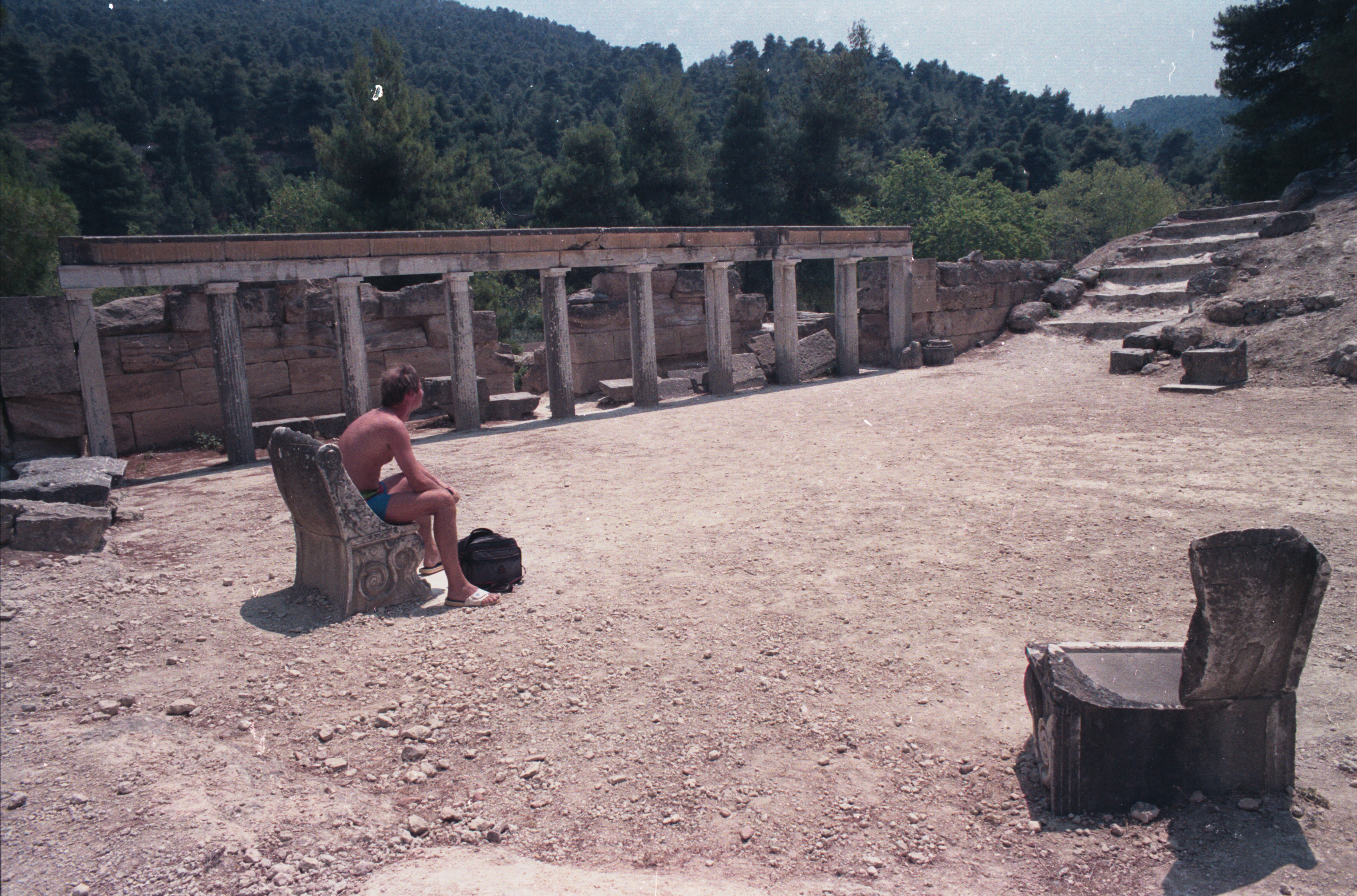
Me at the small site of Amphiaraion
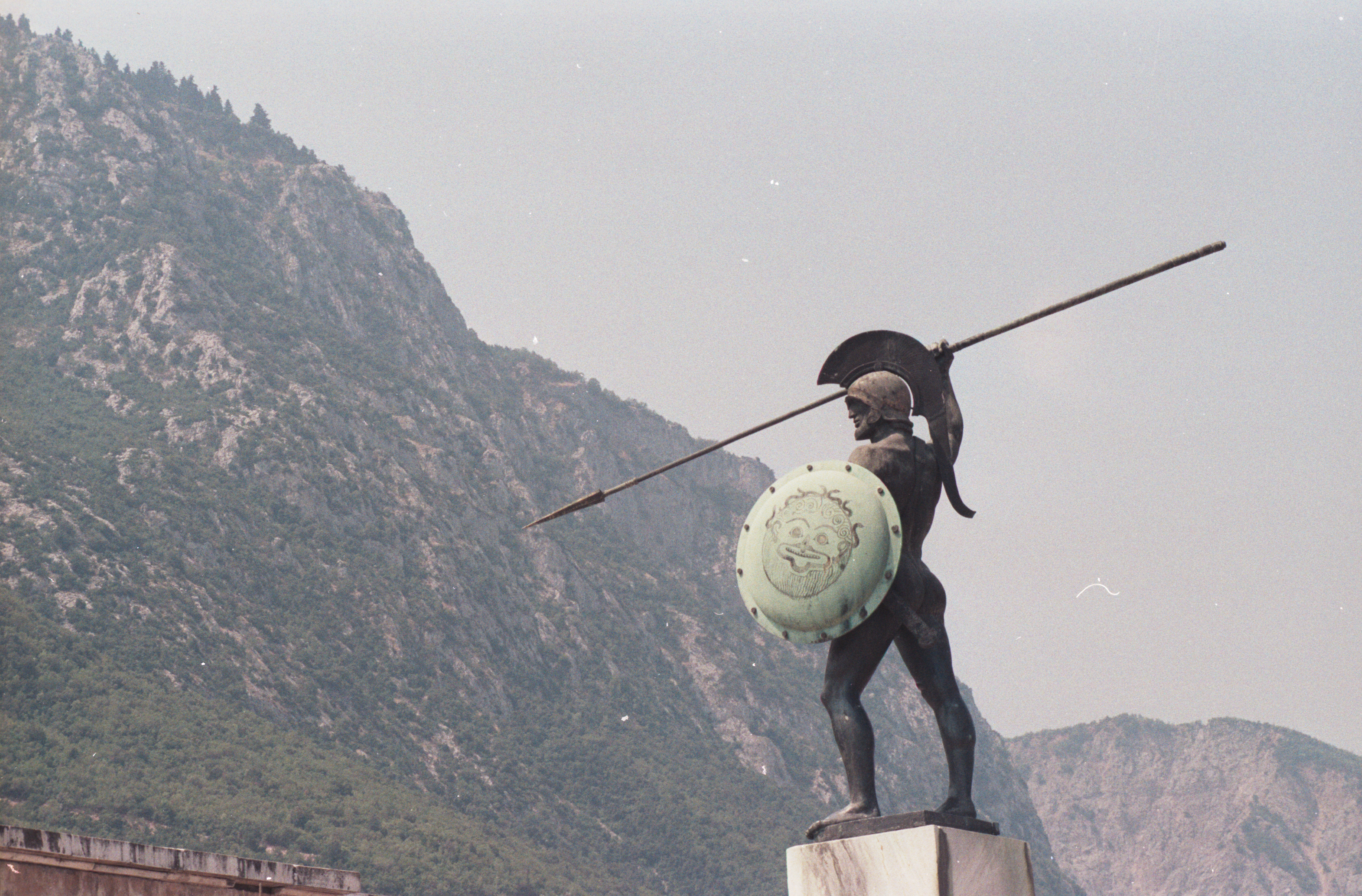
Statue of Leonidas at Thermopylae
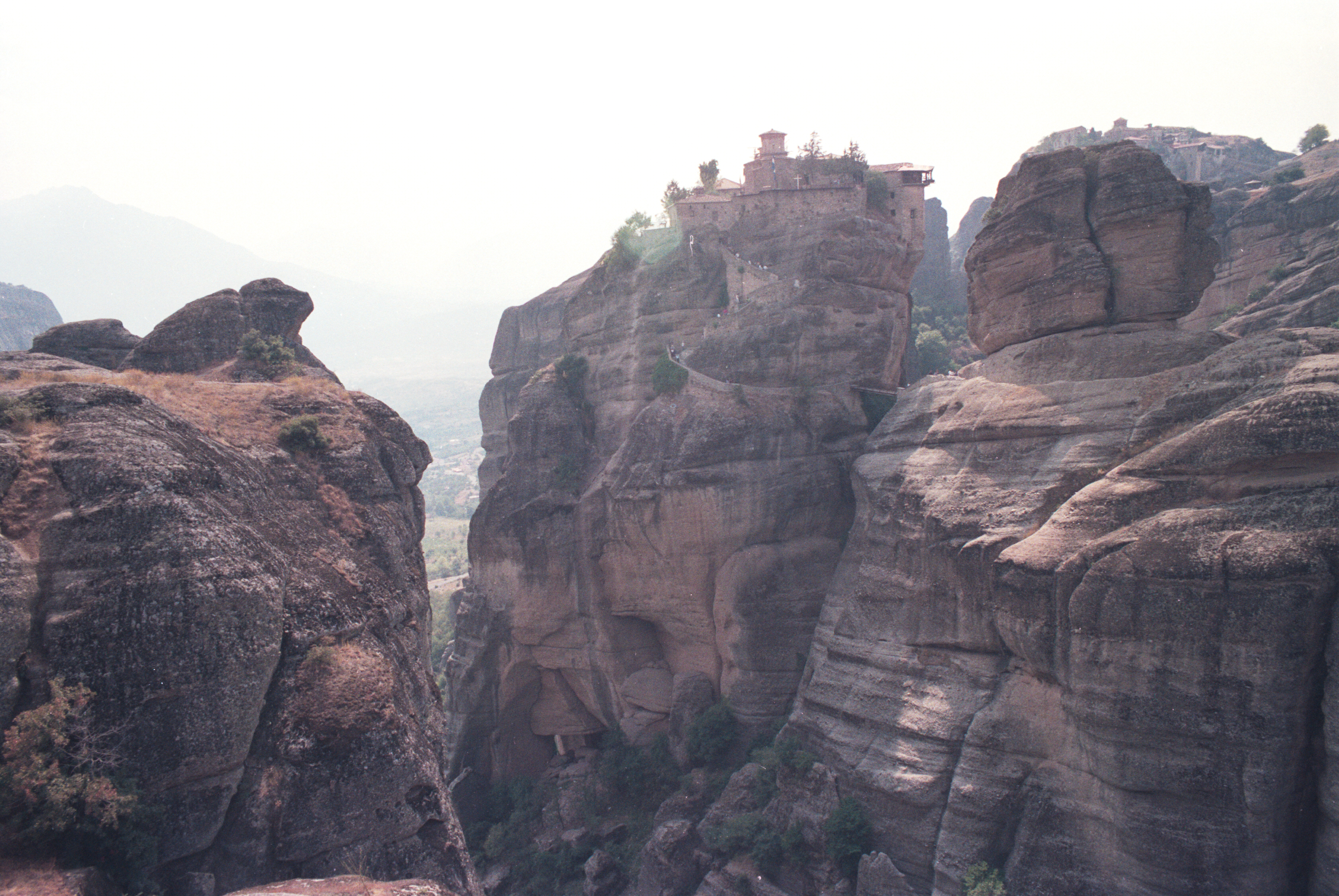
The Monasteries in the sky at Meteora
This was Yugoslavia's final year. After 1990 the civil wars began. My memories of this country are of children throwing stones at cars. Germans everywhere on the coast and the water getting colder and colder the further north I went. The rain also returned in the form of spectacular thunderstorms.
My route was via Skopje, Titograd, Dubrovnik, Split and Zagreb. I did not hang around here for long due to the imminent Turkish workers invasion, and the bad stories I had been told about the attitude of the people here, which I found to be true. They really were the most surly and unfriendly lot.
I had one interesting stop which was after the longest driving day of the whole trip. I drove From Greece to Skopje than over the top of Albania, which at the time was still a closed communist state and looked to find a camp site on the coast. I stopped at the first site and payed my money at the gate. I then realised I was somewhere special because nobody in the campsite was wearing clothes. I found a spot then proceeded to take in the sights. A particular feature was the shower block which was raised above the ground and open on one side. It was like a stage where people performed for the audience in the campsite below. Amongst the activities on show was badminton, hacky-sack, and gymnastics. I could not believe the exhibitionism on display. I could not strip off myself because my suntan, which was the best I had in my entire life, stopped where my speedos started, whereas everyone else there had full body tans. I spent most of that evening in the van looking out.
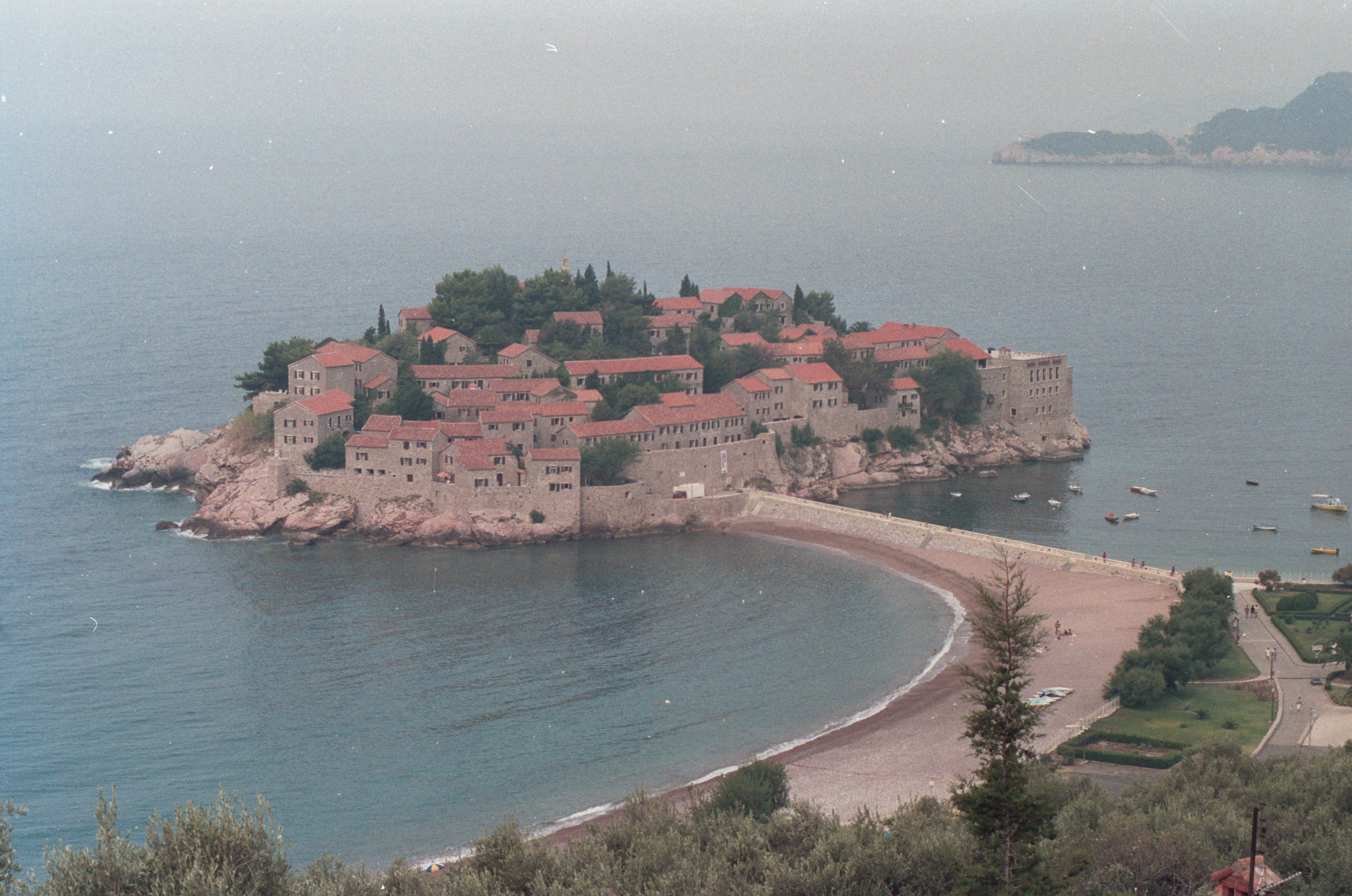
Yugoslavia
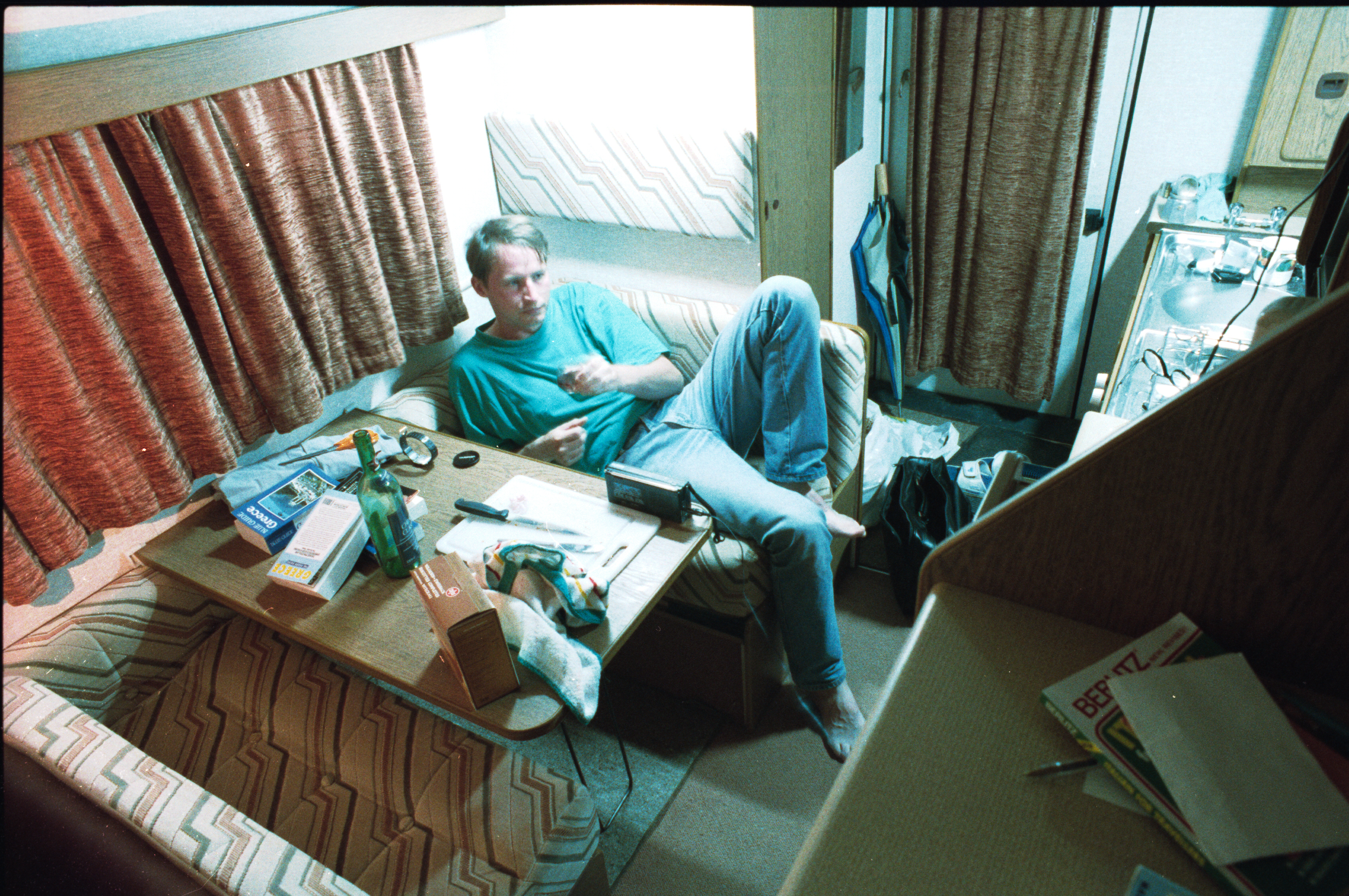
Me in the van
There was only a short delay at the border into Austria so I must have got my timings right. After a short stop in Graz, it was on to Vienna where I could not get The Third Man out of my head. I visited the Ferris wheel, and the cemetery featured in the film. Also in the cemeteries are the memorials to Beethoven, Mozart, Strauss, and other great composers.
In the camp site I met a few people going in the opposite direction and managed to exchange my tens of thousands of Yugoslavian Lira for Austrian marks. I had a good evening talking and drinking with my fellow travellers, of which there were now many more than when I started. I only actually spent one day sightseeing in Vienna since it took over an hour to get from the campsite to the centre that I had lost the motivation.
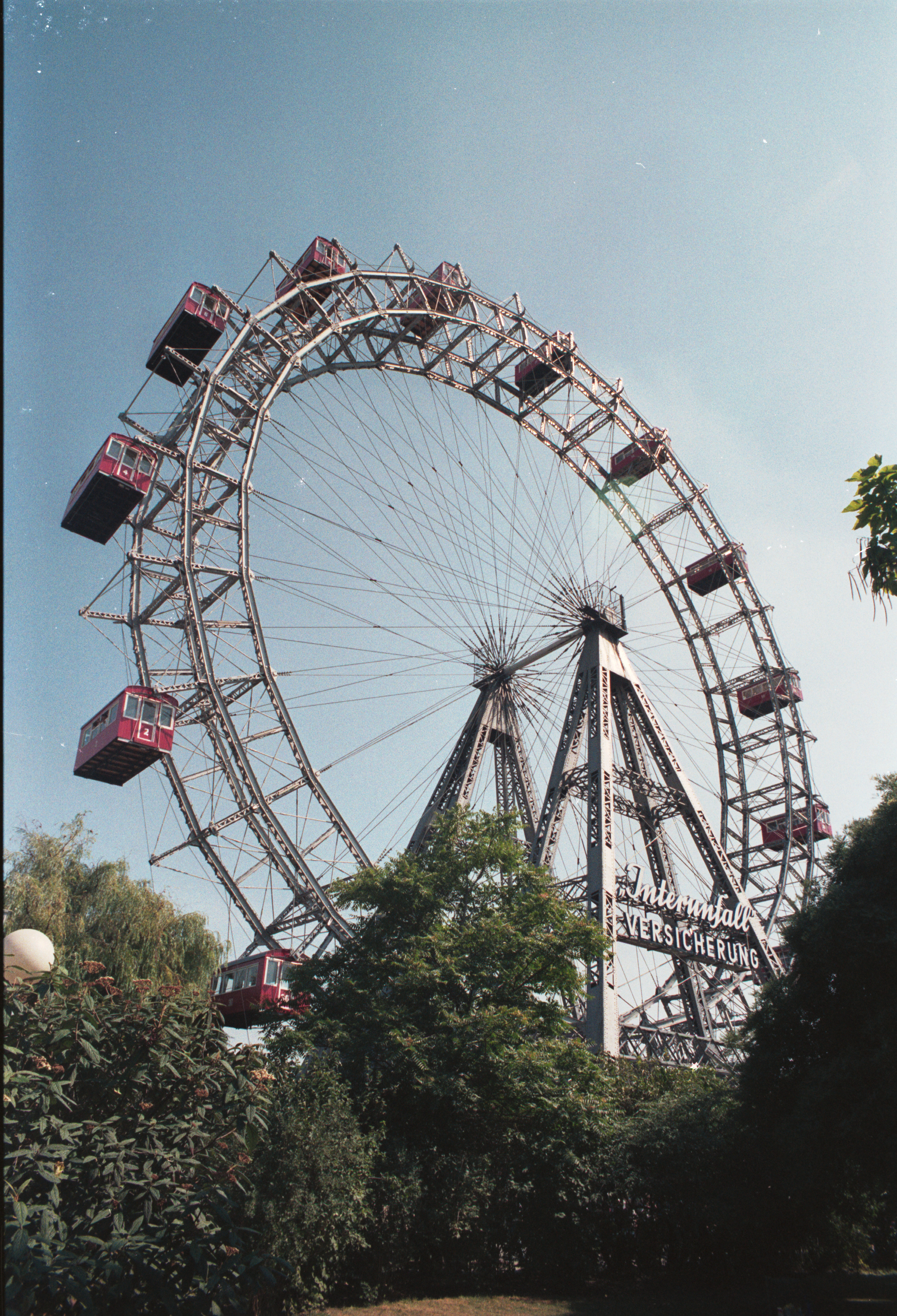
The ferris wheel from The Third Man
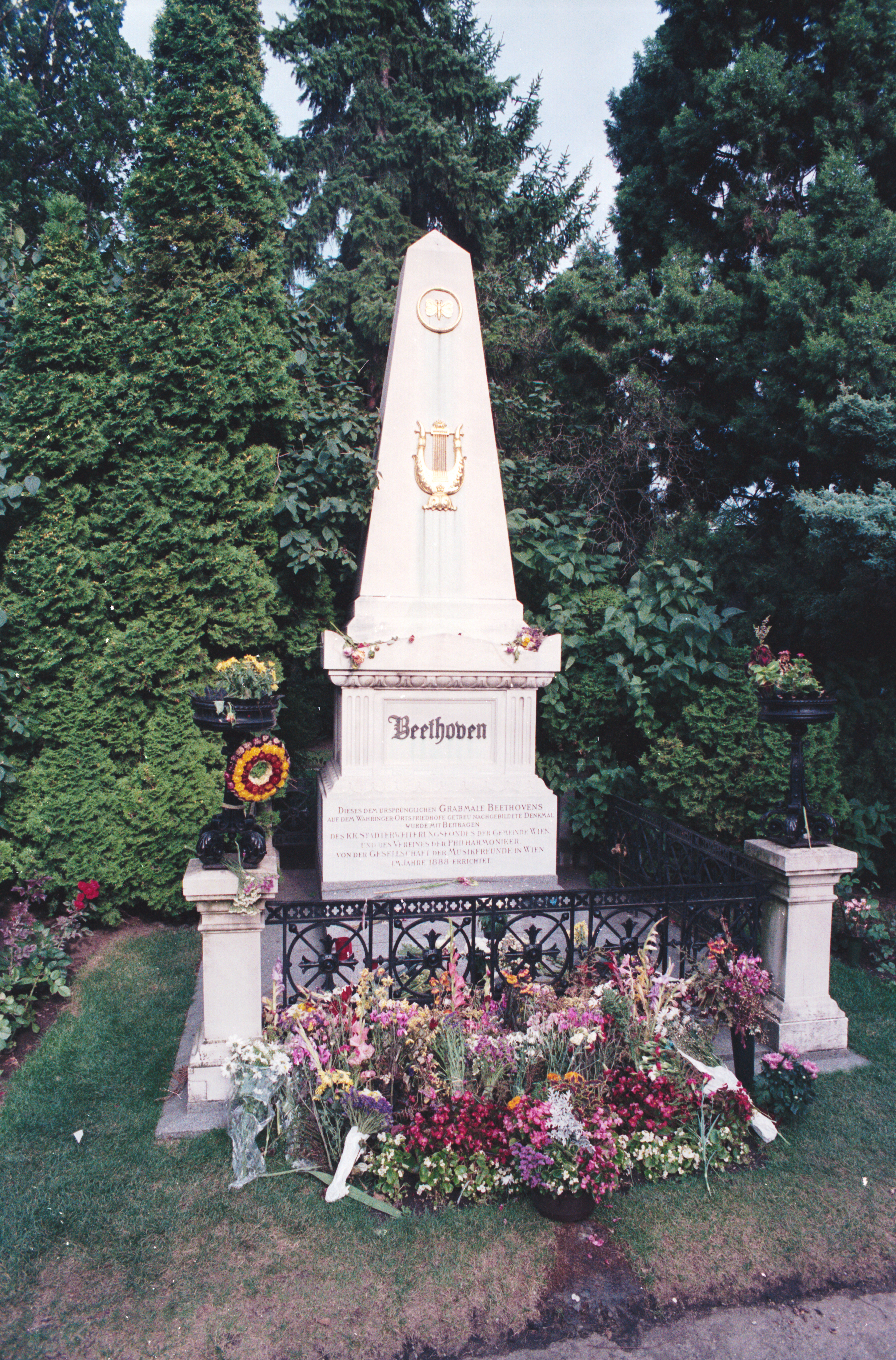
Beethovens tomb
My only stop in Czechoslovakia was Prague. It was really hard to buy anything here because the country was still effectively governed by communists. I had to bribe a garage attendant with Dollars to get enough petrol to get the hell out of the place. Anyway, Prague was actually a bit amazing, nothing had changed since the 70's I am sure, and most of it since the 18th Century.
On the way out of Prague I was stopped by the police who searched the van and asked what I had bought with the money I had to exchange. They did not like people leaving the country with very much of their currency, so I had to produce a small painting I had bought, and some sweets and food to prove that I had spent the required amount of money.
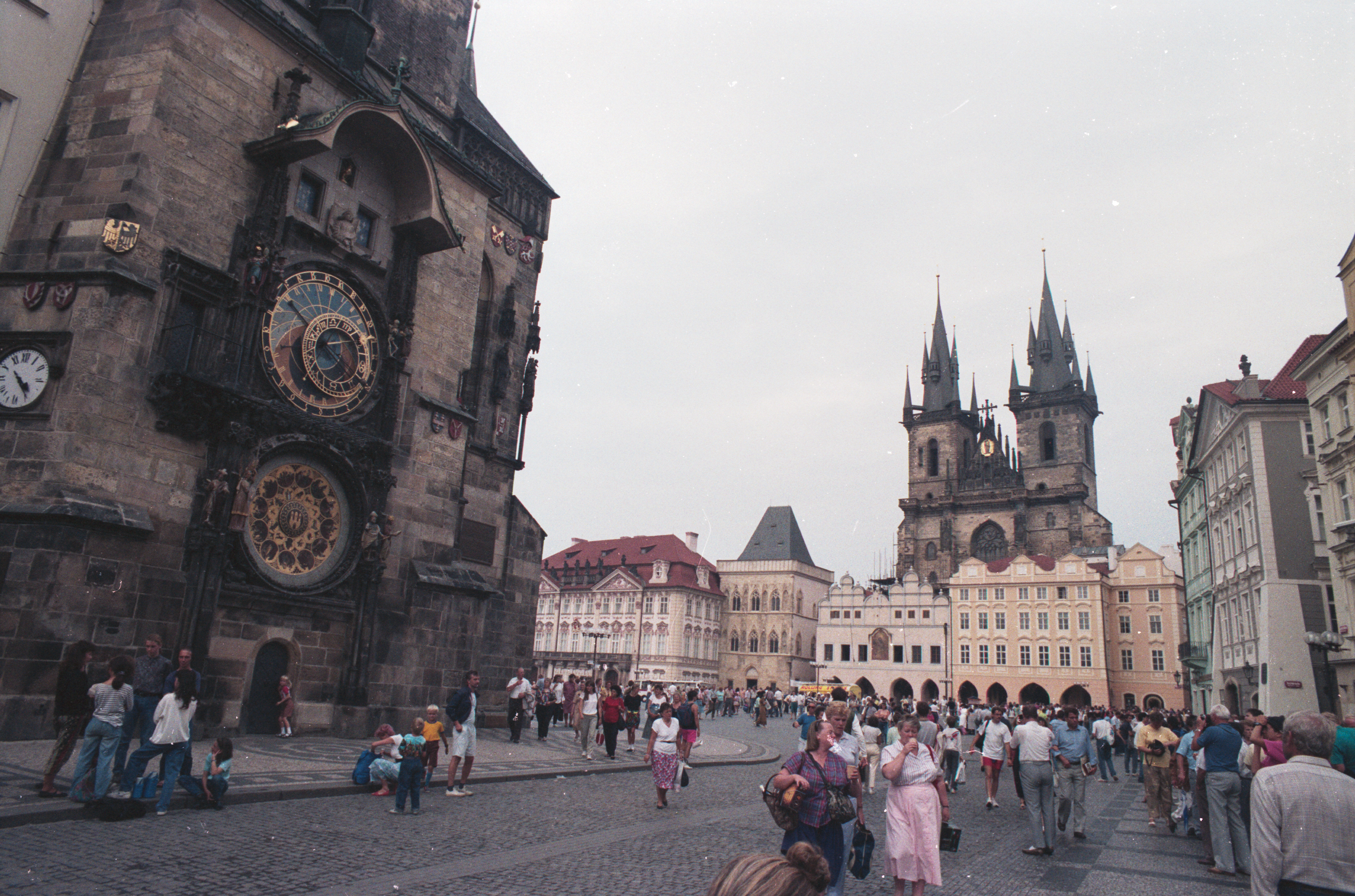
Prague
The East Germans had only just united with the West in 1990. From the border I travelled across country to Dresden then Berlin. Everywhere I drove through the countryside people stopped and looked up at this strange Bedford van from England. I am sure that the novelty of that type of event has worn off by now.
Dresden looked like Coventry. All decrepit 60's houses and shops. Both these cities were flattened in the last war and built up again using the same communist architecture.
When I got to Berlin, I parked the van and wondered around the centre. It was quite exciting to chip off my own bit of the Berlin wall. I explored at great length around East Berlin but did not bother at all with the West. Everywhere there were reminders of the recent past, wire, towers and the wall. Near the wall in the east there were the large soviet statement buildings, but a bit further away were the dismal apartment blocks that communism always seemed to produce. They also made quite an effort to re-use the pre-war buildings where possible, anywhere that the buildings had been damaged by bombs or bullets had been patched up with little square blocks of stone inlaid into the wall.
I spent a night in an East German camp site near Berlin. It was an excellent site with a restaurant, swimming pool and a hall for putting on shows. It seems that they put quite a bit of effort into these sites because holidays abroad were a luxury for the elites in the old east. Again, I got quite a lot of attention because of the van.
Finally, while on the main road from Berlin to the west, I cruised past the vast abandoned border check-post where not long before had been a busy and scary place but was now just a curiosity for tourists.
I was now in Northern Europe, so the weather was cold, and I was ready for home. After exploring the old east-west border down to a town called Seesen, I scooted through the rest of West Germany and back into France for the last time.
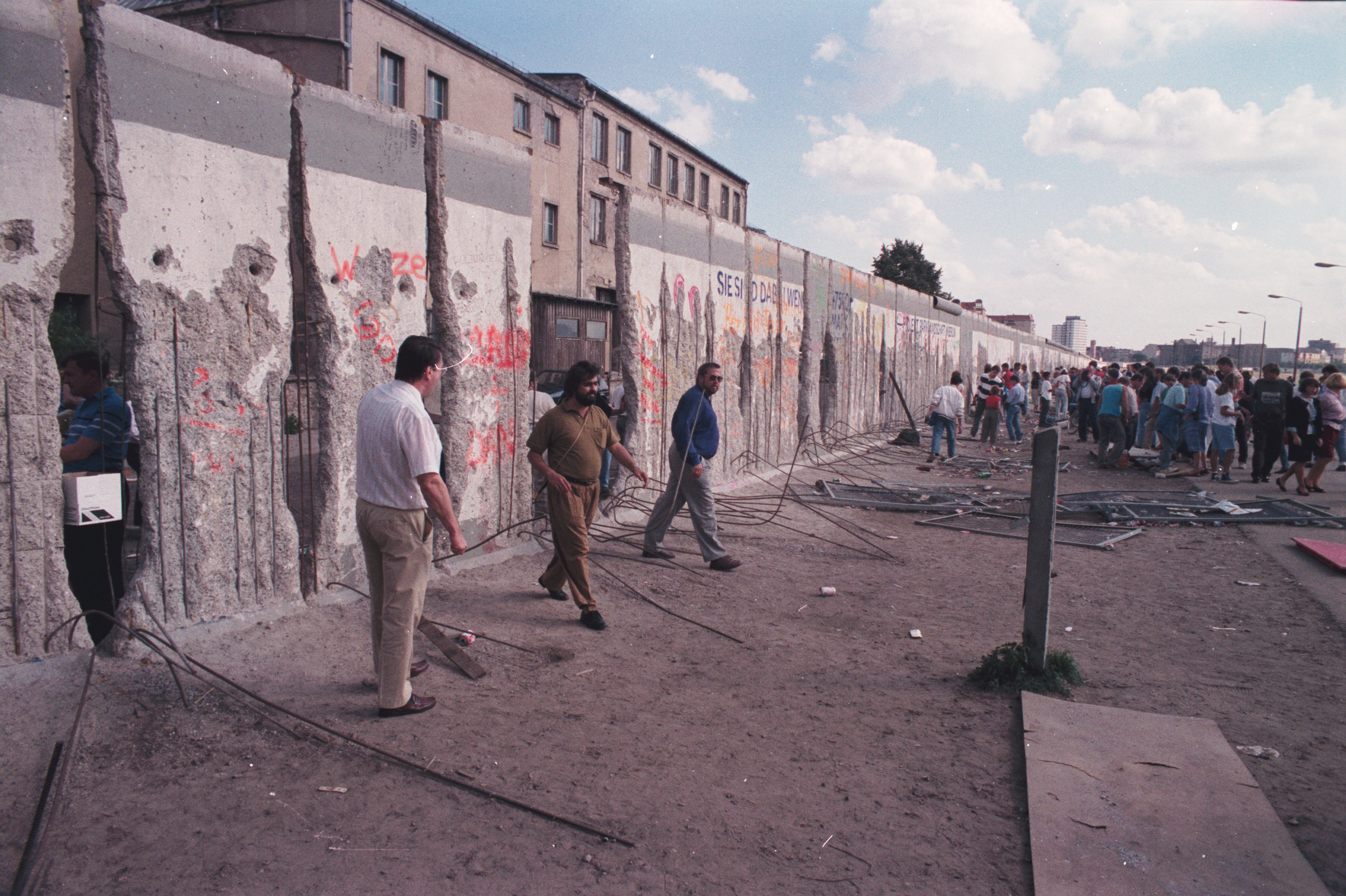
The Berlin wall
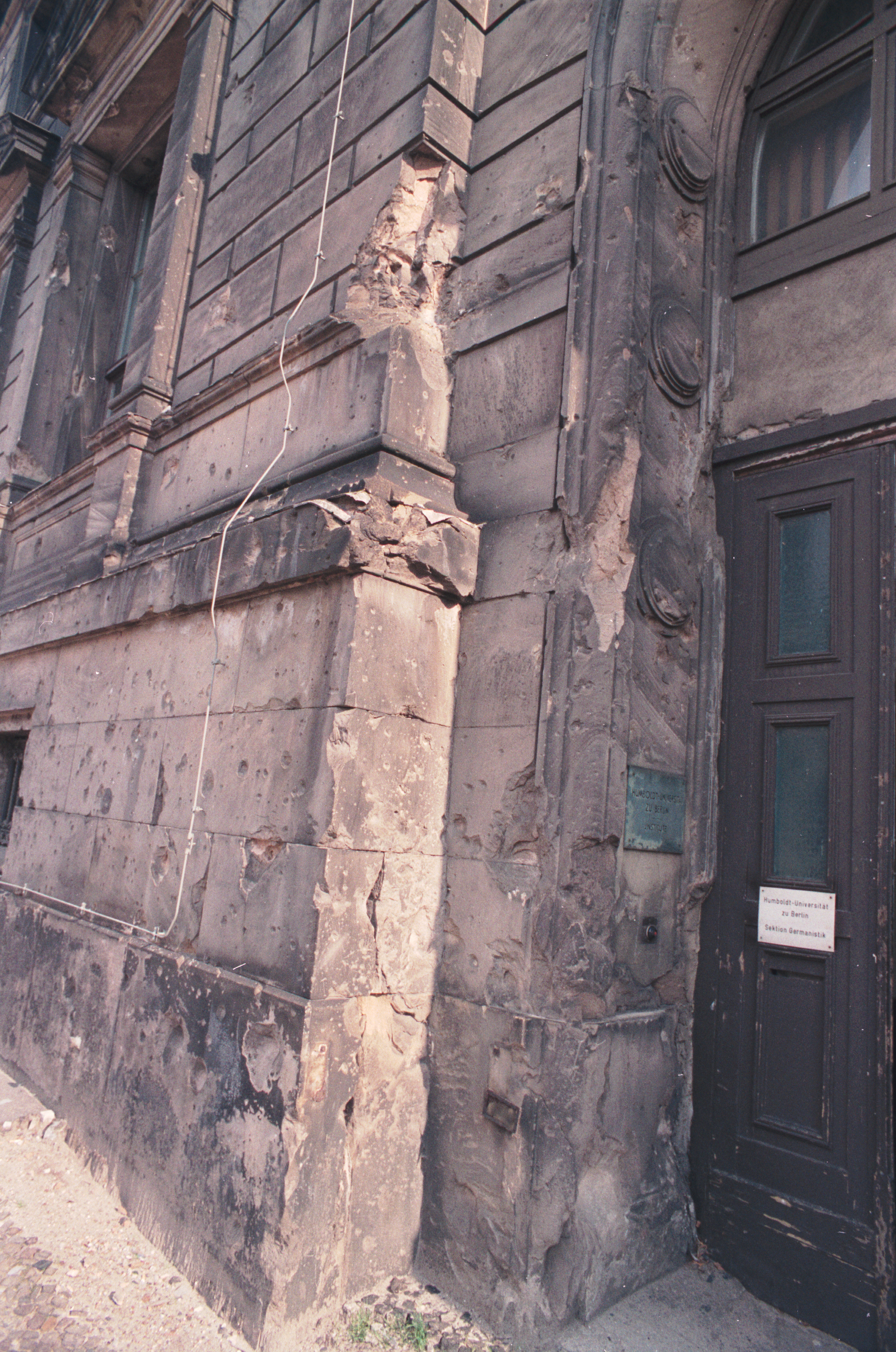
A building in East Berlin
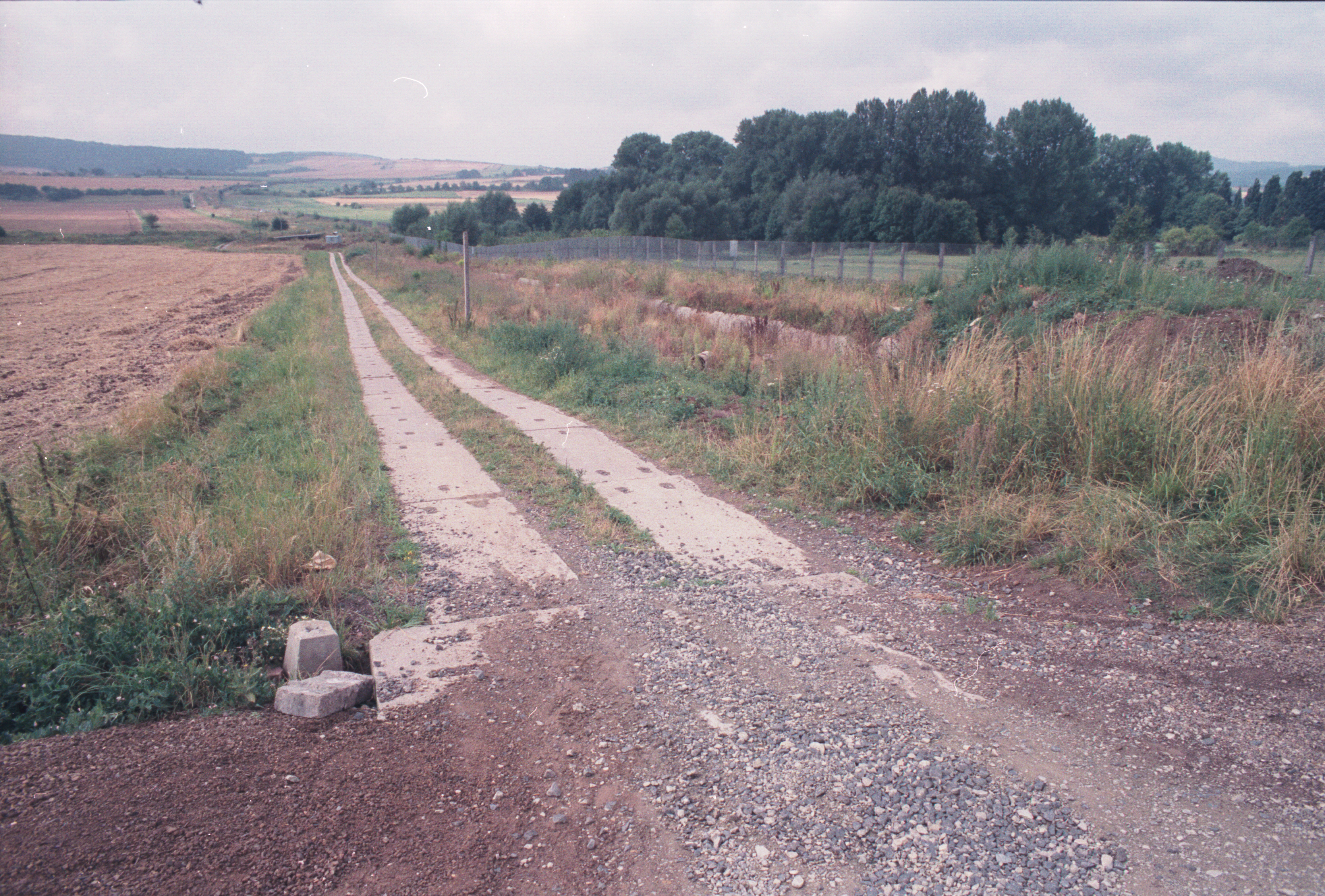
The old East German border
I drove through Luxembourg on the way to France but didn't stop, what's there to see in Luxembourg? Once back in France I stopped at Verdun which was an appalling First World War battlefield that claimed around 300,000 lives. There is a building called The Ossuary, where the bones of at least 130,000 of them are stored and can be viewed. It was like a cathedral to the dead and left me thinking that it was glorifying rather than condemning war.
After visiting Reims cathedral, I made my way back towards Theipval again. My last campsite on the trip was one I was already familiar with at Authuille, which was near Theipval. It was strange to find myself back at the same campsite I started from. The end of the tour was now very close. I drove north, and the English Channel came into view, so I drove into Boulogne to book the ferry. I thought I would have to wait a day or two for a free space, but I was amazed to find that I could get on one straight away, and so in a slight state of shock I waved goodbye to continental Europe and boarded the ferry.
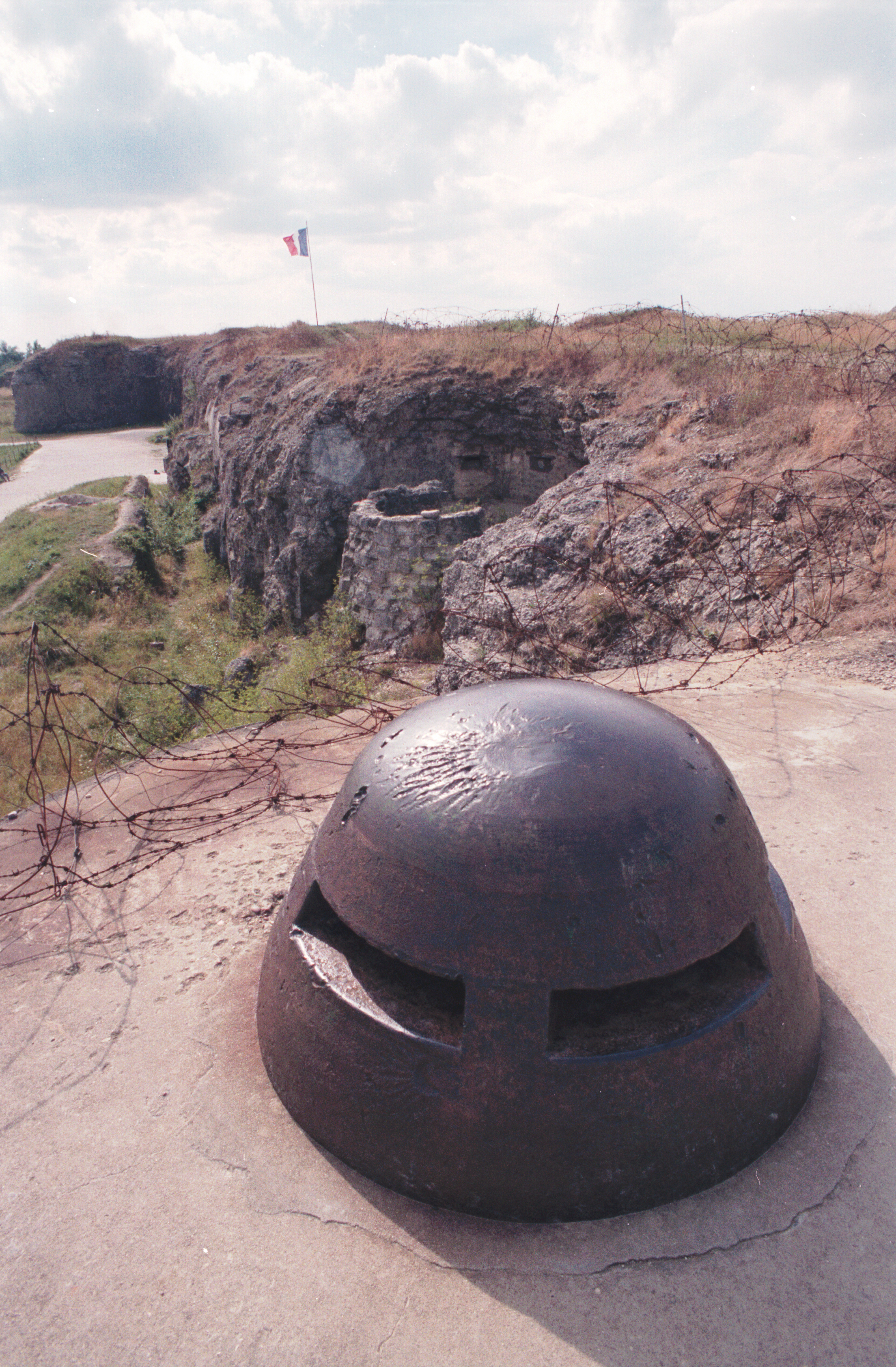
A fort at Verdun
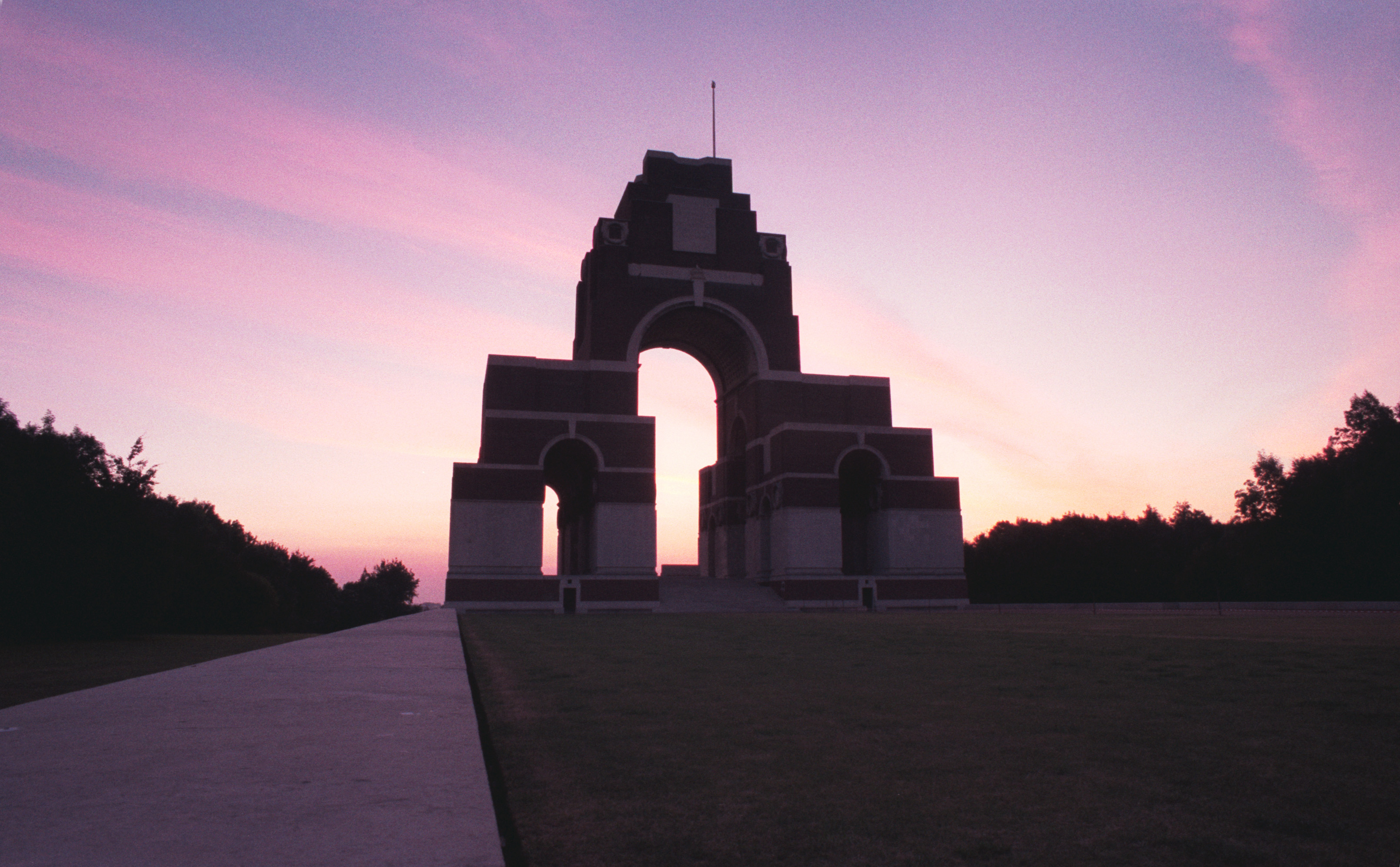
The memorial at Theipval in the Somme
Nobody knew that I was coming home, I just turned up at my parents' door and flopped onto the sofa. Over the next few weeks, I think most of my skin peeled off, which was the end of my best ever suntan. Even the soles of my feet were tanned from lying on beach and swimming in the sea. I had been away for five months, and I think that was enough to get that bug out of my system and would however recommend the same adventure to anyone.
Home