
Chapter 4: The Secondary School era.
The school was situated on the main road running through Wealdstone and Harrow Weald. From the road, the main buildings visible were the church, St Josephs, and the school gym. Between the two was a small staff carpark and the main entrance to the school. Incidentally, the school became a comprehensive two years after I left, and the sixth form was relocated to the Sacred Heart across the road, which changed to become a co-education sixth form college. Salvatorian College was entirely demolished in 2017, rebuilt from scratch, and re-branded as a modern academy in 2020. So, everything I knew, except for the church, has gone.
There were a number of ways we got to and from the school. The first was to catch the H1 bus from the bottom of our road, which went about a mile and a half in the wrong direction before looping around to end up at Harrow and Wealdstone station. We then had to walk the length of Wealdstone high street to the school, which was about a mile. The second was to catch a train to Harrow and Wealdstone from Kenton, and then do the same walk. Sometimes on the way home, when I had time to spare or I did not fancy walking down the high street in the pouring rain, I used to wait for a 140 bus just outside the school to take me all the way into Harrow, or just to the station. There will be more about the bus stop outside the school later.
The school had the usual facilities, a hall, gym, dining hall, woodwork and metalwork shops, science block and a massive playground out the back. Some of the playground was tarmacked but about two thirds was covered with a fine red gravel dust christened the redgra. This dust was ingrained into the shoes and the clothes of all Salvatorians and was part of our identity. On the edge of the playground was the tuck shop, which was run by Bruv, one of the Salvatorian Brothers. I never knew his real name or his status at the school, but he was always big and scary and looked a little bit like Hagrid from Harry Potter, although we didn't realise it at the time. Here you could buy all sorts of chocolate and crisps, but the best offering was the frozen orange triangle which left you with bright orange lips all afternoon. On the other side of the playground, a large double gate led into the roads behind the school.
My first year was full of new experiences, like having to actually learn stuff. Our form master was Neville Bayross, who was as camp as an Asian Quentin Crisp, but that did not occur as anything strange to us youthful types. He wore bright colours, had a flamboyant mop of hair on his head and walked with a mince. He was however a great teacher, and everyone liked him.
The school had a uniform. Years 1 to 5 wore a green blazer with the school shield on the pocket. In the sixth form the blazer colour changed to black. My brother Pete was already at the school when I started, and I think his year was the last one that had to wear a cap. There was a story that in previous years, when it rained, the teachers used to stand at the school gates and checked if your hair under the cap was wet, which was proof that you were not wearing it on the way to school, for which the punishment was detention.
In these early years we siblings had to go to the staff room to collect our dinner money since we were judged too poor to pay ourselves. I am not sure how they worked this out because we were paying a mortgage and owned a car. It was really embarrassing to go begging for money at the staff room door because there was stigma in my mind that I had to get money from other people in order to eat.
We had a core of older teachers who still walked around wearing gowns. A few of them also kept canes secreted in the gown that could be deployed and used in an instant. We were sheltered from the scarier teachers until the second year.
By the second year I had also discovered the workshops. It was here that I spent my favourite days. The workshops were run by a teacher called Colin Tufnell. If there was one person who profoundly affected and guided me in my school days and beyond, it was Colin Tufnell.
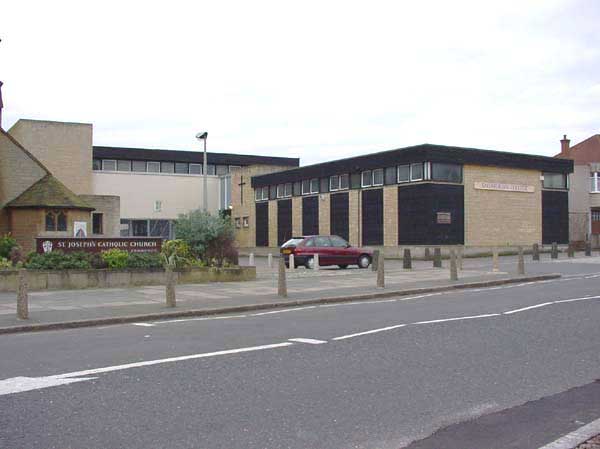
Salvatorian College
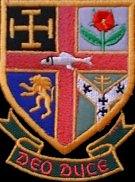
The school badge
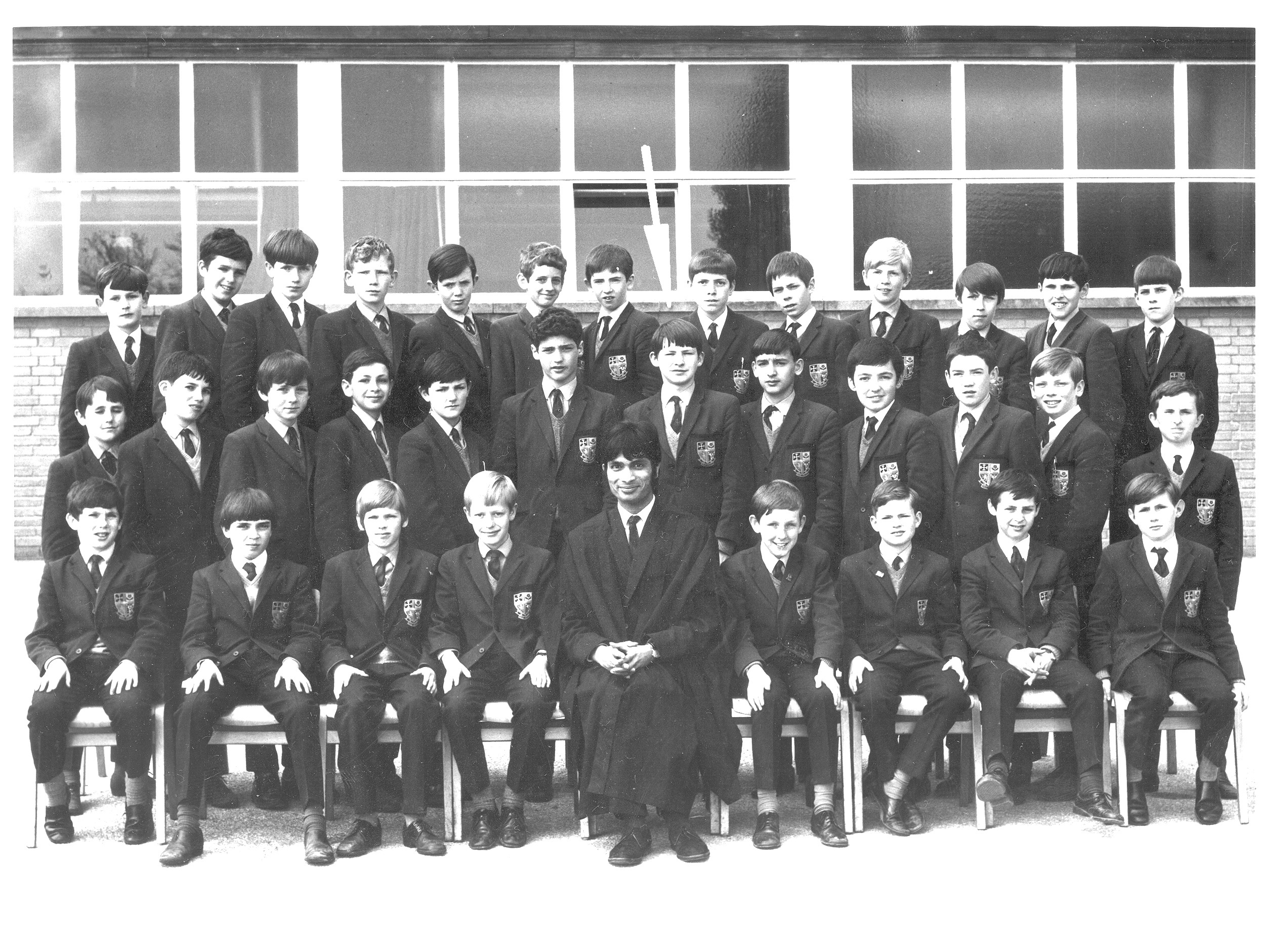
My first year class with Neville Bayross
Colin was medium height and a little bit chubby. He had curly black hair that never changed. He lived right next to the school where he shared a house with his mother. This, and the fact that he was single spawned all sorts of malicious rumours about his sexuality, which was not an unreasonable conclusion to draw, especially when looking around at some of the other teachers. I heard of some students who avoided anything Colin was involved in because of these suspicions, and hence missed some of the best aspects of the school. Colin never lost his temper, he never over-supervised us, and he always put up with our jokes and boisterous behaviour unless there was a safety issue. As well as teaching workshop skills and design, Colin was also involved in rugby, cricket, drama and just about anything involving engineering around the school. So, you can see how I was later roped into rugby and cricket, but I was also involved in the stage crew of the drama society, more about those later.
Colin was dedicated to teaching in everything he did. He ran amateur dramatic societies in Harrow in addition to the one at the school. Because he ran the rugby and cricket, his Saturday mornings were always taken up with school activities. Whenever there were evening activities in the workshops, sports training, drama society or film club, he was there, which was most evenings. I was involved in all these things, so Colin was always around, to such a degree that I never really appreciated him until I looked back in later years. By the way, Colin did eventually get married, and he stayed at the Salvatorian College for his entire teaching career, and when he retired, he was awarded an MBE for his service to education in Harrow.
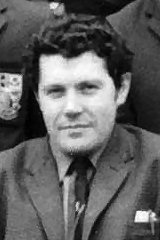
Colin Tufnell
Serious sport started in the second year. Salvo was a rugby and cricket school, although they also did football and hockey for the leftovers. We had PE in the gym twice a week, and Wednesday afternoon was put aside for Games. Games usually consisted of getting on an old double decker bus and driving about a mile to Roger Bannister sports fields. Roger Bannister was the guy who ran the first 4-minute mile, and this facility was named after him. The fields consisted of a running track and adjacent rugby pitches. There were some good changing rooms and showers there as well. Adjacent to the changing rooms was an old military bunker which we had to use occasionally if there was some other group in the changing rooms. The bunker was a flat roofed single story concrete building with no windows and a heavy steel door. Inside there were a number of rooms, the ones we changed in, and several others where we could glimpse desks and maps and telephones. I doubt it was a nuclear bunker and suspect it was left over from the war.
I'm not sure if it was the second or third year that I discovered that I was quite sporty. I could run fast and had a bit of an aggressive streak, so I was ideal for rugby, and worked my way to a wing forward in the first 15 by the 4th form. We were one of the best teams in Harrow at the time. There were only two schools out of about fifteen that regularly beat us. They were Kingsbury High, and Northwood Grammer. Burnt into my memory are the cold wet muddy matches where running was almost impossible, and the cold frosty games where the hard pitch cut your knees. But my most common injury was to my hands, particularly my thumbs, and the painful results of which I suffered from for years. Rugby was organised by a few teachers from time to time, but always Colin Tufnell. I once did a rugby trial session for the Middlesex school team, but even though I was tall and fast, I was much too skinny for real rugby. However, in my later years in the school I did play for Harrow Rugby Club 5th team on the odd Saturday afternoon, that was after playing a school game in the morning, and sometimes after a couple of lunchtime pints in the pub. It was often good fun because we teenagers could easily run rings around the old boys in the oppositions 5th teams. We had so much energy then, which compensated for our lack of weight. We of course retired to the rugby club bar after the game, which meant that by the time I got home all I could do was flop onto the sofa and sleep.
The summer sports activities were athletics and cricket. I managed to do both. My athletic expertise was in the long and triple jump, and I was always in the top two when we competed against other schools around Harrow. I cannot remember how far I could jump but I have many memories of waiting long hours at various athletics tracks for my event to start, incidentally I do not remember there being any girls at these events. Due to my speed, I was also usually roped in for the 4x100m relay. On one occasion I hadn't warmed up properly and ripped a muscle in my thigh, the result of which put a large dimple in the muscle which I still have to this day.
Cricket was another Colin Tufnell thing. He recruited me one season in the 4th year I think, and I played for two seasons. I was rubbish at batting and bowling, but then so were most people. I do have fond memories of playing many games on lazy grass pitches in the baking sun. I don't remember it ever raining. I was usually in the slips and managed to hold onto a number of good catches. Colin was most disappointed when I gave it up in order to work for my dad at the weekends in the summer.
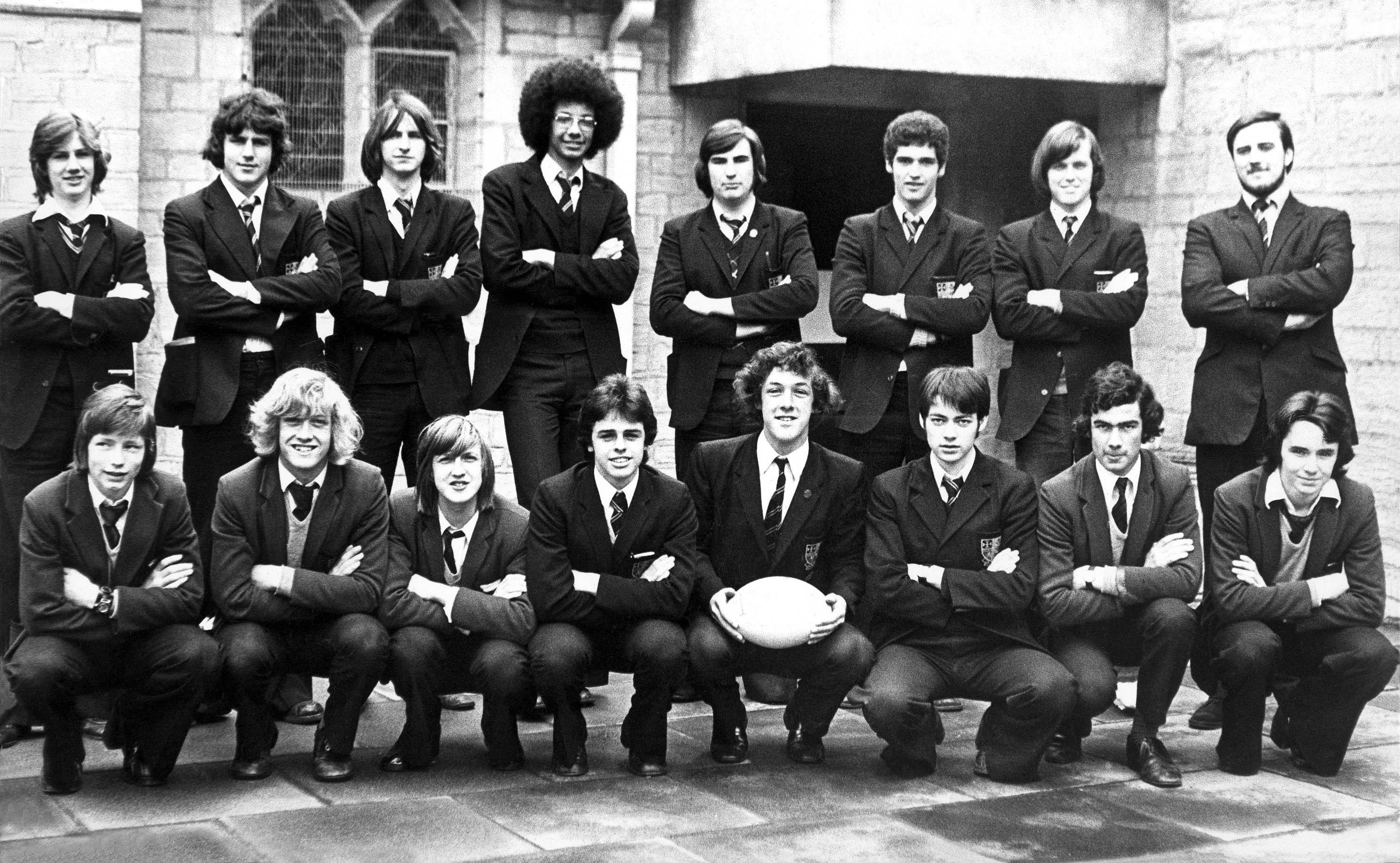
1st 15 rugby team. I'm 3rd from left in the back row
Also in the back row:-
John Sheldon - second from the left
Steve Moore - third from the right
Derek Frew - top right
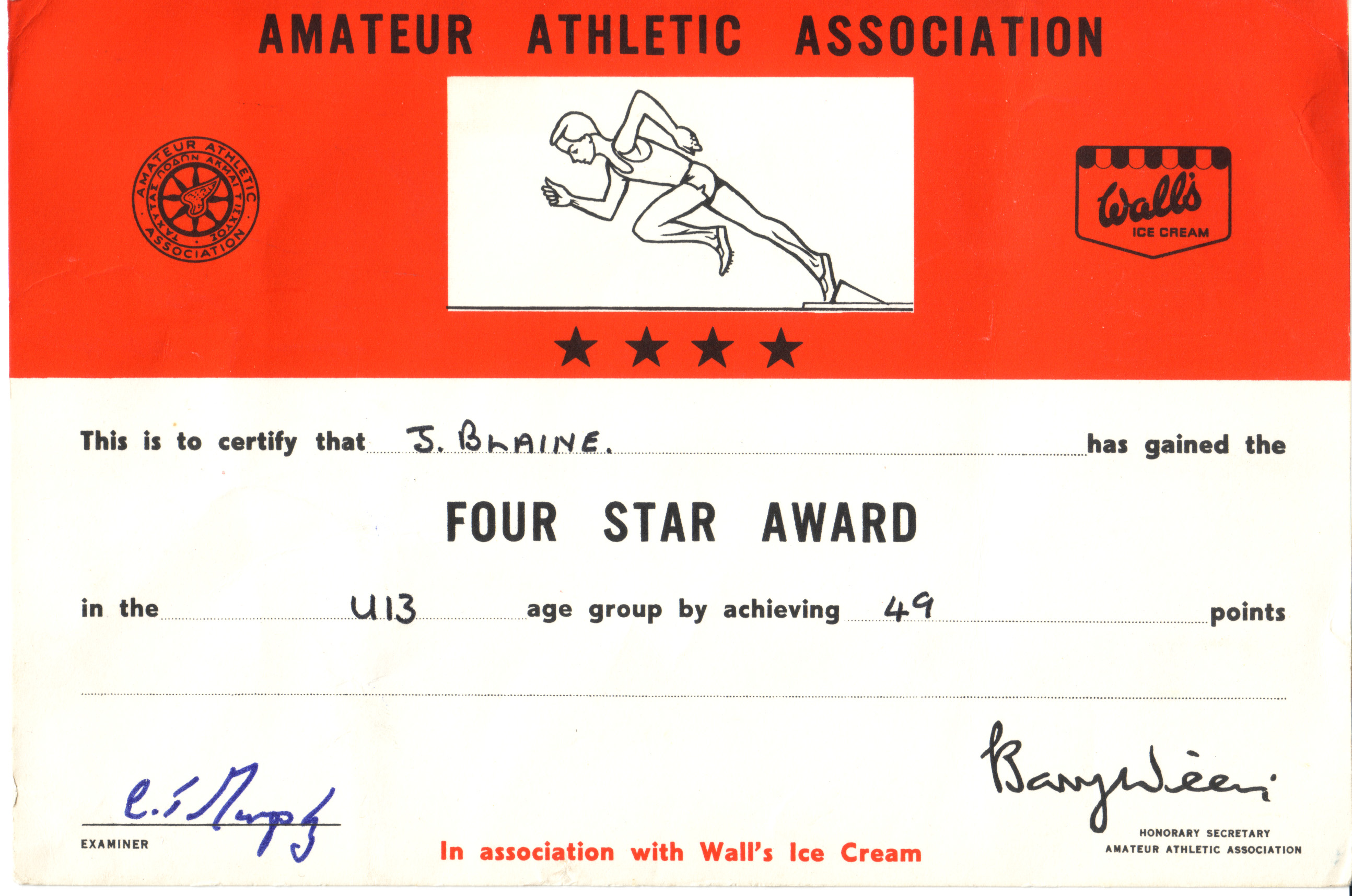
My 4 star AAA certificate
I never had to get a paper round or a job in a shop to earn money while I was at school. I used to work for my dad all through the school holidays and often at weekends. I remember that my brother Pete also did some time working for him, but for some reason it was mainly myself wo did the work. My job was as a plumber's mate, and useful money it was too. All I had to do was run up and down stairs with tools and fittings and pipes so that my dad, or whatever plumber I was allocated to, could concentrate on the job in hand.
We did a lot of work in the Soho area of central London. This meant that as soon as I was old enough, I had to drive the Mk 1 Ford Transit van on 'L' plates all the way from Harrow in the worst possible traffic. Looking back though, the traffic today is far worse for the modern commuter, but I thought it was bad at the time. These old vans were so primitive. They were noisy, cold and gutless but they got us there and I didn't hit a thing.
There were a lot of characters in the plumbing business in those days. One of them was Tony McAuley from Ireland who didn't believe that dinosaurs ever existed. And then there was Mick, who fought in the North African desert in the war. He always chewed his food twice, once when he bit down, and again when his dentures fell down on their own. And the last guy I remember was Pete, who was reaching retirement age, so when he had started his plumbing career, the pipes were lead and iron instead of copper. Pete was a quiet man who always had a smile on his face. He had been married a couple of times but looked back on both of them as mistakes, and now he was more than happy to do his days' work and retire to the pub every evening where he drank bottled Guinness. My dad used to say that Pete had forgotten more about plumbing than he would ever know. One day we got a call from Pete's landlady. He had not come out of his room that day and she was worried. My dad went round and managed to open the door where he found Pete lying dead, half over the bed with his trousers round his ankles. He had not quite made it back from the pub before his heart gave way. This affected my dad quite a lot at the time, and he spoke about Pete now and then in later life.
I had a very close call with fate one day. My task was to lag a loft with glass fibre insulation, but to get in the loft I had to use a ladder to climb into a hatch in a recess above a very deep stairwell. After a few trips I was on my way down the ladder when suddenly it started to slide sideways on the smooth wall towards the stairwell. I dropped what I was carrying and reached out with my left hand and just caught the edge of the recess with one finger. This saved me from a very high fall probably leading to terrible injury or even death. There were other hazardous situations that I was exposed to in this job. The first one I have already mentioned, the glass fibre lagging. I used to spend hours in dark dusty hot attics, particularly the hot summer of 1976, handling rolls of lagging, which shed clouds of small fibres which I promptly breathed in because we had no face masks to protect us in those days. Another hazardous material was asbestos. I often had the task of sawing asbestos pipes with a wood saw which made copious dust, again without a mask. At the time I thought nothing of it, nobody did. Now that I'm getting on a bit, I wonder if my asthma symptoms were caused by this, and I never miss any opportunity to push for a chest X-ray.
My dad was often oblivious to potential hazards. I was sent up to chimneys on top of houses so that I could knock off the existing chimney pots and push down new metal flue liners, all without a rope or safety harness. On another occasion we were both working on some scaffolding attached to a building when my dad dropped half a brick on my head, by accident of course. I was not wearing a hard hat, and the impact made me dizzy for a few minutes. If it had hit me any harder, I might have lost consciousness and fallen to my death. However, I didn't and survived all these close shaves. What it did convince me of was that plumbing was not the career for me, although I didn't tell my dad this at the time. I did appreciate the benefits of having a holiday job because at the start of term in September I was always flushed with cash. I vividly remember laying out all the money I had earned in the summer on top of my bed in neat rows and counting and admiring it. It added up to an amazing £100. I spent a lot of it down the pub after Saturday morning rugby.
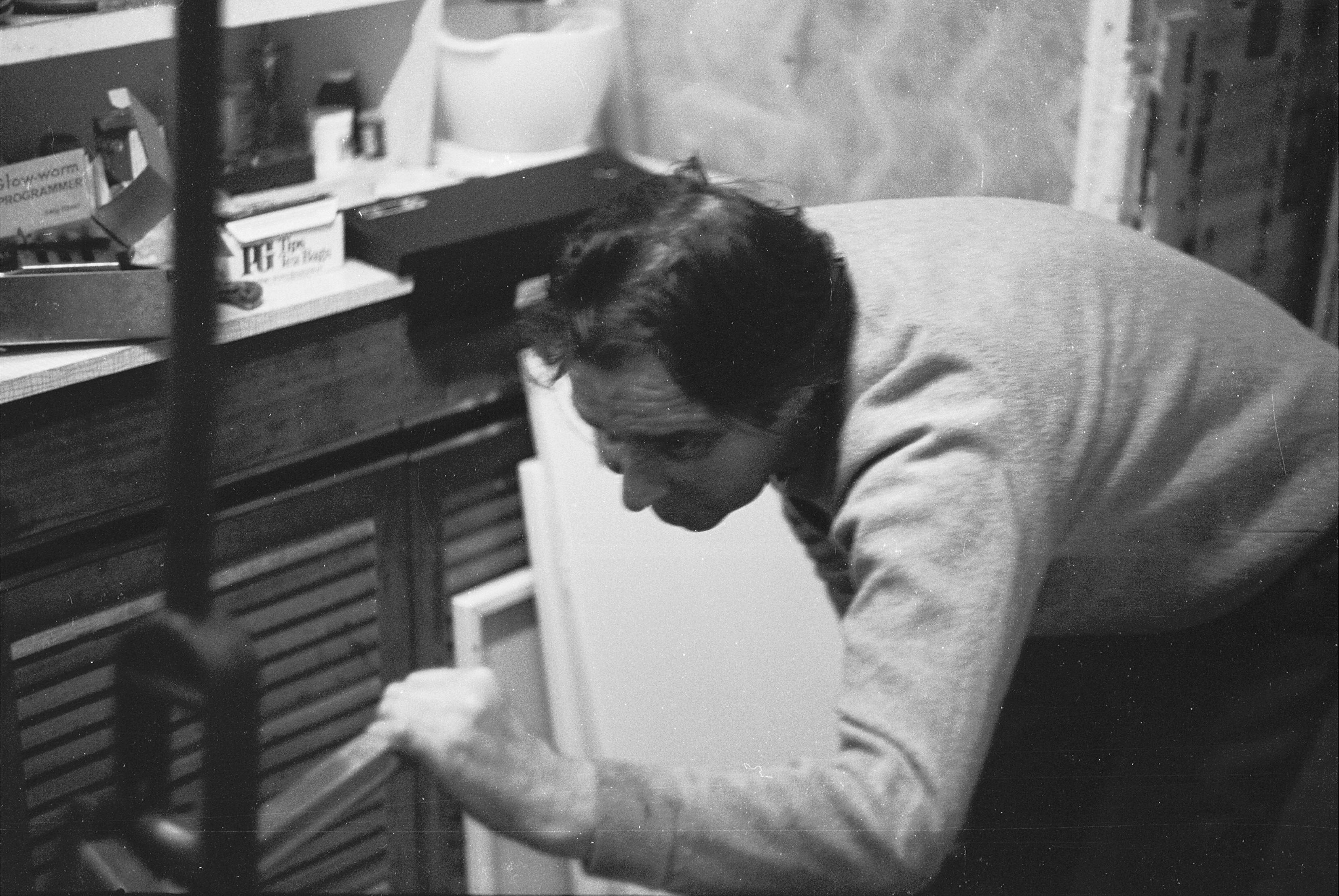
Pete the plumber
Meanwhile, back at school, one of the most interesting changes in the teaching was the introduction of Latin, which was compulsory in the 2nd and 3rd years. Latin was taught by a tall skeletal gowned teacher who we called Twitch. His real name was Eddie Morgan, but he got his nickname due to him having an almost continual nasty twitch on the left-hand side of his face. He tried to alleviate it by slapping his hand to his face and rubbing the surface downward while exhaling loudly at the same time. The story was that he picked up his ailment from the bad experiences he suffered as a prisoner of the Japanese during the war. Twitch would sometimes turn up for a lesson where he just paced back and forth at the front of the class, then leave after 40 minutes without saying a word. Cool, but scary at the same time. I still remember a couple of things from the lessons, like: Amo, amas amat, amamus, amatis, amant. And mensa, mensa, mensa, mensamus, mensatis, mensant. But not surprisingly that has never been of any use to me.
Eddy Morgan (Twitch)
All through my early teenage years I enjoyed making plastic models, mostly aeroplanes or model soldiers. I spent many happy hours in my bedroom with Airfix, Revell or Tamaya plastic kits. I also delighted in making them into something other than intended. There was a magazine that I bought every month that had projects which turned these kits into different things with the addition of balsa wood and filler. I followed quite a few of these articles to make, for example, many different marks of Spitfire and weird planes with double fuselages. I also sliced up model soldiers and their horses so that they could be posed in different positions. I think there is a number of these in a box in the loft right now. From these beginnings I went on to make things solely from plastic or wood.
Due to this interest in models and making things, it was a natural progression for me to be drawn to the workshops at school. I took O-level and A-level design and technology, so I tended to spend a lot of time hanging out and getting involved in the many activities that centred there. Each workshop had its own smell. You could always tell which room you were in with your eyes closed. This is one of the sensory memories that I have retained over the years. I have a few of these, and this is the first.
I recall making the usual school stuff in the workshops; a small hand roller using a bent metal handle and a turned wooden roller, all riveted together, a phallic sculpture in woodwork, about 9 inches tall, polished, and varnished to perfection, a solid silver ring using the lost wax process, a fabulous wooden box with dovetailed corners, which I still use to this day, and a metal articulated lamp using aluminium tube and machined aluminium blocks for the hinges. The shade was made from glass fibre using my own design of wooden mould. I still have a few bits left from this somewhere. In addition, I am sure a few other projects that I just cannot remember. I somehow became one of the trusted few who were allowed into Colin's Office to get stuff like materials or tools. I must have been such a swot.
In those days there was not the overriding focus on safety in the workshops that there is today. The metalwork shop had lathes, drills, a milling machine, and a forge. In woodwork, there was ready access to lathes and sanding wheels as well as the usual planes and chisels. There were no guards on any of these machines. I think there were protective glasses, but no requirement to use them. This lack of focus on safety meant that I got Colin into a bit of trouble once. I was in the workshop, and I happened to have a bandage around my hand from a rugby injury. I started to use one of the pillar drills and suddenly I felt my hand being pulled and wrapped around the back of the drill. My bandage had been caught by the drill and it was threatening to pull my fingers off. It must have been only a second or two because I had not responded, and then there was a 'crack' and my hand was free. For a moment, I actually thought I had lost a finger, but the noise was just the bandage breaking. I then went into what must have been a shocked state. For some reason, probably pride, I didn't tell anybody it had happened and left the workshop to evaluate the damage in the toilets. I still had all my fingers, but the drill had sliced a few strips of skin off the back of my hand, and I still felt faint. I then made the mistake of going straight to the medical room rather than reporting it to Colin first. He apparently got a severe talking to since he told me that I had got him into a lot of trouble. The injury mended quickly and the whole thing was forgotten in a few days, I had however learned a bit more respect for the machines.
I do not think I ever went home at 4pm from the 4th year onwards. I was always doing some kind of evening activity at the school. The following is a summary of the various clubs and activities that kept me at Salvo in the evenings.
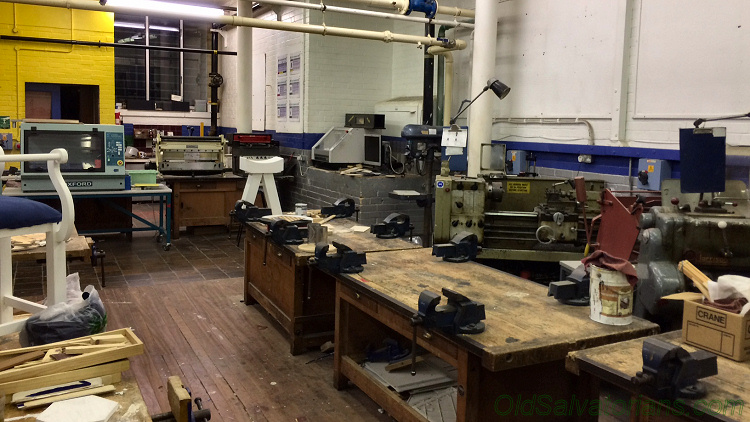
The metalwork shop just prior to demolition
During my first couple of years, I had occasionally noticed two go-karts hanging on the wall in the metalwork shop. One day I asked Colin if I could get one down and have a look. This was the start of the go-kart club. The machines had been made by previous students long gone. The first one was green and was made from thin steel tube brazed together in a spaceframe. The second one was red and made from larger diameter welded tube in a more open chassis structure. They both had the same 100cc Villiers 2-stroke engine behind the seat, and a 3-speed gearbox. The main thing about the red kart is that it was lighter than the green one, and so faster.
As soon as I got one of them down from the wall, it attracted attention. I was not the only one interested, in fact in a couple of days we had the core team of myself, John Dickinson, Mick Phelan and Ged O'Brien. Both karts needed repair, in fact the green one needed a new rear axle, which took some skill on the lathe to produce. Once fixed, we spent many long evenings after school racing around the redgra, raising dust and making lots of noise. The silencers were just metal tubes stuffed with steel wool. We took the wool out as an experiment and got a real improvement in performance, but got noise complaints from the nearby houses and had to put it back in. We had to set up a production line for head gaskets since we got through at least one per session. We made them out of very thin copper foil to increase the compression ratio and therefore the power, but the raised pressure blew them out regularly. There were several other things we did to those engines in an attempt to squeeze out as much power as possible. We polished the ports to improve airflow, we bored out the carburettors to try and get more air in, all sorts of tweaks.
We had races between the red and green cart. The red one was faster, so the game was to give the green one a head start, and then the red one had to catch and overtake it. The competition was quite fierce, and I remember once being hit from behind while trying to block the red cart and seeing its rear wheel passing my head at eye level. There was some quite aggressive racing and all without crash helmets. At the end of each session, we were covered in red dust from head to foot. I don't remember my mum complaining once, or maybe I was deaf.
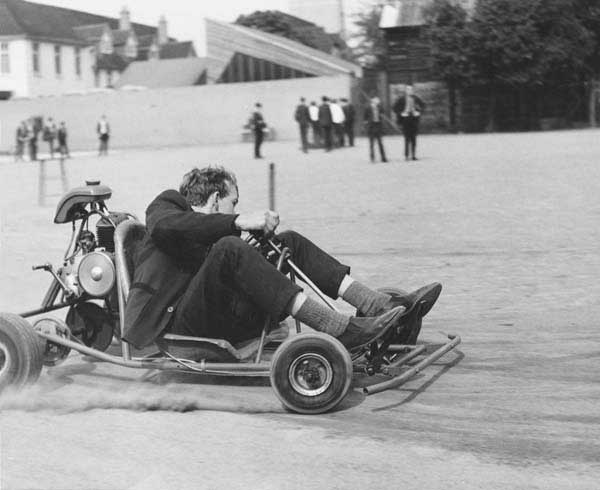
Me on the red Go-Kart
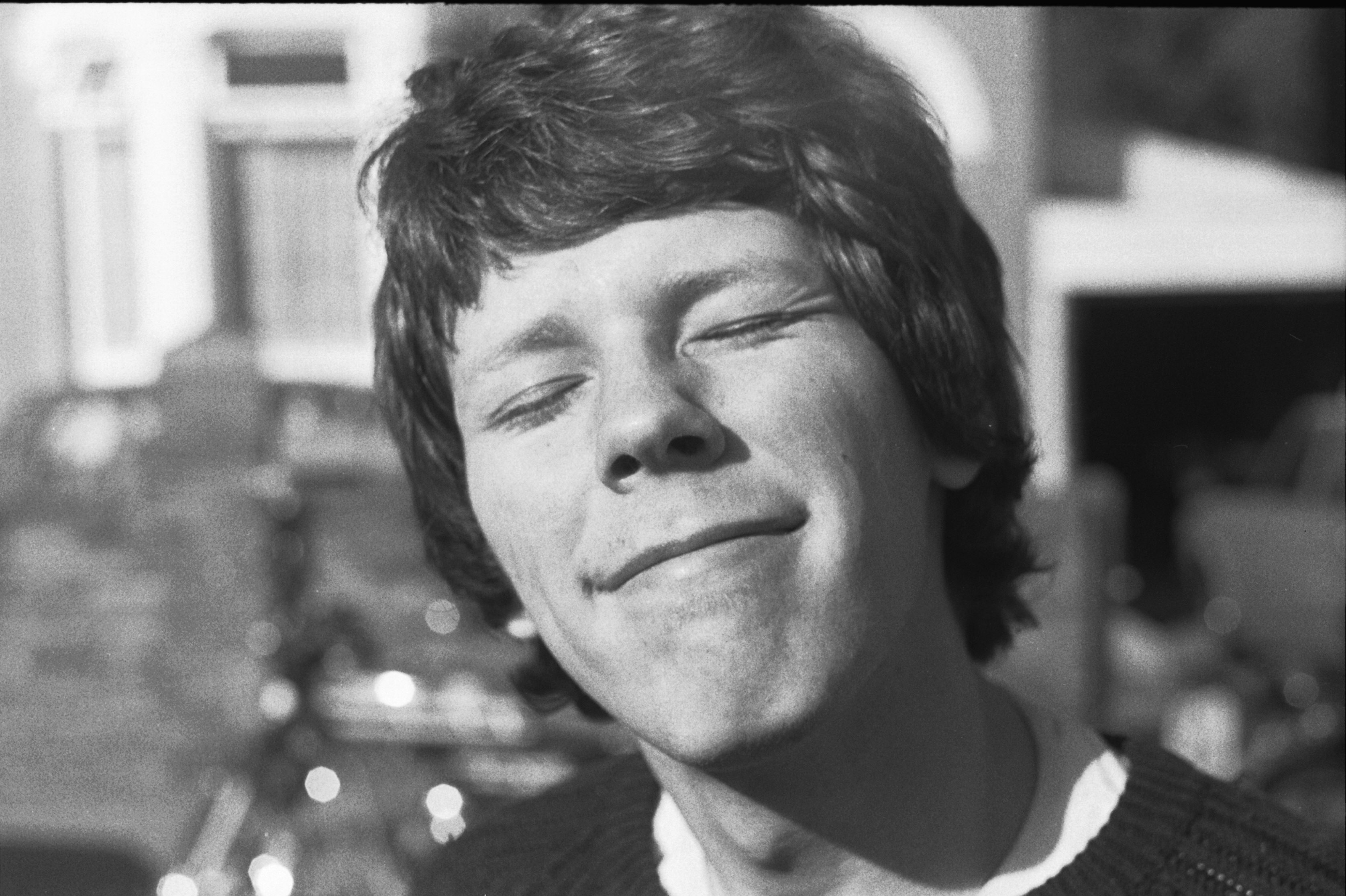
Mick Phelan
Somehow from somewhere an old hovercraft appeared in the workshop. This was an open 10ft x 5ft fuselage, which came with two engines in a frame at the back, one for lift and one for thrust. I of course got involved and the hovercraft club was born. At about the same time, the school employed a retired old boy as a workshop assistant. His job was to maintain the machines and assist Colin with odd tasks in the department. I cannot remember his name, but it was said that his career before he retired was involved in the maintenance of the old piston engine airliners at Heathrow airport. So, this chap was assigned to look after the hovercraft club team and add his expertise. The hovercraft was in an unloved state, so over the next, (I don't know how many) evenings we resealed the fuselage with some new aluminium panels. Rebuilt the engines and remounted them. The lift engine was direct drive to a fan, which bled some air off to fill the skirt. The skirt was another new thing that has blurred in my mind as to how exactly we got the new material sewn together to the correct shape. The trust engine was mounted on the frame and linked to the propeller using three fan belts in parallel.
Then the day arrived to test the completed craft. We had already had it floating on the lift engine in the workshop but now it was time to see it really fly. The chosen place was the service road behind the workshops. This was about 50 meters long and had a large steel double gate at the end. The trick was to start it running slowly down the road and stopping before hitting the gate. We all had a go, slowly at first but someone learned that if you kill the lift engine just before the end, then the craft would come quickly to a halt on the skids when the skirt deflated. It came to my go, and I blasted down the road much too fast and of course mistimed the engine cut, so as a result I hit the gates with enough force to bend one of the metal rails and knock one of the gates off its hinge. This would have been bad enough on its own, but it just so happened that the headmaster had wondered around to see what all the noise was and was watching as I impacted the gate. Any more runs were cancelled, and Colin spent the rest of the session up a ladder fixing the hinge, which he did. The bent rail however was not fixable and remained bent for the rest of its existence.
Any further testing involved putting the craft on top of the minibus and transporting to the rugby pitch at Roger Bannister. It was here that we realised that the drive system was not really working well. Every time we added thrust on the propeller, the frame distorted, and the fan belts went loose. This turned out to be the end of the hovercraft club since exams were looming and nobody really had the time or inclination to try to fix it. It was great fun creating it though.
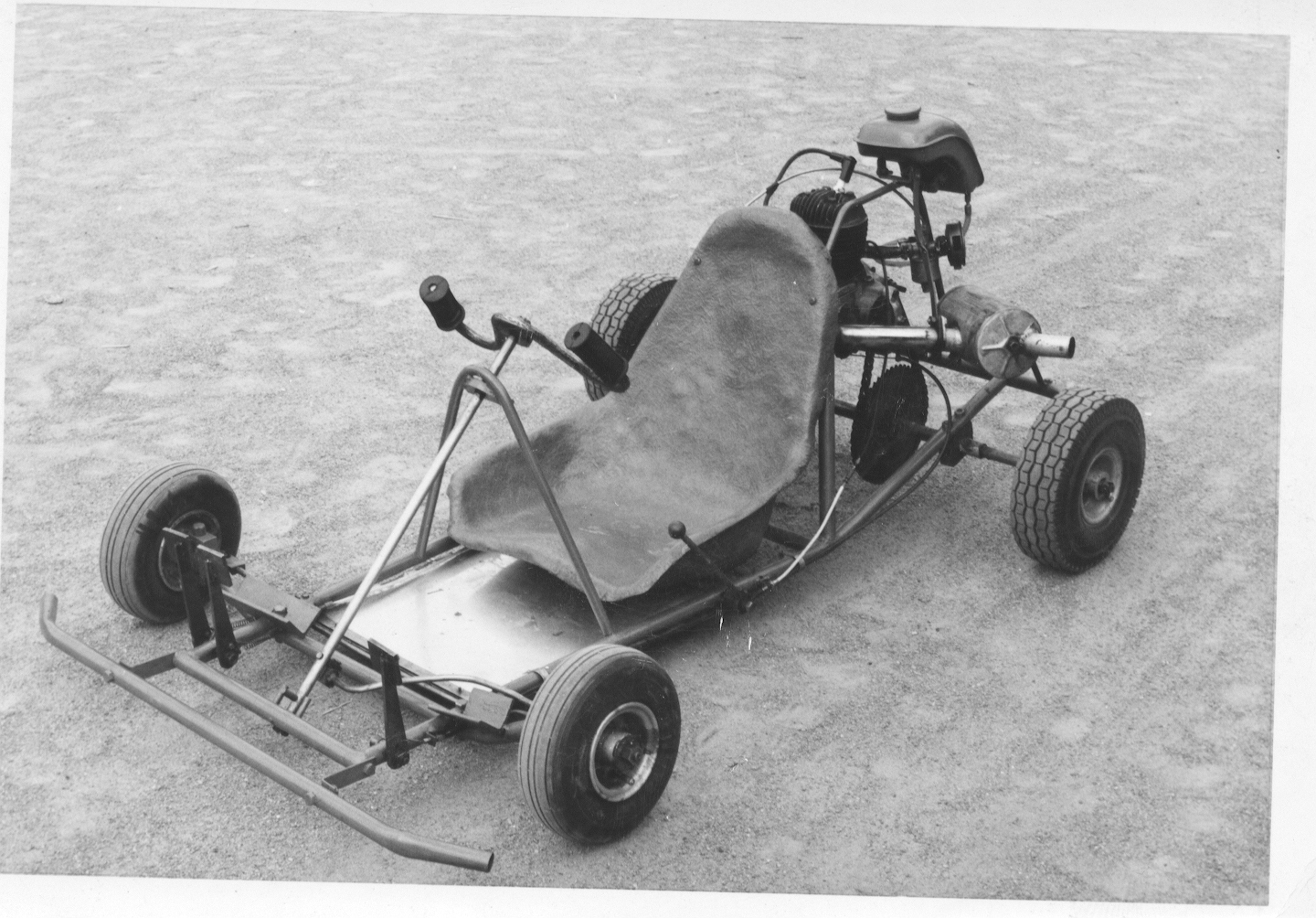
No pictures of the hovercraft, but here is another picture of the red Go-Kart.
It probably happened one day that Colin asked for volunteers to help make a set and props for a play at the school. Colin oversaw the drama society, and the school put on a play in the hall every year, which was well attended over the 3 evenings it was performed. We even had a critic from the Harrow Observer local paper to review the performances. He said that the quality was so high that the review comments were at the same level as other amateur groups in Harrow. I had great fun painting flats and making various things out of 2-by-1 and hardboard. Then there was the stage crew tasks on performance nights. I managed quickly to be promoted to stage manager, which was a post I maintained until I left. There was always something magical about being on stage during a performance, the nervousness before curtain-up, the mad choreographed dash to change the set between acts, in fact I liked it so much that I continued backstage at a local amateur group called Proscenium, in which Colin was also involved. One special aspect of the school plays is that we sometimes did joint productions with girls from St Dominic's school, which was a nearby girl's only grammar school. I got to know one of them quite well, her name was Tracy Adams. We used to catch the same train from Harrow Weald after rehearsals. I thought I was making progress until she got together with Cornelius Bohane at the end of year party. 'Corny' was apparently quite clever and earned a place at the University of Oxford, which is strange because I saw nothing special in him. More about Cornelius later. After the last performance of every play, there was the party. Some people only did the plays for the party. I remember getting really drunk and doing dangerous things at these events, like hanging from the lighting bars. When the girls from St Dominic's were involved, the parties took on a special atmosphere that made me realise I was missing something by being in a boy's only school.
Special memories have stayed with me from the following plays: Royal hunt for the sun, Indians, Marlowe, and Toad of Toad Hall. All of them were fabulous ethereal experiences.
In Toad of toad hall, after changing the set to the home of Toad and opening the curtains, the audience did a spontaneous applause in appreciation. The set was a marvellous complex depiction of Toads underground burrow with all sorts of food hanging from the ceiling and a boat, soft furnishings and clocks. It was amazing.
Something that often drew gasps from the crowd was the rotating stage that Colin dreamt up which was made from chipboard with nylon rollers mounted underneath. It was moved by about six people with rods that located at its circular edge. The spectacle of a rapid scene change right in view of the audience was amazing when done well.
It was a tradition for the stage crew to write their names in chalk on the ceiling above stage, called the fly tower. The fly tower was very high and was only accessible by using a scaffolding tower and then swinging from the chains holding the lighting bars. I learned that some of the names were still there when the hall was demolished, perhaps mine was one of them, and I know this because someone I knew from those times, Robin Lambert, visited the school just before it was torn down and noticed the names still there. There are many old stories like that to be found on the unofficial Old Salvatorians website.
Another game we played was to lie on the ground and allow a stage flat to fall down on top of you. A stage flat was a lightweight wooden frame covered in canvas. Some flats could be 20 foot high. When it fell over, the air was caught underneath and cushioned any impact. Great fun until a teacher, Mr Shackleton, witnessed the events and forbad it in future.
On the subject of stage flats, one of the wonders of stage crew was the props room. This is where all the flats were also stored, so it was a large, very high-ceilinged room with a very tall door to match. In here, on high shelves all around was stored the props used on all the previous productions by the school and by Proscenium, the local amateur club who also used the hall. To reach the top shelves required a long ladder and an iron nerve. If you have ever seen the 'room of requirements' in the Harry Potter films, then this is something like our props room.
Back in the hall, underneath the stage was hollow and could be accessed from a low hatch on either side. This was a favourite place for some students to hide when they wanted to miss a lesson, smoke, or just disappear. I never used it for this purpose myself, but the evidence of occupation was there to be seen.
There was a stage crew moment for me that could have changed everything. At home, we had acquired a couple of air rifles and an air pistol that we used to shoot various targets set up in the garden from the bedroom windows. Pete and I also sometimes took them down to some nearby woods and blasted away at things, including, to my shame, small birds. Anyway, one day I brought the air pistol into school to show off with it in the backstage area. We had a bit of fun for a while, shooting various things including the set for the next play. I was in a chair in the wings with the gun pointed upwards when Colin suddenly appeared through the stage door. I can only imagine that because I was sitting in a dark corner that he did not see the gun or me otherwise who knows the trouble I would have been in. I realised the close shave I had had and never brought the pistol into school again.
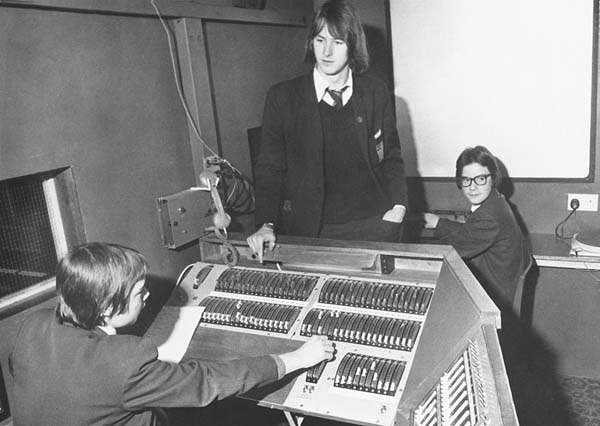
Me (standing) in the Sound and Lighting room
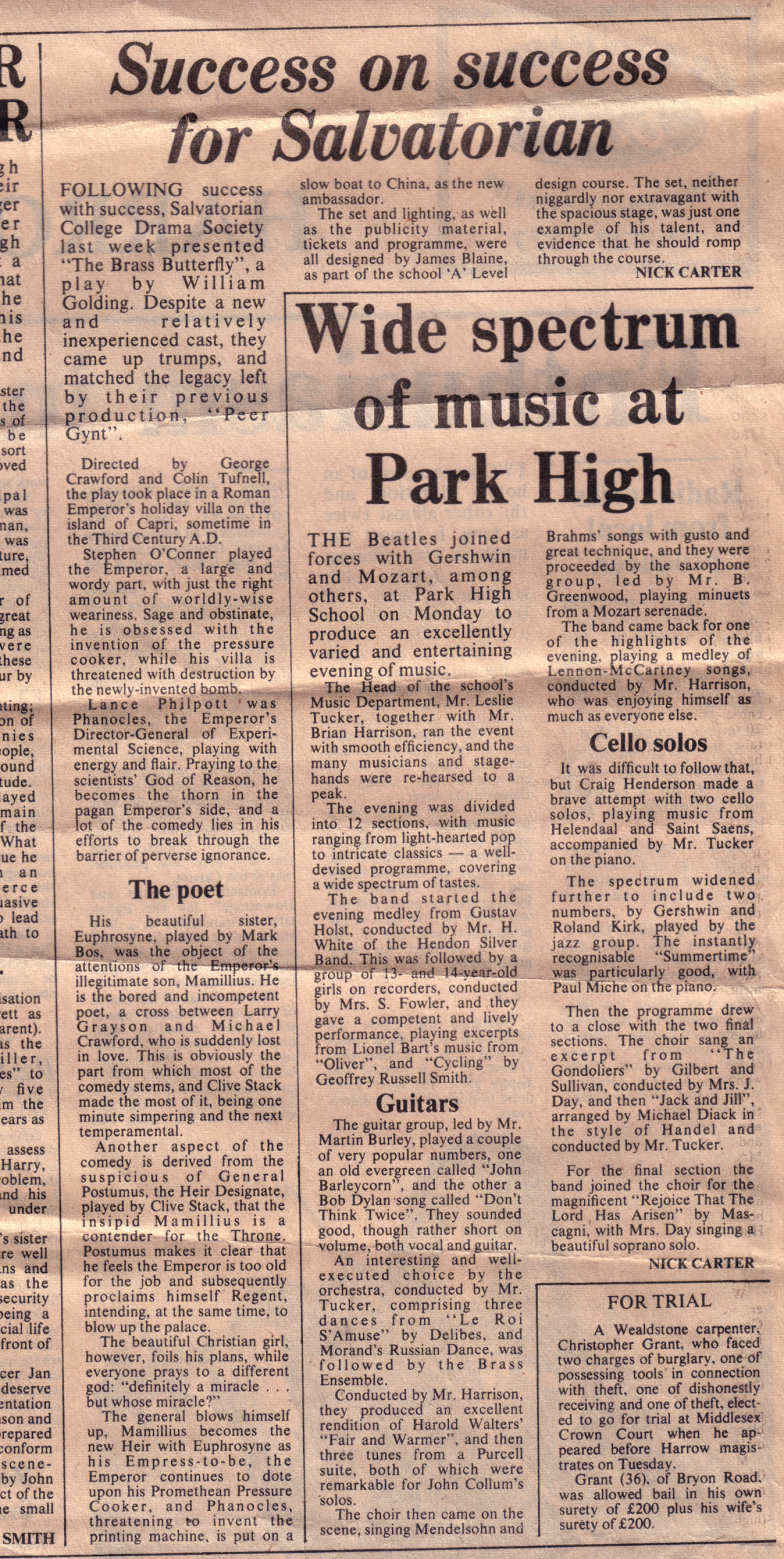
A review or the "Golden Butterfly" in the Harrow Observer mentioning me as the designer.
Again, I do not know how it happened, but I found myself as the projectionist for the school film society. It was a joint society between the Sacred Heart girl's school and us. We used to show a film projected on the big screen in the hall every 2 weeks. In those days, it was real 35mm film in a metal can. The projector was in the sound box at the back of the hall and my job was to look after the sound and vision, which included changing the reels. We did not have two projectors, so the film just stopped after the first reel until I got the next one loaded onto the projector. I do not know who actually chose the films but there was always a risqué element in them, probably intentionally. I heard that a sacred heart girl complained about this once, but nothing changed. I only remember two of the films, 'Pere Ubu' and 'Don't look now.'
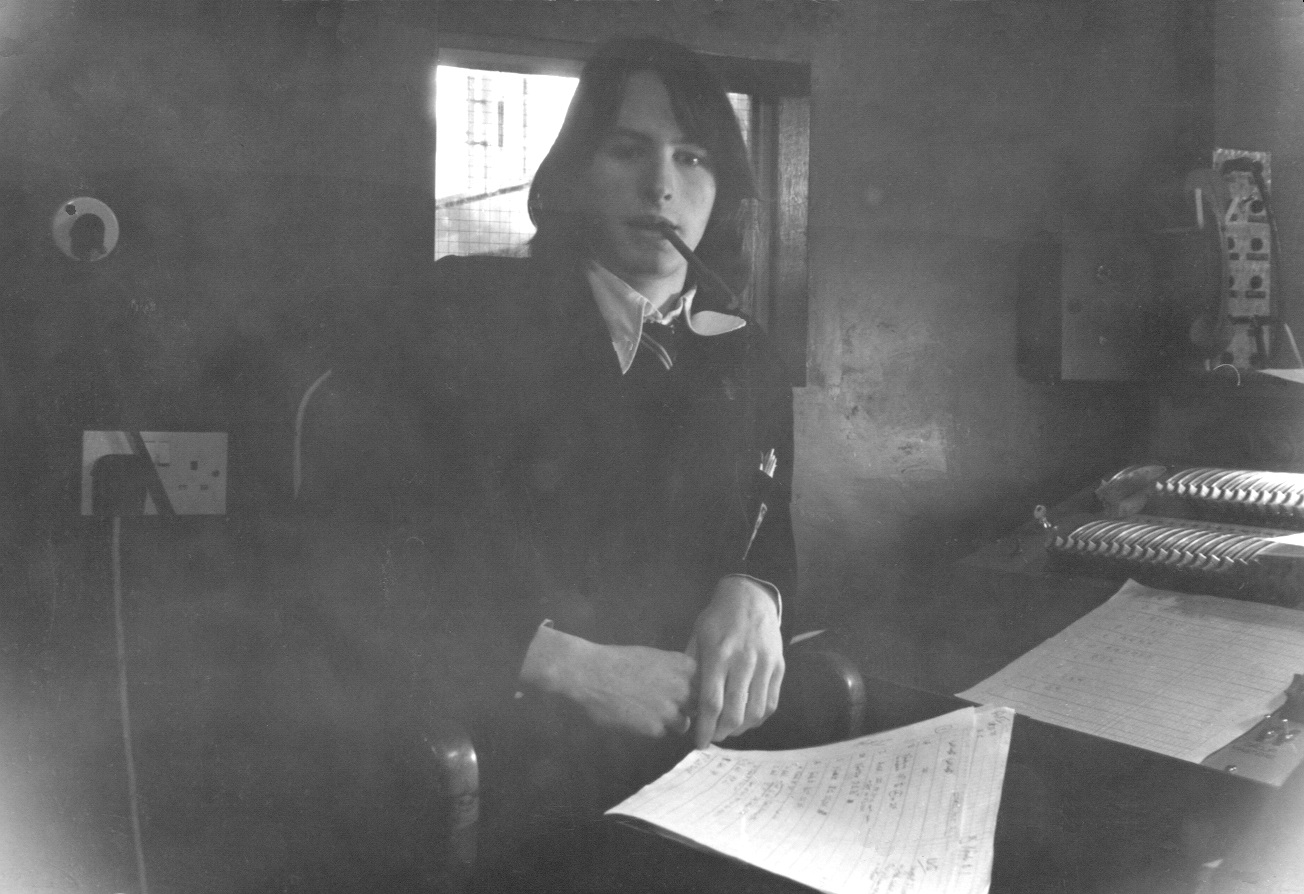
Me in the lighting box
I have already mentioned Twitch and Colin, and here are some other teachers who were also memorable. The coolest priest was Father Raymond. He rode a Triumph motorcycle and smoked cigarettes, often at the same time. After I had left, he was involved in a scandal where he had an affair with one of the schoolgirls from across the road, he was about 35 by the way, the result of which was that he left the priesthood. There were two other priests, Father Eric and Father Louis who I remember took a suspiciously close interest in little boys, which was confirmed in the stories of other ex-boys on the old Salvatorians website. Derek Frew took over rugby in the sixth form. He was a great lad who always came to the pub with us after a game, and being an ex-player himself was a very good coach. There are so many memories of the weird collection of teachers that passed through the school that I think I shall not bore you with them here. However, the next section will explore one if the worst of them.
'Doc' was the maths teacher for O-level students. He was wheelchair bound due to having contracted polio on a school trip abroad. The story was that he refused the vaccination because he said that if he did contract polio then it would be Gods will, and it was. He was a bomber pilot in the war, was shot down at some point, and consequently spent half the war in a prison camp in Germany.
Nobody liked Doc. He used to punish errant boys who had to lie over the handrails of his wheelchair while he struck their backside with his hand. He had favourites in class and if you were not one of them, then you were the target of his sarcasm and distain. If you were a favourite, then you might be invited back to class for extra lessons or maybe even to his house. It was not good to be a favourite because Doc liked little boys and was always on the lookout for one to abuse. He was careful of course and did not push his luck, however all the stories pointed in this direction. All the attention I got from him was lunchtime detentions, but I cannot remember why. Detention was not used to improve your maths, but to sand down the desktops to remove ink graffiti that had built up on them over the years, a lot of it concerning Doc. After all the desks were sanded, they were not re-varnished. They were left as bare wood so that any accidental drops of ink were grounds for more sanding in detention. He was a true sadist.
Years later, when Doc was in hospital enduring his final illness, he was full of good cheer and resigned to his fate. He was an ideal patient who talked and joked with the nurses looking after him. Then one day one of the nurses told him that her son had been at Salvatorian College and was one of his ex-students. From that moment his countenance changed. He lost his cheerfulness and spoke only when he needed to. He knew what the students thought about him, and he knew what stories were being told to that nurse by her son, and he also knew that all the other nurses would know what a sadistic little shit he was. So, he died surrounded by that knowledge.
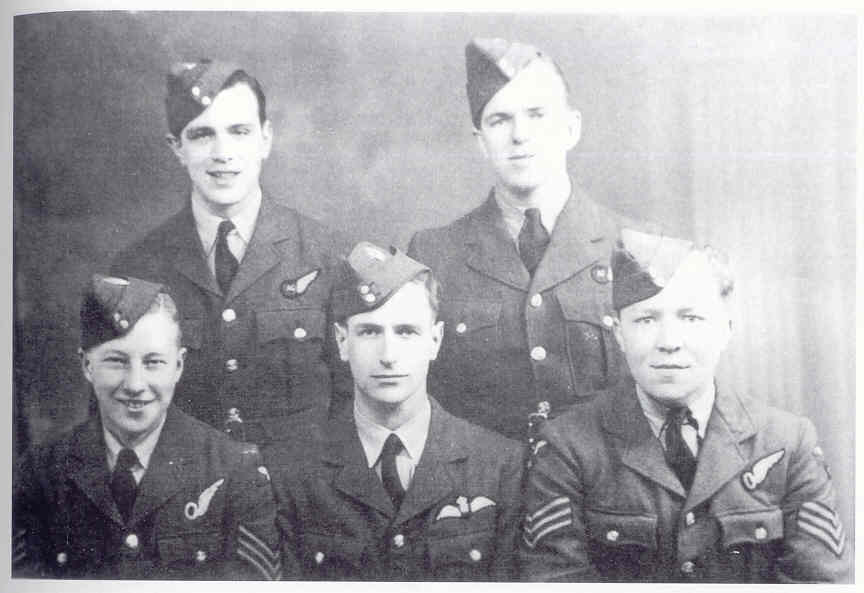
Doc Lewis - Center
There were a few bullying types in the school, one of which was Kevin Corbett. He delighted in finding people to bully in order to mess up their day and exert his authority over them. He was shorter than me and a bit stocky. One day in the art lesson I was sitting down admiring a drawing I had just finished when Kevin came along beside me and scribbled all over it. He laughed at my indignation and said, “Oh yeah, what you gonna do about it”. “I'll see you outside” I heard myself saying. He was waiting in the corridor after the lesson with his chin out and a smug expression on his face. Without any words or hesitation, I punched him hard on that chin and he immediately bent double holding his face. I turned and walked away. Art was the last lesson of the day, so I went back to my form room, collected my stuff and started to leave. I was almost at the gate when I heard someone running up behind me, it was Kevin. He pushed me in the side as he passed and then stopped in front of me to throw a punch which landed somewhere on my face. I barely flinched. He looked back in shock. I then proceeded to throw about six punches in his direction, which left him again clutching his face on the ground. I left him there and walked on without saying a word. Kevin never bothered me again. I heard in later years that he still remembered that thrashing I gave him.
Incidentally, the Art teacher was pretty cool, and I was sorry to have to give it up at the start of O-levels. He said that in his experience, compared to the secondary modern schools, grammar school kids were much more creative in the tricks they played on teachers and each other. The secondary modern kids were into violence and damage, whereas in grammar schools it was more about shock and surprise. (Except for Kevin).
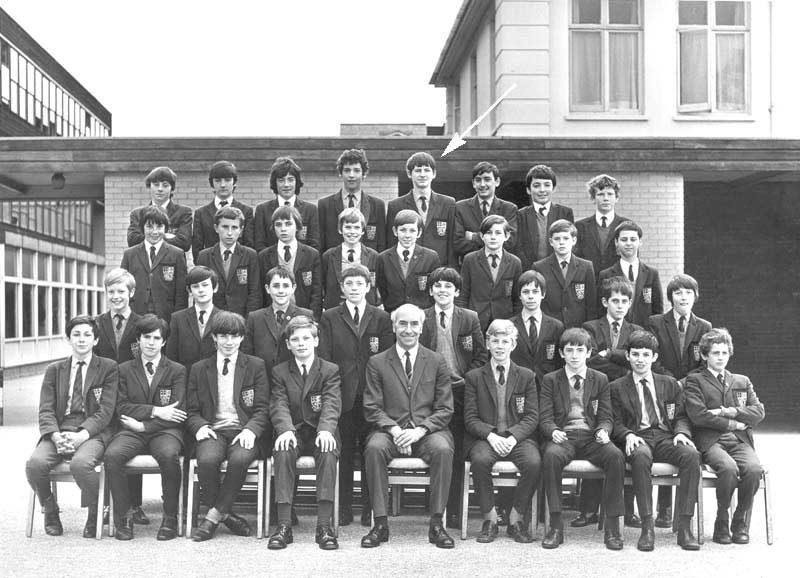
The 4th Form. I'm just to the right of centre in the back row.
Kevin Corbett is top left in the back row.
My parents had no qualifications from school, in fact, they only did the bare minimum in the education system before having to leave and get a job. All through my academic journey, I don't remember any support or encouragement from my parents. There were no discussions on how important it was to get O or A levels, let alone going to university. I was never asked about homework, or how well I was doing at school, or even what I wanted to do when I left. There was a complication in that my father had hoped that I would want to take over the family plumbing business. As mentioned previously, I did work for him during the school holidays so that I could get some money, but all that did was convince me that it was not a career I was interested in. One day around the kitchen table, my father asked me directly whether I wanted to go into the family business. I did not have to think about it for very long because I already had the answer. I am sure that he was disappointed, but he didn't show it, but then I wasn't looking for a reaction. In retrospect I would potentially have been a multi-millionaire by now if I had accepted the offer.
Starting in 1975, my O-level year, there were a series of three hot summers, so I recall revising for my O-levels in stifling heat in the local libraries. I could not revise effectively at home because of the many distractions. In those times there were no air-conditioned buildings to retreat to, so even the library was hot and sweaty. I don't think that my revision strategies were in any way effective. There were no previous papers to work through, all we had were the course notes.
I got a fairly good bunch of O-levels. The grades were not stellar, but I passed them all with room to spare. I got nine passes including: - Maths, Physics, Chemistry, Design and technology, English language, English literature, French and Geography. As you can see, I gave up Latin. Some of the less able kids did CSEs, which at the time were a much simpler exam. A top mark in a CSE was about the same as pass in O-level, useless in other words.
After the O-levels finished I went on a ferry trip to Denmark with a couple of guys from school. They were Mick Phelan and Ged O-Brien. I cannot remember whose idea it was but all we did was ride the overnight ferry to Bergen, then after a couple of hours wondering around the harbour, got back on the same ferry and sailed home. The weather was quite lumpy on the way home and a number of the passengers were leaving puddles of sick on the deck. This was my first trip away without my parents and I quite enjoyed the freedom to stay up all night and drink as much beer as my queasy stomach could take.
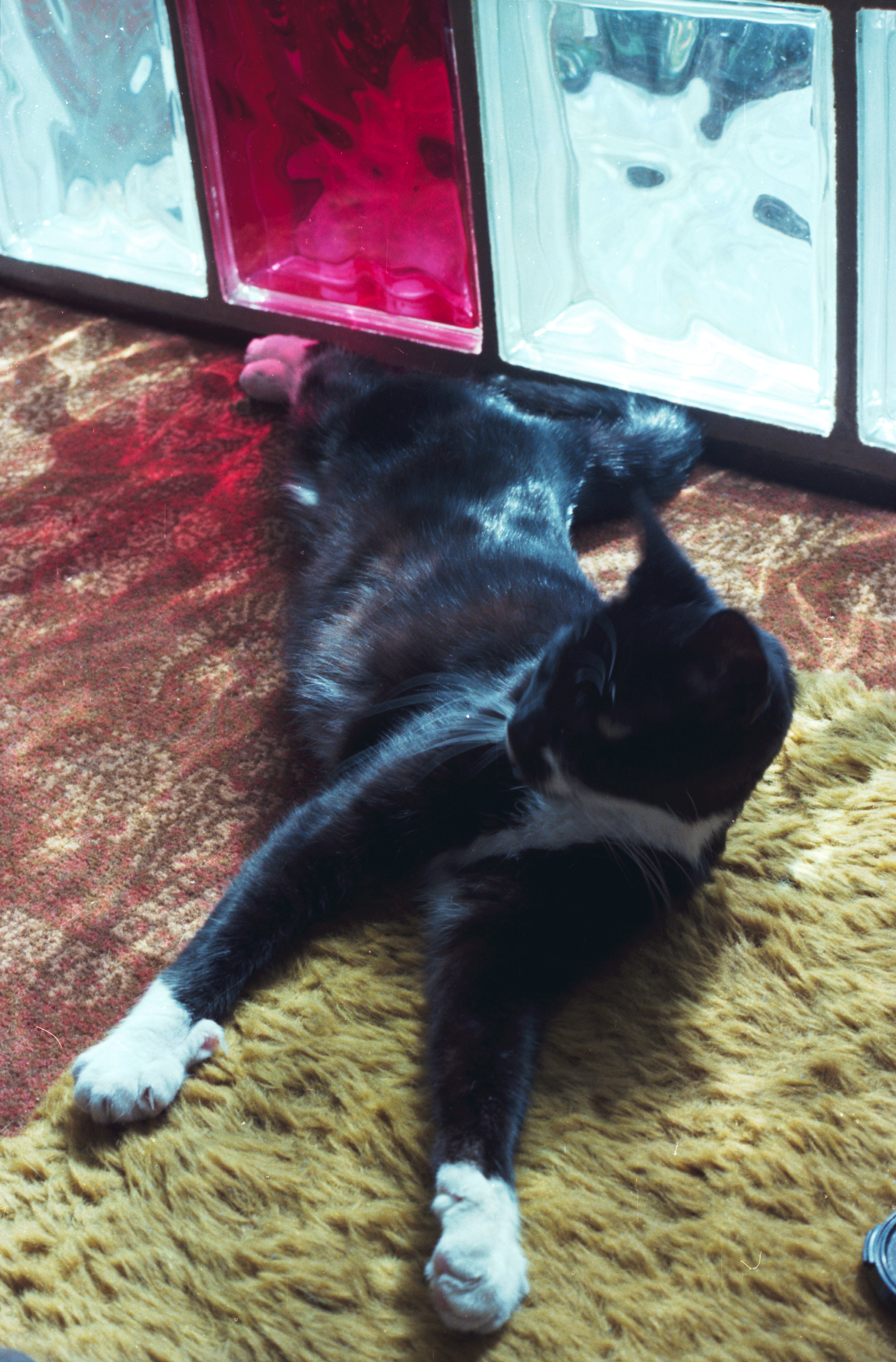
Trixie the cat. Our constant companion at home.
Both my brother Pete and I, as soon as we were able, got into motorbikes. Pete had left school after his O-levels and needing transport to commute to work. Dad tried to control the situation by purchasing a Honda C50 step-thru scooter. He hoped that this would stop Pete from getting anything bigger and more dangerous. It didn't work. Pete's first proper bike was a BSA 250cc Gold Star. This was a nasty unreliable example of the worst that the UK bike industry could produce. In no time we were dismantling the engine for some reason, and fettling parts on the bedroom floor, since it was winter, and the shed was cold. Mum was remarkably calm about this.
As soon as the BSA was working he got rid of it and moved up to a Yamaha 650, which was much more civilised. I think there was also a Suzuki 500 two stroke at some time, now that was a scary monster to ride. My first bike was a BSA Bantum. This was a primitive, slow 125cc 2-stroke. I managed 55mph once on a long downhill stretch. Looking back, I quite liked it because I understood everything about it, and everything was fixable, unlike modern ones. I cannot remember what happened to the Bantum, but it was replaced by a twin cylinder Honda 160 which I got from somewhere. I converted it to 175cc by buying new pistons and grafting on a cylinder barrel from a breakers yard. Amazingly it worked.
What I remember most about motorbikes was the noise, the cold and how wet you got in the rain. I also came off the Bantum once when it was icy. It was at very low speed but scary enough to make me very wary of inclement weather, so as soon as I could I took to four wheels and never returned to the bikes again. All this was ahead if me though, back to school.
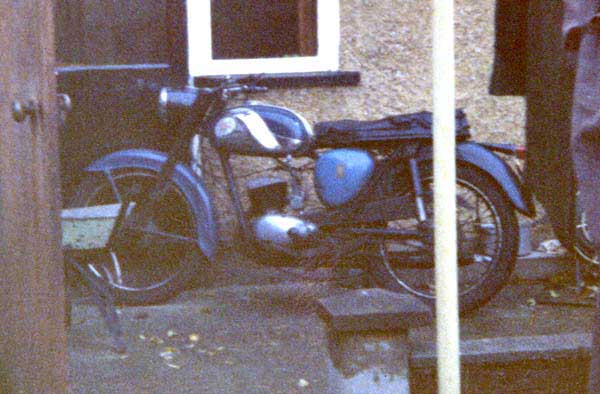
My BSA Bantum
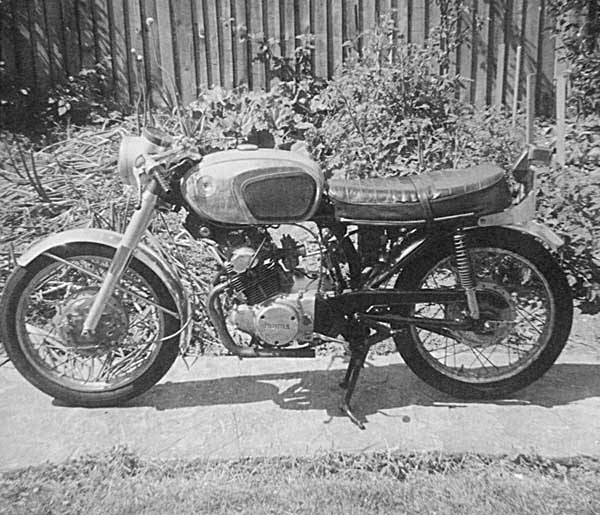
My Honda C160
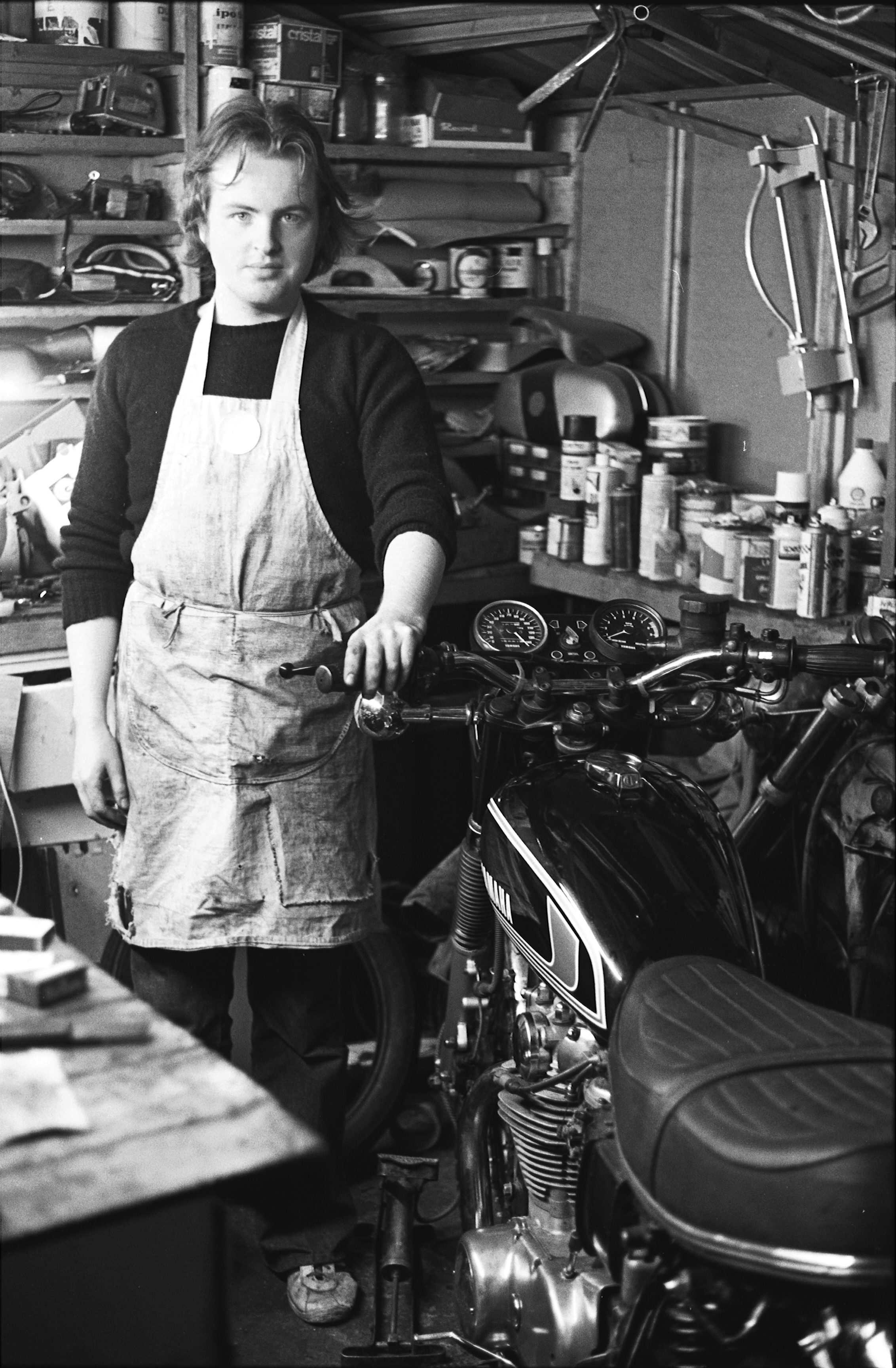
My brother Pete in the motorbike days
Once in the sixth form, the colour of our blazers changed from green to black. I don't know where our old blazers went, mother probably just threw them out at some point. I opted to study Maths, Physics and Design & technology. I thought I was best at these based on my O-level results, but it turned out otherwise.
As a sixth former, you could now hang out in the sixth form common room buried deep underneath the hall. It had no windows so was dark and smelly and had a strange, sweet smokiness in the air now and then. For amusement there was a pinball machine and many games of 5 card brag going on. We sometimes went to the pub in our school uniforms and had no problems being served in The Alma, next to Wealdstone bus garage. In line with the current fashions, I had been growing my hair long. Unfortunately, being a teenager, my hair was mousey, straight and greasy. Luckily, I did not realise this was a bad thing, and just went with the grungy look.
There were a couple of my fellows in sixth form who went on to greater things. The first was Tony McNulty with whom I played rugby. He went on to be the Labour MP for Harrow East for more than 10 years, before being ousted in the expenses scandal in 2009. Second was Steve Moore, another rugby player, who became a member of the board of Microsoft for a time. In later years on a skiing holiday, I bumped into another contemporary who had done well, Julian Norman-Taylor became a leading consultant Gynaecologist in London. There may well have been many more but who knows.
We were excused PE in the sixth form, but a lot of us still did Rugby, Cricket etc. Some of us now became prefects. This was now an opportunity to flick younger kids around the ears if they ran too fast in the corridors or such. Another responsibility was to police the bus stop across the road from the school. We just had to get the first bus loaded and then we could leave. I sometimes just got on the bus myself if I was not doing anything else at the school. It was while at the bus stop that we occasionally saw a coach loaded with schoolgirls go past towards Harrow. We often waved and they waved back enthusiastically. Little did I know that there was one very important person on that bus who I would meet again almost thirty years later. And here I am sitting next to her on my wedding day.
It was in the first year in sixth form that I passed both my motorbike and car tests in the same week. I do not remember much about the tests but do remember that I thought they were easy. For the bike test I borrowed my brother Pete's BSA Gold Star. That was a beast of a 250cc single cylinder, and a sod to kick-start. I passed my driving test in the instructor's car. The instructor by the way was a miserable sad man with thin un-kept hair and bad teeth.
After passing the car test, I sometimes borrowed my dad's car to go to school. It was a metallic lime green Vauxhall Victor and was for some reason garaged in a block of flats across the main Kenton Road. When I wanted the car, I walked down there in the morning and returned it to the garage long before my dad returned home, not that he would notice if he had. My mum did not drive at that time so never required a car during the day. Both my brothers had left school at the end of their O-levels, so I had no need to take them as well.
In design and technology, we had our own office at one end of the woodwork shop. That is where the select group of D&T students spent their time working and talking. I can only remember John Sheldon and Alan St. Clair, who later became a punk guitarist as one of the four or five of us that were there. As part of my course work, I designed a lighting console for the school hall, and a molten plastic sprayer. The sprayer worked by feeding plastic powder into a gas blowtorch from the forge. It worked great, and when a visitor from Central School of Art and Design in London came to the school, he even offered me a place there, which I stupidly turned down in favour of what I actually did, which comes in the next section.
There were a few parties that I remember going to, one notable one was at John Sheldon's house. His parents were away so he invited a load of people round. The house was filled with 17- & 18-year-olds and the dimmed lights, loud music and free flowing alcohol had the desired effect. Every corner seemed to be occupied with snogging and groping couples. Not me though, Sigh, I did however get very drunk. Suddenly, Johns parents came home expectantly, I think one of the neighbours contacted them about the noise. The house was emptied pretty quick. This was my first proper teenage party. We learned that they had to re-carpet most of downstairs due to the spilled beer and sick.
My A-level maths teacher was useless. I cannot remember his name, but I do remember that I was on my own. I did not do well in the exams and got an E, which is just a pass. In Physics, I think I got a D, just a bit better than Maths. My best subject by far was Design and technology where I got an A. While doing my A-levels I did the rounds of universities in the expectation that I would be going to one. I visited Southampton, Lancaster and Surrey universities, all in vain. It needs to be remembered that at that time only the seriously clever went to university, about 13% of students. I was however offered a clearing space studying Physics at South Bank University but turned it down. I was not interested in studying Physics or travelling to South London every day.
There was a party to celebrate the end of our school days. It was a joint one between us and St Dominics girl's school. It was held in a hall next to South Harrow railway station. I cannot remember a lot about the party, but it was here that Cornelius Bohane got together with Tracy Adams who I was planning to make a move on but never had the courage. Most people then just went their own way to university or jobs, never to return. I did return to the school in later years though, as a member of an amateur dramatic society called Proscenium, who are still going at time of writing. There are even some members today who were there in my time.
It was about the end of sixth form that somehow from somebody my dad got me my first car. It was a grey Ford Anglia 105E, registration 3856BY. It was one year younger than I was and cost £50. I think it was about now that I started using my own car insurance. Up until this point, I had been using my fathers. His insurance certificate was in the name of J. Blaine, which was ambiguous enough for me to use as well if needed. Moreover, it was needed once when I was stopped one morning for a bald tyre when driving one of my dads' vans and was given a 'Producer' by the policeman. A producer meant that I was given 7 days to report to a police station with my license, MOT and insurance certificate. When I went, the policeman behind the counter ticked them all off as OK.
As briefly mentioned previously, both my brothers left school after their O levels. Neither Pete nor Steve achieved much in their exams, so I was the only brother to progress to sixth form. Anita however did much better and ended up taking a history of art degree at Sheffield University. I don't think that any of us boys thought that our failure to achieve highly in school was a problem. Only 13% of students went to university in those days, so we were well within the normal spectrum of achievement. After a couple of false starts, Pete went on to be a very successful sales manager in the sporting shotgun market. Anita joined the civil service just after university and remained there throughout her career. Steve however turned out to be a more troubled soul, and after a couple of attempts, he gave up work and retired to his bedroom in the family home to become a lifelong lonely alcoholic hermit supported by his parents.
I never really knew Steve. Tragically none of us had any sympathy for him and looked on him as lazy and useless. However, even when he was young it was recognised that he was withdrawn and friendless. My parents took him to the doctor one day, who said that the family should be bonding with him more, and because of this Mum asked me to take him down the park and hit a tennis ball around, which I did. This was probably the only time I did anything like this with him. Being young and having my own interests meant that to me, anything to do with Steve was uninteresting and a waste of my time. I was guilty in my youth of thinking that other people's problems, even within the family, were nothing to do with me, and so not visible on my radar. In retrospect, Steve obviously had a mental health issue. He may have been a sociopath or schizophrenic, but in those days these sorts of illnesses are hushed up. Steve never changed, he sat in his room, supported by mum and dad and drank cheap booze until it cut his life short at 53 due to liver failure. The detail of that event is a story outside this books' scope.
Looking back, my experience at Salvo was overwhelmingly positive. My exam results were not stellar, but I got involved in just about everything else available, from sport to stage-crew, go-karts to the hovercraft, which both helped to cement my interest in engineering. I feel sorry for people who did not enjoy their school days; I used every minute and had a great time.
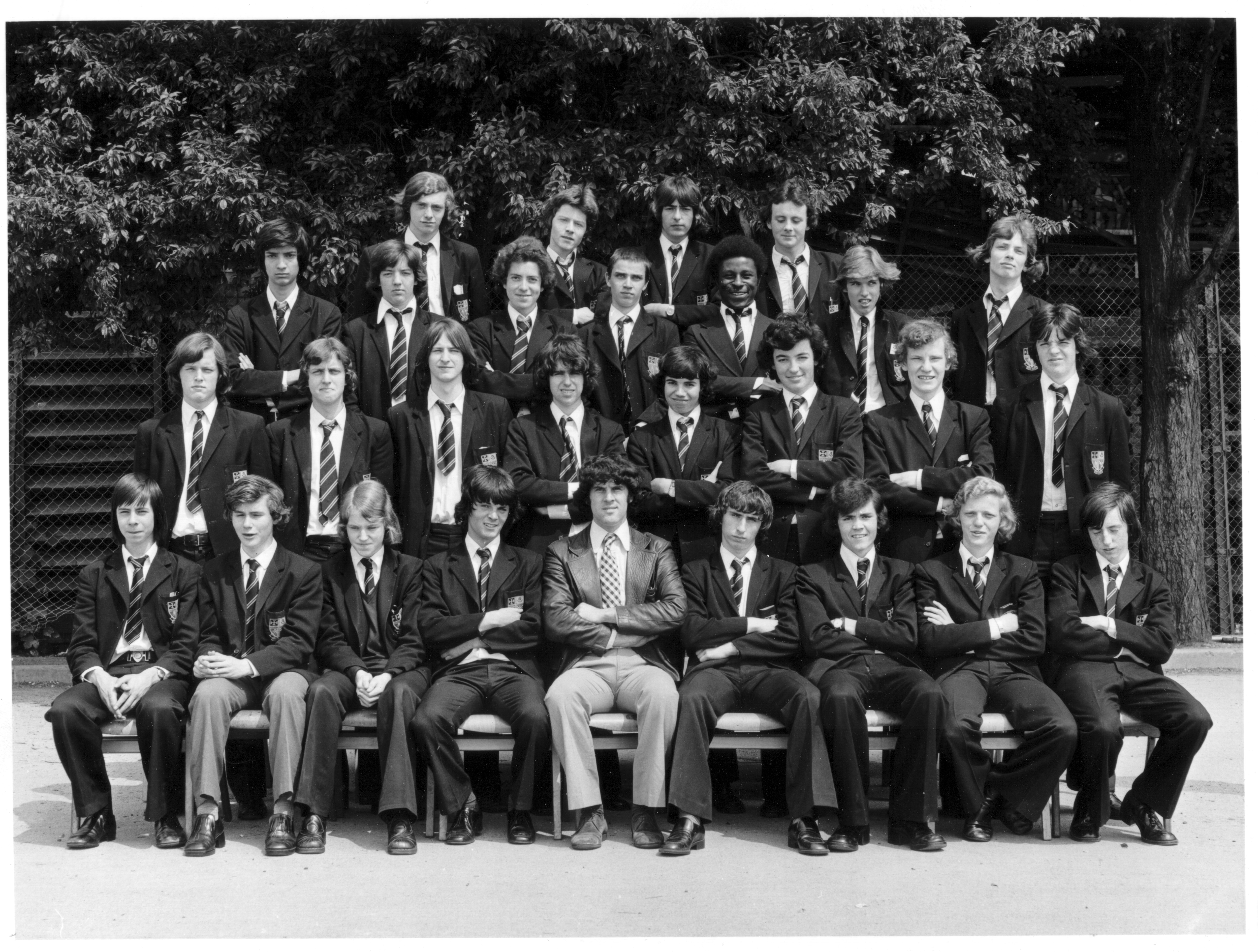
Sixth Form.
I'm the one with the short tie.
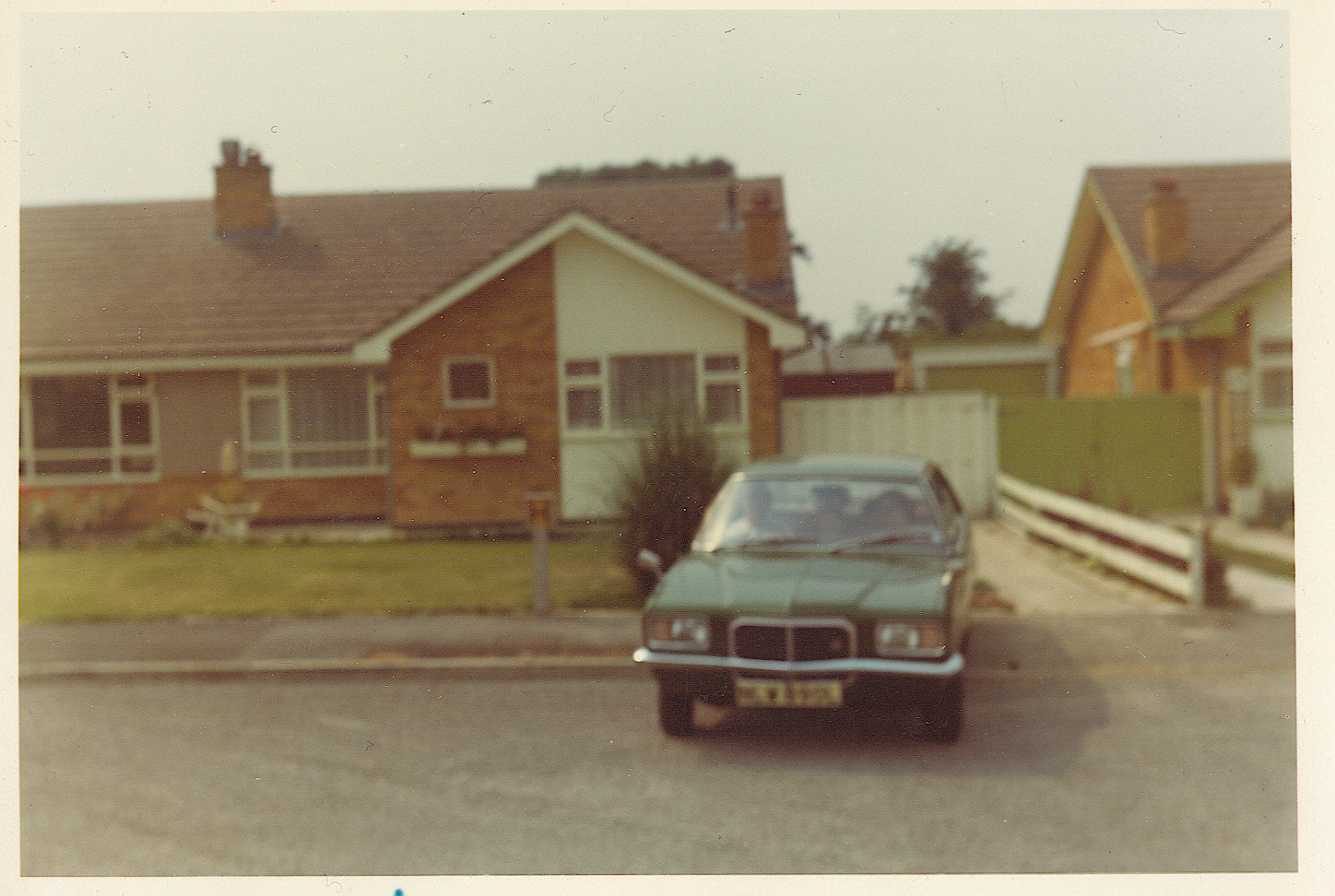
My dads Vauxhall Victor, that I used to borrow.
In the summer after the exams, I went on holiday to Ireland with Mick Phelans family. They had rented a house somewhere on the West coast. On the day we were to leave, the big car we were supposed to be travelling in broke down, there was another car, but it was small and could not take myself, Mick, his parents and two older sisters and the luggage. The solution was that we had to get Micks brother to drive some of us all the way over in a second car. He had not planned to come, but he was working as a freelance taxi driver at the time, so was able to drop everything. Halfway across Ireland we stopped at a roadside cafe for a meal. I had the fish, which turned out to be a big mistake because by the time we got to the house I was feeling quite ill and spent the first two days in bed with food poisoning. The rest of the week was fine though. I spent some very pleasant hours on the beach since the summer of 1977 was also an abnormally warm one.
Micks' brother had driven home after dropping us off, so there was a change of plan for the trip home. The plan was to take a roundabout route via two youth hostels. Mick and I went with his parents in the only remaining car, but his two sisters decided to hitchhike. The first hostel was in Galway, right next to a mountain, which we decided to climb. This was my first mountain and was great fun but exhausting. When we got to the second hostel, we discovered that the two girls had still not managed to get a lift and had decided to give up hitching and took the train to Dublin.
It was during this trip that I phoned home to check my A-level results. I was disappointed but not too much because, as you can see from the next chapter, in my mind my career was sorted.