Chapter 6: Kirkbride Associates
Alec was an Industrial Designer and formed Kirkbride Associates to practice his art. Attached to one side of the house was a single storey office. It had enough space for four drawing boards, a secretary, W.C. and kitchen area. Between the office and the house was a garage where Alec was restoring a 1930s Rolls Royce with the help of a friend.
In the first week of January 1978, aged 19, I started work there as a draughtsman. I produced drawings and artworks to help the other designers in the office. Most of the time there were two designers and me. Alec rarely spent time in the office, he had his own work area in the house. I worked with pencils and rubbers and produced artworks using ink and Letraset. Letraset was a way of producing text on artworks using sheets of rubdown lettering, it was a bit of a skill to master the process. It is all on computers now of course.
I was paid the princely sum of £2,800 per annum, which I thought was OK at the time since I was only being paid £2,500 in the RAF. I enjoyed the work and settled into the team pretty well. After a while, I have no idea why, but I decided I needed more education. I found a part time HNC Product design course in Harrow College of Technology and asked Alec if they would let me do it because it involved spending one day per week at the college. He agreed, and kept my pay the same. Alec's main designer was Peter Paine. Spookily, Peter was an ex-Salvatorian and took an Industrial design degree at Central School of Art and Design, so in another world, that could have been me. Peter had some great stories from his student days in London in the swinging 60's. He and his mates wandered the streets at the weekend and always found a party to crash somewhere. He holidayed in Spain with friends and told quite a few very blue stories about what they got up to in the early days of package tours to the Spanish Riviera. To add to the cool, Peter drove a 3 litre six-cylinder MGC that ran on 5-star petrol.
Kirkbrides did work for some quite large and well-known customers. Among them were CI Caravans, Whale, Compair, and JCB. For Whale, I designed the mechanism for a peristaltic tap for caravans and boats. The tap squeezed a silicon tube to stop the water flow, hence peristaltic. For Compair we worked on a new pneumatic road-breaker. This had a moulded plastic silencer jacket, which I designed. It was very innovative at a time when all road breakers were just covered in a canvas bag to try to silence the exhaust noise a bit. Then there was JCB where we designed the cabs, and I made cardboard models of the various options.
Our biggest customer was CI Caravans based in Norfolk. Peter and I worked together on the new designs. I remember the Sprite and Europa as particular models. My job was to make cardboard models and artworks. I even visited them once or twice with Alec. On the road from the A1 to Royston in Cambridgeshire, there is a row of trees across a field in the near distance where Alec said, "When I see those trees, I think to myself that this is where the fenlands begin". Those trees are still there 50 years later.
Sometimes I was thrown into the deep end. At the completion of the design process for a new JCB cab, Alec was due to drive to their factory in Staffordshire to present the design, but on the day, he came into the office and said he was too ill to go and would I and one of the industrial designers go instead. I assumed that the designer, whose name I have forgotten, would be doing the presenting since he was the senior man. However, when we got to the extraordinarily large JCB facility and sat in front of a group of very senior JCB managers, including John Bamford himself, the guy went silent. He let me do all the talking, and I am sure I was not that good, but I did it anyway out of sheer ignorance. What should have happened is that Alec should have postponed the trip. It was for me though an insight into a world where I wanted to be.
About this time, in the summer of 1979, my brother Pete announced that he and his friend Bob Steele were going to do a parachute jump, and would I like to come along too. Sounded like a laugh so I said yes. This was the start of a passion in my life that lasted 8 years. More about skydiving later.
It was during my day-release at Harrow Technical College that I realised from the other guys that I was severely underpaid, because they were all earning twice my wage. When I talked to Peter Paine about this, he mentioned that his father was the design manager in a company in Ruislip called Racal BCC, so I wrote to them asking for a job. At the same time Alec was showing another side of his character. I had forgotten to telephone someone about something and when he asked me about it in the office, he lost his temper, shouted at me and kicked a wastepaper bin across the room. The next day I got the job offer for £6,000 from Racal and instantly handed in my notice. Alec was very apologetic about his loss of temper but made no effort to keep me on. I had worked at Kirkbride's for three years. It was now Christmas of 1980 and I was starting my new job first thing in 1981.
Alec Kirkbride died a few years later from Stomach cancer, he was probably in his late 50s. Peter took over the company for a while and renamed it Paine Associates. The last I heard; Peter became the manager of a hotel in Wales. I have never revisited that cul-de-sac.

Kikbride Logo
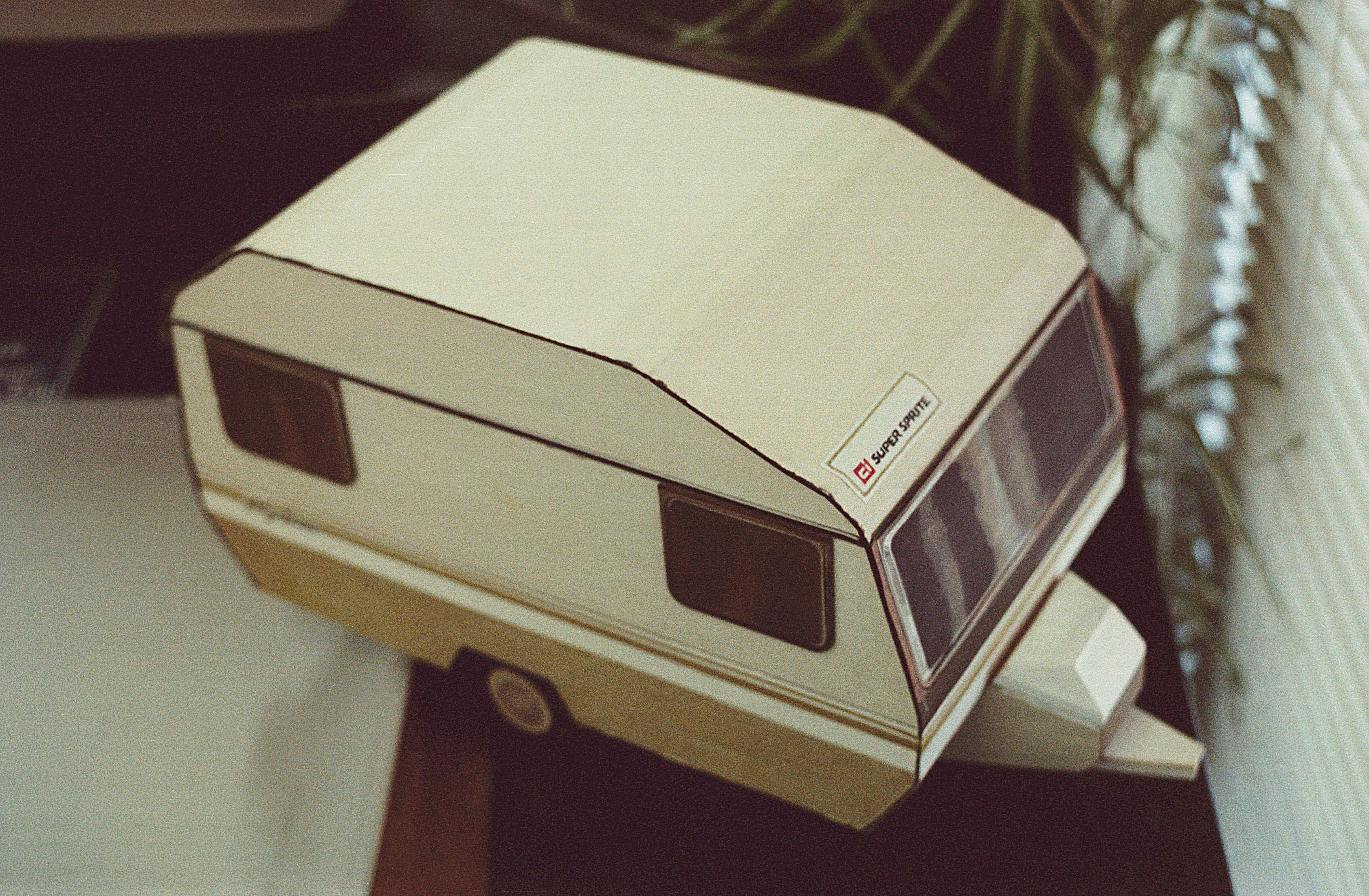
Cardboard model of a CI caravan, made by me.
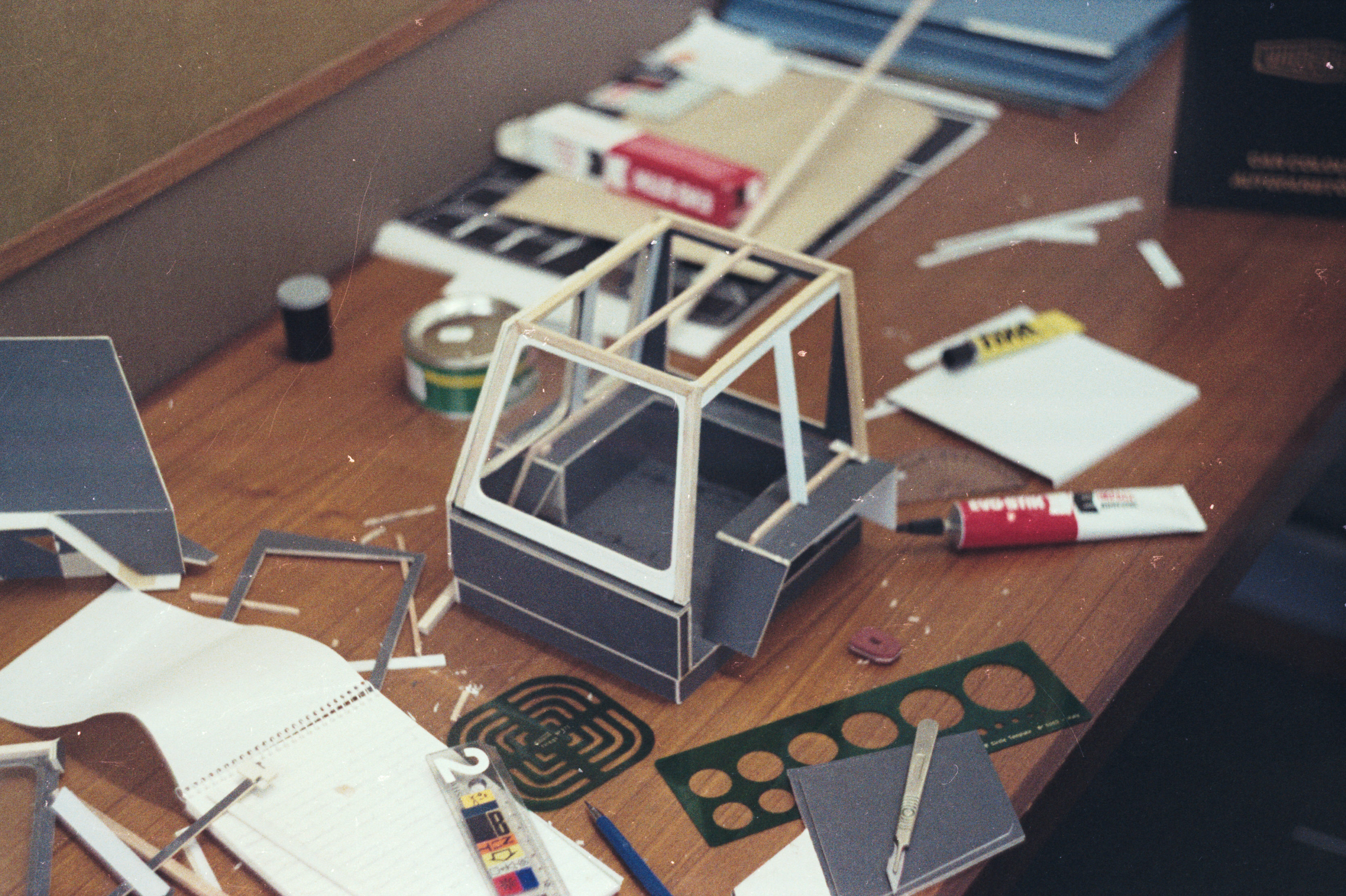
My desk with a JCB cab in preparation
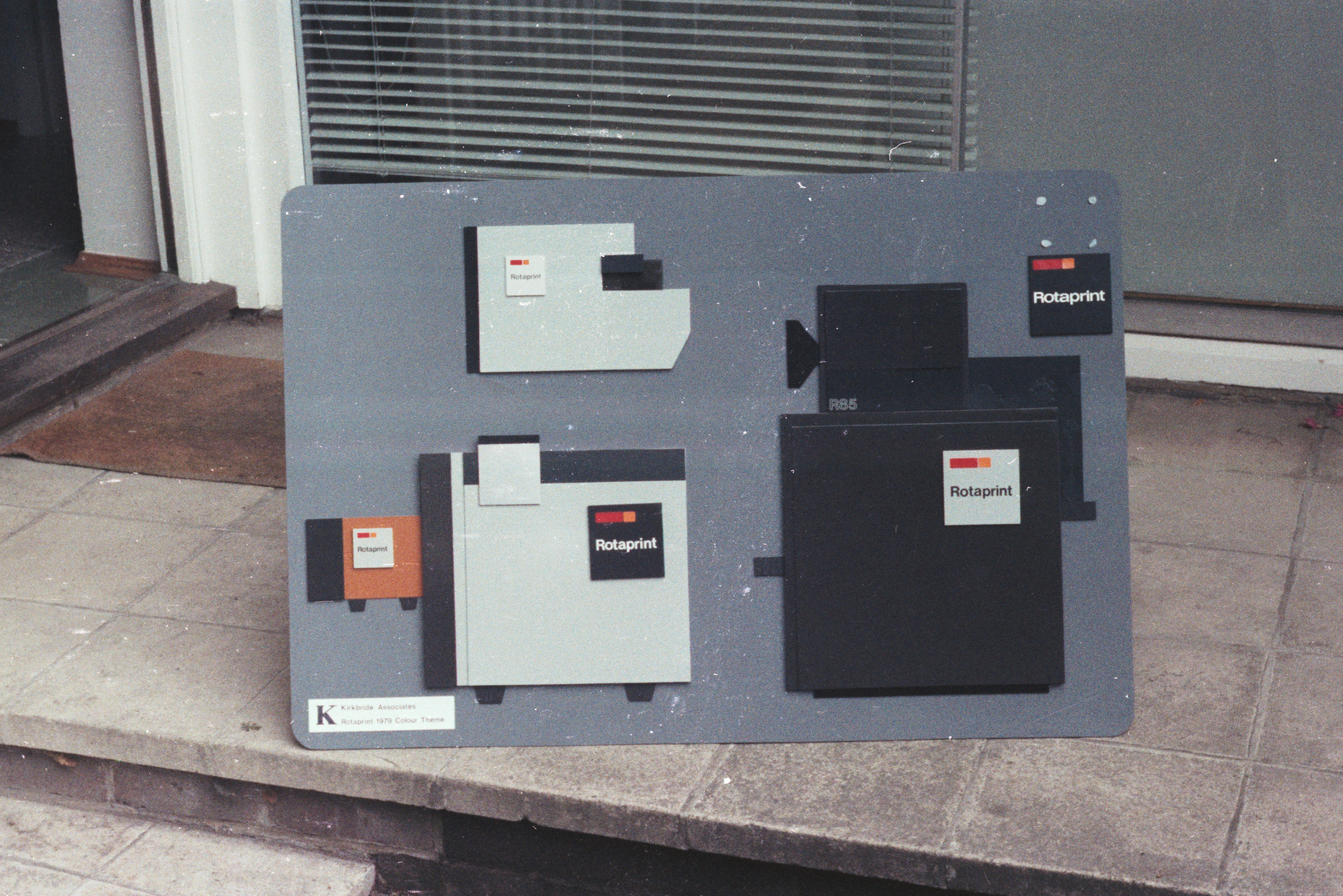
A colorboard for Rotaprint
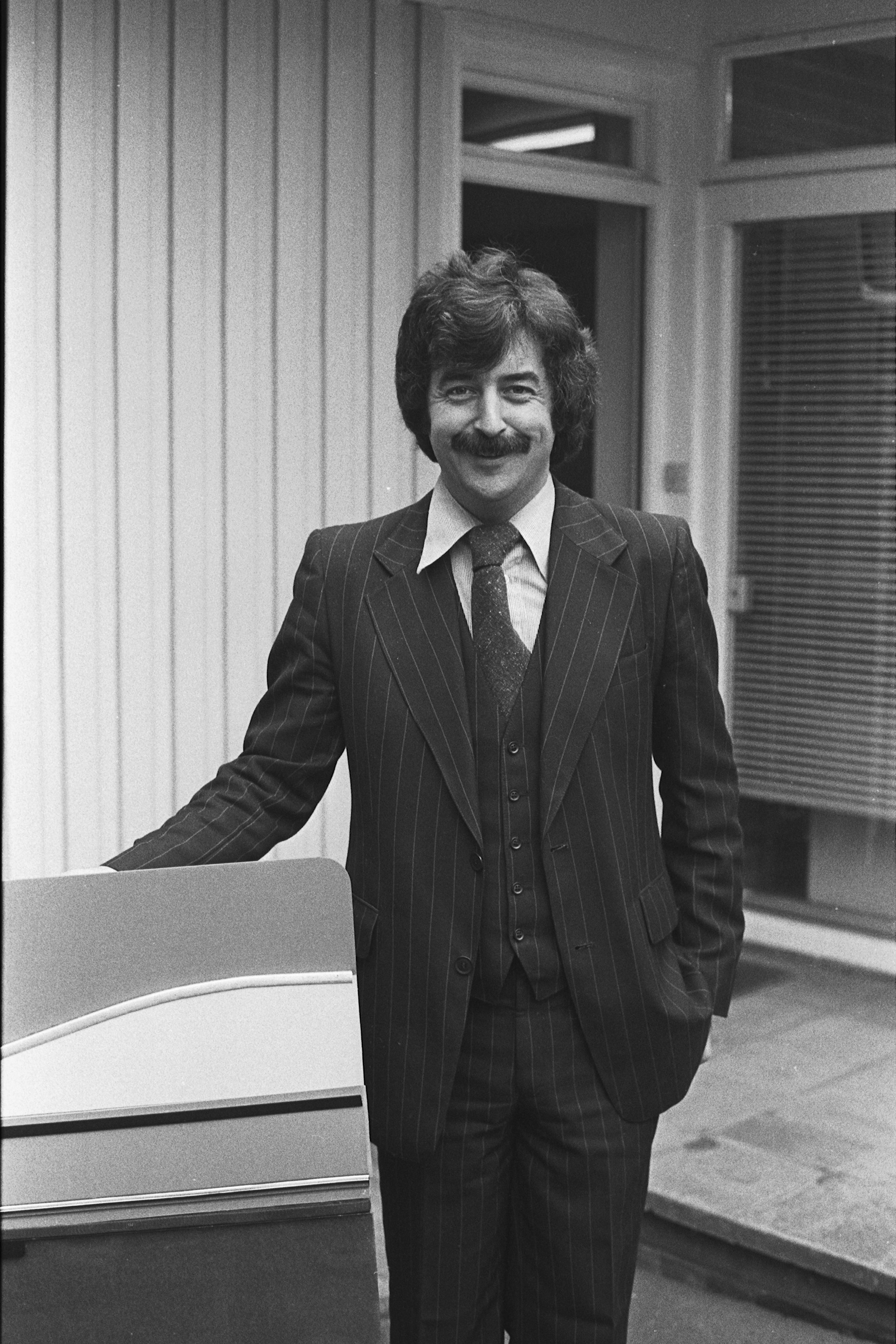
Peter Paine
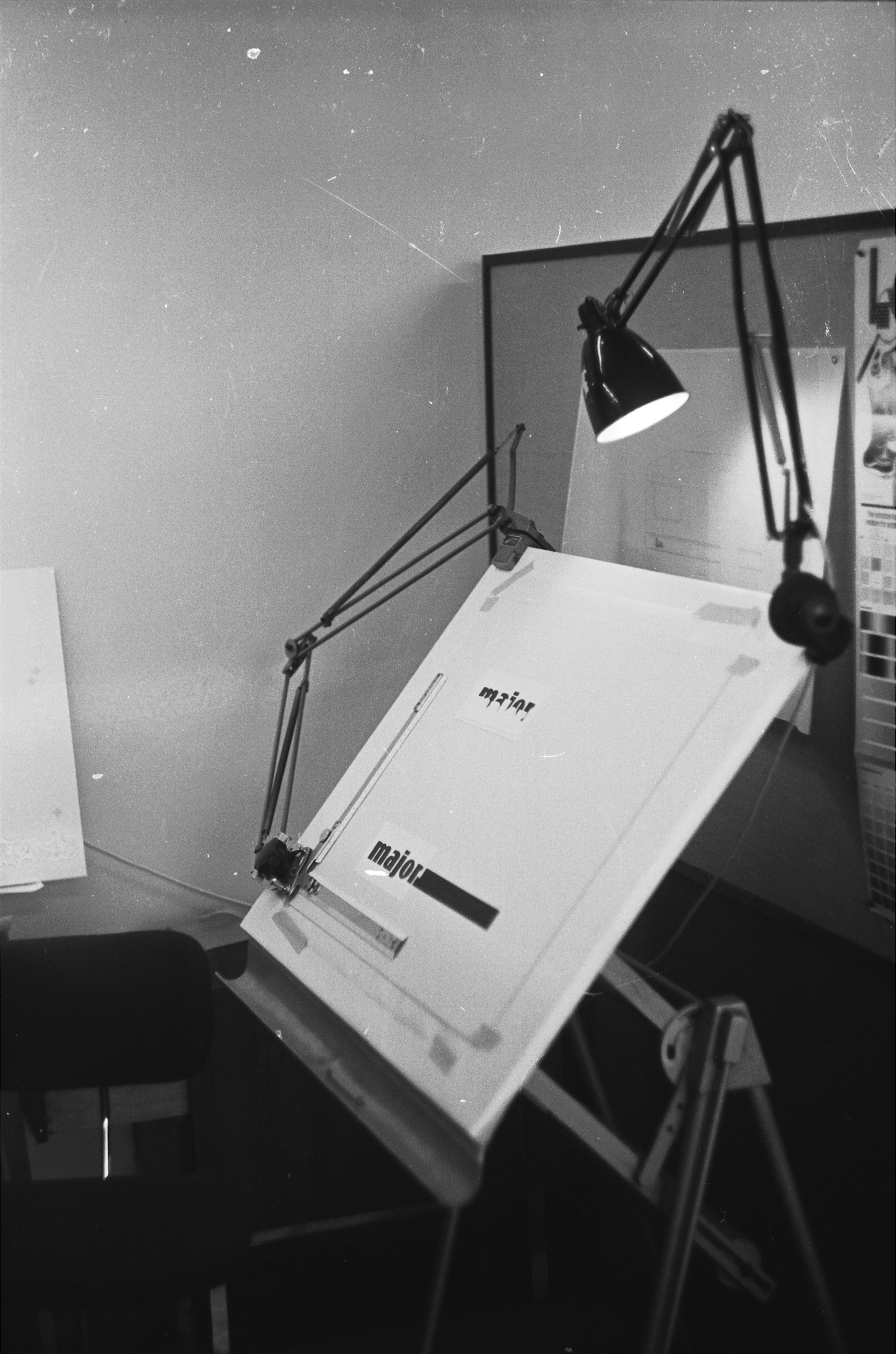
My Drawing Board
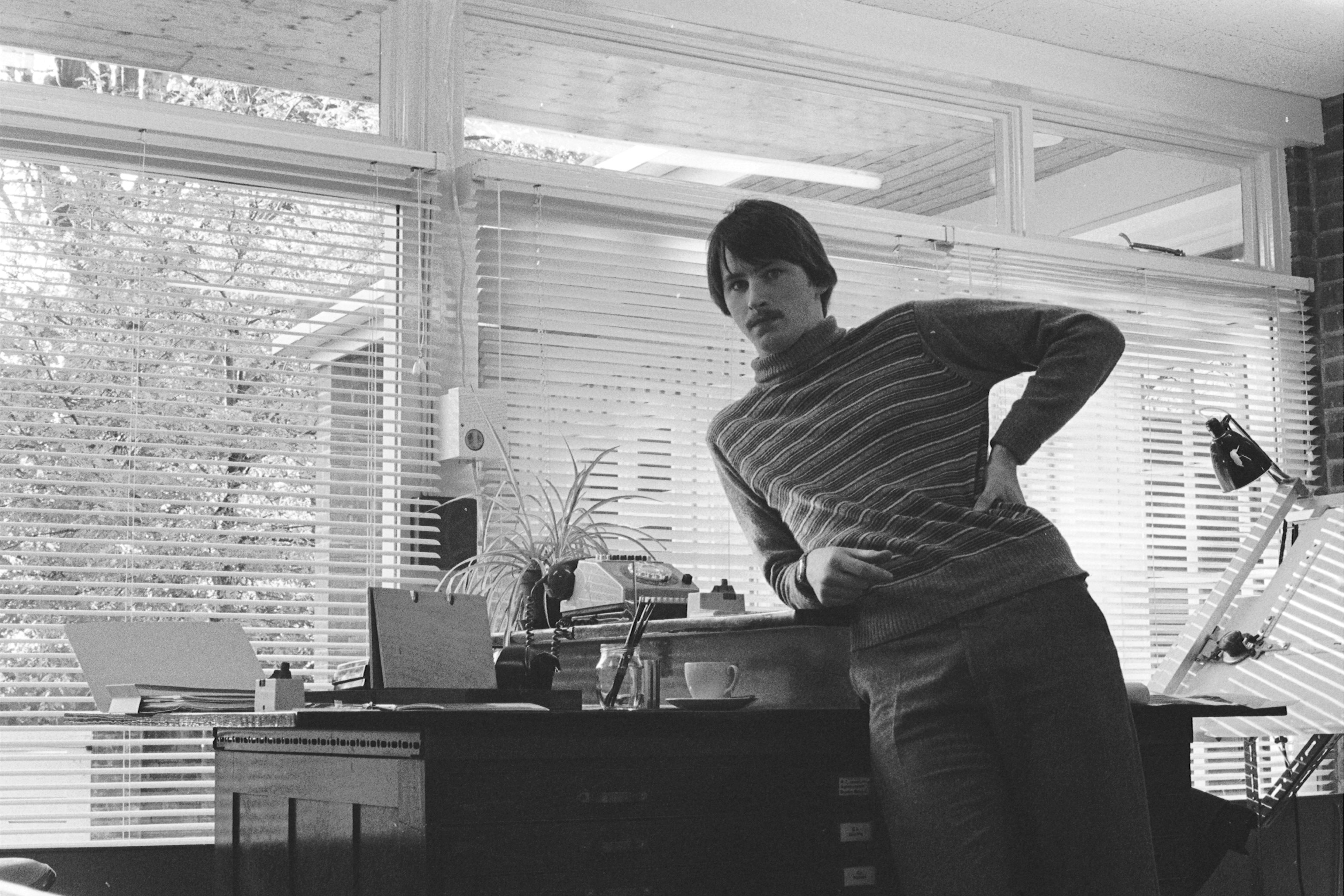
Me at Kirkbrides