
Chapter 7: Photography
To make a print I used a photographic enlarger where light was passed through the negative and projected onto the photographic paper below. The paper was then developed, fixed and washed in three separate trays that I had set up on a wallpapering table in the middle of the bedroom floor. I loved the process of making an 8 x 10-inch print and I can still remember the smell of the chemicals. From that point, I always had a camera to take snaps of what was around me, and whenever I went on a trip. I upgraded from the old Zenit to a Yashica FR1 and then to a Canon A1. The Canon was a fabulous camera, which was top of its range at the time. For me, black and white gave way to colour and then eventually the digital age came and changed everything.
The first digital cameras had such low resolution that they were almost useless for anything with any detail. Some people tried to use them at work to record various things, but the resolution always let them down. It wasn't until the first 2-megapixel cameras appeared that they began to really take off. In 1999, which is almost at the end of this book, I bought a Sony F505 2-megapixel camera and never looked back. It was expensive but the results were worth it. To underline the switch from film I also began to digitise all my old film negatives using a scanner linked to my PC. It was a slow process but meant that every photo I had ever taken was now available digitally. I was an early adopter of this technology and enjoyed the difference and freedom that digital gave. But all that's in the future, for now I had to stick to good old film.
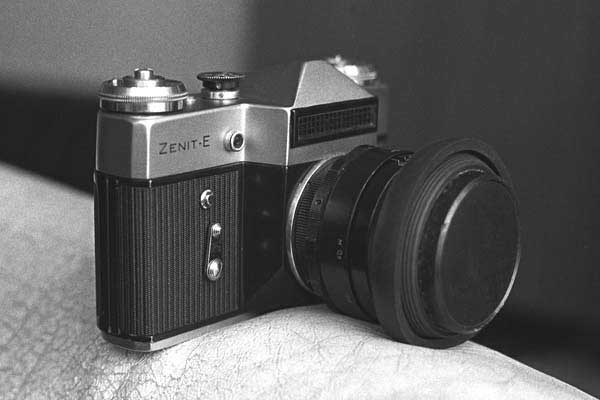
My Zenith E
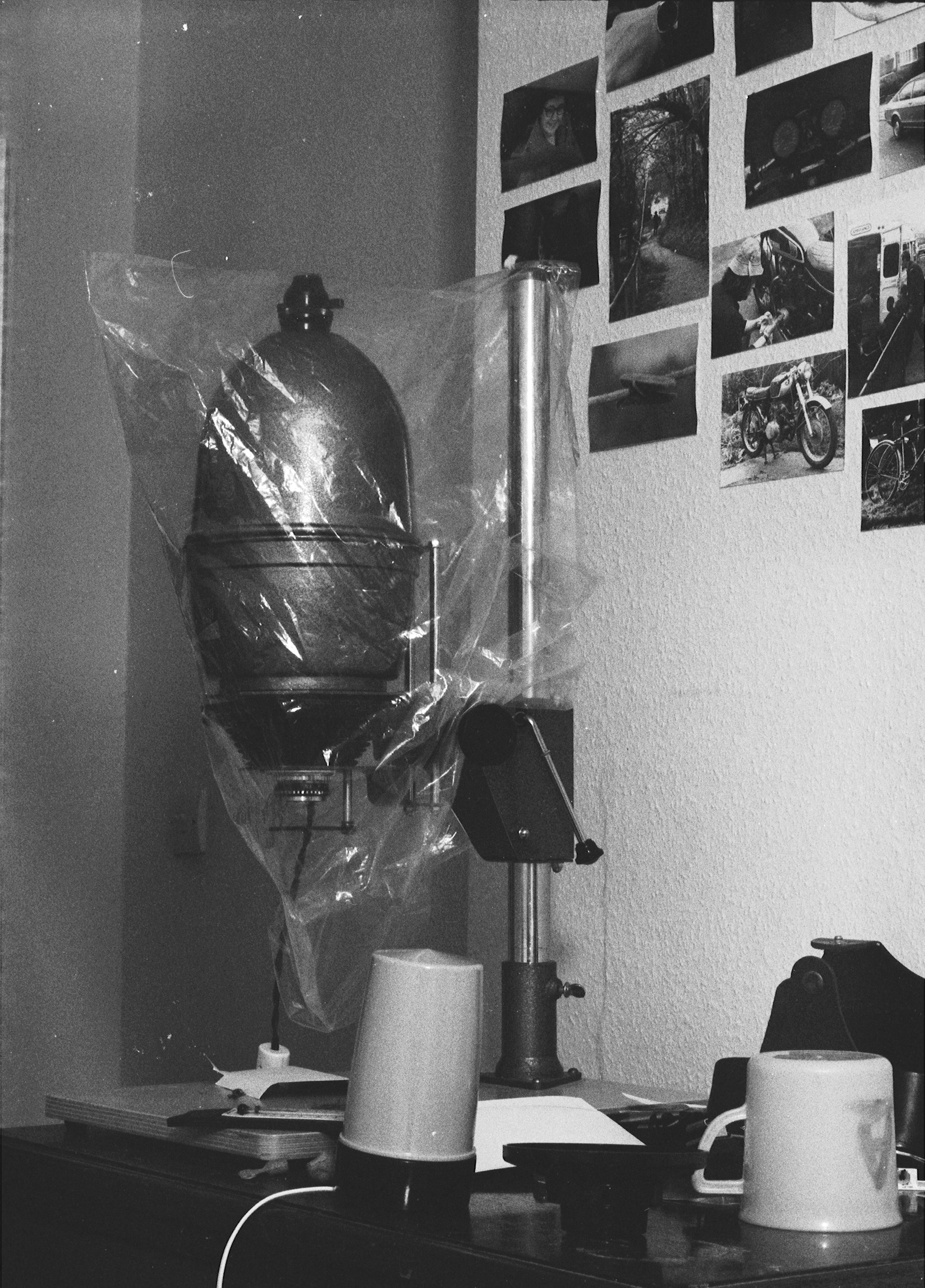
My photo equipment including the enlarger.
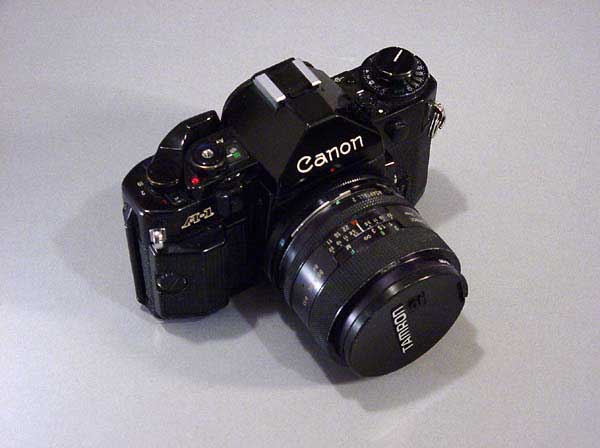
My Canon A1