Chapter 9: Skydiving.
Everyone has a time in their life that they can look back on as the most wonderful, amazing, exciting and memorable of times. For some people these are their university years or the years they played sport. For me it was my years in skydiving. Hardly a day passes without me remembering something that happened or someone I knew from those times. These were the best years of my young life.
My first jump, and most subsequent ones, were at Peterborough Parachute Centre at Sibson airfield in Cambridgeshire. It was situated to the west of the city, on the other side of the A1 Road. It was a small airfield with two grass runways, which were in a T shape at right angles to each other. There was one large hanger for private planes and all the remaining buildings including a smaller hanger belonged to the parachute centre. The smaller buildings consisted of two bunkhouses, a bar, day room and the packing shed. In the smaller hanger there were the training areas and some offices. On the airfield, there was also a collection of caravans where most of the instructors lived. To the North, well away from the runways and the buildings was the landing zone. Sunk into a small field was a circular gravelled area called the pit, it was about 20 feet wide, and that was your target. After landing, you then needed to walk on a track through the crops back to the airfield.
The first jump course was two days long, and the first days' training consisting mostly of safety briefs and practicing the parachute-landing fall. This is the technique which you need to use to lessen the risk of breaking your legs on landing. We then spent the night in the bunkhouse after a few drinks in the bar, where Bob tried his best to pick up one of the girls on the same course. The second day was a quick refresher then kit up ready to jump. The kit consisted of a massive heavy static line parachute on your back, and a smaller, but still heavy reserve parachute mounted in front. These were attached and checked by the instructors or their helpers and everyone wore a helmet of course. The aircraft was a Britten-Norman Islander where the door had been removed. It took six jumpers and one dispatcher. When it was your turn to jump you had to shuffle rearward towards the door where the dispatcher connected your static line to a wire in the plane. At the right moment he shouted in your ear, and you launched yourself into space where the static line would open the parachute for you almost immediately. They say you need to do at least two jumps since you don't remember the first one due to the fear before, the surprise and terror during, and the shock and relief after. My experience was that this is true, and I did a second one on the same day, as did Bob, I think. I utterly enjoyed it and resolved to come back and follow the progression path to be able to freefall on my own.
It may have been the following weekend that I drove back up to Sibson in my (t)rusty Ford Anglia and became one of the regulars. Before being allowed to freefall you needed to do three static line jumps where you demonstrated that you could exit the plane and adopt the stable position before simulating reaching for the ripcord and pulling it. This took me a few weekends and then the time came for my first freefall. I think the first freefall is more memorable than the first jump, and I even opted to have a photo taken from the plane to immortalise the moment. Everything is very similar to static line until you launch yourself from the door. You adopt the arch position and at the same time shout "One thousand" then while shouting "Two thousand" you reach for the ripcord and then shout "Three thousand" as you pull it out as hard as you can. Without the static line opening your chute for you, the extra delay between you pulling the ripcord and feeling the parachute open may not have been long, but it really got the adrenalin flowing. You need to do three of those successfully before progressing to 5-second delays, then 10 seconds, 15, 20 then finally 30-second delays. Each time the delay increases, so does the altitude at which you jump. Therefore, a thirty-second delay was a 7000-foot jump. After progressing past 5 seconds, you really know you are in freefall. Your body flattens out and you are looking at the ground rather than back up at the plane. The noise increases as your speed increases. From 10 seconds onwards you have reached terminal velocity, which is around 120mph.
This progression lasted me through the winter of 1979-1980 and long into the summer. I drove up most weekends in the Anglia at a top speed of 55mph and only broke down once. I even drove up when the weather was bad because parachuting was also about the social aspects of the sport. After arriving on Friday night, I met up with likeminded people as hooked as I was. We drank and laughed together until the bar shut. What happened the following morning was entirely dependent upon the weather. A student parachutist can only jump in winds below 10mph because any faster would be risky under a round parachute. The parachute we jumped was a modified round one, called a 'double-L'. It was called that because it had two L shaped cut-outs in the canopy so that the escaping air gave it a small amount of forward speed and made it steerable by pulling on the risers. The parachutes were ex-military, so they were coloured in green, orange and white thirds. The green and white were for camouflage and the orange was to attract attention when needed. The best times of day for low wind speeds were first thing in the morning and late evening. So, we all got up early and if the wind speed was low, then the plane was dragged from the hanger and the jumping began. It sometimes happened that during the process the wind speed increased beyond the threshold and all us students had to stand down. The advanced parachutists could still jump because the square parachutes, which were quite new then, could tolerate winds up to 20mph.
In bad weather we could sit around the airfield and play card games in the common room. If the weather was particularly bad, then we had a film show. There were only three films to watch, all about skydiving. Someone would get the projector and set it up in the middle of the day room, someone else had to borrow the films from the office and then go through the process of unpacking them from the aluminium boxes and threading the film through the projector. By this time the word had got around, and the dayroom filled to capacity. We also had people from the weekend course present, since the weather prevented them from jumping. The films were called Wings, Rainbow Magic, and something else that I wish I could remember. These were indeed magical films in our eyes. Blue skies, big planes and great music from 70's America. We could but dream from our grey wet corner of the fens in Cambrideshire. Two of these films were made at an airfield in Arizona called Coolidge, which I had the pleasure of visiting a couple of years later, but only appreciated the link decades later.
Sometimes we would head into Peterborough and go to the cinema or swimming pool or grab something to eat. I remember also going to Stamford fair and feeling sick from over-doing the fairground rides. We went to a couple of beer festivals and musical evenings at local pubs. The nearest village to Sibson was Wansford, which had a pretty little sandstone high street. Our favourite pub in Wansford was the Paper Mills, where many an eventful evening started. It was my social scene away from home. I never saw these guys except at the weekend.
People I knew whose names come to mind are Des Atkinson, Mike (something), Lorraine Allen, Graham Heywood, Chris Gilmore, Judy Slater, Debbie Randall, and many more whose names have gone but not their faces. From the instructors: Fred Ryland, Neil Townsend, Gary Gnapp, John Meacock, Ronnie O'Brien, Dave Morris and more.
It took me the whole of the summer to the point where I was cleared for relative work. This is where you can skydive from maximum altitude with other jumpers and fall relative to each other. The idea is that you form up into shapes during freefall, with names like stars or bunyips or lines or offsets and a whole host of other formations in the sky. During this summer my mum and dad came to see me one weekend at the club. I was doing a particular training jump where I had to demonstrate two 360 degree turns and two backward somersaults before my 30 seconds of freefall ran out. My parents watched this and all they could see was a black shape tumbling in the sky, they thought I was a goner. My dad then said that I have been lucky so far and should give it up. I ignored them of course, and the worry and dread that was surely going through their minds never occurred to me.
As the autumn of 1980 was drawing in, I had only done a few proper skydives, and due to the weather, I could see that I would not progress too far until next spring. I had heard that, because of the weather, the best place to jump a lot and to progress quickly was in America, and the most popular locations were Zephyrhills in Florida and Perris Valley in California. I resolved to go to Zephyrhills to get some winter sun and really get into skydiving.
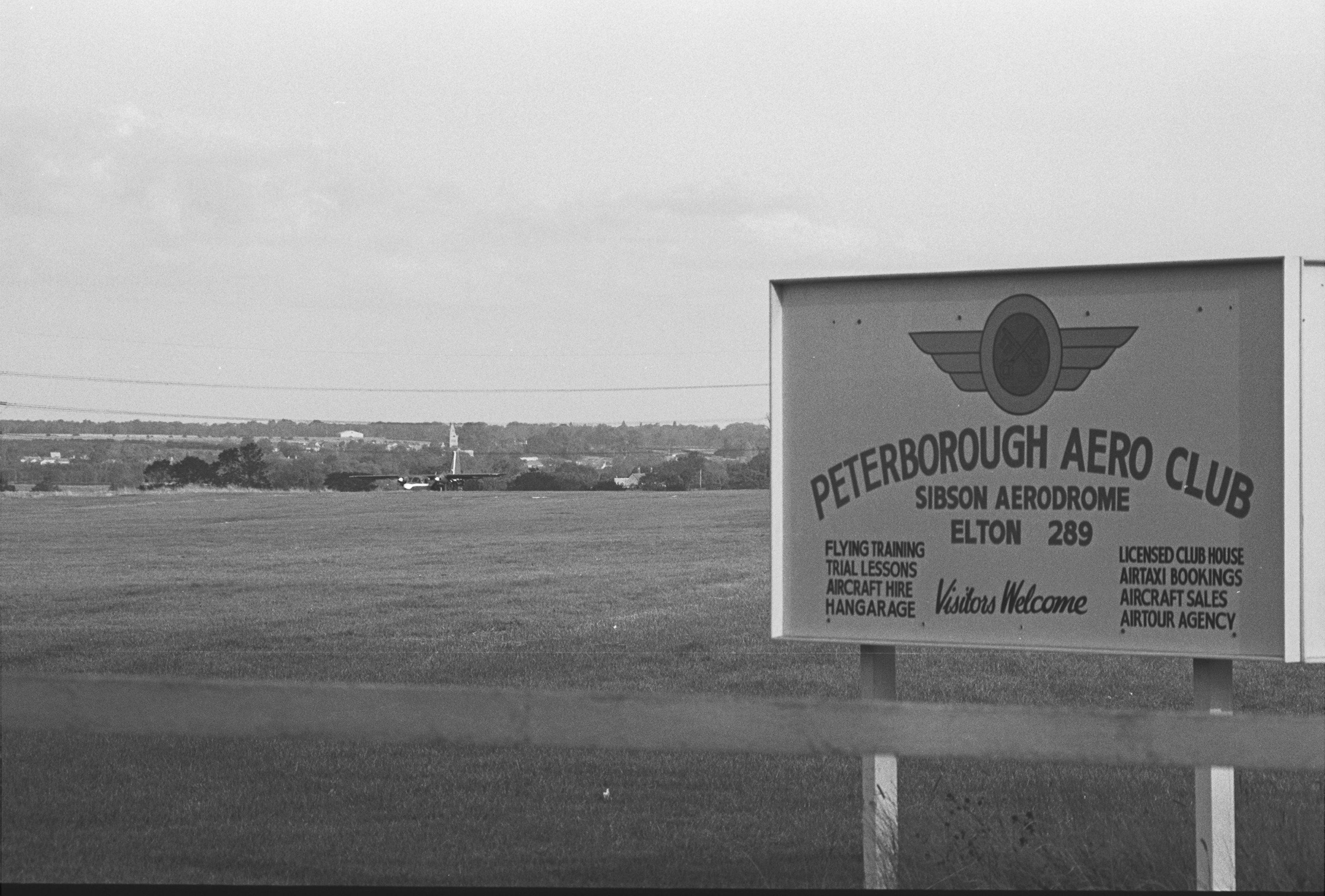
Sibson Airfield 1979
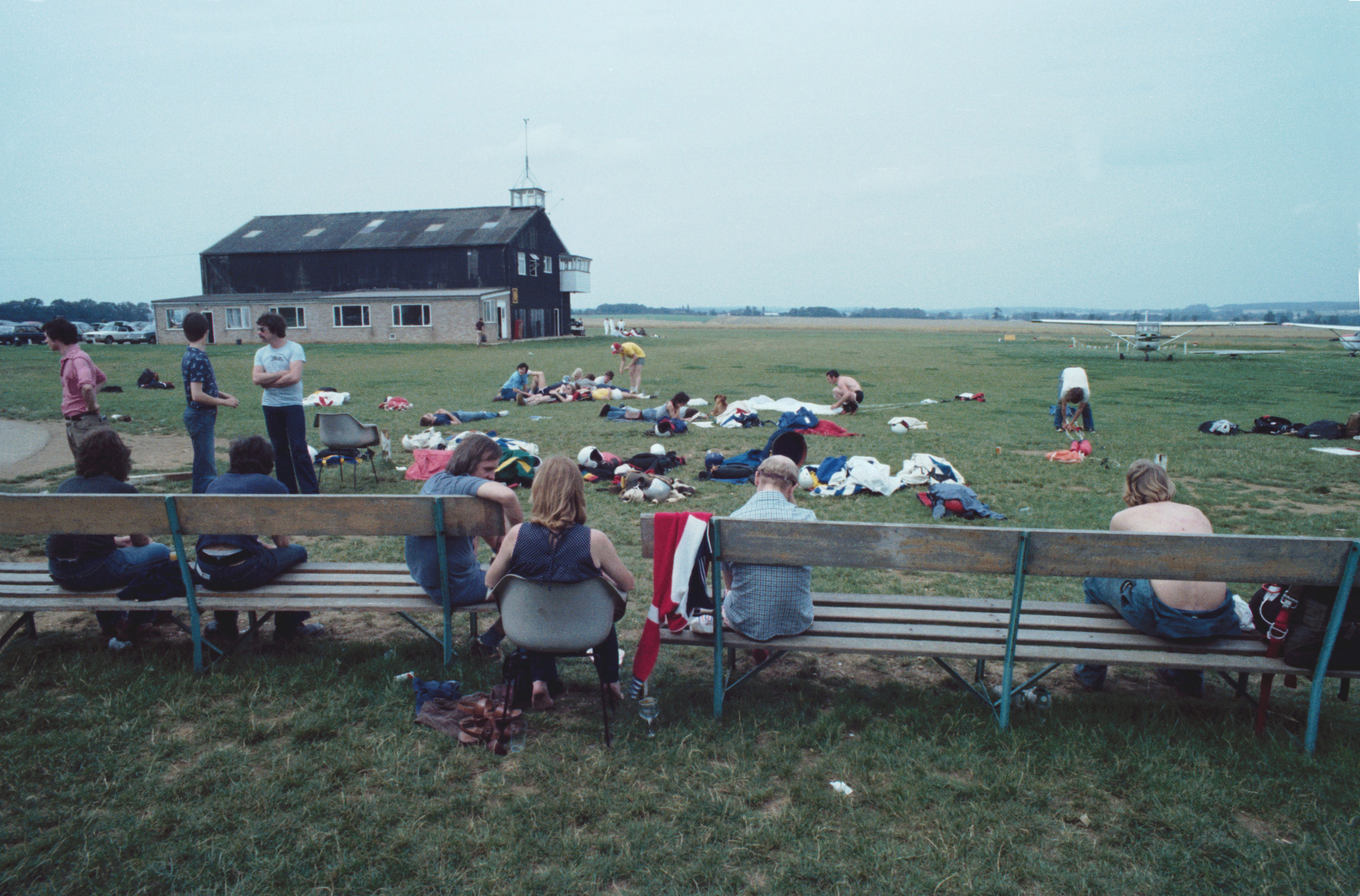
The packing area
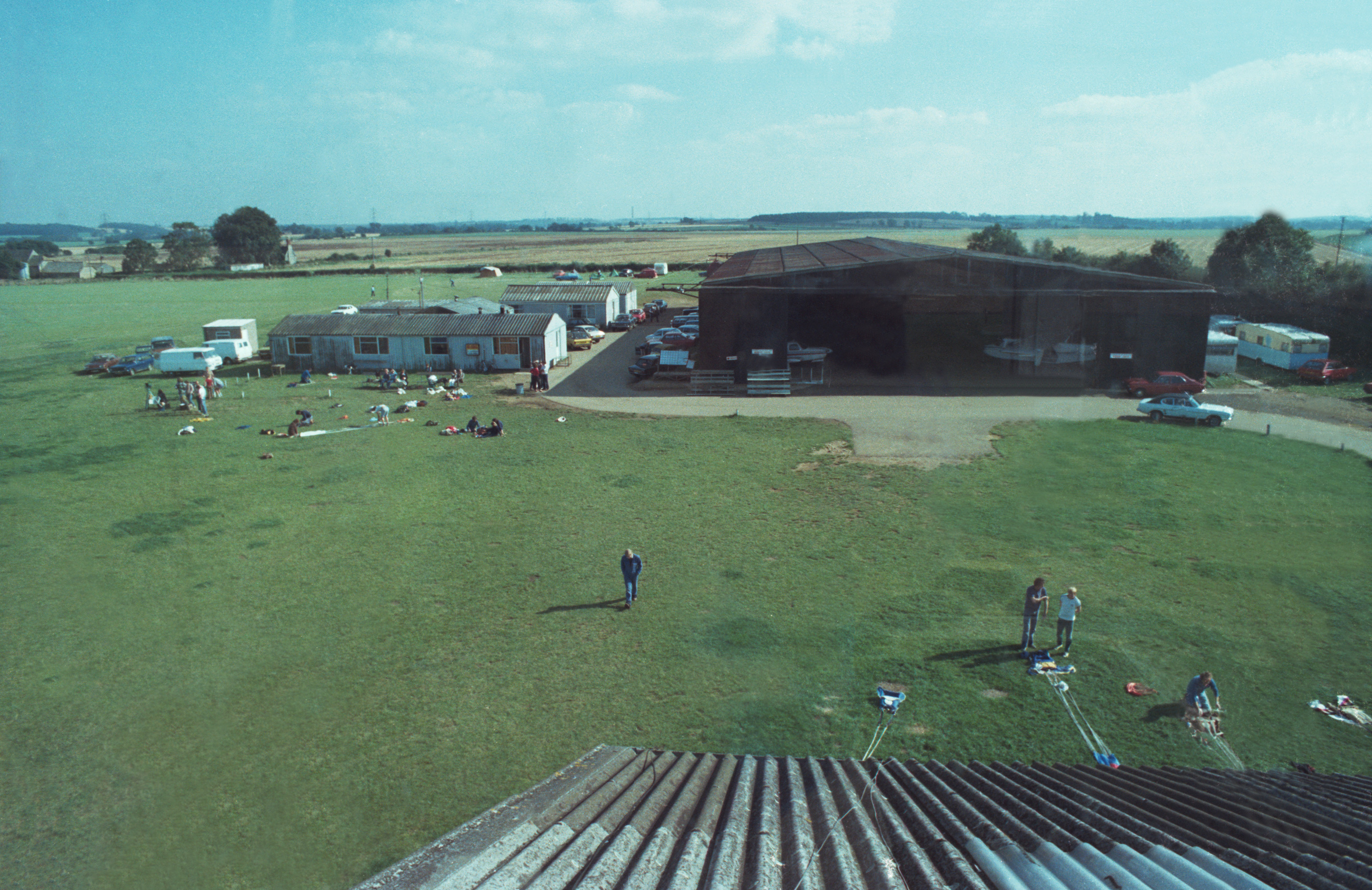
View from the hanger tower.
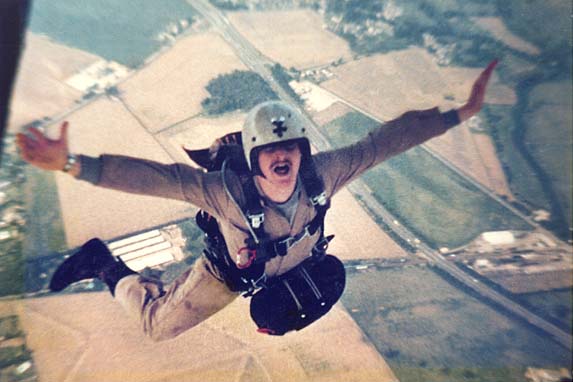
My first freefall
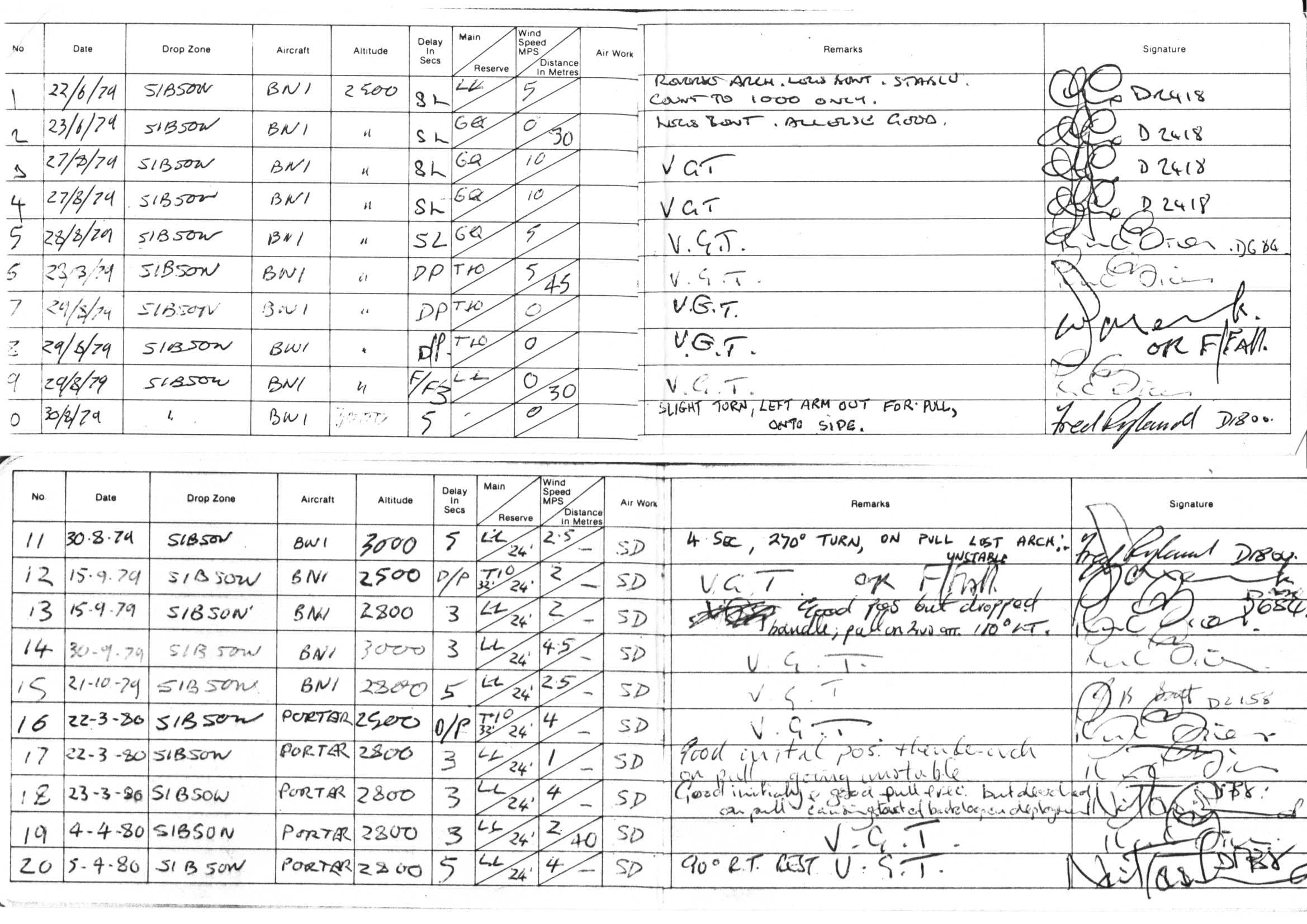
First page of my student logbook
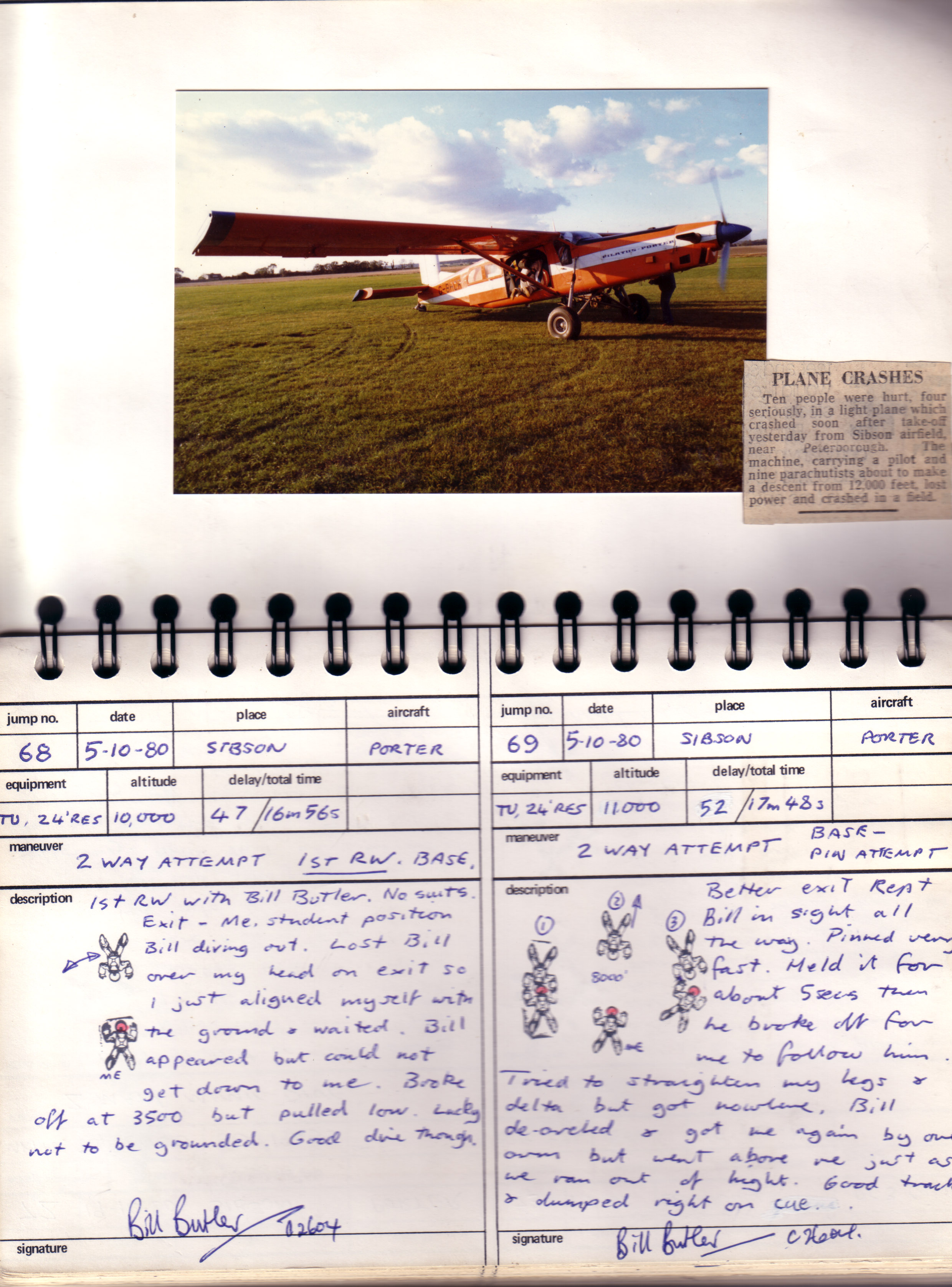
First page of my RW logbook
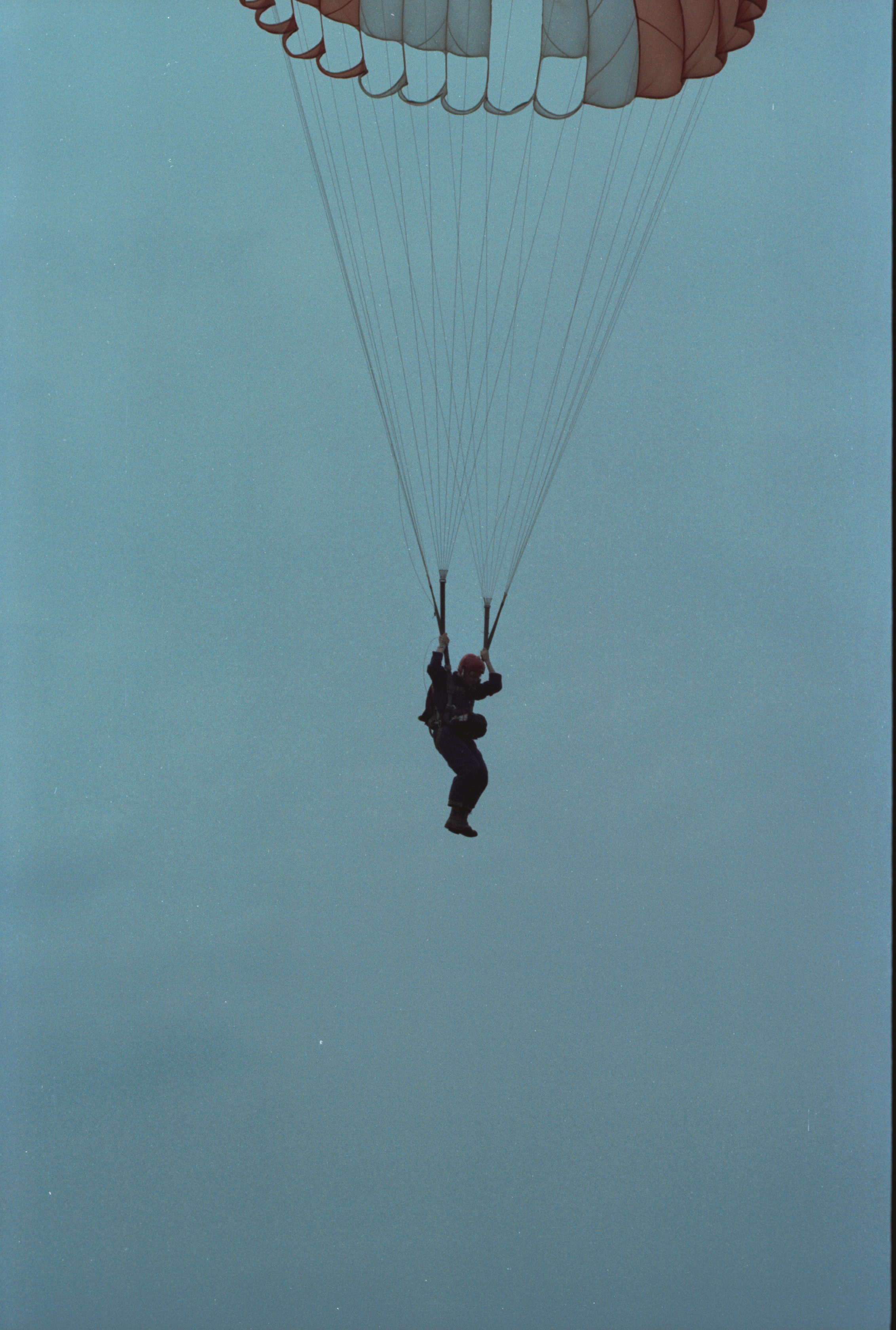
Me under a Double L
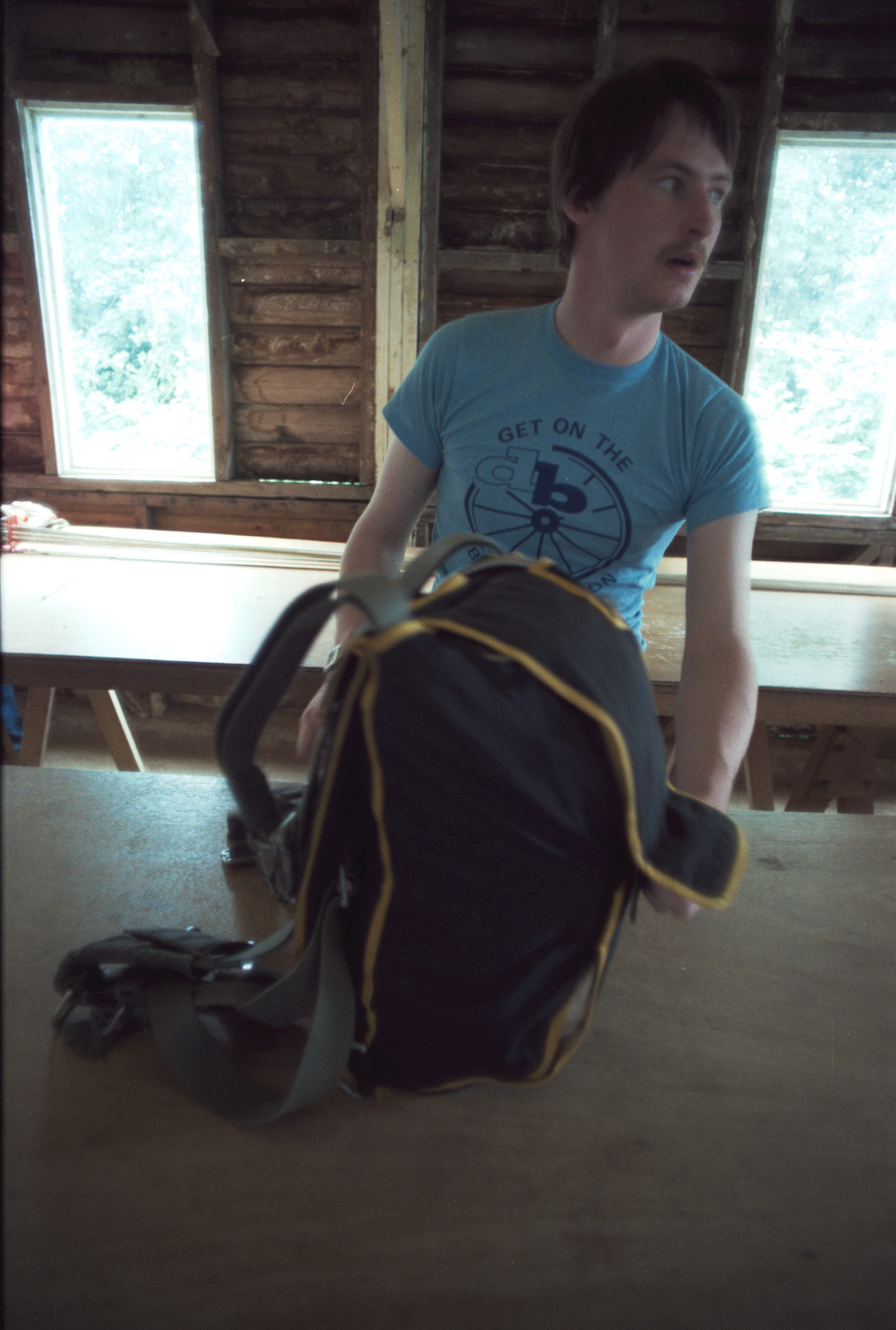
Me packing a double L freefall rig.
I remember sitting at my desk at work and updating a hand drawn calendar to count down the days. I was saving all my money for the flight, the jumps and buying a new square parachute since they were much cheaper in the States. I even phoned up The Jump Shack in Zephyrhills and placed my order and I chose the colours as well. I also heard that it was easy and cheap to get from Miami to Zephyrhills, either by coach or plane, so I did not bother arranging for any onward travel after I had arrived in Miami.
So, I set off alone in the autumn of 1980 at the age of twenty on my first trans-Atlantic flight, but I cannot remember a single detail about it. After landing, I had to walk around the airport looking for a standby flight from Miami to Tampa, which I managed to get but was told there was no guarantees. Luckily, I was the last passenger selected from the standby list on the last flight of the day. If that had not happened, I had no other options planned. When I got to Tampa it was so late that there was no means to get to Zephyrhills that night. I had to get a taxi driver to take me to a hotel close to the bus station with the hope that I could get a bus the next day to complete my journey. I arrived at the seediest hotel I had ever seen, not that I had stayed in many, and checked in. The hotel was cold, and I remember hearing police sirens in the streets outside just like in the movies. At that time, in the UK you only heard the two-tone horns from our police cars. So next morning I dragged my suitcase to the bus station and was told that the next bus to Zephyrhills was at 5pm that evening, so I had 8 hours to kill. I remember I went for a walk around the deserted streets of downtown Tampa around the bus station with my suitcase dragging behind me. I was such an easy target but was lucky.
The bus finally came and an hour and a half later, I was in Zephyrhills. My journey was not quite over yet though, I still had to get to the airport. There were no taxis visible, so I started walking. It took around 45 minutes before I arrived, and as soon as I got there I bought some food from the canteen area and sat down to eat. I watched in awe as the sky filled with parachutes. In the UK the maximum number of chutes you could see in the sky was eight. While I was sat there Neil Townsend, an instructor from Sibson and his girlfriend Sally walked up to me and said hello, from that point everything was great. Travellers like me bunked down in the packing shed. We just found a few jumpsuits to lie on and slept in our sleeping bags on the hard packing table surface.
I immediately went to the Jump Shack and inquired about the kit I had ordered three months previously. Nobody knew anything about it, so I had to borrow some kit to tide me over while they tried to come up with a solution, which they did a few days later with a second-hand SST Racer harness, a Pegasus parachute and a round reserve, all of which I still have.
The next day I started jumping with the borrowed kit. They had a special arrangement for novice skydivers where we were allocated an instructor who took us up for training jumps. It was called swooping practice. I was teamed with Sally and a couple of other guys for about a week. Our instructor was Dane Kenny, who was a member of Symbiosis, which was the best 8-man skydiving team in the UK. I did four or five jumps a day and learned so much from the constant practice in the warm, clear blue skies. When I got the new kit from the jump shack, I went up in a normal skydive and did my first square jump. You were supposed to have a briefing before your first jump with a square parachute, and to do a special jump just to try it out, but everything turned out fine and the square was a revelation because I could actually fly this thing and was no longer at the mercy of the winds.
There were three jump planes at the airport, two DC3s and a Cessna 190. The DC3s were both made in the 1940s and were called Forty Tango, which was blue, and Skytrain, which was white with a rainbow stripe down the fuselage. In those days, the rainbow stripe did not have the meaning it has acquired today. The DC3 was amazing because we never saw anything like it in the UK, there was so much space inside. The seats had been removed and a layer of carpet was attached to the floor to sit on. A flight in a DC3 attacked all the senses simultaneously. The noise of the engines when they started and the roar as the aircraft lumbered down the runway. Looking towards the rear you could see the tail lift and the fuselage twisting as we went, and there was the constant smell of ozone from the ancient electrical system behind the cockpit. It took 20 minutes to reach 12,500 feet, which was an opportunity for lots of people to have a little sleep. When it was time to jump out, instead of shuffling around on your knees and squeezing through the little door like with the planes in the UK, you could run full height the length of the plane and throw yourself through the large door into the sudden blast of the slipstream, how I loved the DC3. The Cessna 190 however was like being at home, except for the big powerful radial engine on the front, which made for a rapid climb to altitude. It also had a cool rainbow stripe paint job. I only jumped it once I think.
The jump site was always busy and there was a constant turnover of people from within the US and from other countries all in search of warm, blue winter skies. I met other guys from the UK, and we started to jump together after Neil and Sally went home. I even teamed up with some guys with a car and stayed in their motel room, which was far better than the hard packing table. There was a bar in the town where we hung out in the evening. It was dark and smoky, and out the back there were some logs to sit on around a fire where we went to smoke pot and drink beer until the early hours. Two local girls adopted a few of us Brits and took us to a couple of bars and even the local nightclub one night. An English accent could open many doors in those days, and I had a great time in the last few days. In one of these bars, I piped up "Is this really a redneck bar?" We had to leave pretty quick because I had said it a bit too loud. There was another occasion where I was sat at a bar talking to a girl and I mentioned the mosquitos that were all around us. "That's nothing" she said, "In the swamp we have mosquitos that fuck alligators!" I instantly fell in love.
During the day there was a snack bar on the airfield that sold burgers and hot dogs. This was my daytime food since I cannot remember ever eating breakfast. On one occasion at the end of the days' jumping a large barrel of oysters appeared in the office, and I was so hungry that I tucked into them and must have eaten a dozen raw. It's amazing what hunger drives you to do. Sometimes we went to eat in a restaurant in town where there was a free salad bar. When three of us went in, somehow there ended up with six people at the table. There were some guys who existed by coat-tailing other jumpers into the restaurant and eating from the free salad bar.
I met another girl called Jo from the UK who was staying with some other guys in their motel and somehow she took a liking to me and when she left for the airport, she insisted that I contacted her when I got back. It is to my shame and regret that I never did. I was so focussed on skydiving, and particularly jumping at Sibson that any distractions from other parts of the country were not on my priority list. Maybe they should have been.
One evening I tagged along with two other Brits who were going to a mall. This is something else that was rare in the UK. After a look around, we ended up in a coffee shop and proceeded to entertain the waitresses until the mall closed. They said that nobody had spent so much time and money in the shop before. We must have been very entertaining because the next day two of them turned up at the airport. It seemed that everywhere we went we created an impression.
One night we were walking back from town when we found ourselves in the airfield maintenance area. Some guys were working under floodlights trying to change the wheel on a DC3. We were roped in to help them, and between us we manhandled this enormous wheel onto the undercarriage and bolted it down. They were most grateful for the help, and I was buzzing from the experience.
All good things must sadly come to an end, and the day came when I had to leave. Luckily for me, there were some other UK guys who were leaving the same day, and they had a car and were driving all the way to Miami. It could not have turned out better. Again, I do not remember any details of the flight home, but I think my parents collected me from Heathrow.
Those short few weeks at Zephyrhills made a lasting impression on me that survives to this day. I only wish I had written down my experiences at the time since a lot of the trip is blurry now. Or that may have been for another reason.
When I arrived back at Sibson I was immediately categorised as a Yank. This meant that I had chosen not to progress through the cold wet and windy UK winter but instead had shortcut the whole process by going to the States. I had no problem with this label, the coming summer of 1981 turned into my most memorable at Sibson.
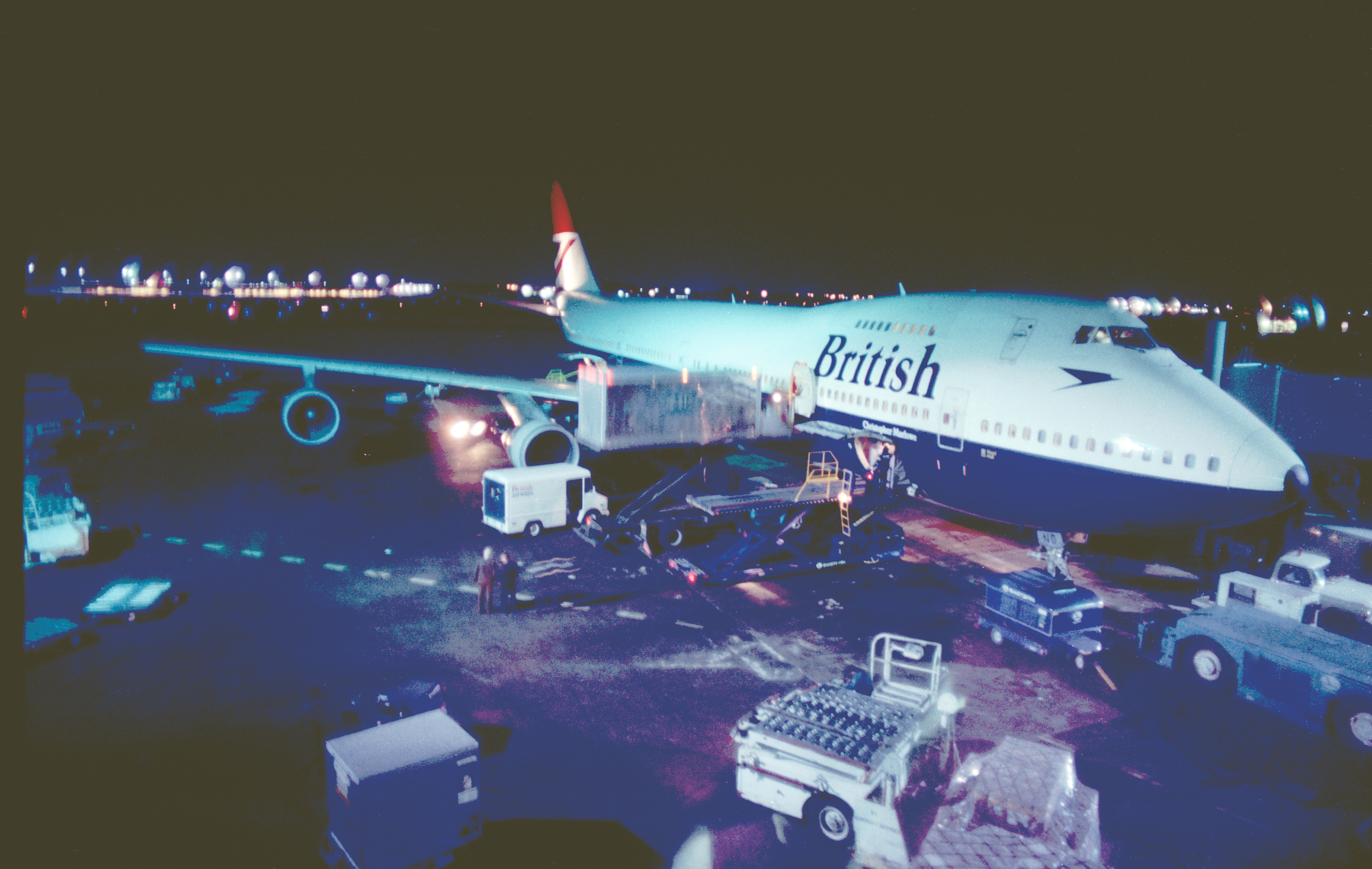
Boeing 747 - My first big jet ride
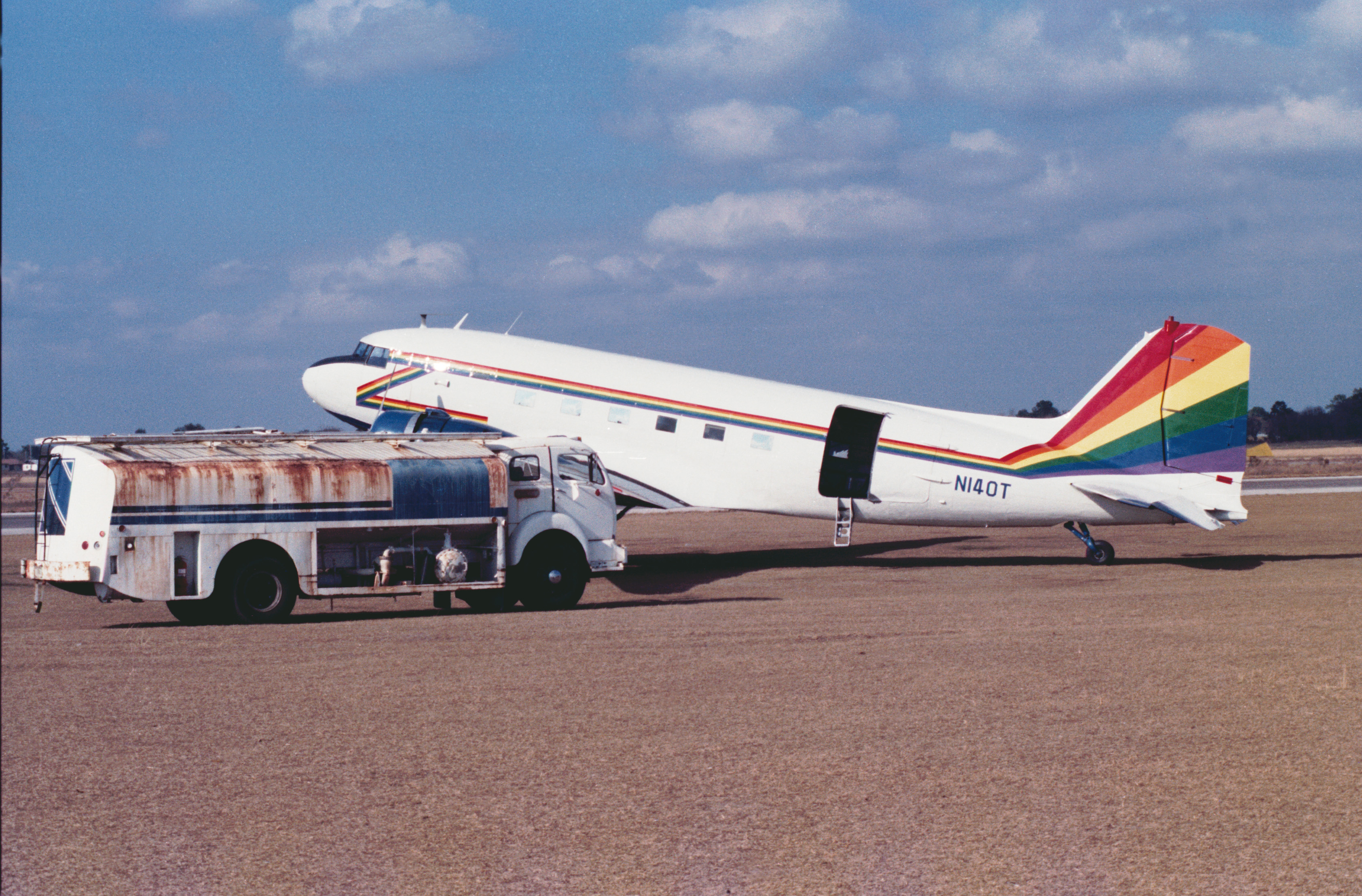
DC3 - 40 Tango
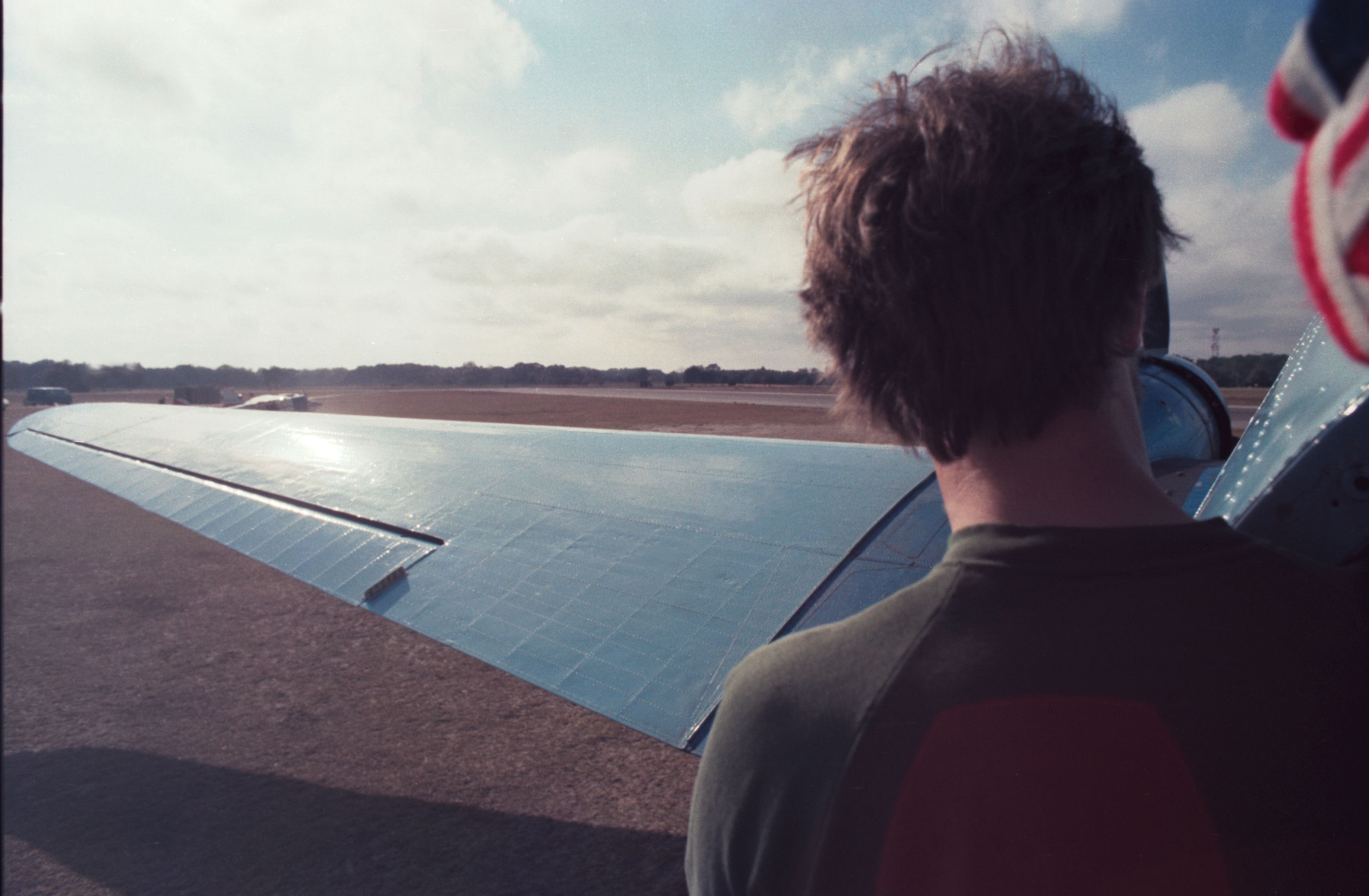
View from the door of 40 Tango
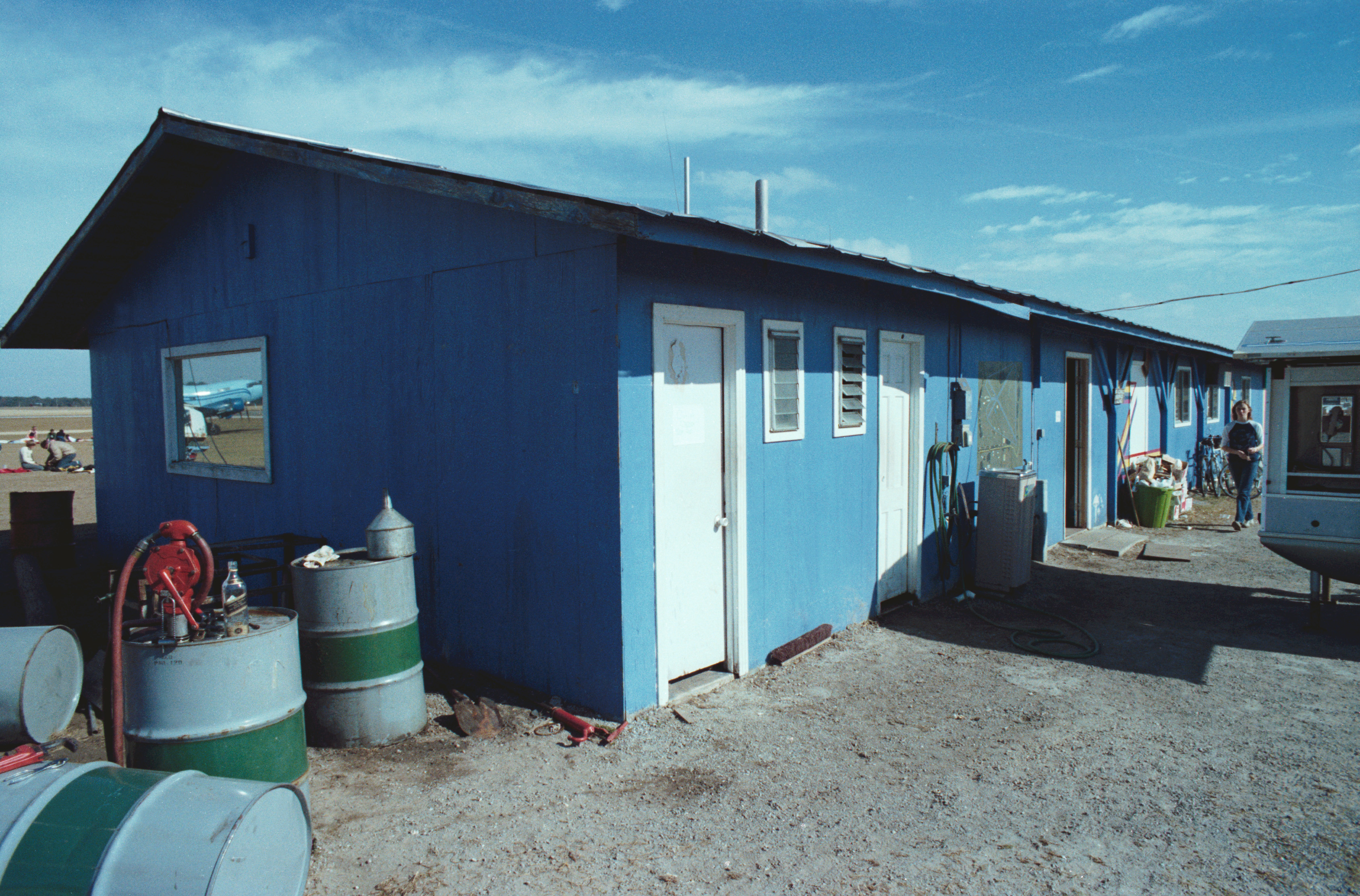
The Zhills packing shed
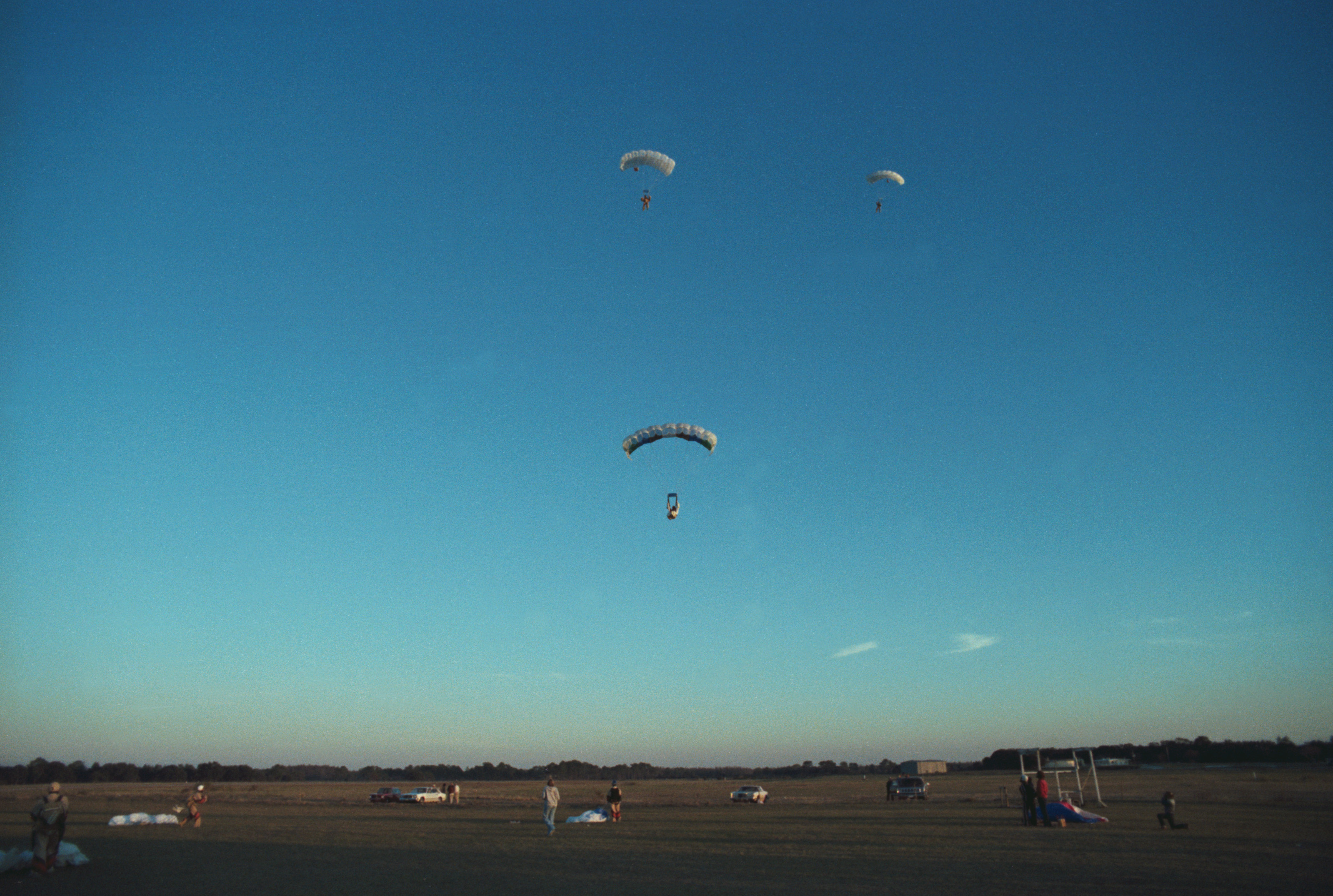
Horizon at Zhills
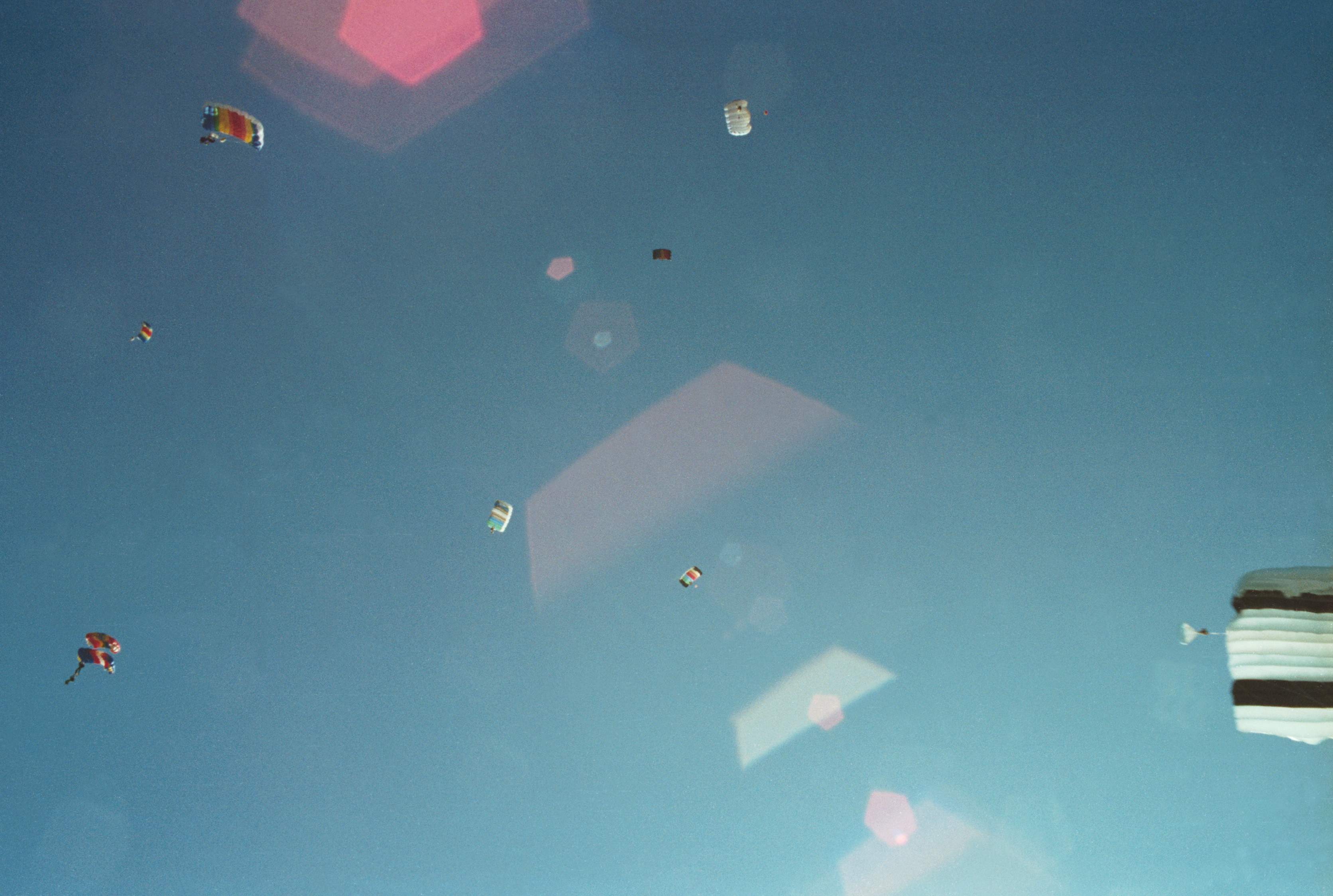
Zhills Sky
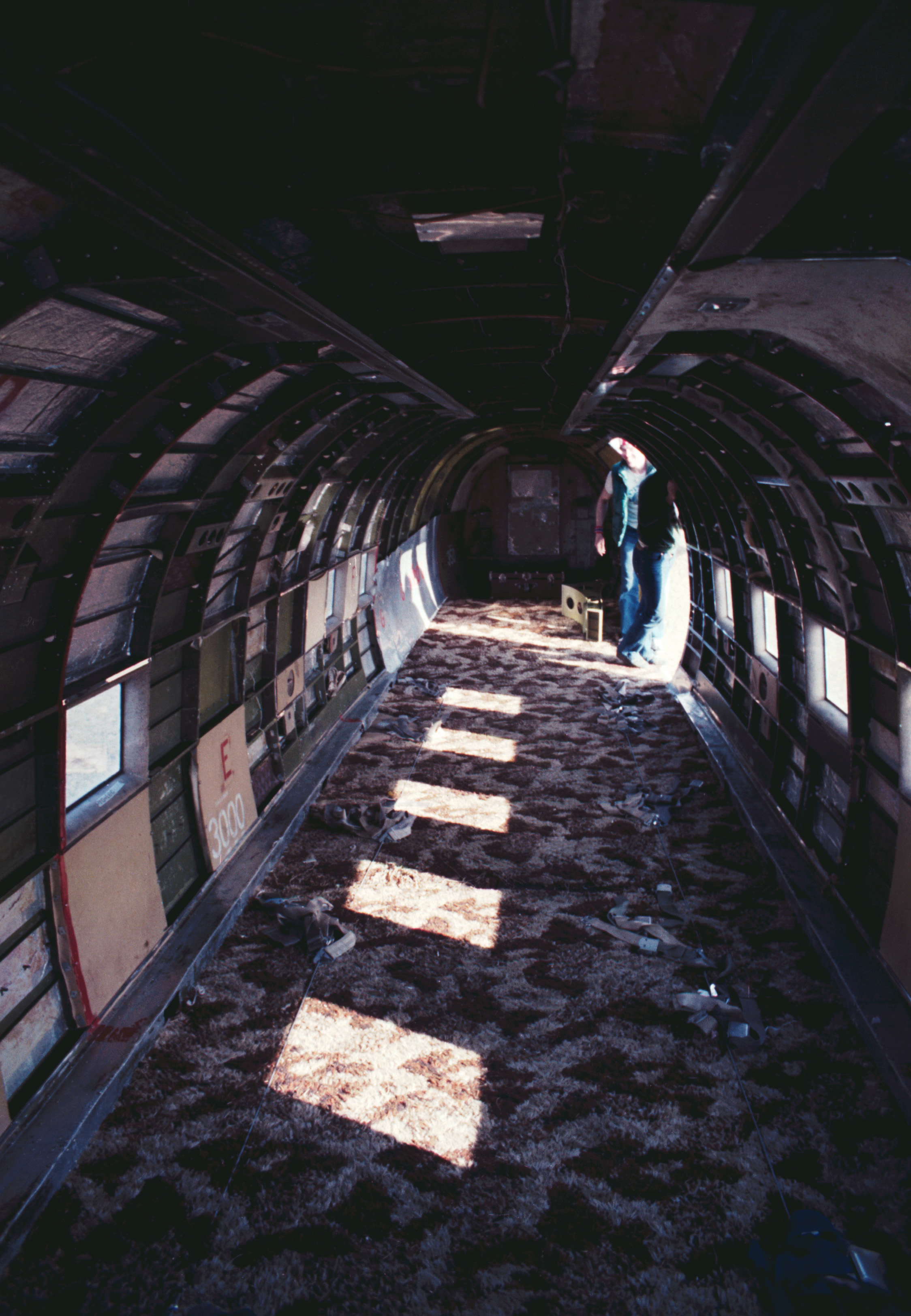
Inside 40 Tango
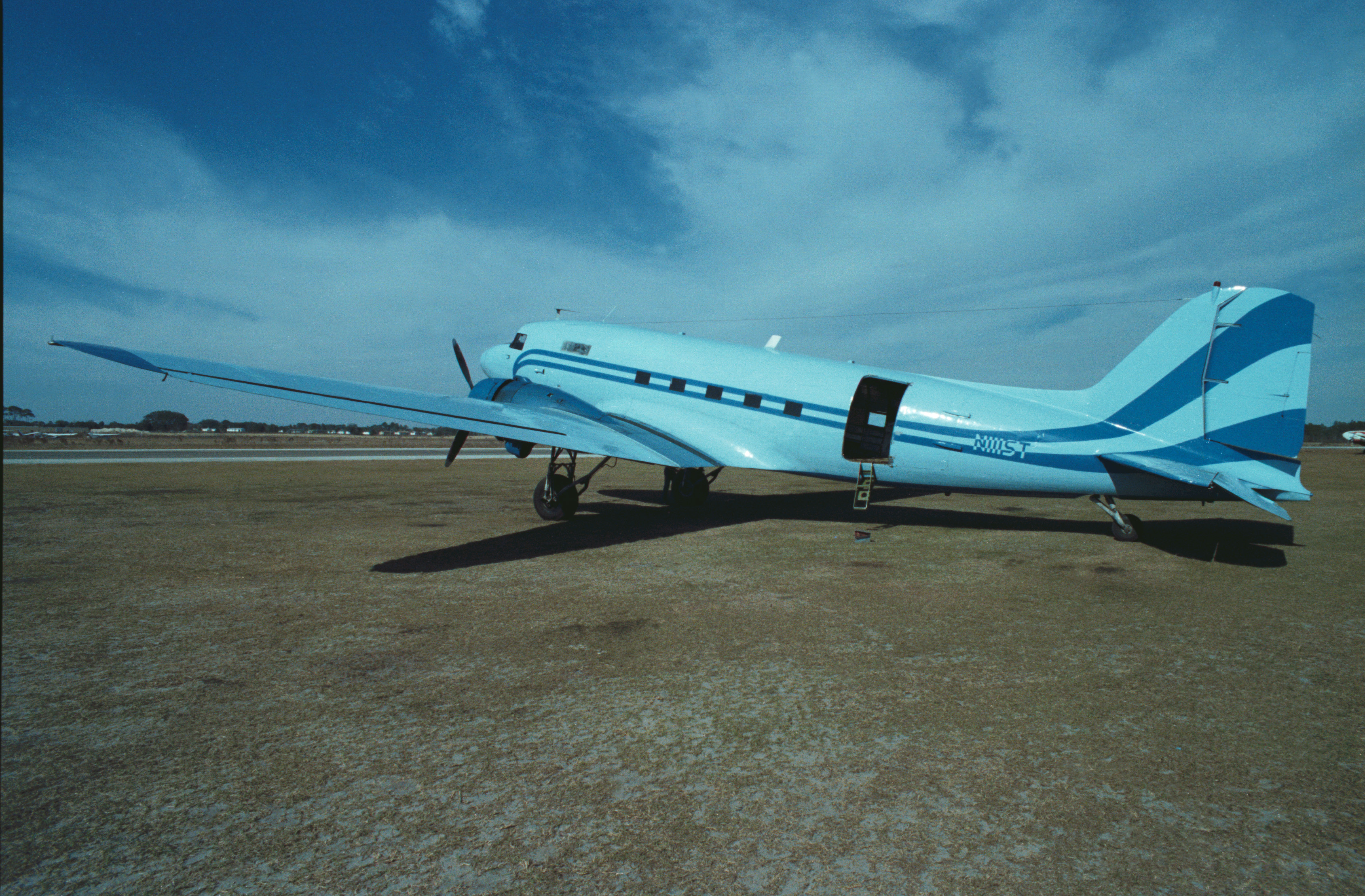
DC3 - Skytrain
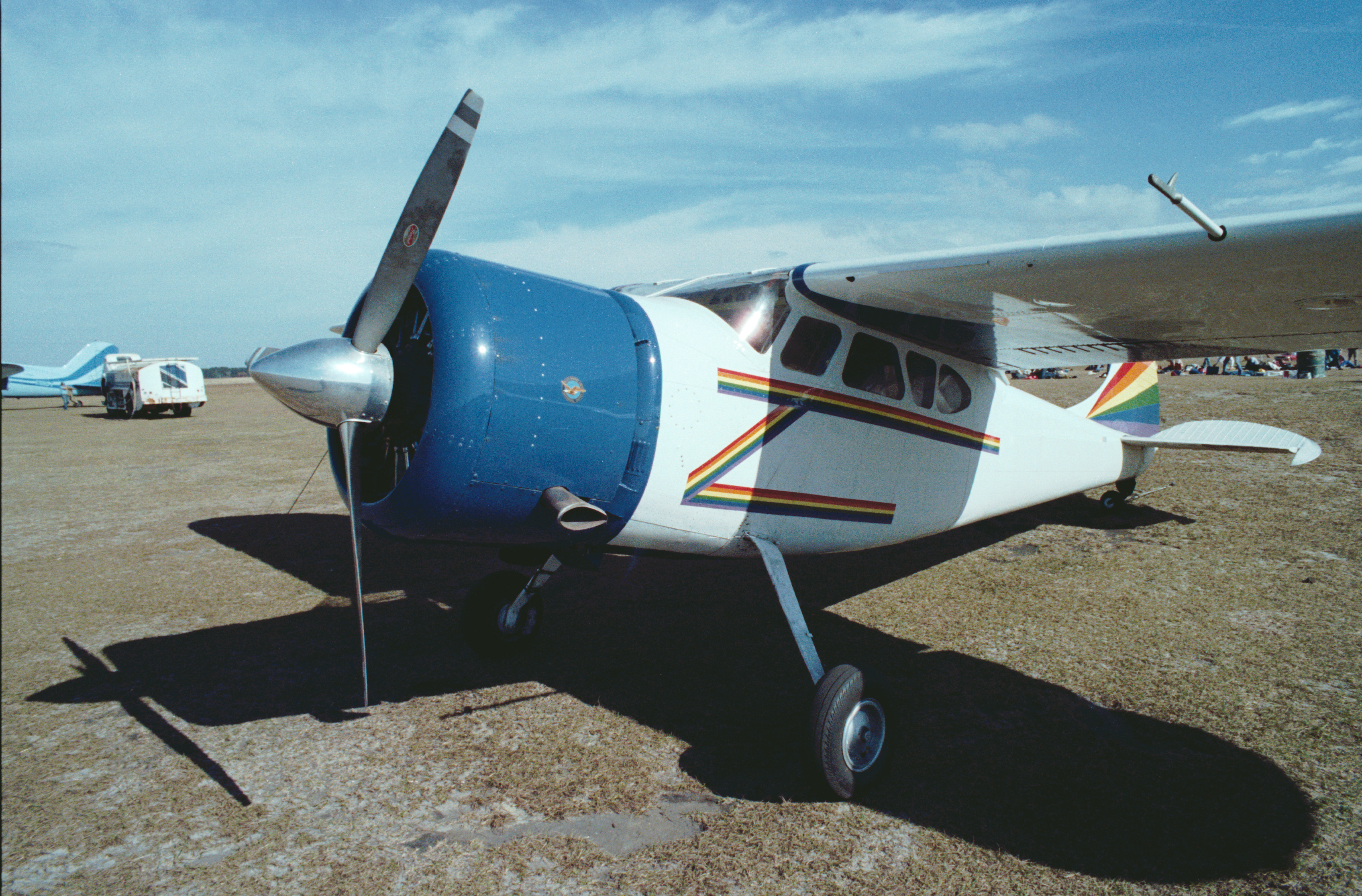
Cessna C190
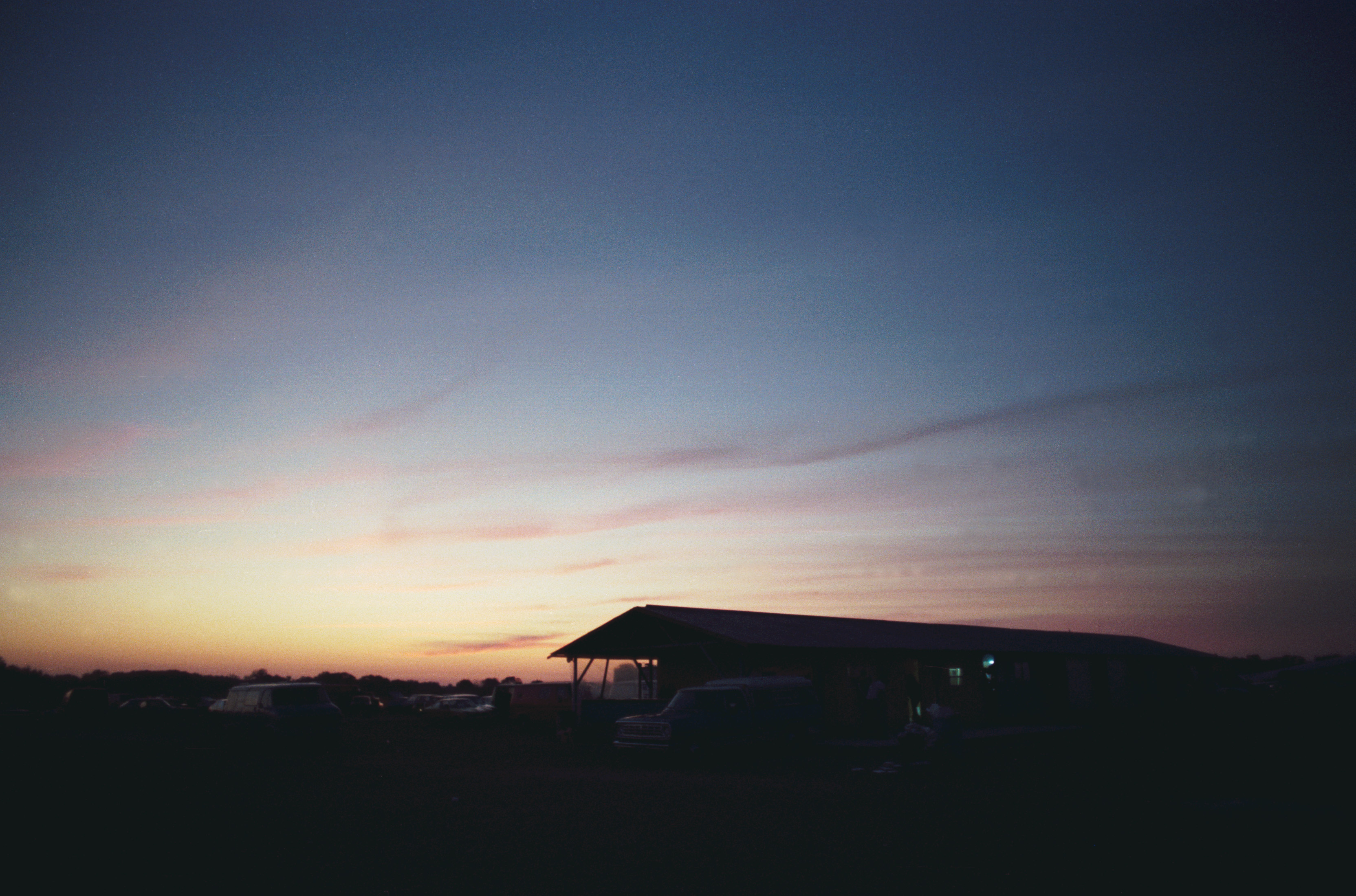
Zhills sunset
Now that I was an experienced skydiver, well I had about 30 jumps in the States, I sought out others to do some relative work at Sibson. It was still winter so jumping was rare, but now that I jumped a square, I could jump in much stronger winds. I did some three ways and four ways, which were great fun. The social activities at Sibson began to have more importance now, and I was sometimes disappointed when the weather was good enough to jump because it was still freezing at altitude and usually muddy on landing. I would rather be socialising in the warm day room. At about that time I became great friends with a local girl called Lorraine Allen and we were always glad to see each other and spend time together, but sadly, it never developed past friendship though.
So, one weekend I met up with the guys that I would be jumping with the most, they were Paul Smith, Chris Gilmore and Trevor Warrenger. Graham Heywood was already on site and sometimes became part of the team, and now and then Glynn Thomas would turn up. These guys were from other jump sites around the country and had decided to come to Sibson because it was the biggest parachute centre in the country at the time. The main jump plane had also just changed. The old Islander was gone and replaced by a Pilatus Porter, which was a single engine turboprop. This powerful plane could take ten jumpers to 12000 feet in half the time as the Islander, so was another reason other jumpers came.
We did a few jumps together and got on pretty well in the sky, and also had good times in the evenings. The evenings were mostly alcoholic in nature and I spent a fortune on beer in the bar. There was one drunken evening when we decided to take a look at the Varsities. On the airfield were parked two old RAF transport aircraft called the Vickers 668 Varsity. The story was that the owner of the airfield brought them there with the plan to turn them into a restaurant, but it never happened, so these aircraft became our playthings. To get into them you had to climb up onto the wing, which was pretty high so quite a challenge after a drink or two. Then you could enter the fuselage through a door above the wing. Inside was quite Spartan because all the avionics had been removed so not much of interest was left. This particular night Chris decided to clamber on top of the fuselage and walk along it while hanging onto the antenna wire, which ran from the roof of the cockpit to the top of the tail. Unfortunately, the wire broke and Chris fell from the fuselage onto the wing and then to the ground underneath. I think he was unconscious for a bit, but he came round. He was still drunk of course, and we decided to put him to bed, and he would be all right in the morning. Fortunately he was. Incidentally, one of the Varsities ended up in Brooklands Museum in Surrey, which I visited in later years. It was exactly the same as I remembered it.
From this and several other team building activities our 4-man RW (relative work) team was born. We jumped at Sibson for a few weekends and then decided to try another jump site for a bit of variety. The site we decided on was RAF Weston-on-the-green, just North of Oxford. We jumped there probably half the time, and always when there was a special event arranged. There was one particular skydiving meet organised there which included a barbeque and a live band. By this time there were a few other guys that I regularly jumped with; Jerry Lanchbury and Tony O'Connell, who was known as PD, which was short for prairie dog (long story).
In those days, security at RAF bases was very lax and you could just drive onto the military airfield with a cursory wave to the guard at the gate. There was no bunkhouse at Weston, so everyone had to camp on the grass around the hanger. Being military, everything on the base was clean and new. The bar, canteen area, the toilets and even the aircraft were sparkling new. The main aircraft was a turbine Islander, which was a standard islander but with turbo prop engines instead of piston ones, so it climbed really well and was a much smoother ride.
Occasionally we had to stop civilian jumping because the military needed the airfield to do a mass training drop. It was great to watch the Hercules planes flying over and dumping strings of squaddies on static line parachutes.
There were a couple of quite nice pubs in the village, so we often had a meal there in the evening before retiring to the bar at the airfield. One morning, after a drunken evening I crawled out of my tent and while walking to the washroom I spotted the body of Jerry, who was lying face down halfway into his tent with his trousers and pants pulled down to his ankles. I imagine he slept like that all night. A particular skydiving incident from Weston also springs to mind. It often happens that when a 4-man team is going up to altitude, they are given a number of students to dispatch at various altitudes on the way up. I was assigned a few guys who were going to 7000 feet to do long delays, however when we got to the correct altitude the cloud cover was so thick that I could only get odd glimpses of the ground. I knew the countryside around Sibson very well, so a few holes in the cloud were often enough to figure out exactly where to jump, however I was not that sure about the Oxfordshire area. After a few minutes, I thought I had it. I called the guys to the door and dispatched them in one pass. After landing I found out that I had got it completely wrong and all three landed off the airfield, and one of them broke his leg on landing. Sorry mate. I had some great times there, but my true home was always Sibson.
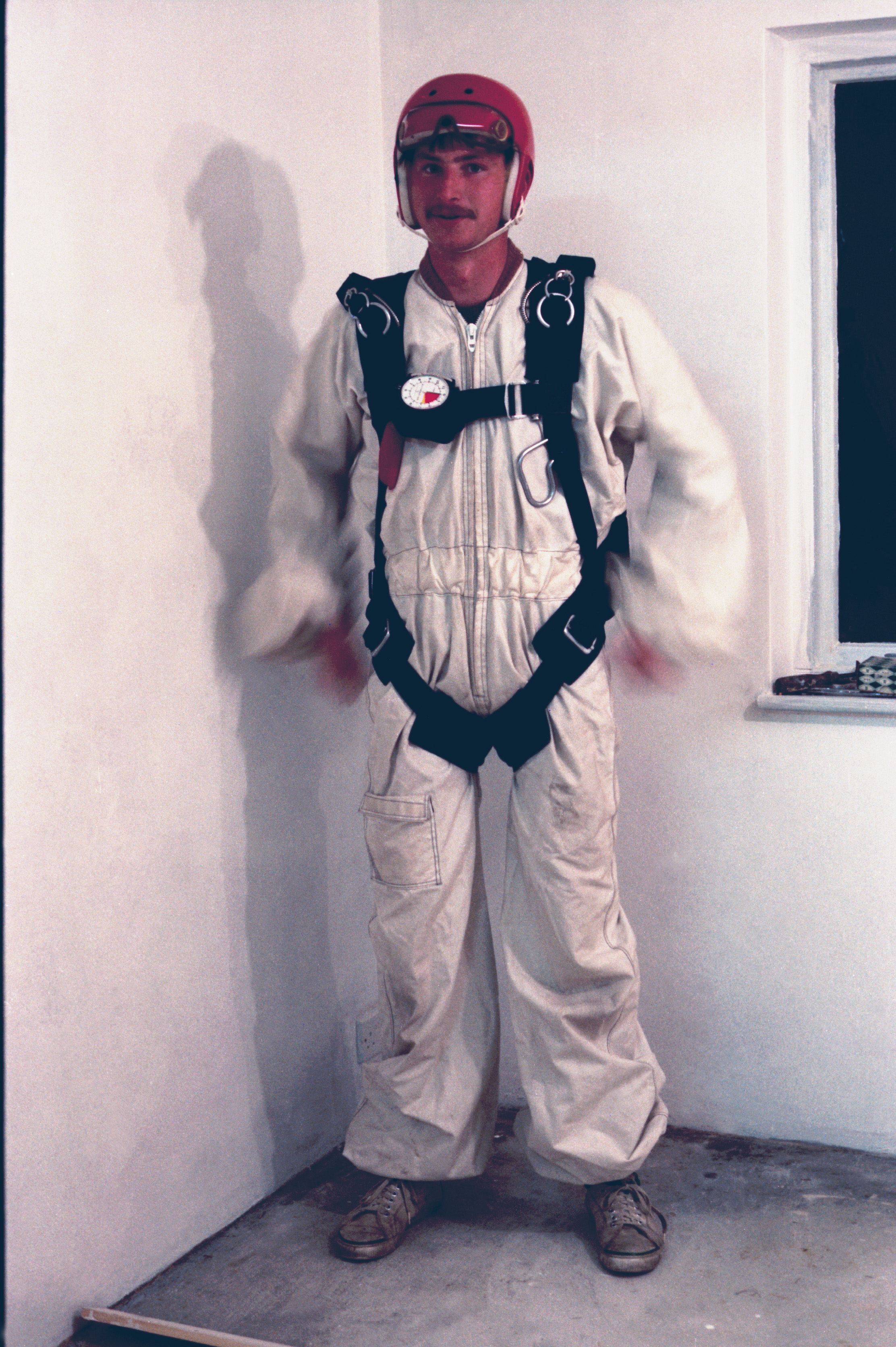
Me, the Skygod
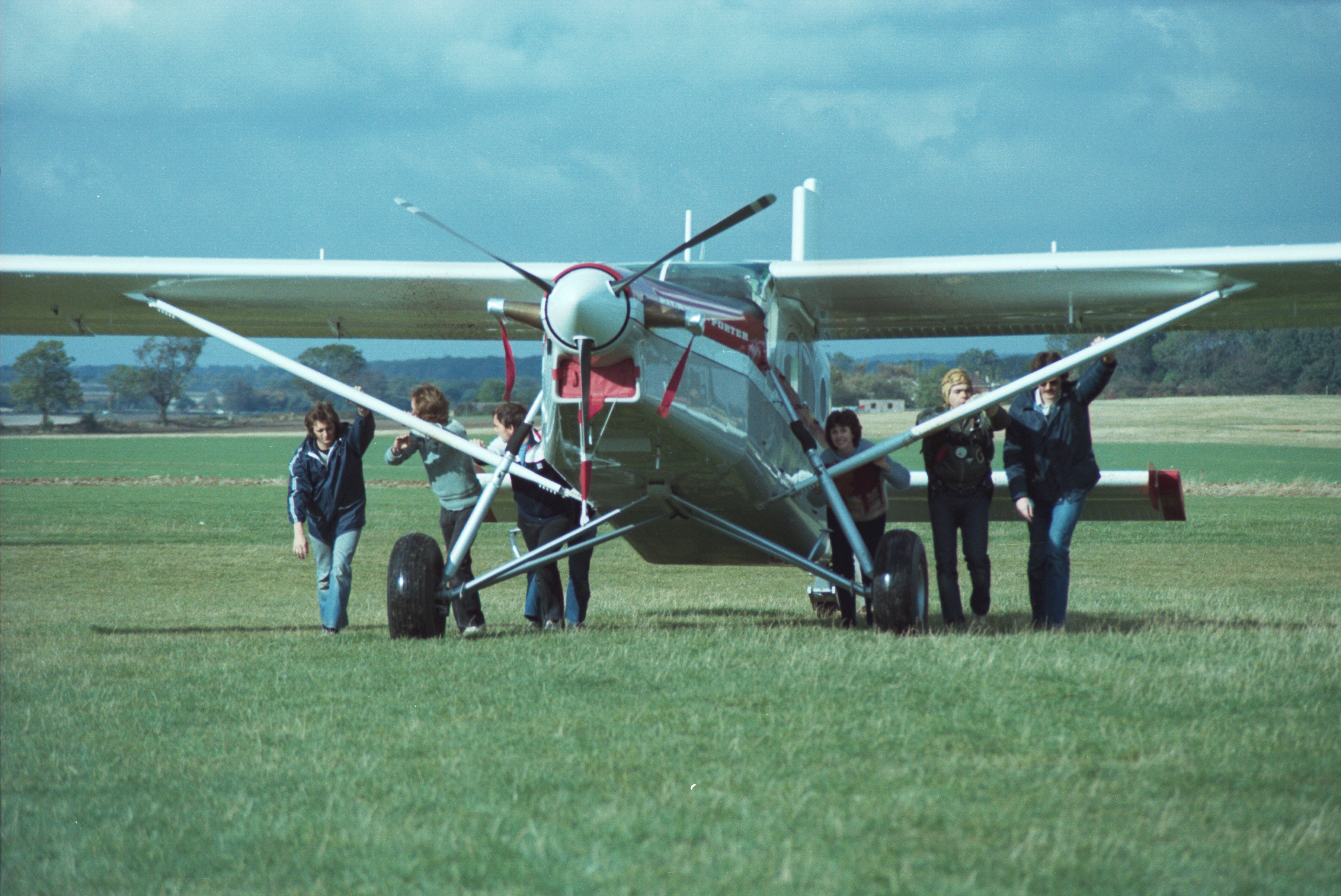
Pushing the Porter
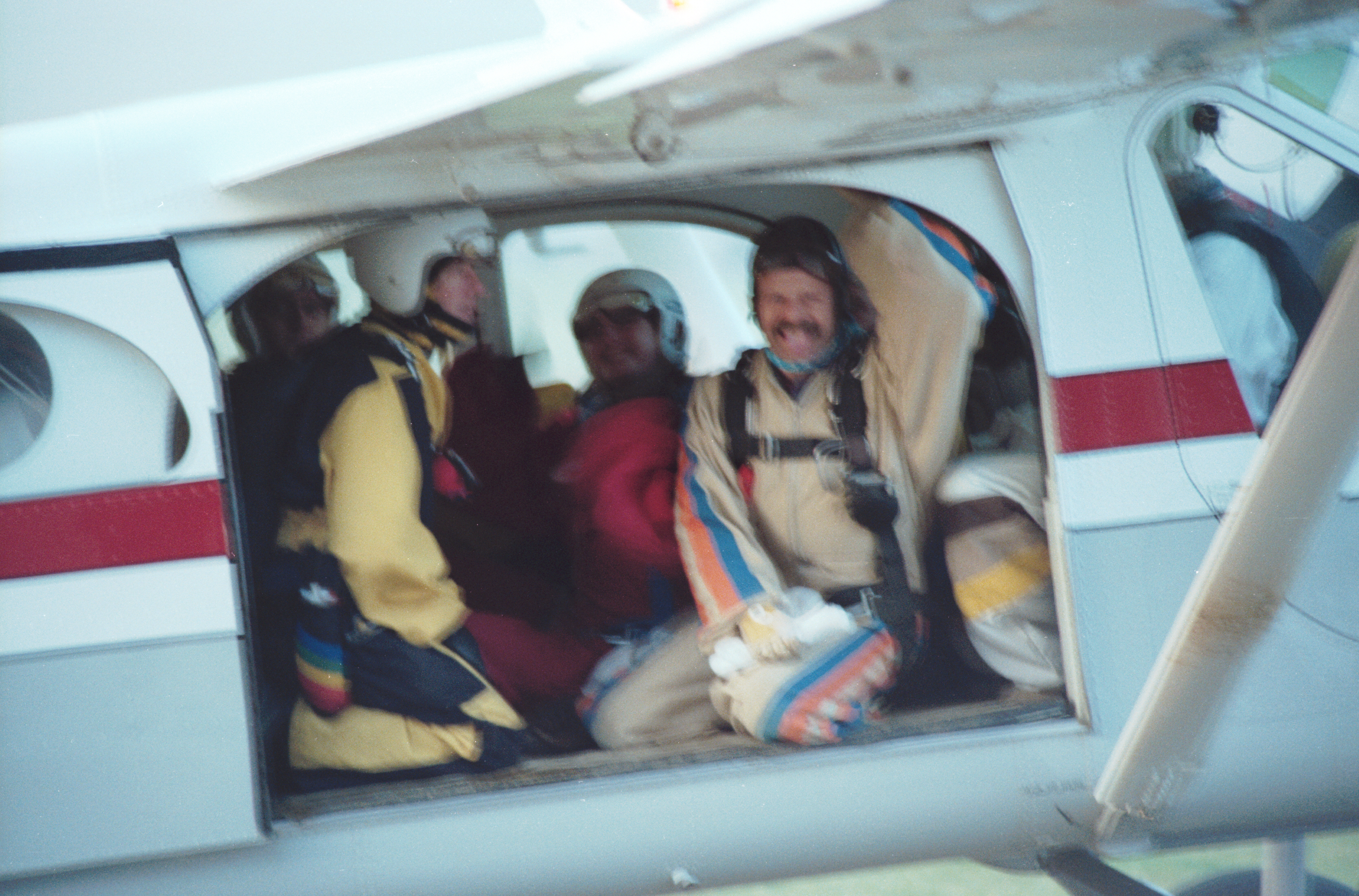
A full load in the porter
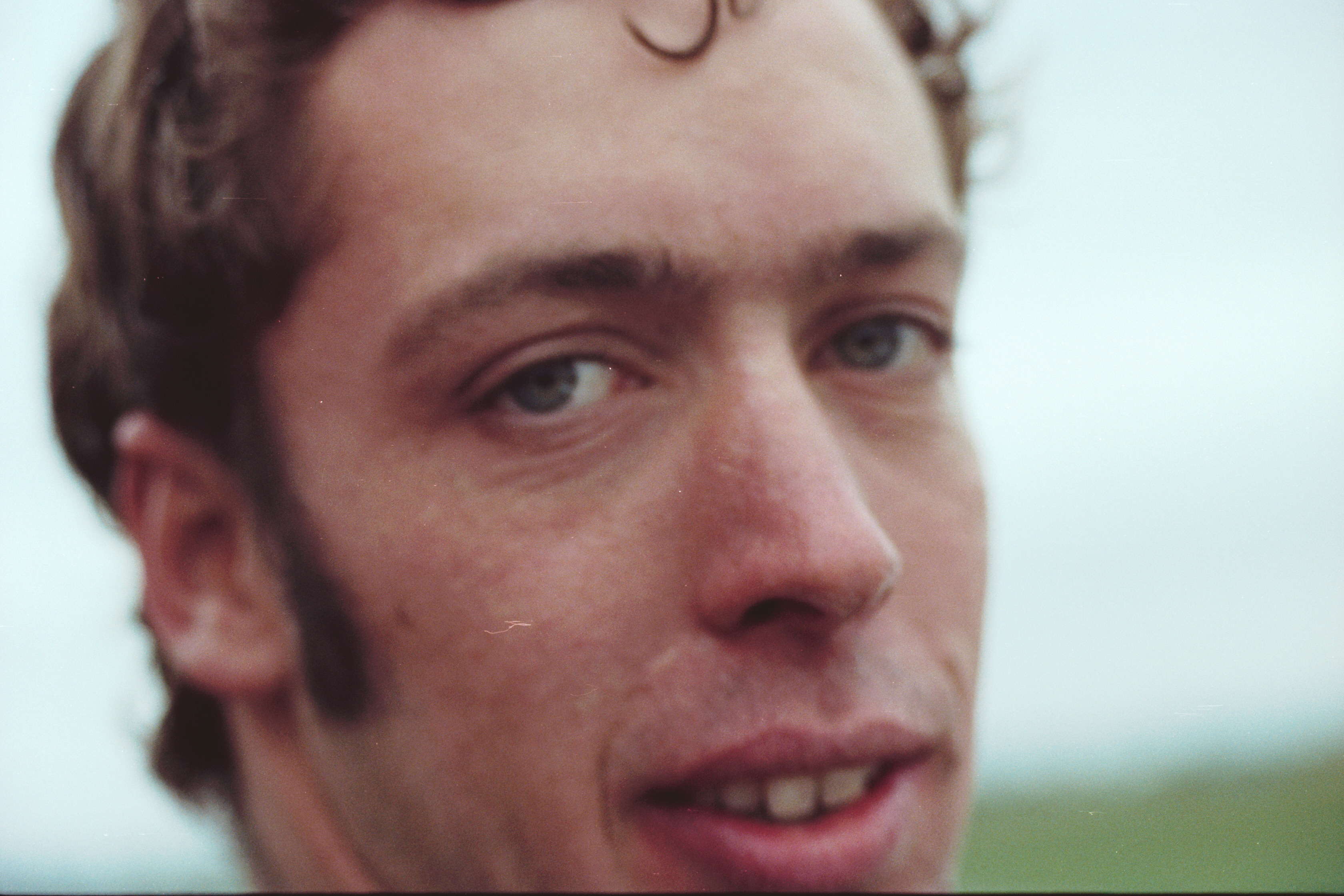
Paul Smith
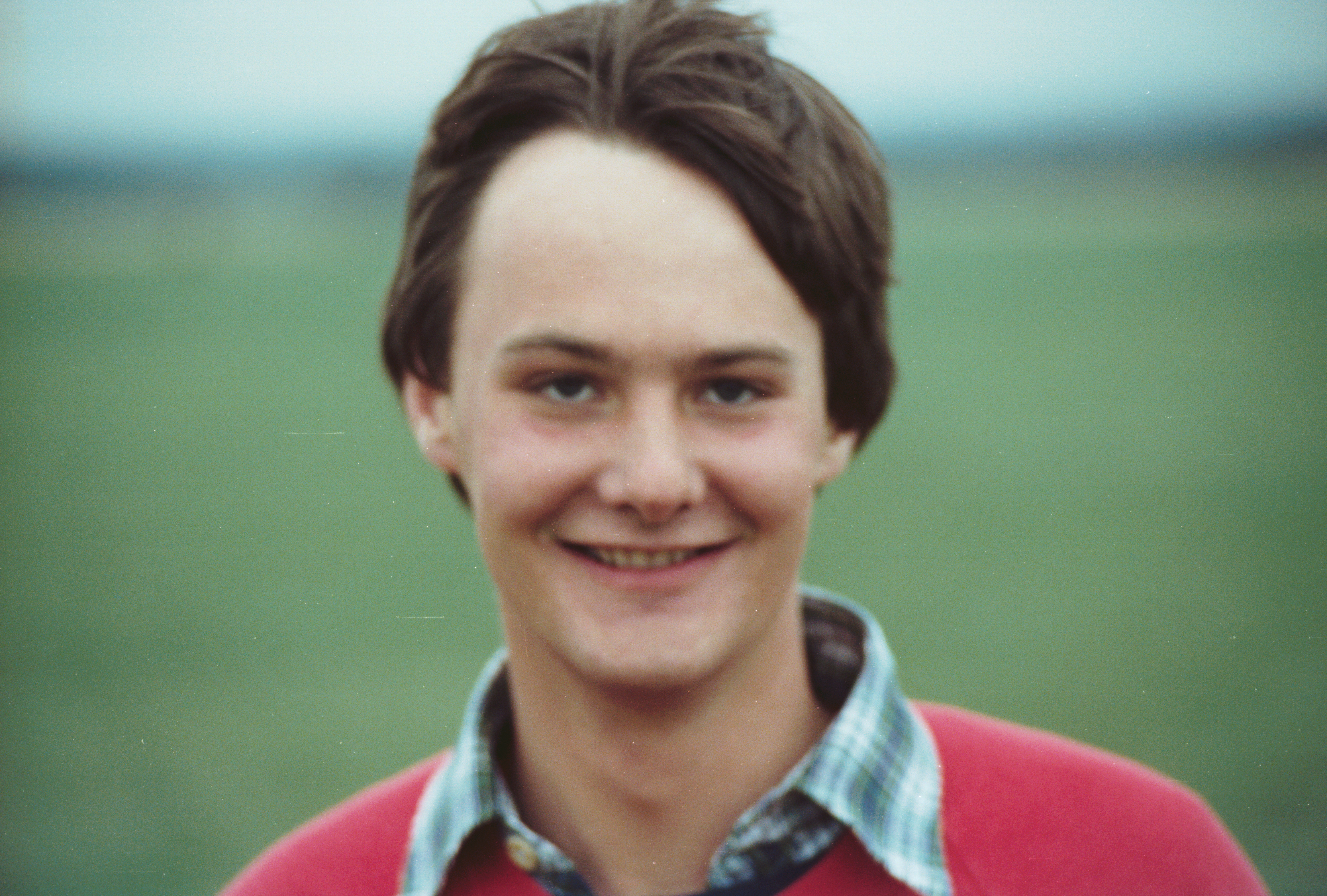
Chris Gilmore
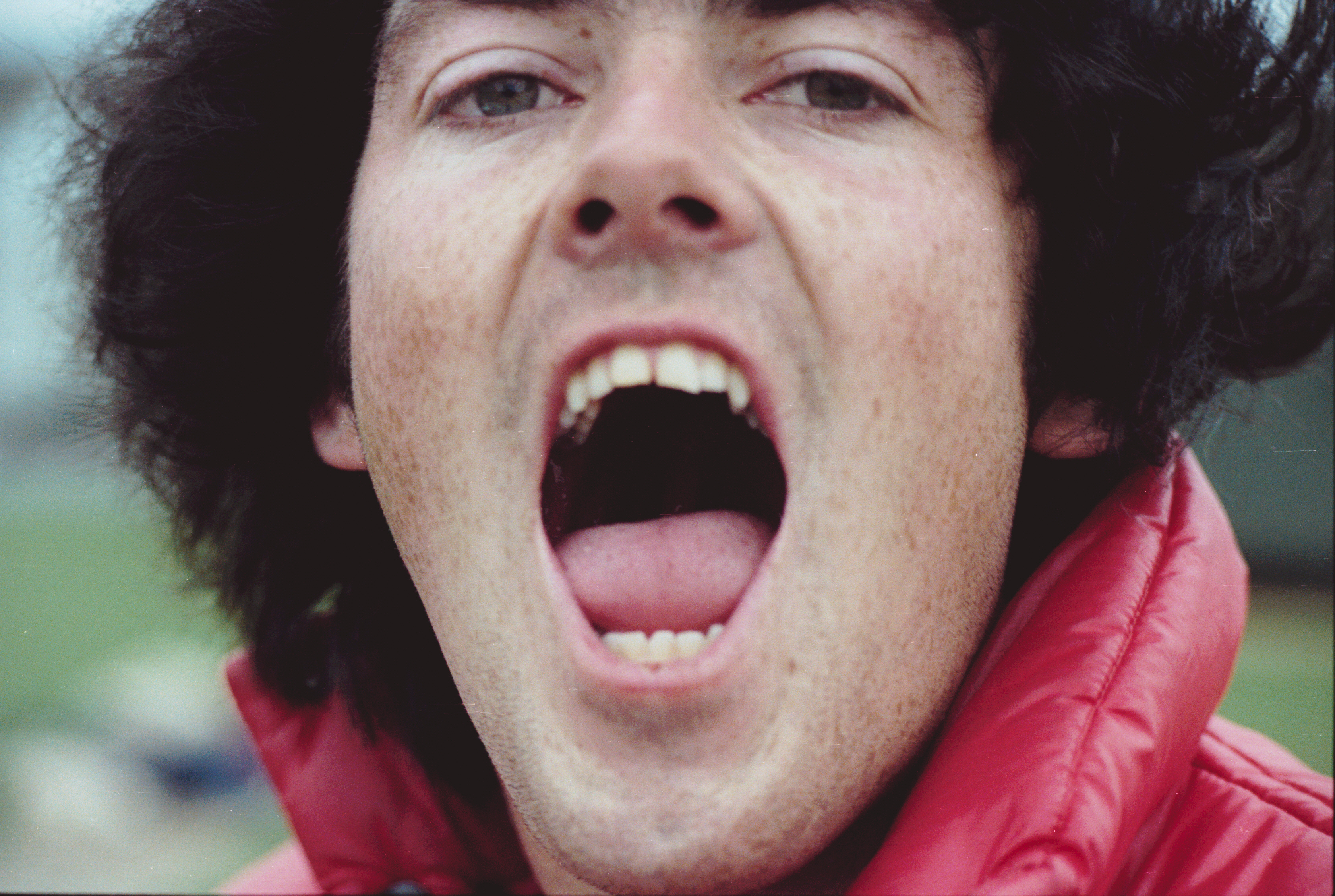
Trevor Warranger
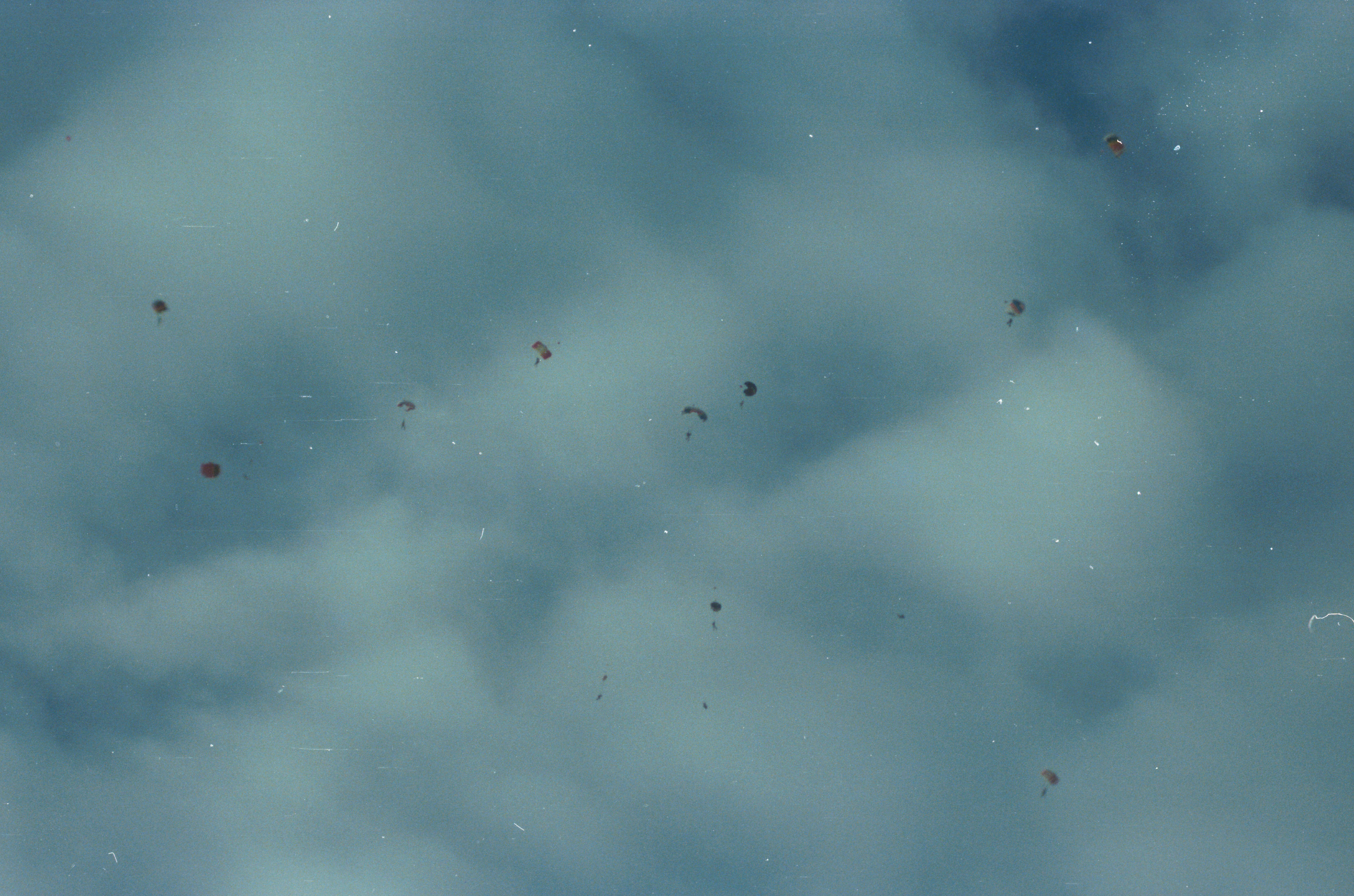
Jumpers
After the long and busy summer of 1981 jumping together, one of the guys, probably Paul, voiced the idea of going to Perris for Christmas. Perris Valley was a big skydiving centre in California, about an hour outside Los Angeles. I said yes, of course, so the preparations began. There were four of us going, myself, Paul Smith, Chris Gilmore and Trevor Warrenger.
It turned out that we could not coordinate the flights, so two of the guys went out a few days earlier than Trevor and myself. I met Trevor at Watford station, and we made our way somehow to Heathrow. The flight was with Laker Airways, who were very cheap, but a bit of a risk, and just to highlight this, they went bust a few weeks after we got back. Before the flight, Trevor visited the duty free and got himself some spirits and wine. I do not think I bought anything. We boarded the plane and took off for California, which was my longest flight to date. The plane was a DC10, which somehow seemed bigger than the 747 I travelled to Zephyrhills in. It was all so special and romantic, and I could not help but sing "Coming into Los Angeles, bringing in a couple of keys" in my head all the way there. The highlight of the flight happened when Trevor started to consume his duty free. He was in the middle seat with a guy against the window on his left. I was in the aisle. Trevor was having a great time, and after a while got very drunk and fell asleep. He dozed for a bit but then stirred and despite successfully reaching for a sick bag, vomited the contents of his stomach all over the front of his sweatshirt. This event sobered him up slightly and he requested I let him out to go to the toilet. We happened to be situated about as far from the economy class toilets that you could possibly get in a DC10, so Trevor had to walk the walk of shame past half the plane with sick dripping off his chin and all down his front. I apologised to the guy by the window.
So, we made it to LAX and were picked up outside by Paul and Chris who had rented a car when they arrived two days before. It was about an hour and a half to Perris, so we stopped en-route to get something to eat. In the UK, we still did not have many of the American fast-food outlets like McDonalds or any of the others that were all over the States, so my first experience in a McDonalds happened here. Trevor asked for a burger "Without those horrible pickle things" and was gladly obliged.
Perris was an airfield to the Southeast of Los Angeles with a long tarmac runway, which looked across to the San Bernardino Mountains to the East. Military planes often flew across between Perris and the mountains on their way to March air force base just to the North. It was very much a desert area, but we were there in December, so the locals were wearing jumpers whereas we were in T-shirts and shorts. There was a large bunkhouse on the airfield for visitors to stay in, with actual bunk beds. The clubhouse had a bar and a kitchen where you could get some food including the most amazing chilli I have ever tasted, and nothing has matched it since. If you felt brave you could have a dip in the outdoor pool, but it was cold this time of year according to Trevor, who plunged in without checking.
They flew a DC3 and a Twin Otter. The DC3 was flown when there were enough people around to fill it, which was mostly at the weekend, but it still flew at least once in the afternoon during the week. The Twin Otter is a twin turbo high wing plane with about half the capacity of a DC3, but much quicker to altitude. On the airfield there was also a graveyard of old DC3s, where it looks like they had been scavenging them for parts to keep their one flying.
We jumped as a 4-way team the whole time. Maybe once a day there would be larger groups organised and we would try to put a bigger formation together. There was one particular flight during our stay where we wanted a bit more airtime to get a large formation together and the pilot was persuaded to increase his altitude from the usual 12500 feet to 16500. This is not really legal but whatever. Above 12500 feet, I began to feel more and more lightheaded as we pushed higher and was glad when the time came to exit. That was my longest ever freefall of around 80 seconds. I cannot remember if the jump was any good.
In the evenings we hit the bar, either on the airfield or in Perris, where there were a few really seedy redneck bars with pool tables. The locals loved us and bought us drinks all night as we played pool. One night after the bar shut, we were invited back to some guys' house to have another drink. His house was actually a trailer where there was virtually no furniture except for an enormous stereo system. I was quite drunk so, knowing my limits, I left the trailer and crashed on the back seat of the car where I promptly fell asleep. Not long after the other guys got the same idea and we left to make our way back to the airport. I do not know who drove, but they must have been almost as drunk as I was. I am full of admiration that they found their way back. The next morning I could not get out of bed at the usual early hour. The first flight of the day was at about 8am and was half price, so we went for this most mornings. I don't know how they did it, but the other guys got up and left the bunkhouse. When the door closed behind them, I heard a Yank say, "Those Brits, how the hell do they do it? They come in absolutely wrecked every night and still get up for the early bird!" That was when I realised how much we were burning the candle at both ends.
The occupants of the bunkhouse were a mixed lot. There were a few guys there who didn't actually jump or work at the airfield, they just lived in the bunkhouse. They had made their corner into a little home with knickknacks on the table next to them, and pictures above them on the wall. I should have asked one of them about their story but it never occurred to me since they were a bit weird. I also met a girl in the bunkhouse, she was occupying the bunk below me and was Canadian. She was a jumper but I did not see her jump much. We got on well and spent some time together soaking up the sun on the grass between jumps. We talked a lot about life and stuff. She said that I had a great accent, she knew several of her friends who had "Got laid by an accent". We said that we would stay in touch but again I did not try. Holiday romances are usually doomed, especially when we lived a world apart, and again I cannot even remember her name.
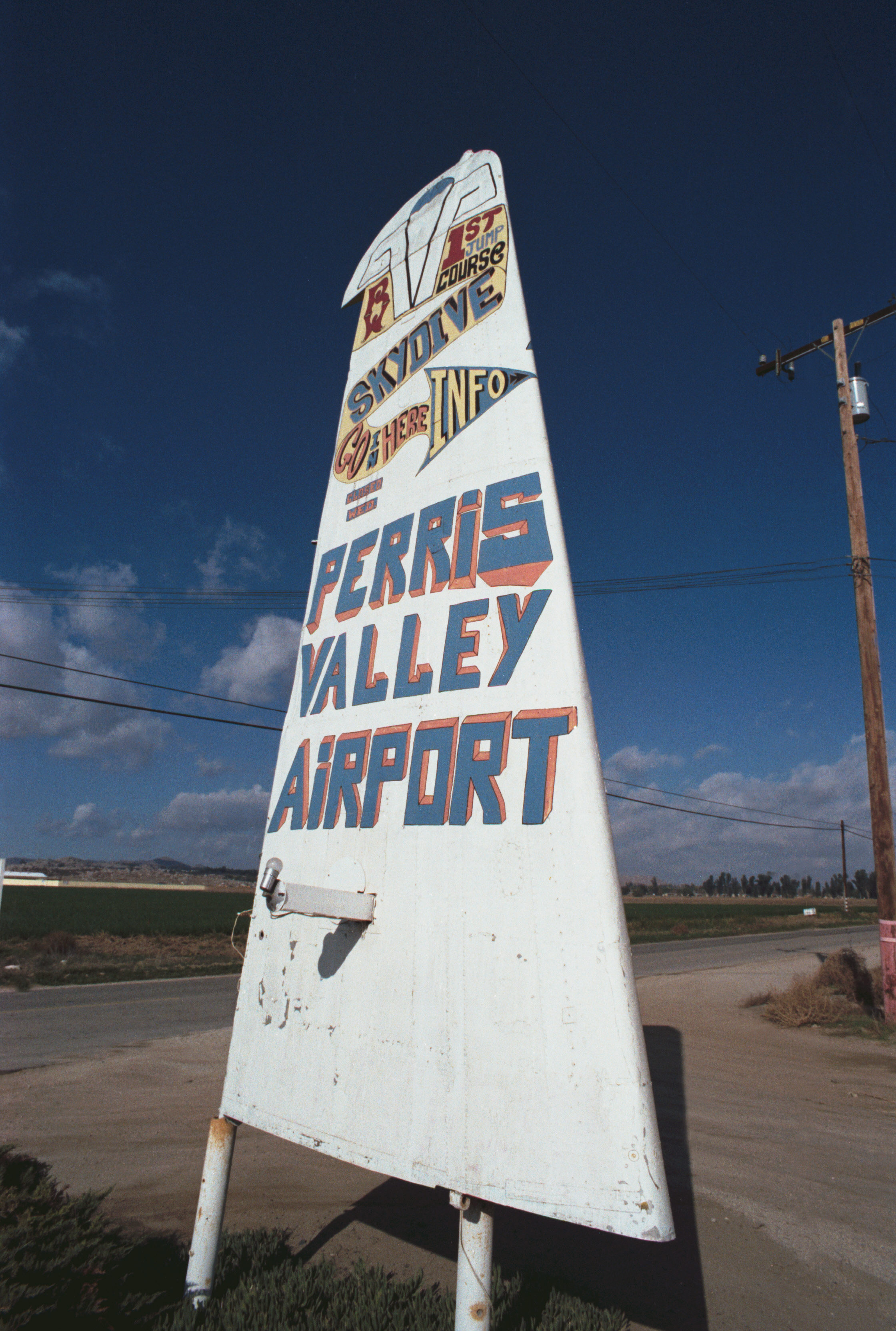
Perris Valley Parachute Center
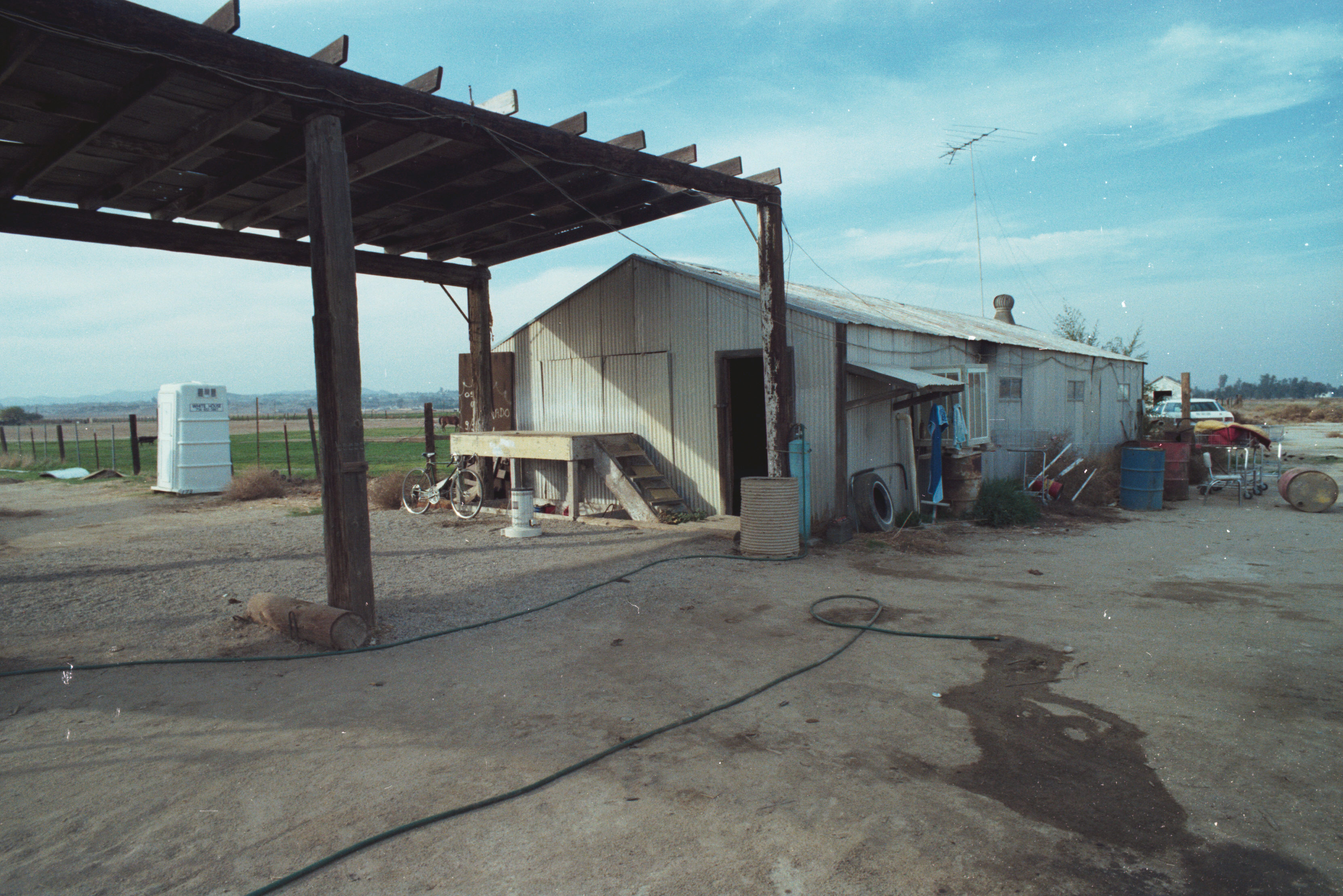
The Perris Bunkhouse
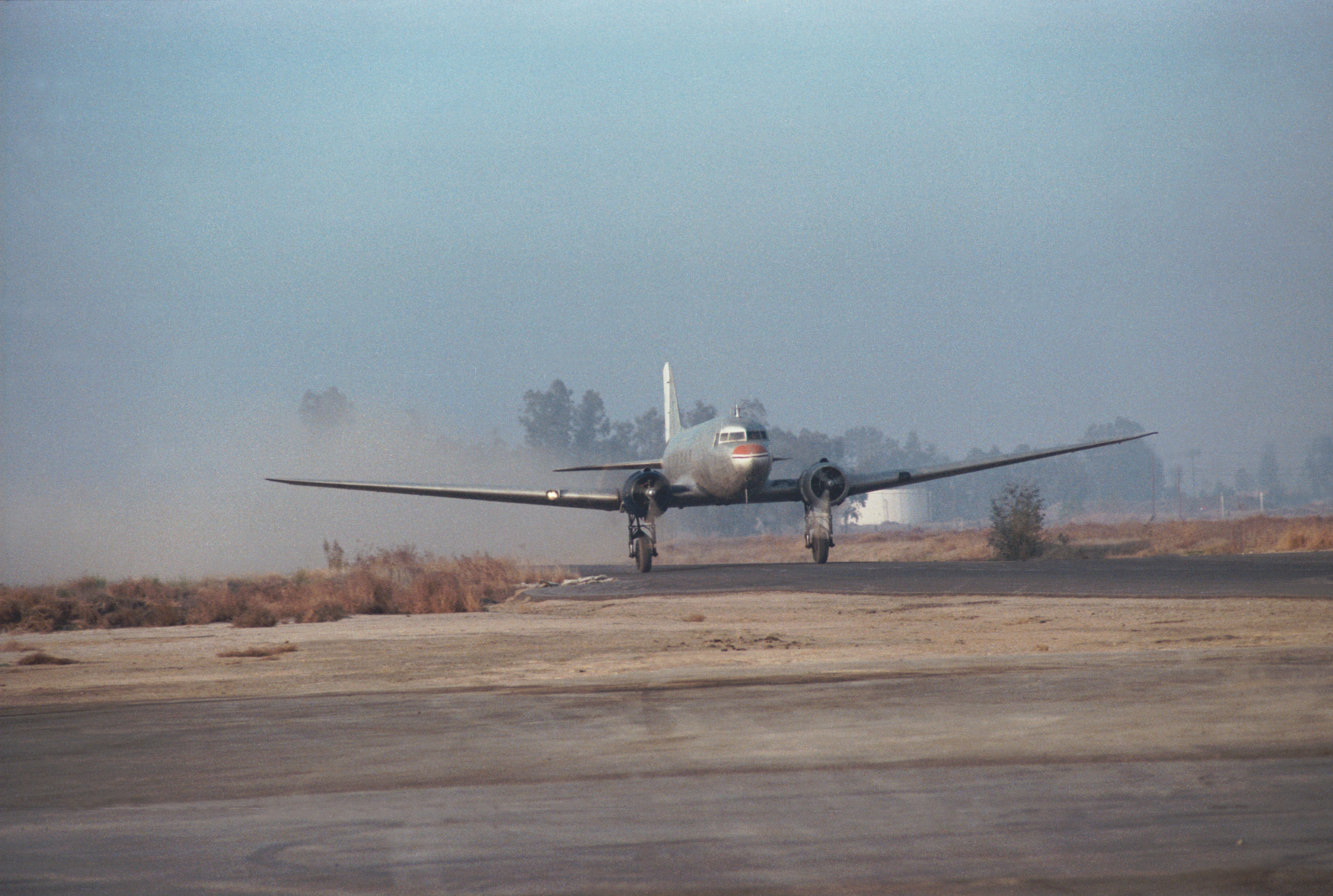
DC3 taking off
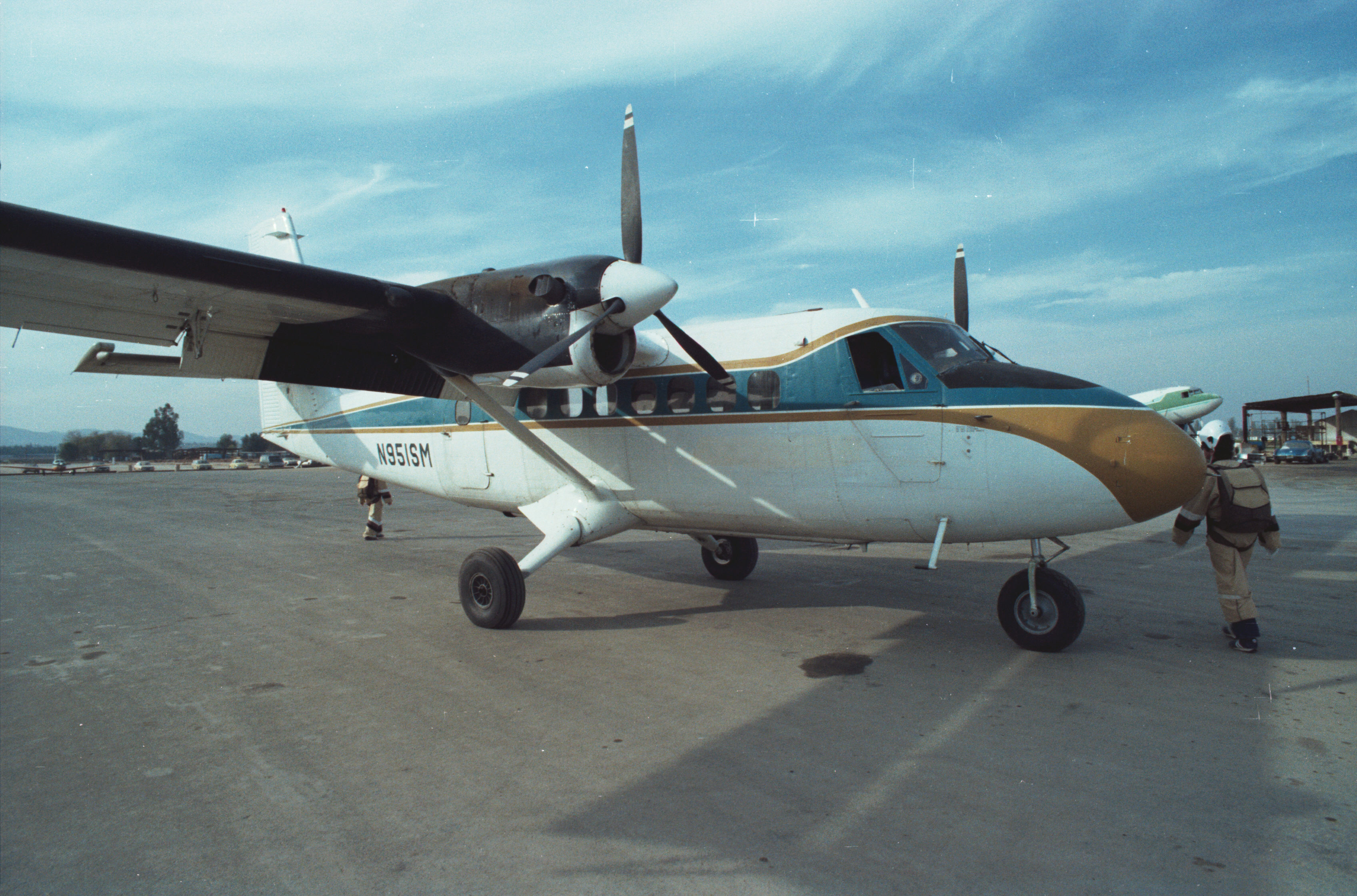
Twin Otter
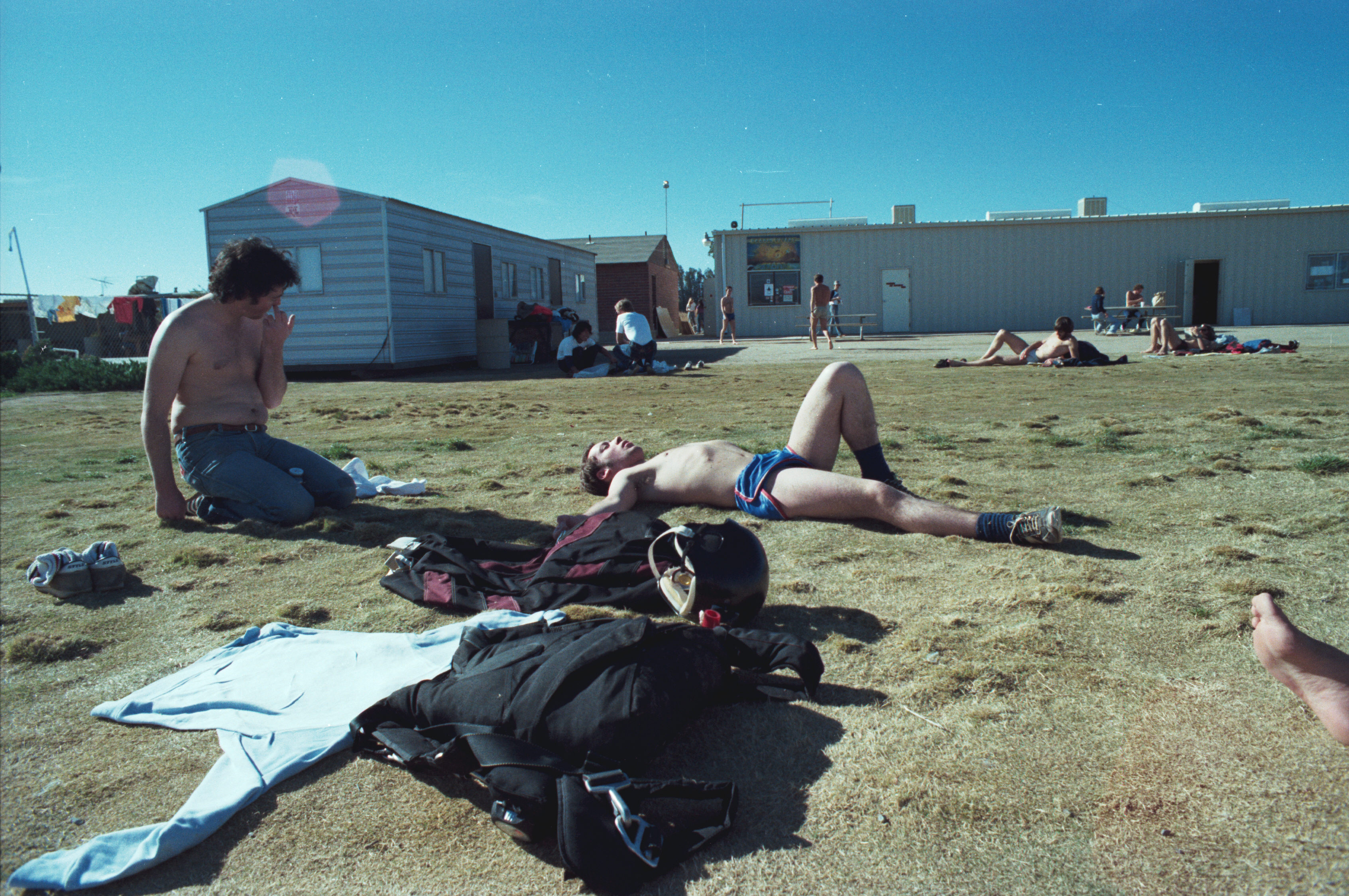
Chilling in the packing area
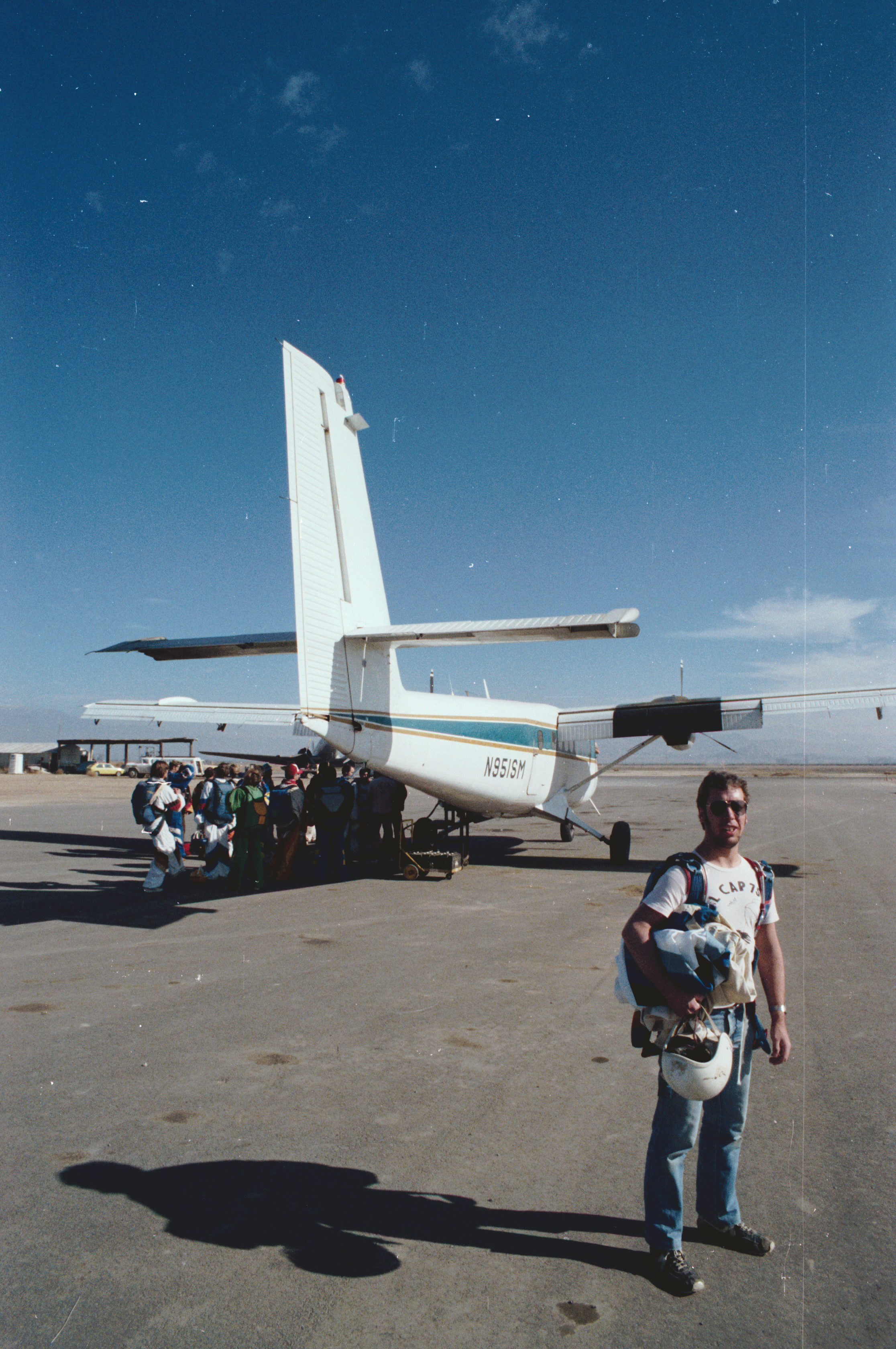
Paul in front of the Otter
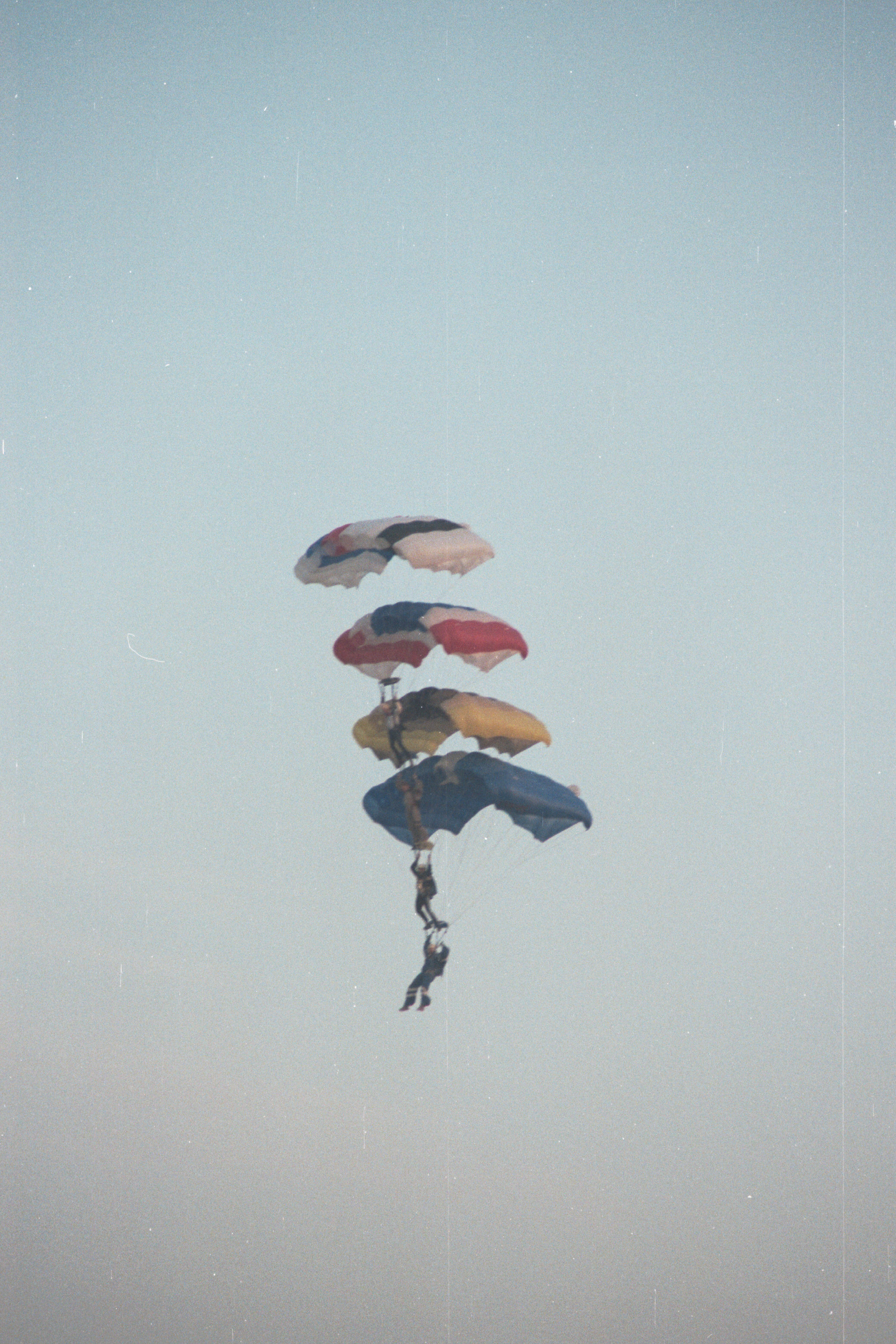
A 4-stack
While on this trip I came as close to death as I have ever come. It was in a skydive at the end of the day and we were trying to put together a large formation. It built for a bit then fell apart before I could get there. It did however begin to rebuild again and I swooped down to join it. I heard my Paralert in my ear blaring at me, so I knew I was at 3500 feet. A Paralert is a device that is attached to my helmet that sounds an alarm when I reached a set altitude. I usually had it set for 3500 feet, so I had time to find some free space to open my parachute before 2500 feet, which was about 5 seconds. On this occasion, I remember thinking to myself that I would just touch the formation and then pull. I managed this and as everyone else was frantically dumping their chutes, I just tracked off in my usual way to find some space before pulling. As I was pulling I looked down and saw to my horror how close the ground was. My chute grabbed the air and I just had time to release the brakes before I landed. That rather gave me a fright but only because I was annoyed with myself. I knew what I had done wrong so I knew it would not happen again. The guy in charge of Perris had a few strong words for me and if I had been a local he would have banned me for a week, but he let me off with a stern warning.
Fortunately, the following day was planned as a day off. How could we come to California and not go to Disneyland. We drove off in the car the following morning and made our way to Anaheim. We had managed to squeeze two more guys in the car, another Brit and a German guy who was also a tourist like us. During the journey, a couple of the guys were smoking pot in the car when I noticed that we were being followed by a policeman on a motorbike. If he had stopped us, then that would have been the end of our holiday. Instead, he accelerated past and turned on his siren. He obviously got another more important call and left us small fry to carry on. That was not the only close shave with the police on this trip.
Disneyland was great fun. You need to realise that in 1981 there was nothing remotely close to this anywhere in Europe let alone the UK. Another great thing was that being winter and relatively cold, the park was almost empty, and we hardly had to queue for any of the rides. We spent the whole day doing everything in the park at least twice. My favourite was Magic Mountain, which was an indoor rollercoaster in the dark. The most boring was the haunted house, yawn.
I do not think it was on the Disneyland trip, but after one boozy night in Los Angeles, I was driving back along the freeway with the guys asleep in the car around me when the place suddenly lit up with blue and red flashing lights. This in itself probably saved all our lives because I think I was just about to fall asleep myself and crash us into a motorway bridge at 70mph. I pulled over and stayed in the car. "Keep your hands visible!" shouted a panicked Chris from the back seat. The Cop tapped on the window, which I opened. "Drivers Licence," he said. I handed my UK license to him and after a pause, he said "What kind of license is this?" I then started to explain to him that we were from the UK and were tourists enjoying America, but we were all jetlagged etc. etc. and I was very sorry that my speed had crept up and we would never do it again. I don't know why he let us go. The smell of alcohol and pot in the car must have been overwhelming. I think he probably thought we would be too much trouble to sort out and went to look for an easier target. Our second close shave.
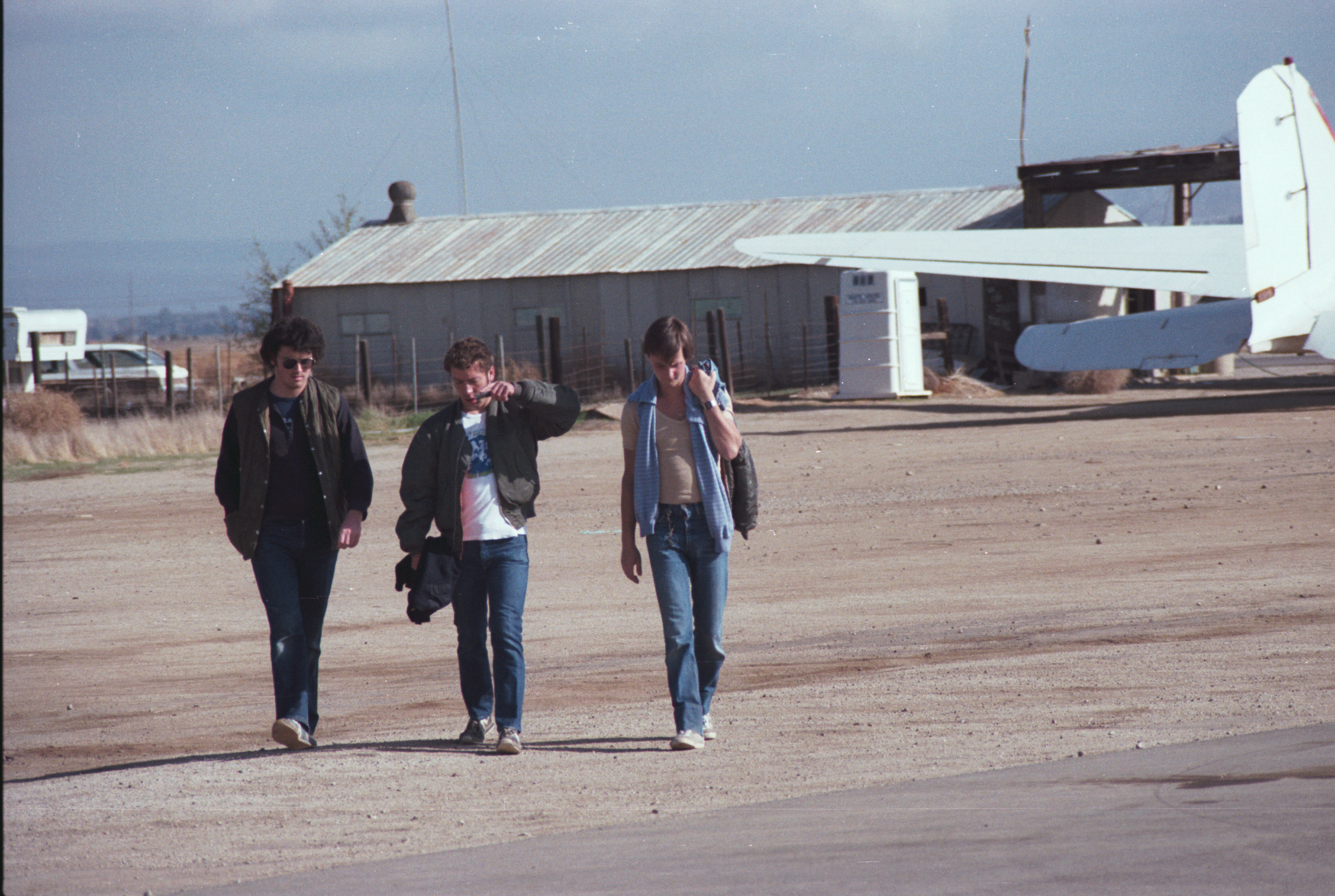
The guys in the car park.
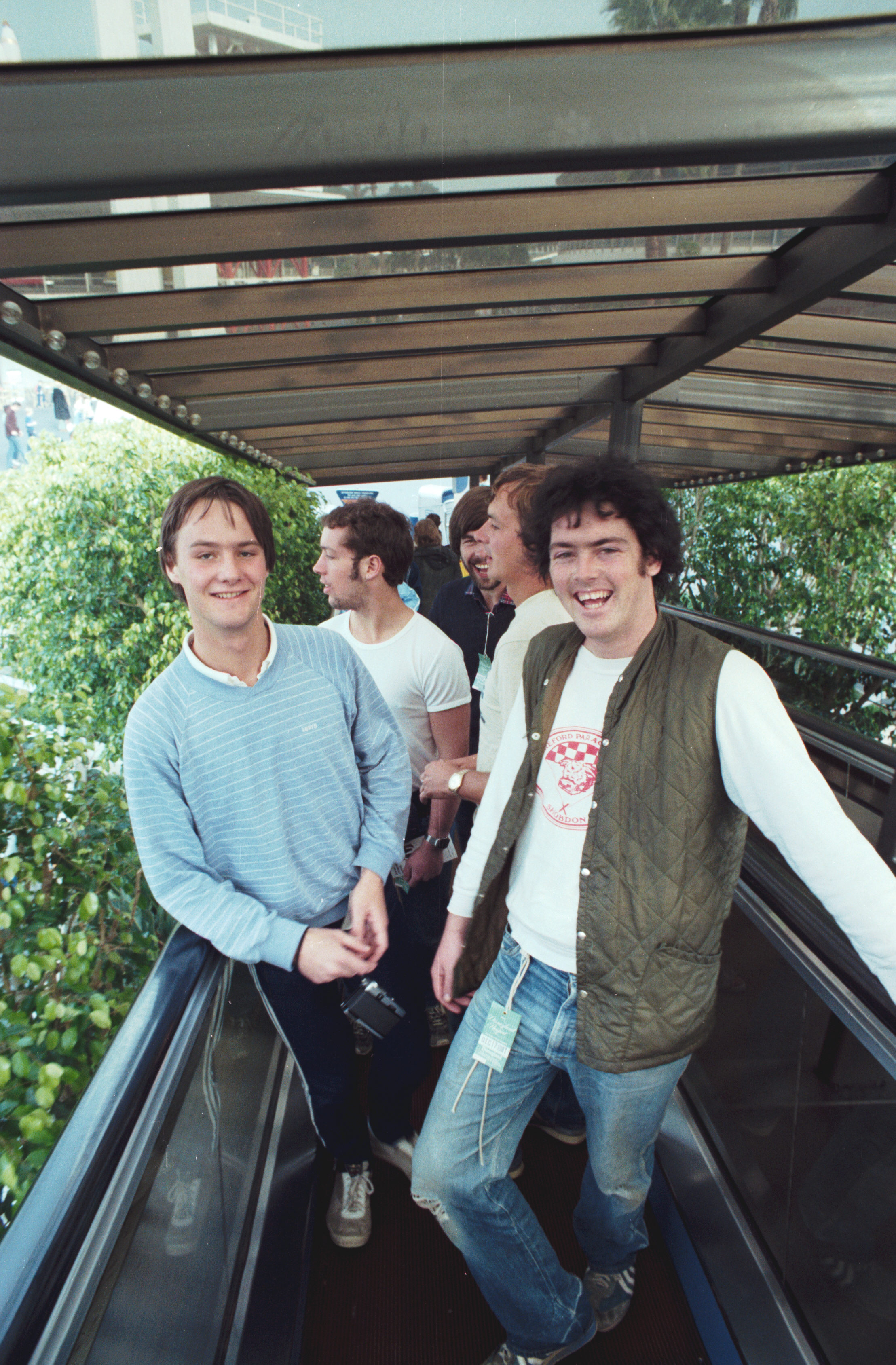
The guys in Disneyland
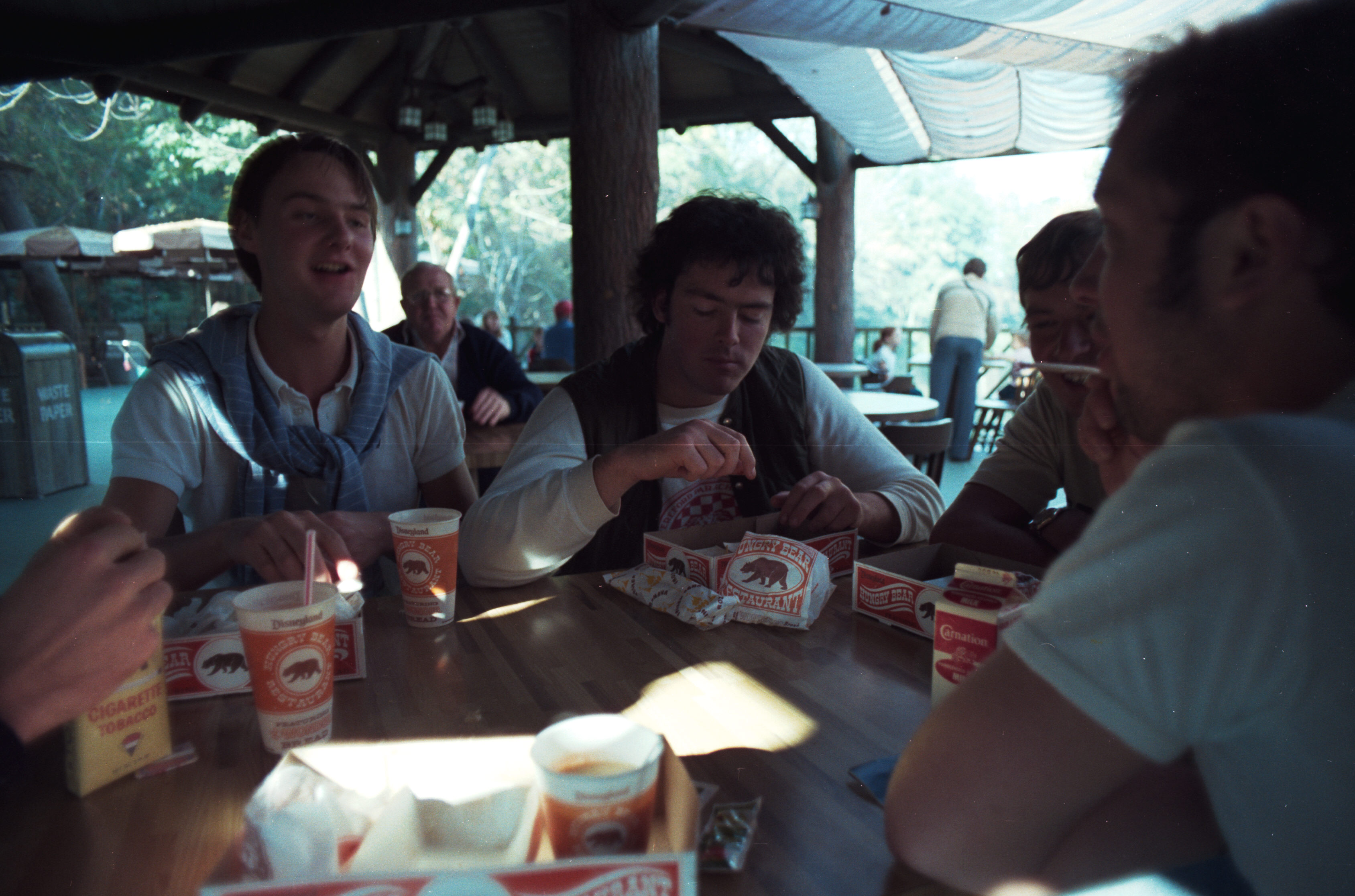
Lunch at Disneyland
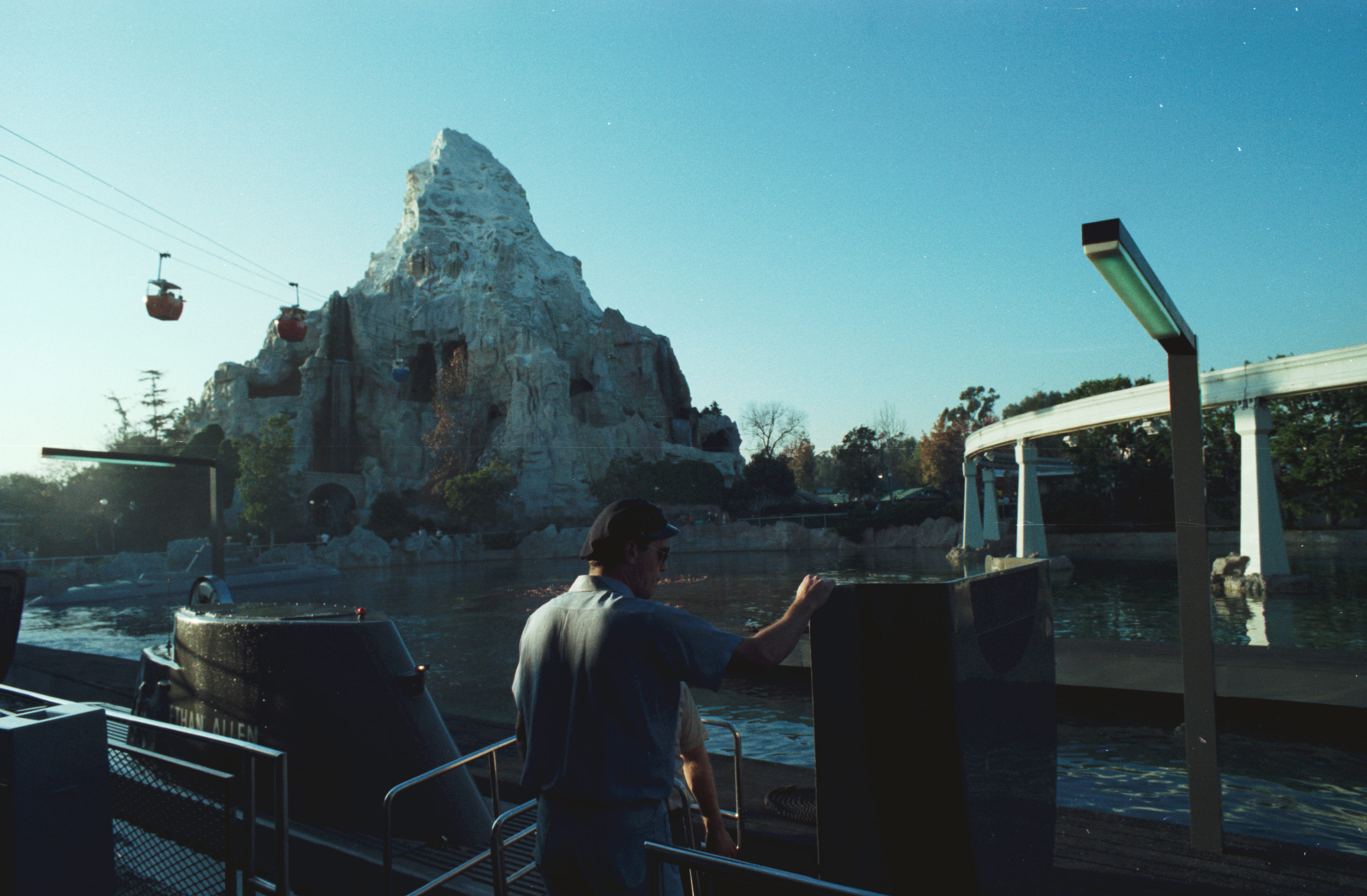
Magic mountain and the submarine ride.
The next part of our trip, which I am not sure I was aware of at the beginning, was a road trip over the state border into Arizona. One or two of the guys had heard that there was a great jump site called Coolidge that had good vibes. Paul had even met the man in charge the previous year when he bumped into him camped at the top of El Capitan in Yosemite National Park. His name was Zing. El Capitan has a 2000-foot-high sheer cliff that is great for skydiving from. It is illegal, but that does not stop the determined.
We did a whole day skydiving then set off on the 6-hour journey at dusk. Many of the inmates in the bunkhouse waved us off, including my Canadian girl. Since the journey was at night there was not a lot to see on the way, just the odd glimpse of a cactus by the roadside. We shared the driving and eventually got there in the early hours and curled up in our sleeping bags on the hard packing tables in the massive hanger.
In the morning, we awoke and started to survey our surroundings. The hanger truly was enormous and quite a crowd of people began to emerge from its various corners. Coolidge was a USAF base in the war but was now civilian. It is situated just outside the cultivated zone around the town, so was properly in the Arizona desert. The runways were arranged in a giant 'A' shape. No one had 'gone in' inside the triangle of the 'A', so that is what we were advised to aim at.
You may remember that one of the winter pastimes back in Peterborough was watching skydiving films in the dayroom. Two of the films were made here in Coolidge, Wings and Rainbow magic. I did not realise this at the time, or for a couple more decades. I wish I had known when I was there.
We met a couple of Scots guys called Hypo and Bounty who were there for the second year running. There was also a Brit girl from Singapore travelling on her own who attached herself to us and took a shine to Chris. She said she only did hot countries because the cold damp weather of northern Europe made her ill. Later that morning we did our first jump as a 4-way after fighting off several Yanks who wanted to jump with us. Our intention was to always jump 4-way, but that was not always possible. The jump plane on that first day was a twin beech. This ancient, twin radial engine plane took about eight jumpers. It was the same plane featured in the film Wings back in the 70's. I must admit that of all the planes I had flown in in my skydiving years, this was the one I felt the most unsafe in. It was old and seemed un-kept, took an age to get off the ground, and struggled to get to altitude. However, on the second day a fabulous visitor flew in, a DC4. This plane was usually used in Alaska transporting fish, but for a few months in the winter the owner flew it down to Coolidge and it was used as a jump ship. Even compared to a DC3, the DC4 is enormous. It was one of the first generation of piston engine airliners, and uses a nose wheel undercarriage, so requires a tall set of stairs to get into it. It also has four engines, which made a unique sound. We jumped this a few times, it was so spacious and warm and comfortable. Amazing.
As time went by, we were becoming more and more relaxed at Coolidge, the vibe there was definitely cool and laid back. There were not any of the usual drop zone rules except try to stay safe. We even started jumping with no crash helmets or shoes, as it just seemed the right thing to do. The airport had no facilities really, so we had to go into town to eat and drink. I remember being in a cocktail bar in Coolidge and drinking margarita after margarita with two policewomen who told us to be careful on the way back to the airport as we drunkenly got into our car. We also spent Christmas at Coolidge, but not a lot was happening on the airfield, so we drove off looking for food. Christmas lunch turned out to be a Sonic Burger from a drive thru which was still there and looks exactly the same at time of writing, 44 years later. Back at the airport, we went off into the desert exploring. The desert was full of the giant Saguaro cactus plants, just like in the westerns. There were many other smaller cacti, but we kept our distance from them due to the possibility of rattlesnakes and scorpions hiding in them. We also came across an old fridge that was covered in bullet holes from somebody's target practice.
By this time, we had ingratiated ourselves with the locals to a point where we were allowed to sleep on the sofas in the day room, which were much more comfortable than the hard packing tables. They even invited us to drink with them in the evening. After a few beers, a bottle of spirits called Mezcal was produced. Mezcal was clear like gin and had a little worm lying at the bottom of the bottle. Apparently, if the worm stayed at the bottom of the bottle, then it was OK to drink. If it floated up any distance, then it was best not to drink it. I drank it but had to go outside and be sick at one point during the evening. Hypo and Bounty turned up that night and offered some cocaine around. I declined of course; I was far from home with no medical insurance. Coolidge was a very druggy jump site. There were always drugs in skydiving, even in the UK, but in the States, it was an integral part of the scene. I was sensible though, most of the time.
It may have been on our last day that we were approached by a couple who for 50 dollars offered to take us up in a hot air balloon so that we could jump from it. Chris and I leapt at the opportunity, as did Hypo and Bounty. This was another Wow event since it happened at sunset over the desert. It seemed that everyone on the airfield helped to setup and inflate the balloon, and when we took off, I experienced another of those memories that will stick with me forever. We looked down in silent awe at the airfield and the setting sun casting long shadows across the orange desert. Chris had secreted a can of beer in his jump suit but when he produced it, the pilot told him that there was no drinking in his aircraft, so he tucked it back and drank it after we landed. Before we knew it, we were told it was time to get out, which was a surprise and a disappointment that I had to leave this amazing viewpoint. We all stood on a corner of the basket; I looked around at the other guys who we all wide eyed and illuminated in red light from the setting sun against a darkening blue sky. Then, at the command of the pilot, we let go. I had never jumped from something that was not moving fast before, so this felt wrong somehow. Usually when you jump from a plane, you are already in rapidly moving air so you can manoeuvre using your body. When you jump from a balloon, you initially have no control at all, so you flap around uselessly until enough speed builds up to be able to get stable. We jumped from 7000 feet so had time to get together in a star formation, but then we just sat there and smiled and looked across the desert and the sunset until we broke away and dumped. The jump site pickup truck found us by the side of the road and drove us home under the now darkening violet skies.
We opted to leave Coolidge a day earlier than planned so that we could do a bit of a tour on the way back to Perris. What we decided on was, the Grand Canyon, Boulder Dam, a night in Las Vegas, then maybe through Death Valley and then home to Perris. That morning when we left Coolidge, I looked around at the people and the scenery and swoop the drop zone cat and could not believe that I would never return.
We took to the road and drove north, past Phoenix and Flagstaff to the Grand Canyon. We stopped eventually at a tourist viewing point and admired the fabulous views of the canyon in front of us. The Canyon is so big that you can only see relatively small parts of it, but what you can see is worth the trip. We even took a walk down a path called The Hermits Trail expecting to make it to the bottom, or at least be able to see the river, but we soon realised that it was a long way, and we would not make it back before sunset. We headed back up and took a few photos at the top, one of which is my favourite photo ever. It is the four of us standing together in front of an amazing Grand Canyon panorama. That photo summed up the team and the character of each of us on this journey of a lifetime.
By now, it was starting to get dark, so we took to the road and headed West young man. We got to Boulder Dam in the dark so the photo I took was not that good. It looked pretty good in real life though, all lit up. And so, to Vegas. We had not booked anything, but we turned up at a large hotel in the middle of town and they happily welcomed us in. The Sundance hotel was cheap, so we all had separate rooms. The ground floor of the Sundance hotel was packed with slot machines and gaming tables. That is how they made their money. We had a quick look around the strip at night, but we were all tired from the journey and a little after midnight retired to bed.
In the morning, we got breakfast for a few dollars. All the food was cheap as well. In the breakfast area there were a few gamblers telling tales to each other about how much money they had won and lost that night. We wondered around a bit in the morning before collecting the car and setting off West again. I didn't actually like Las Vegas, it was impressive, but to me it was seedy and false.
We decide not to go through Death Valley because the morning had gone, and it was still 4 hours back to Perris. When we arrived there, we were still tired, at least I was because the trip was now beginning to take its toll. It turned out that Paul and Trevor had to go back the next day, so we got a couple more jumps in and retired to the bar. Paul was in charge of the hire car so had to take it with him. One of the guys kindly offered to drive Chris and me to LAX the next day to catch our flight. I think we just hung around on the airfield taking in the atmosphere and telling stories about Coolidge, and that evening one of the guys from Coolidge turned up at Perris carrying another bottle of Mezcal, we must have made an impression there. And that's how we spent the last night.
We set off the next morning and it seemed everyone on the airfield came out to wish us a good journey and "Come back soon". We thanked the guy who drove us to LAX and walked into the terminal to find that our flight had not left the UK yet due to snow and was at least 8 hours away. Chris then suggested that we go to a theme park up the road called Six Flags Magic Mountain. He had read about it before coming, so we quickly hired a car at the terminal and set off. Again, the park was almost deserted, and we had several goes on Colossus, which was the biggest wooden roller coaster in the world, before I began to feel sick. There were other great rides with loop-the-loops and vertical drops which were all great fun. After a few hours we rang the airport and they confirmed that the plane was on the way, so we drove back to LAX, checked in and retired to the departure lounge. In the lounge, Chris bumped into one of his customers from the UK. Chris was a pharmaceutical drug salesman. It's a small world.
So ended the Perris adventure. I thought Zephyrhills was great, and it still is because it was the first, but the Perris trip topped that easily. It was only three weeks, but I shall remember the sights smells and faces forever, even if some of the names fade.
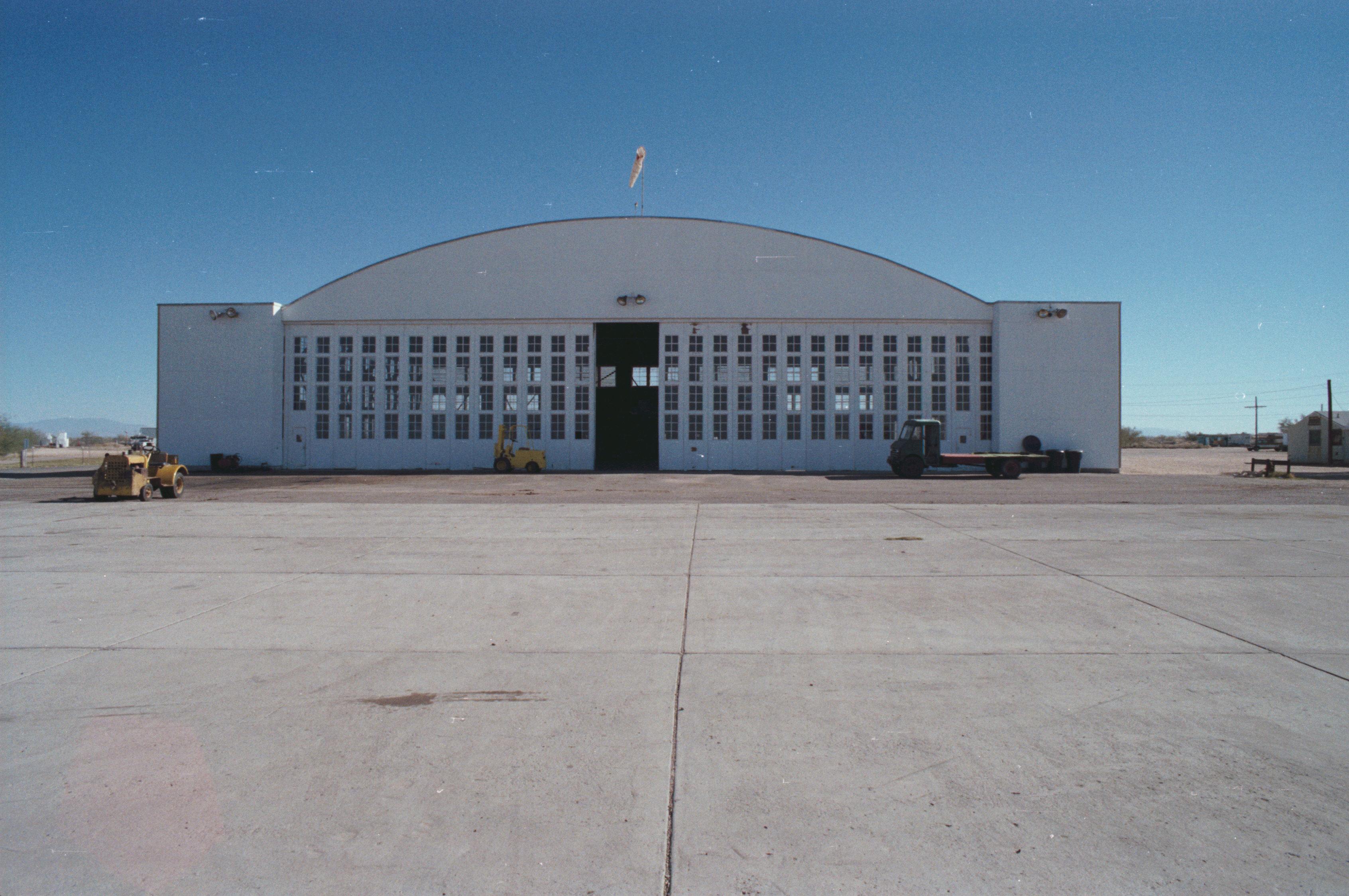
The hanger at Coolidge
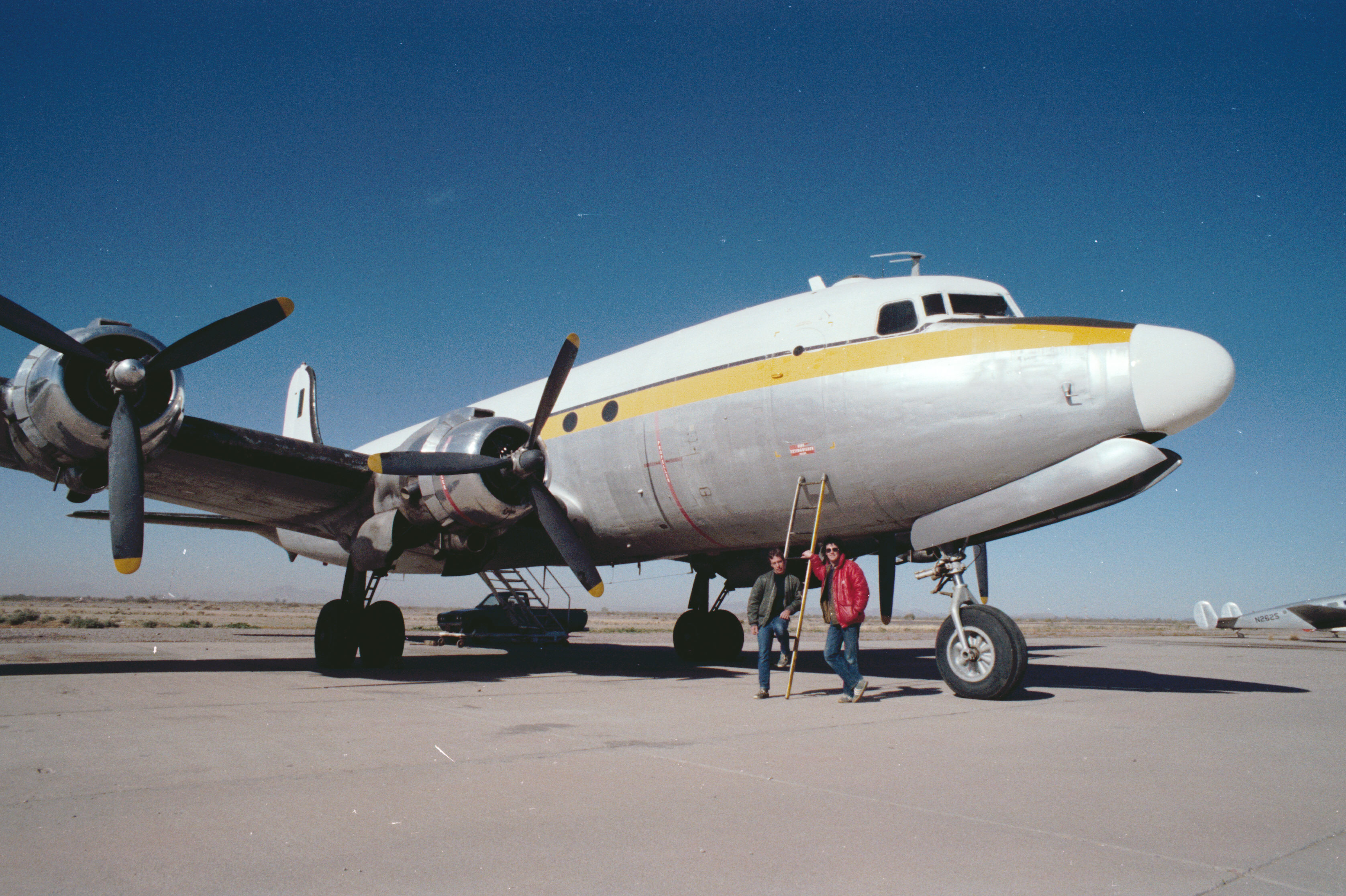
The DC4
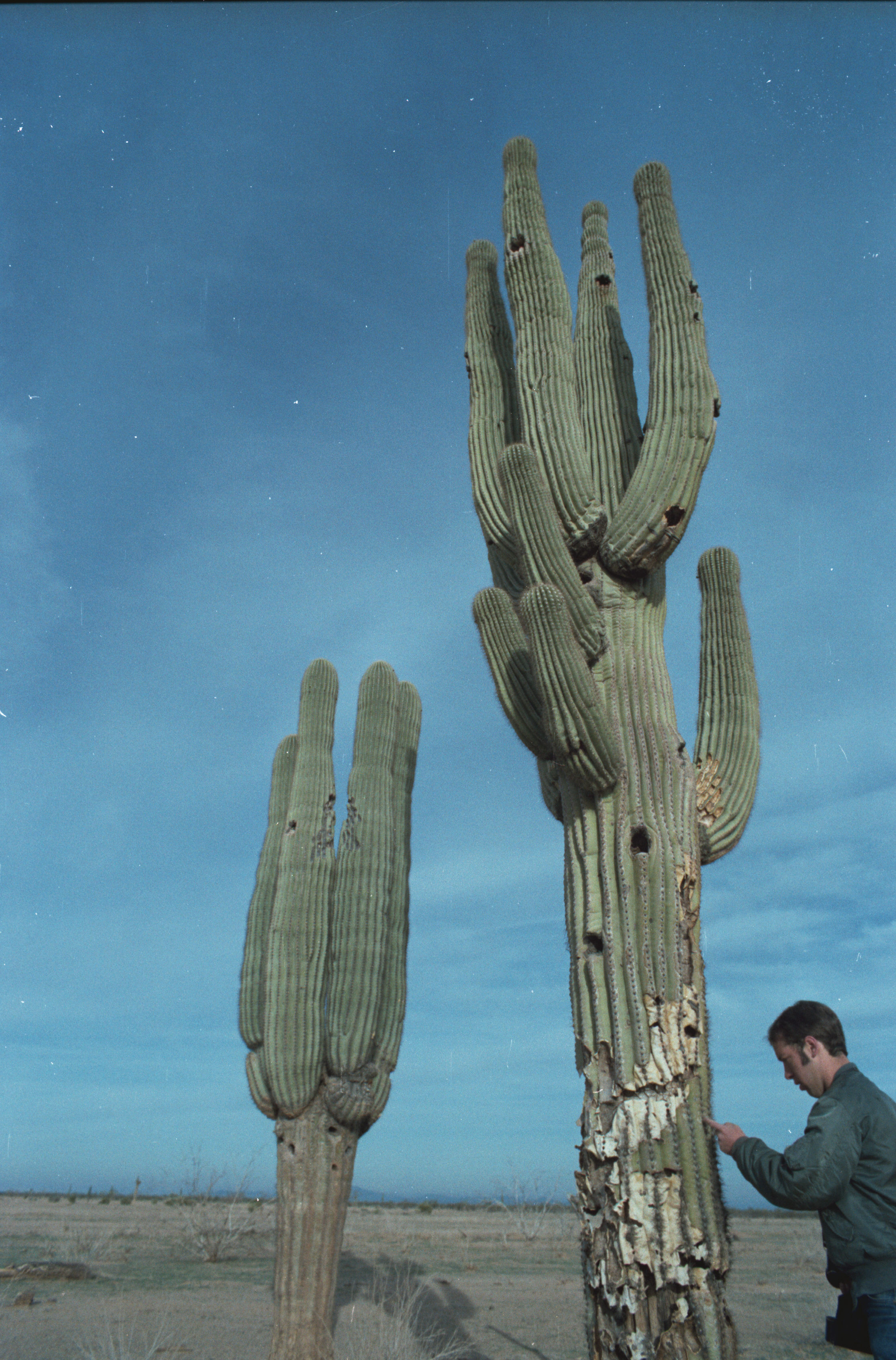
Cactii in the desert
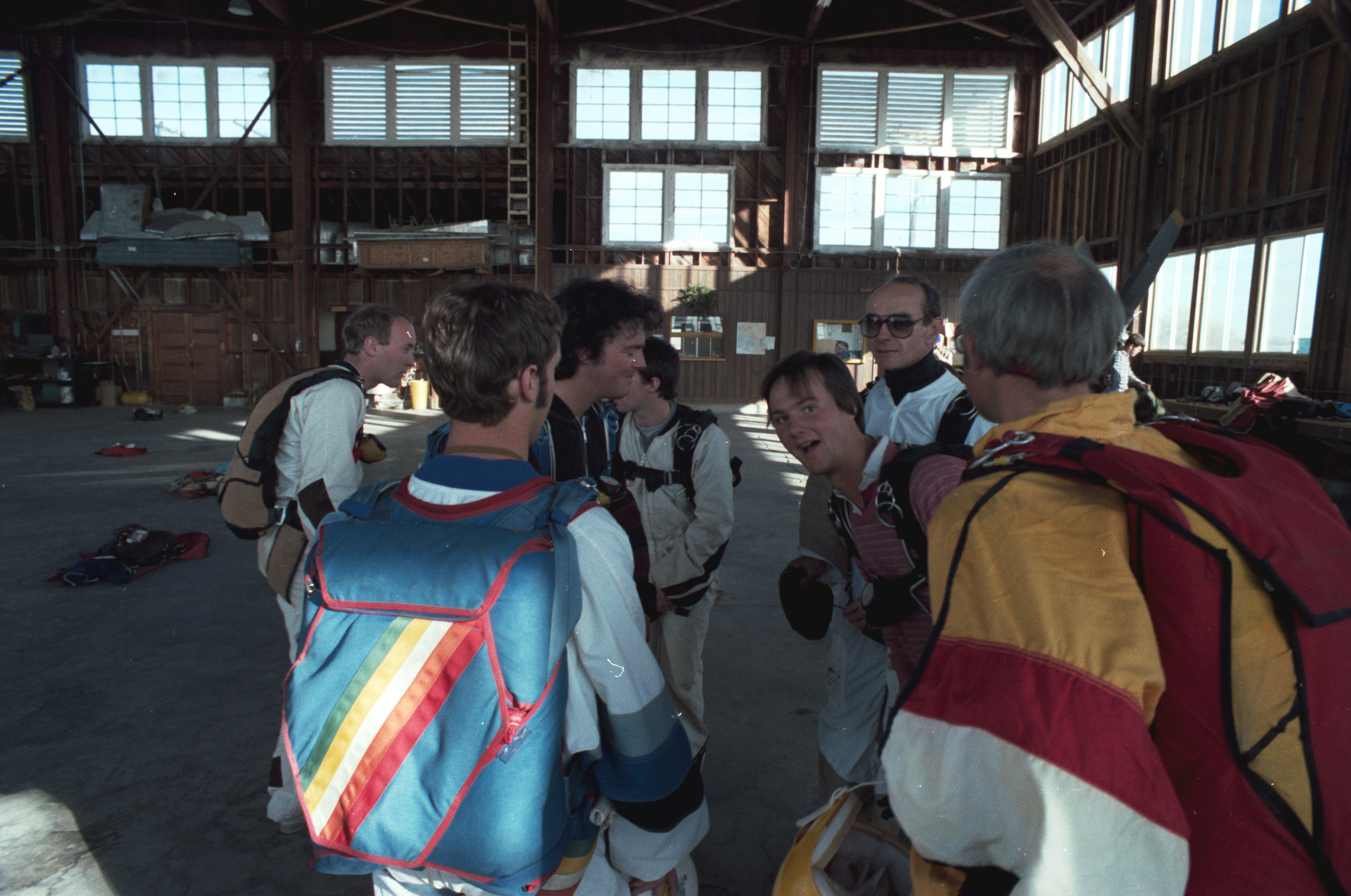
Kitted up in the hanger
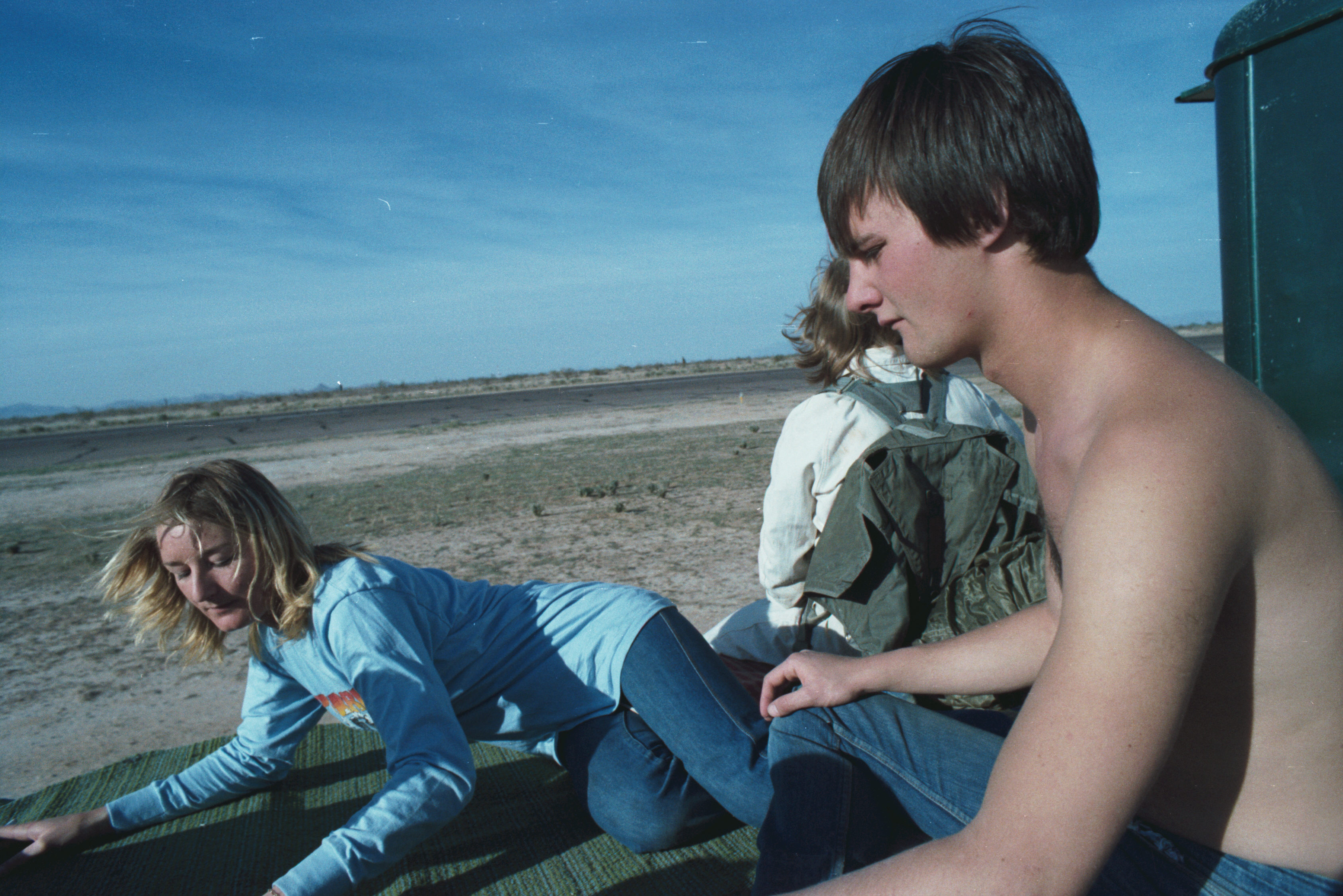
Chris and his girl
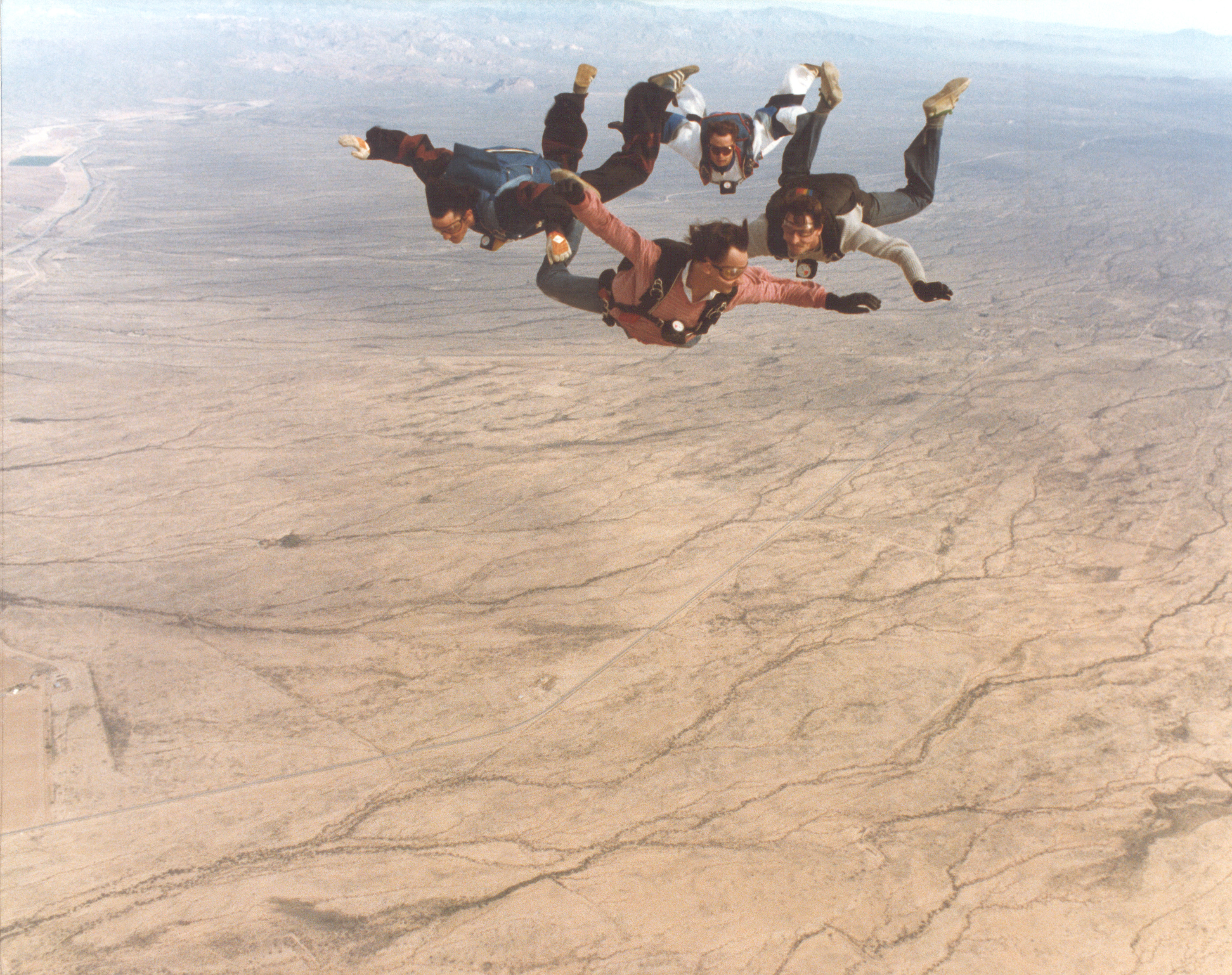
RW over the Arizona desert. I'm on the right.
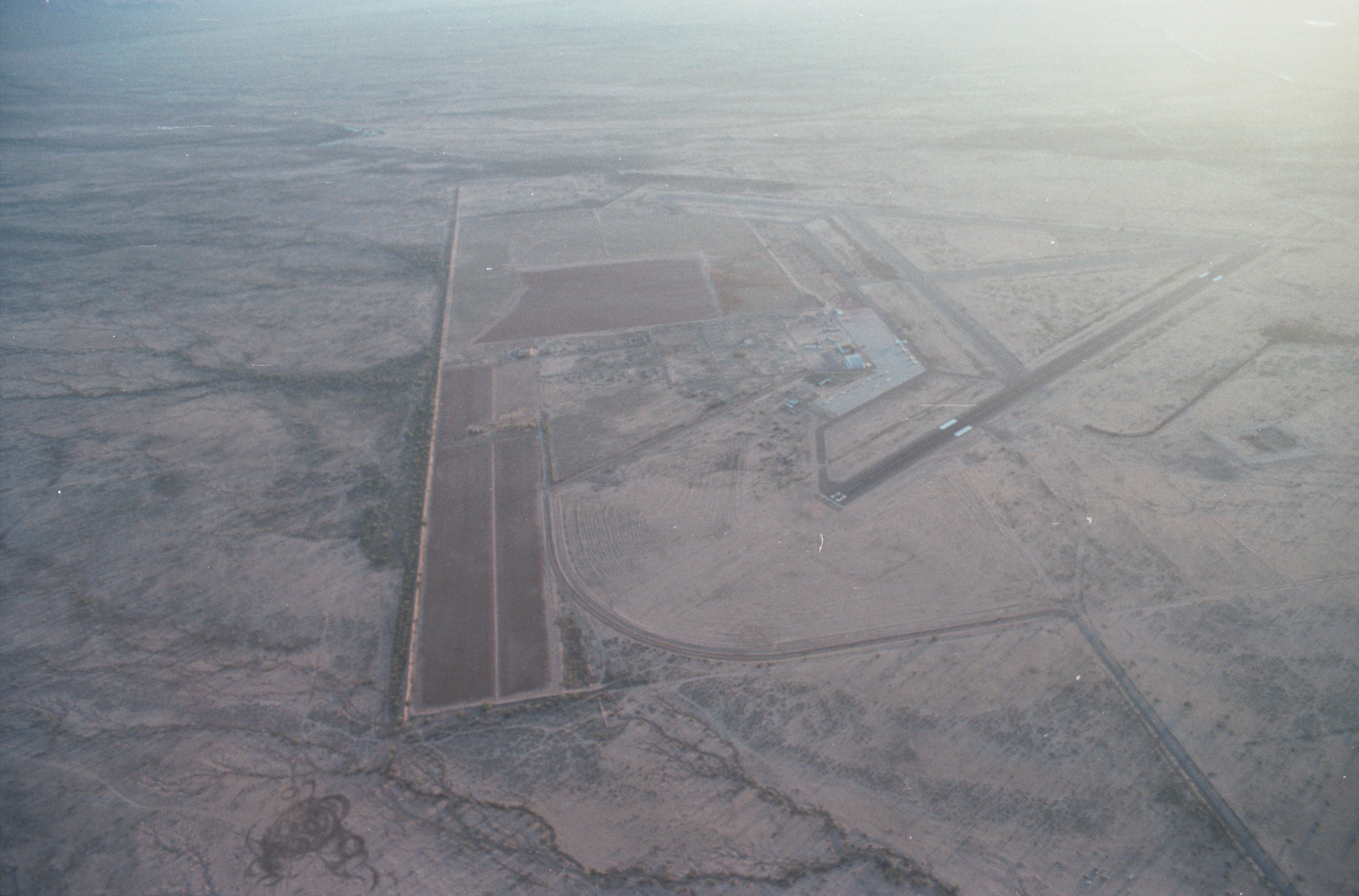
The airfield from the balloon
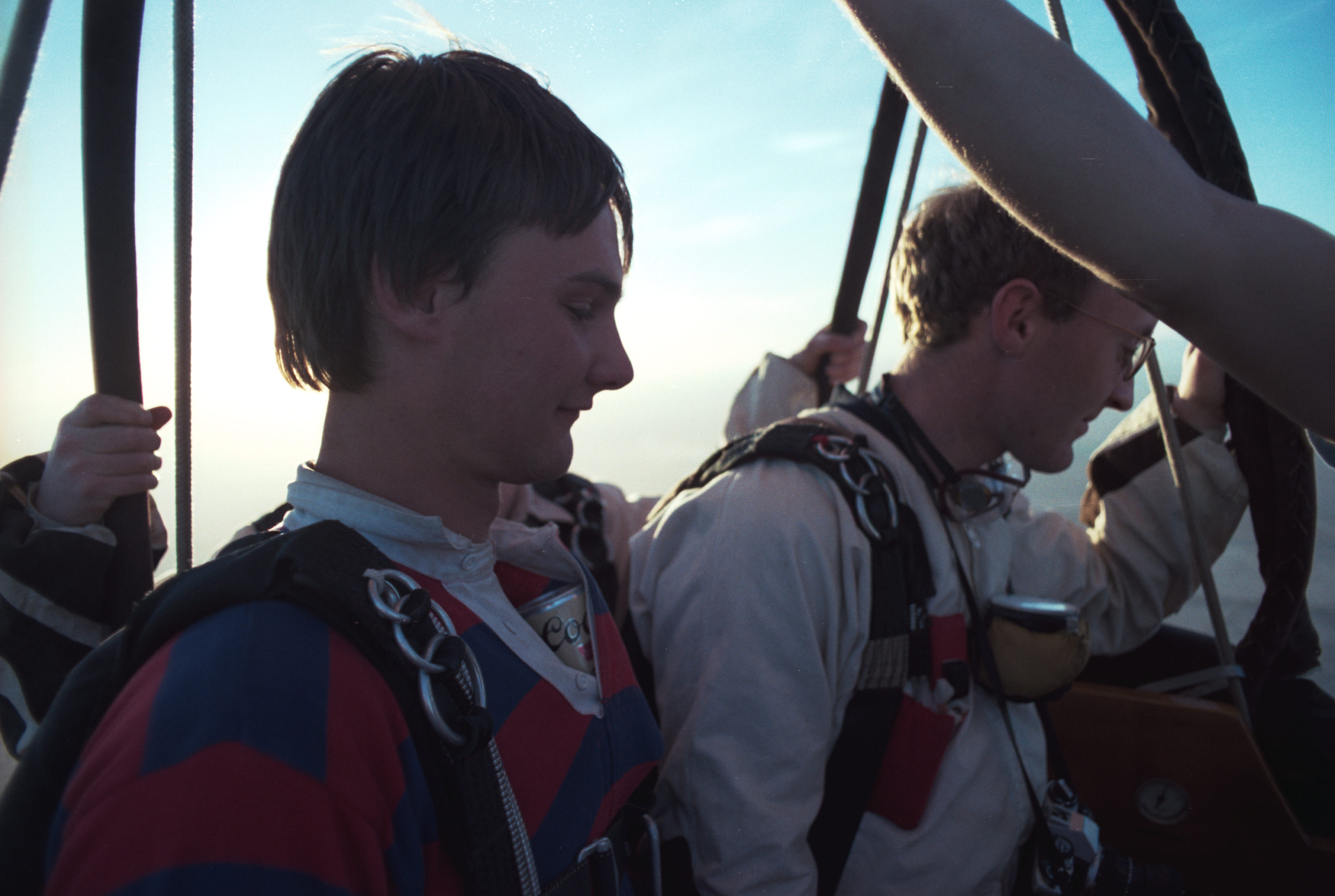
Just about to jump from the balloon. Chris and Hypo
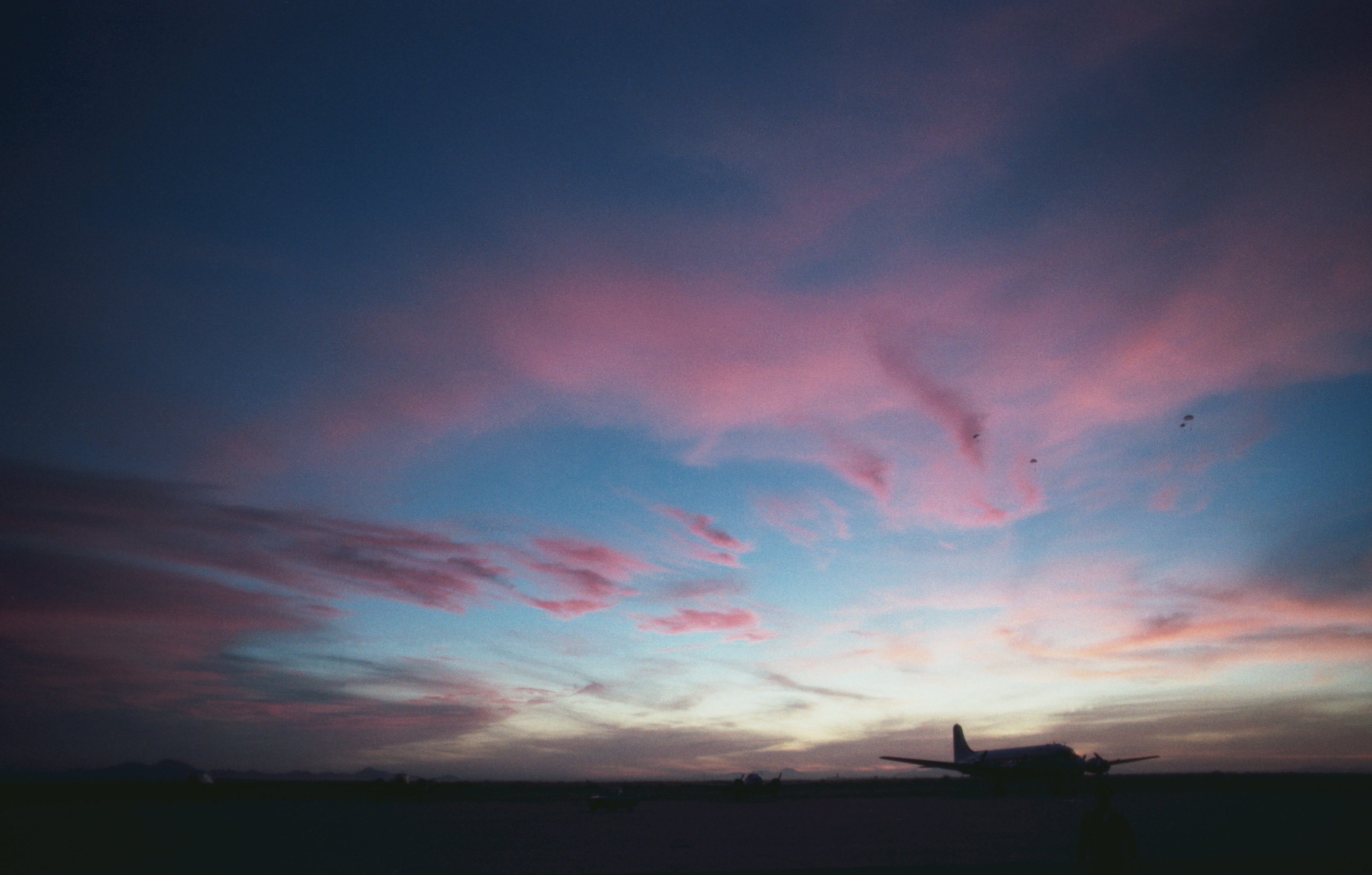
Sunset over the Arizona Desert
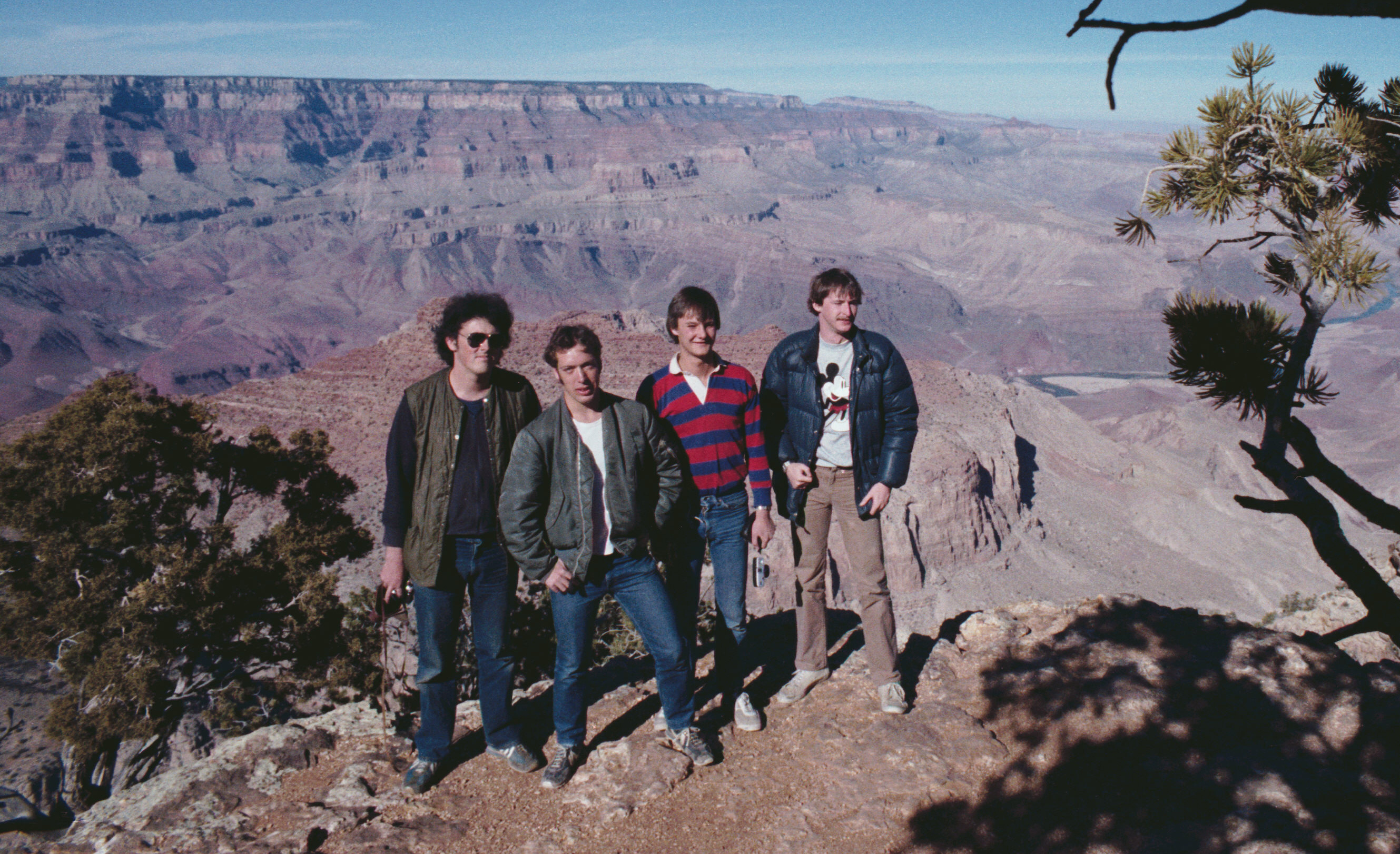
My favorite ever photo. The guys and me at the Grand Canyon
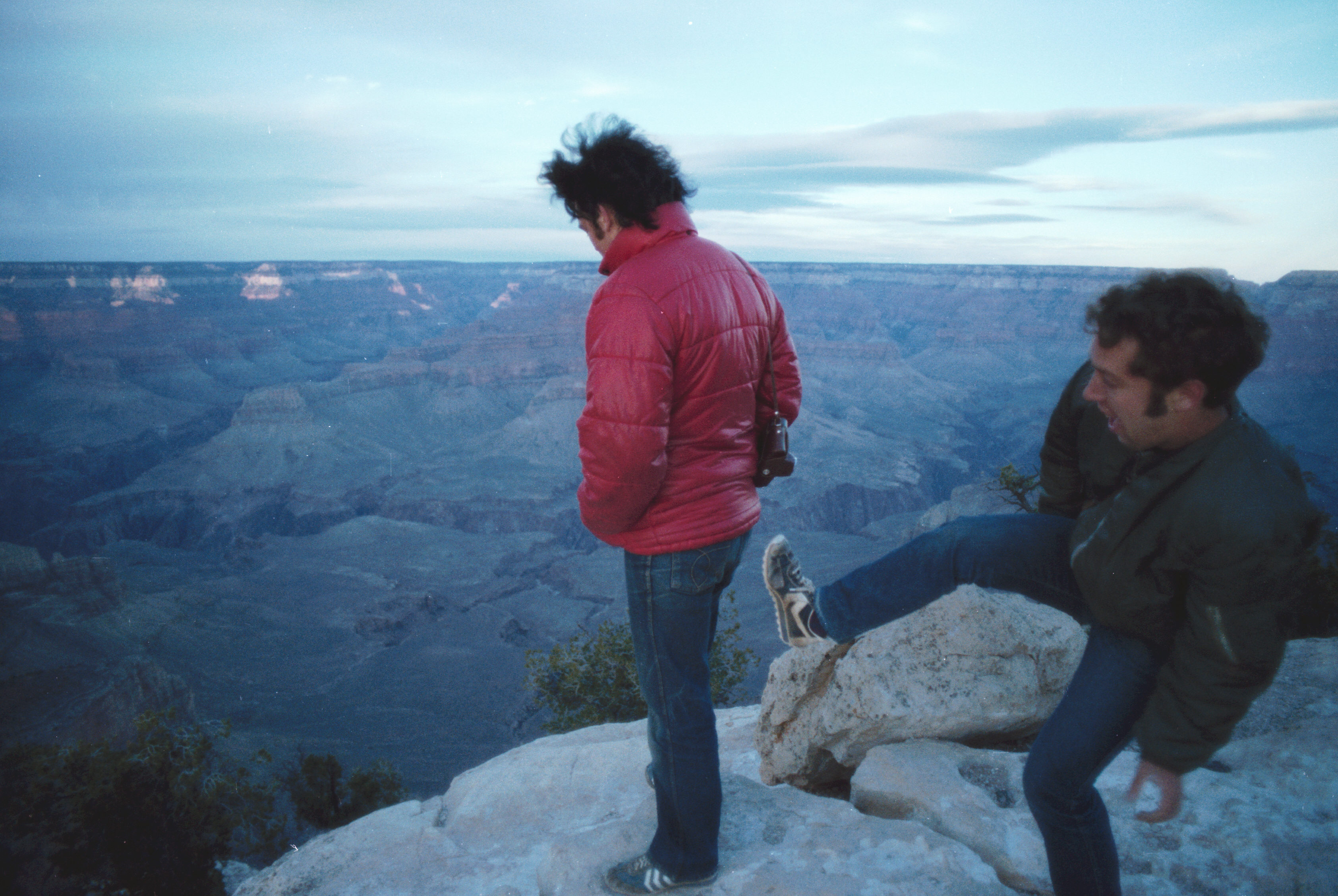
Getting rid of Trevor
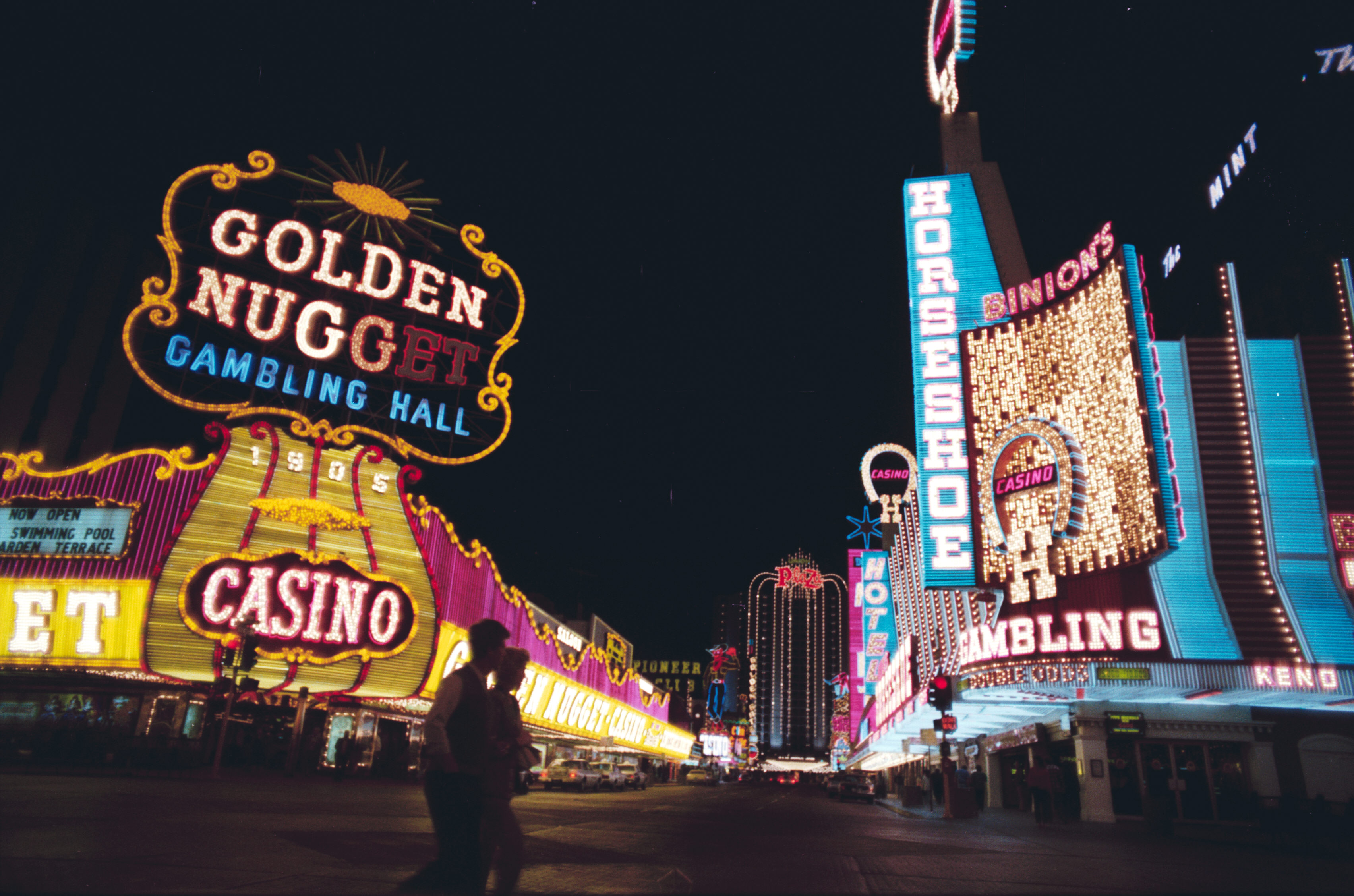
Las Vegas
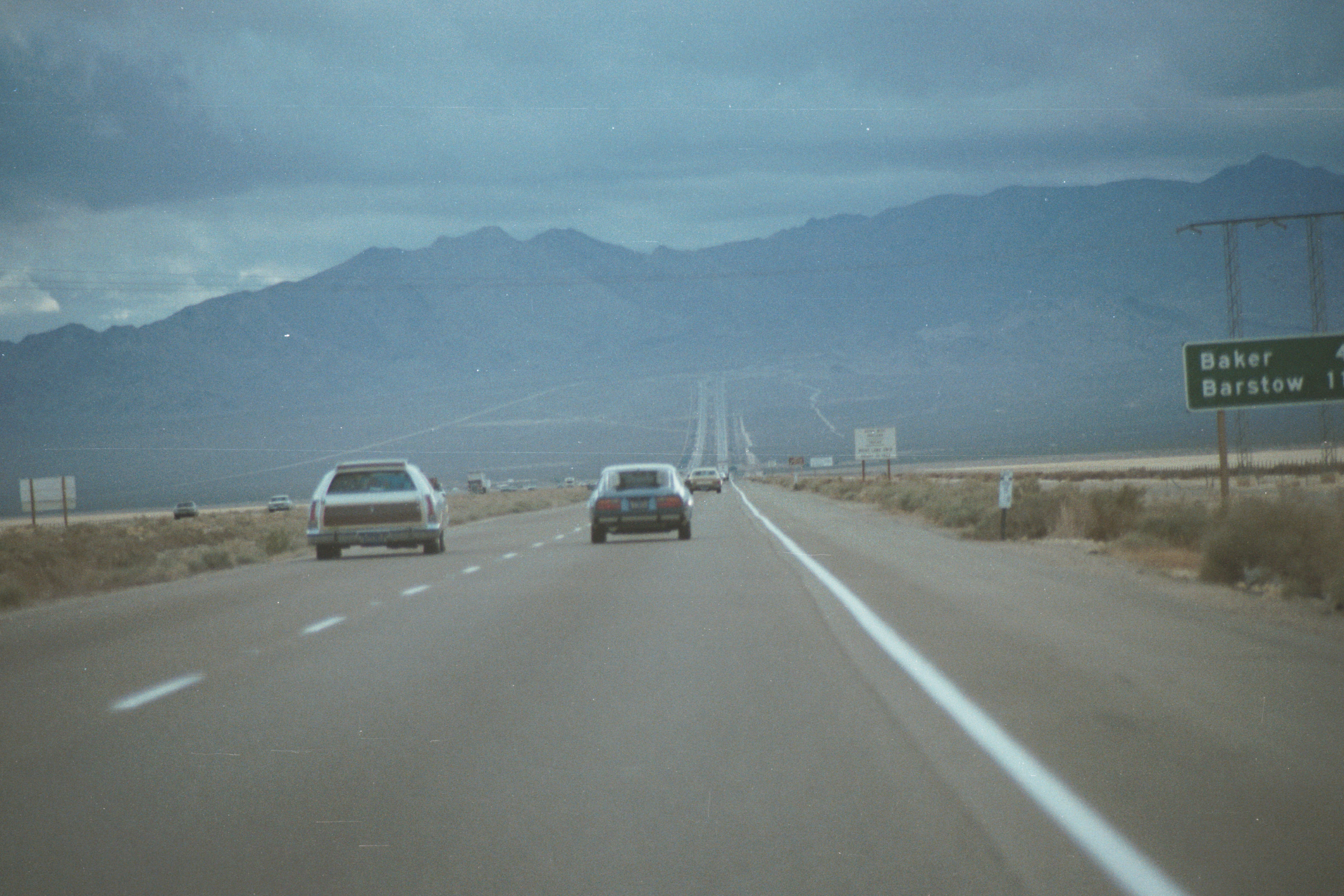
The road back to Perris
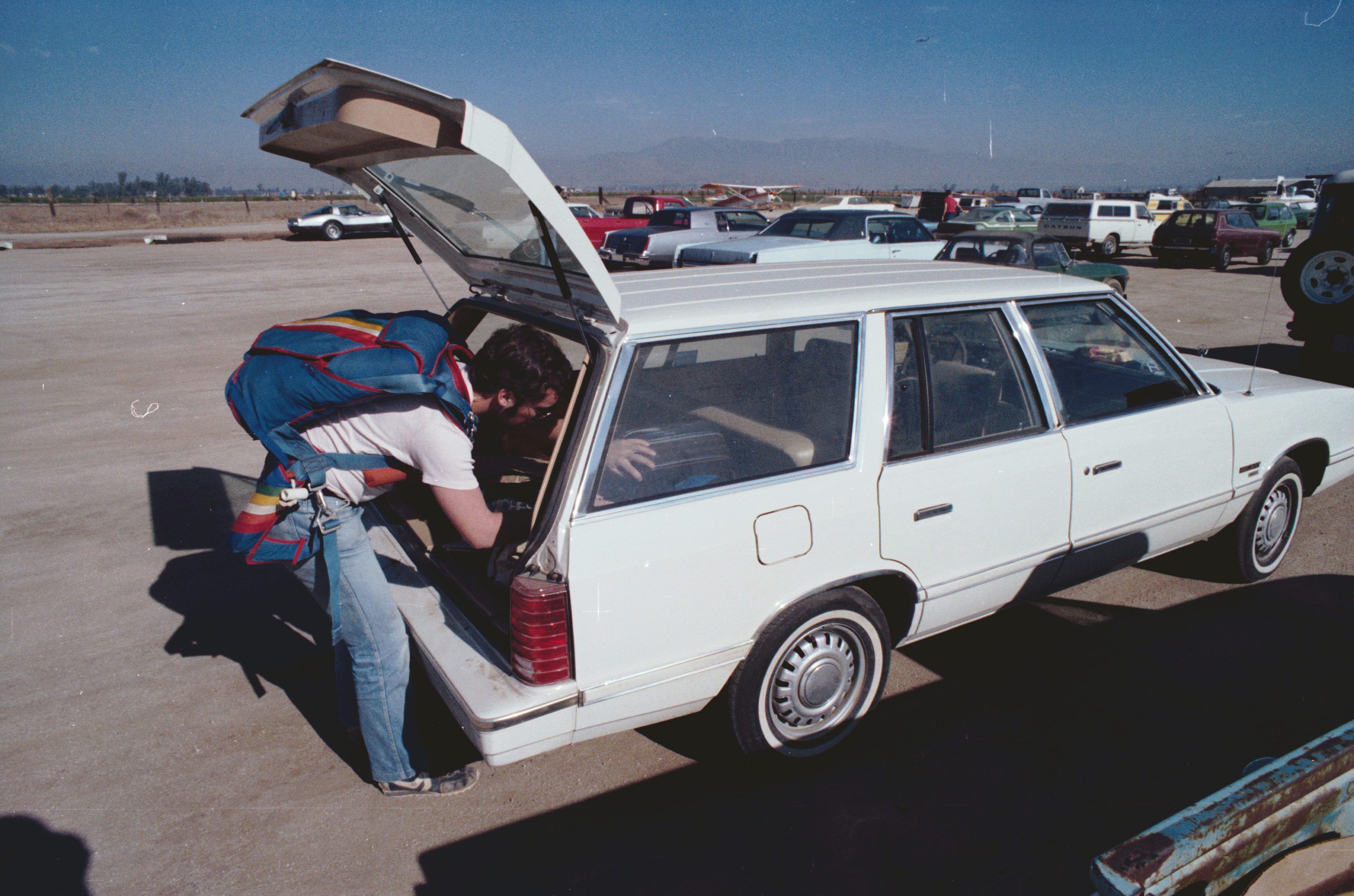
Back at Perris
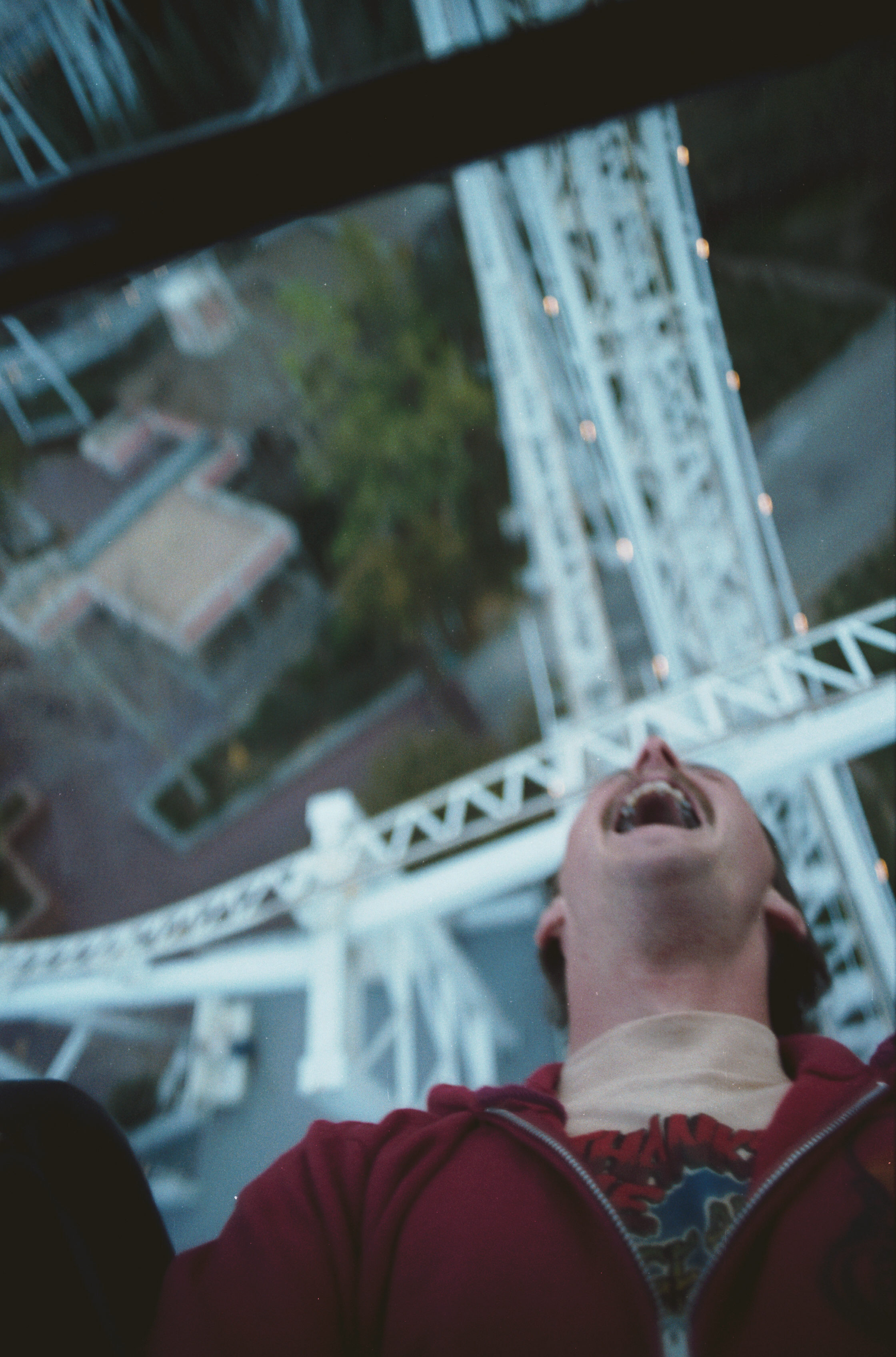
One of the rides at Magic Mountain
Back in the UK, now that we were a team, we set about meeting up most weekends to jump together with the intention of entering competitions. One of the first was the Sibson TRAC meet. TRAC stood for Team Relative and Accuracy. This is where 4-way teams competed to do as many pre-determined freefall formations in a set time, and then land as close to the centre of the gravel pit as possible. I cannot remember how the scoring went but we would have won except that our first formation on one jump was not seen from the ground, so zero points for that dive. We should have held it for one or two seconds more after launching it from the door. There were a couple more competitions, but the details have merged together in my mind, but I do remember that the team members chopped and changed depending on who could make it at the weekend or who could do a road trip. Regular stand-ins were Graham Heywood, Glynn Thomas, Jerry Lanchbury, John Ward and PD. Needless to say, we continued to party as usual through all this.
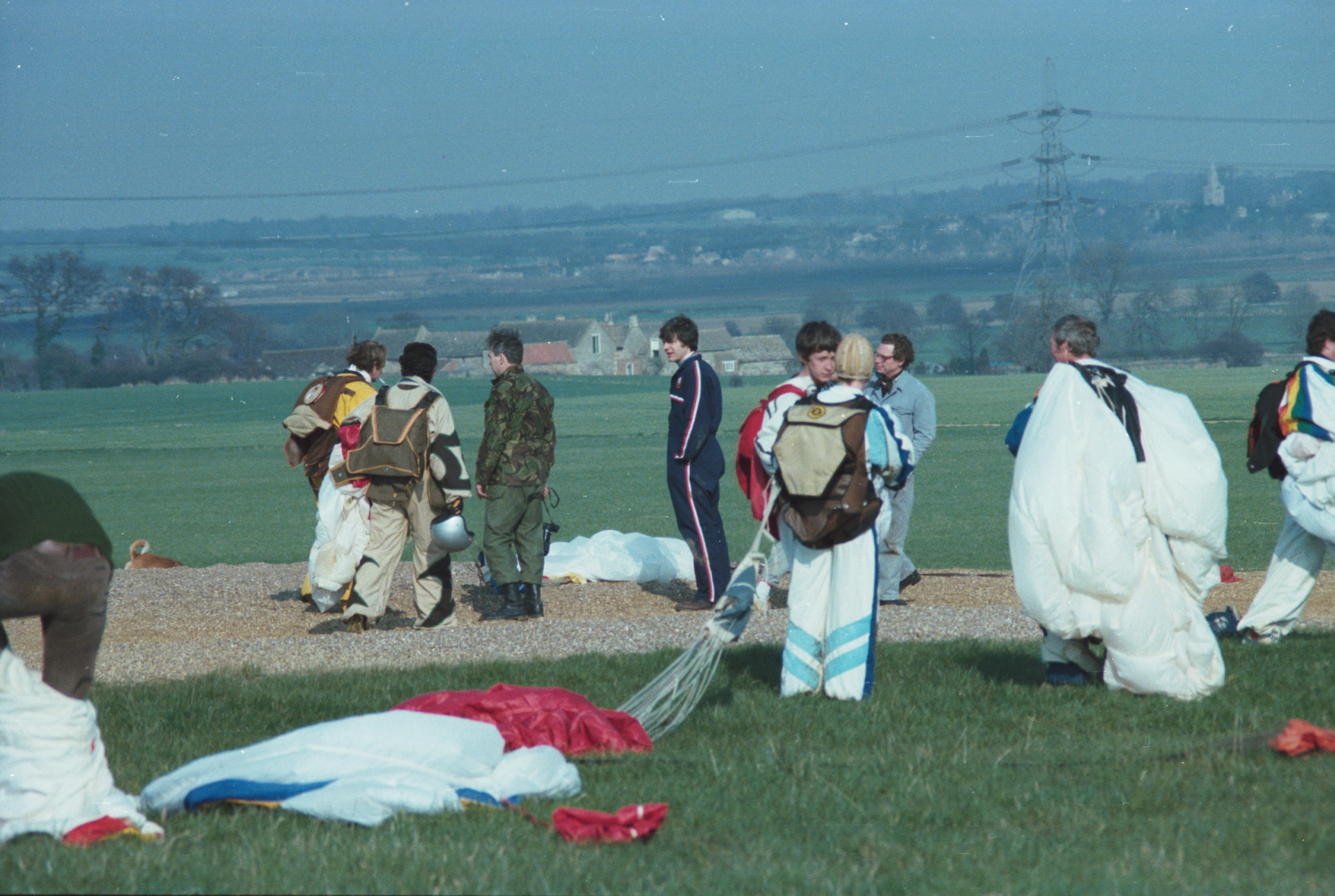
Jumping at Sibson
In May there was a boogie arranged at Swansea airport to try to do some large formations. The team resolved to go. Somehow, the guys at the Swansea club had persuaded the local council to sponsor the event if we allowed spectators to come and watch. They even chipped in to contribute some of the cost of chartering a DC3 from Air Atlantique, who had a few planes for tourist sightseeing purposes. What followed was two days of jumping out of the DC3 in British skies. It seemed a bit weird.In May there was a boogie arranged at Swansea airport to try to do some large formations. The team resolved to go. Somehow, the guys at the Swansea club had persuaded the local council to sponsor the event if we allowed spectators to come and watch. They even chipped in to contribute some of the cost of chartering a DC3 from Air Atlantique, who had a few planes for tourist sightseeing purposes. What followed was two days of jumping out of the DC3 in British skies. It seemed a bit weird.
The highlight of this weekend was the attempt to break the record for the largest freefall formation in the UK, which stood at 24. It was announced on local radio that this was going to happen so quite a crowd of onlookers started to gather for the afternoon. There was even an ice cream van since the sun was beating down and the weather had turned quite hot. The DC3 was ideal for this task since it took around 30 jumpers. Our team was nominated to be part of the base, which is the first part of the formation that all the other jumpers grab onto. This was because it was seen that we could reliably launch a stable 4-way from the door. We did two jumps and just failed to get the required 25. On the third attempt, for some reason we could not go to altitude and instead would have to do a one-by-one low altitude exit over the watching audience. This was actually quite fun to do since I even got a round of applause when I landed next to the barriers. Then someone from the crowd shouted, "What's it like up there?" and I replied, "It's nice and cool", which drew some laughs.
By that time, everyone was tired and flagging under the heat of the sun and was ready to stop for the day. Suddenly the word spread around that the council had stumped up the money for one last attempt at the record. We were torn between the opportunity of a free jump, and how tired we were. We took the jump. Predictably, we just missed the record again, and that turned out to be my last flight in a DC3.
At the core of the event at Swansea were the clubs' regular jumpers, a couple of whom were my friends who I had met on the trip to Zephyrhills the previous year. One of them was called Paul Kipplewhite (Kipper), who was an ex-SAS officer who had just got back from his honeymoon to join us that weekend. Later that year, all the guys I knew were among the nine Swansea jumpers killed in a helicopter crash in Mannheim, including Kipper. I still think of them now and then.
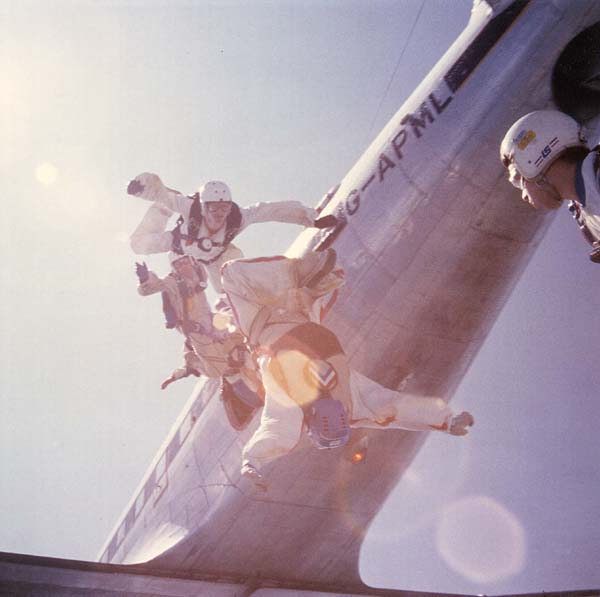
Exiting the DC3 at Swansea. I'm topmost.
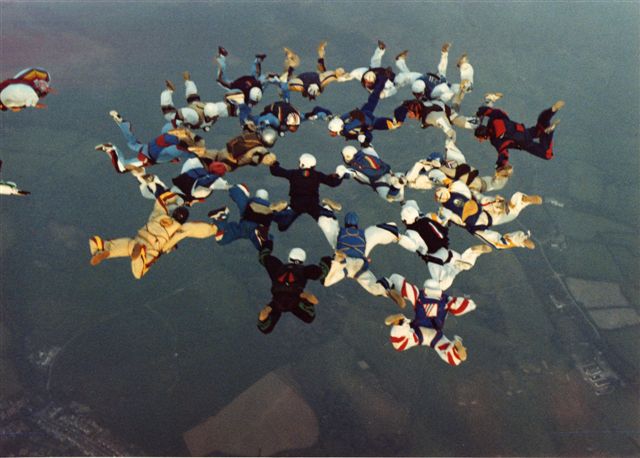
The 25-way attempt
I'm in the centre, black suit, white hat.
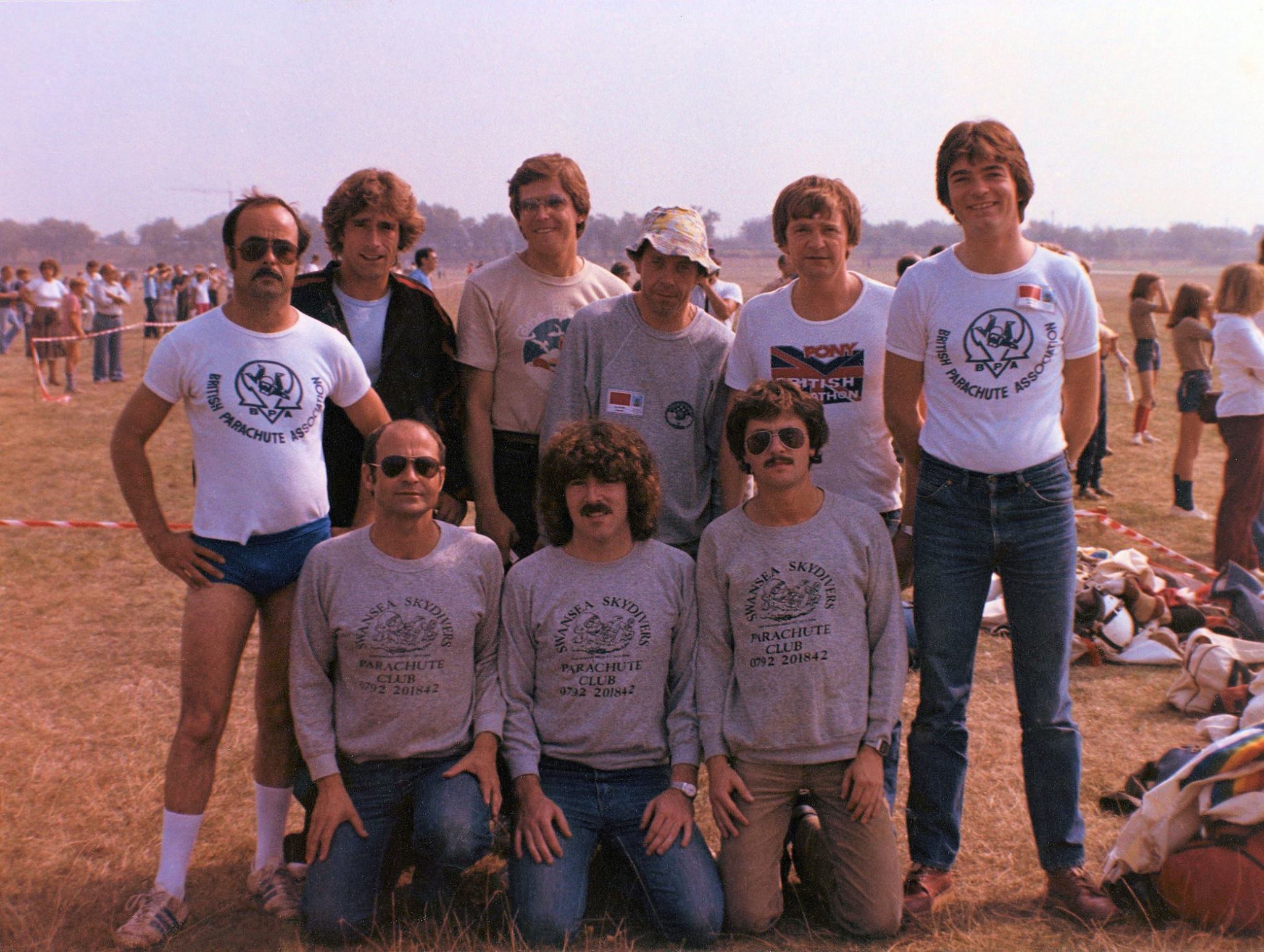
The 9 Swansea jumpers who died at Mannheim. Kipper is far left.
The guys from Swansea were not the only people I knew who died whilst skydiving. The first one was a chubby jovial Spanish guy who I jumped with a few times at Sibson, he was killed in a plane crash back in his native country. Then there was John Ward, who I jumped with regularly, and was part of the team for a while and was great friend of Paul Smith. He hit his head on the tail of a plane on exit and was unconscious all the way down to the ground. Paul had to identify the body as it was lying twisted in the wheat field. The funeral was so traumatic for John's parents and wife that I vowed not to willingly go to another funeral again. One of John Meacock's three sons was killed in France when the plane he was flying crashed on take-off. John was the owner of the Sibson club, and I only knew his son as a teenage kid who hung out at the airfield doing odd jobs at the weekend. The guy who dispatched me on my first ever jump, Fred Ryland, was killed in an accident at some point after I had given up jumping. I never found out the details. As well as these, there were always stories going round the guys about someone they knew who had been killed somewhere in the world but being young and immortal you never believed it would affect you, until it does.
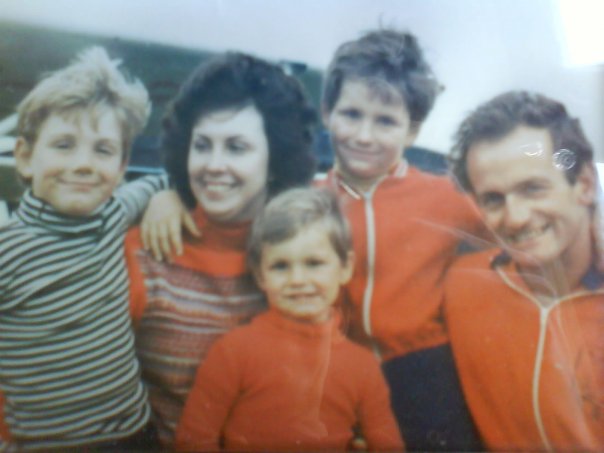
The Meacocks with their 3 sons.
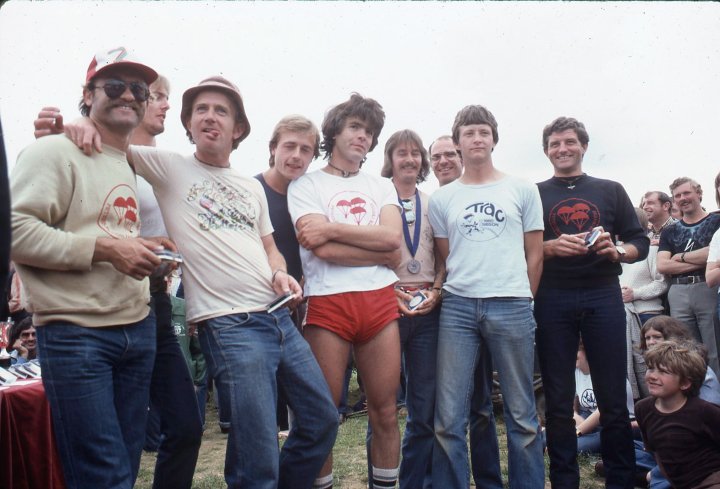
Fred Ryland in the red shorts
The big trip later that summer was to Avignon in the South of France. The team was me, Paul, PD and Simon Nichols who we met in Perris. Simon travelled separately with his girlfriend and stayed in a gite local to Pujout, which was the airfield about a mile to the Northwest of Avignon. The three of us took PDs car and drove all the way. We stayed in a little hotel in France overnight to break the journey. The journey was long but uneventful, and we shared the driving, even though I am pretty sure we weren't insured to do so.
On arrival at the airfield, we stopped at a toilet block since a couple of us needed to go. To our horror the toilets were the squat-and-drop variety, which you only seem to be able to find in rural France. I'd never used one before and it was a bit of a revelation. We introduced ourselves at the office and got settled into our own team room in the bunkhouse. Happily, the loos in the bunkhouse were of the conventional variety.
The plane they flew was a Pilatus Porter, which was very familiar to us from Sibson, but during the first few jumps we were not doing very good exits. The formations we were launching tumbled because the slipstream was not strong enough. We had to ask for 70 knots of speed on run-in to get back the control. I think we spent the whole week just jumping as a 4-way since we were the only Brits there and communication was an issue. I spoke a bit of schoolboy French but that was not enough to talk technical skydiving to the locals.
One morning when Simon turned up, he was accompanied by his girlfriend and a friend of hers who had joined them in their gite for a couple of days. Right from the start she found the whole skydiving thing hilarious. She laughed out loud when we were practicing the moves of the dives on the ground. "You all look ridiculous" she said, and then laughed like a horse. We called her 'The horse' from then on, since she not only sounded like one, but she bore more than a passing resemblance as well.
Being in France was an opportunity for me to practice my French, which was of the schoolboy variety. The other guys had managed to avoid the language at school, so I was looked towards for help in shops or on the drop zone. Its amazing how being immersed in France helps to drag information from your memory that you thought would be long-lost. This is what I found with my French. I could understand most of what was being said and could be understood to an extent with my pidgeon French replies. There was one particular girl on the airport who I found highly distracting because she spoke with the sexiest French accent that I have ever heard. Sadly, she was already attached.
There were a few locals where communication in English was possible. Two French girls who worked on the airfield latched onto us and even provided us with an evening meal one day. One night after a couple of drinks at the bar we went into Avignon with them looking for a club they knew. They said that this was the only one in Avignon that stayed open late, but it wasn't until we had been there a couple of minutes that I realised it was a gay club. This was pretty awkward for us red blooded brits and if the girls weren't there, we would have left a lot sooner than we did. It looked like everyone else in the club knew we didn't belong and were waiting for us to leave. One of the girls was called Mijou, and she took a shine to me. She said she was coming to the UK in a couple of weeks and perhaps we could meet up. You know the story by now, we never met again.
We did a few trips out from the airfield, mostly into Avignon, but we also went to visit Mont Ventoux which was a regular on the Tour de France route. This is where Tommy Simpson died of exhaustion in 1967. And another time we thought that a visit to the coast was in order. We drove down and parked in the beach car park and wondered onto the sand. We had a pretty good swim to a buoy and back but apart from that we weren't geared up for beach life. We got back to the car and opened the boot to put our stuff in, but when I went to the driver's door, I noticed that the lock was missing, we had been robbed. I don't know why but I immediately looked up and saw a covered pickup with a few shady looking blokes in the back. I stared at them for a minute then started to walk towards them. The pickup immediately took off but not before I took the licence plate number. After a search I found that my camera was missing and a few parachuting documents. Luckily, we had the foresight to hide our money and passports under the carpet in the boot and they were still there. We drove to a police station and filed a report, but they were not actually interested. I think the guys wanted some documentation so that I could claim the stolen camera on my insurance. I didn't tell them that I had no insurance, and that the camera was bought from a bloke in a pub, so was probably stolen anyway. I just wrote it off as experience but was more disappointed that I had lost a full can of film and had no means of taking any more.
When our week was up, we did a whole day skydiving then said goodbye to the girls and set off to drive through the night to get a ferry at Dover the next morning. We ended up not eating at all that evening because we left it too late to stop at a restaurant, and all the shops in France seemed to shut early in those days. I didn't seem to do much driving and spent most of the journey asleep on the back seat.
Back at Sibson on one busy sunny summer weekend I was enjoying doing some jumps with my friends and because it was busy, I was helping out in the packing shed between jumps. The student jumpers used round, static line parachutes that we experienced guys were roped in to help pack after use. Even the owner, John Meacock was in the shed helping out. Suddenly Neil, one of the instructors burst in and said to him, "John you'd better come, something's happened to the Porter". Everyone rushed out of the shed where people seemed to be all running off in one direction, towards the end of the runway, where there was smoke rising. I knew immediately that the Porter must have crashed. The Porter was our current jump plane and would have 10 jumpers plus the pilot on board. I glanced round at the manifest board to see who was on that flight and recognised most of the names and, after a moment's thought, made the decision not to follow everyone else to the crash site. I did not want to see my friends dead or burnt, and there must have been over a hundred people down there since it was a busy weekend, so they did not need me. Instead, I climbed into the observation tower on top of the hanger and looked over to where the plane had gone down. I could not see the plane but there were crowds of people milling around, and then I saw ambulances coming along the road in the distance. I came down from the tower and walked back towards the packing shed. There were student jumpers sitting on benches with all their kit on wondering what to do, but they were not going to be jumping today. In the shed I finished packing the parachute that I was working on and went back outside where I stood with some others who were waiting for news.
At some point the news came back that everyone had survived and were all taken to hospital. There were two broken legs and one broken arm. I then felt it was safe to make my way to the crash site to see the damage, maybe they just did a heavy landing, and the plane was Ok, I thought. When I got there though, I was shocked. The undercarriage was completely collapsed, and one wing was detached, folded over and lying on top of the other one. There was also a big kink in the fuselage just in front of the tail. The plane had hit very hard, so the guys inside had been very lucky. There was also the smell of paraffin where the wing tank had ruptured. Apparently, the fuel poured into the plane and soaked all the occupants. There was a fire outside the plane, but luck intervened again, and the main spill did not ignite. While I was there a couple of guys were frantically unscrewing the camera that was attached to the wing strut. The camera took photos of the student jumpers on exit, but was not an approved modification, if it was left on, then the insurance may not have paid up.
The inquiry concluded that the plane took off in landing trim, which meant that the pilot had not prepared it for take-off properly, and that caused it to stall at the end of the runway and belly flop onto the ground. The pilot gave up flying afterwards and I heard he was working as a baggage handler at Heathrow. They got the insurance money and replaced the Porter, which crashed again a few years later, this time with a mechanical failure rather than pilot error. They did not get a third one.
Everyone else in that plane did jump again but two of them did not continue much longer. One of my friends on the plane was drenched with paraffin from head to foot and decided that the fuel could have affected his parachute. He had a lot of trouble claiming this from his insurers, they said that it was ok, so he asked them if they would jump it, and he won his case.
The past two years skydiving had been so intense that by the end of 1982 I had started to pull back a bit from the ragged edge and began to do some other things with my life. Not every weekend was spent at Sibson or some other airfield. Don't get me wrong, I still regarded skydiving as my number one passion, but other interests now began to find some space in my life. The 4-way team lost the serious aspect and became an ad-hoc fun thing to do, which I enjoyed more. I also met a few girls during this time which added extra interest to the weekends.
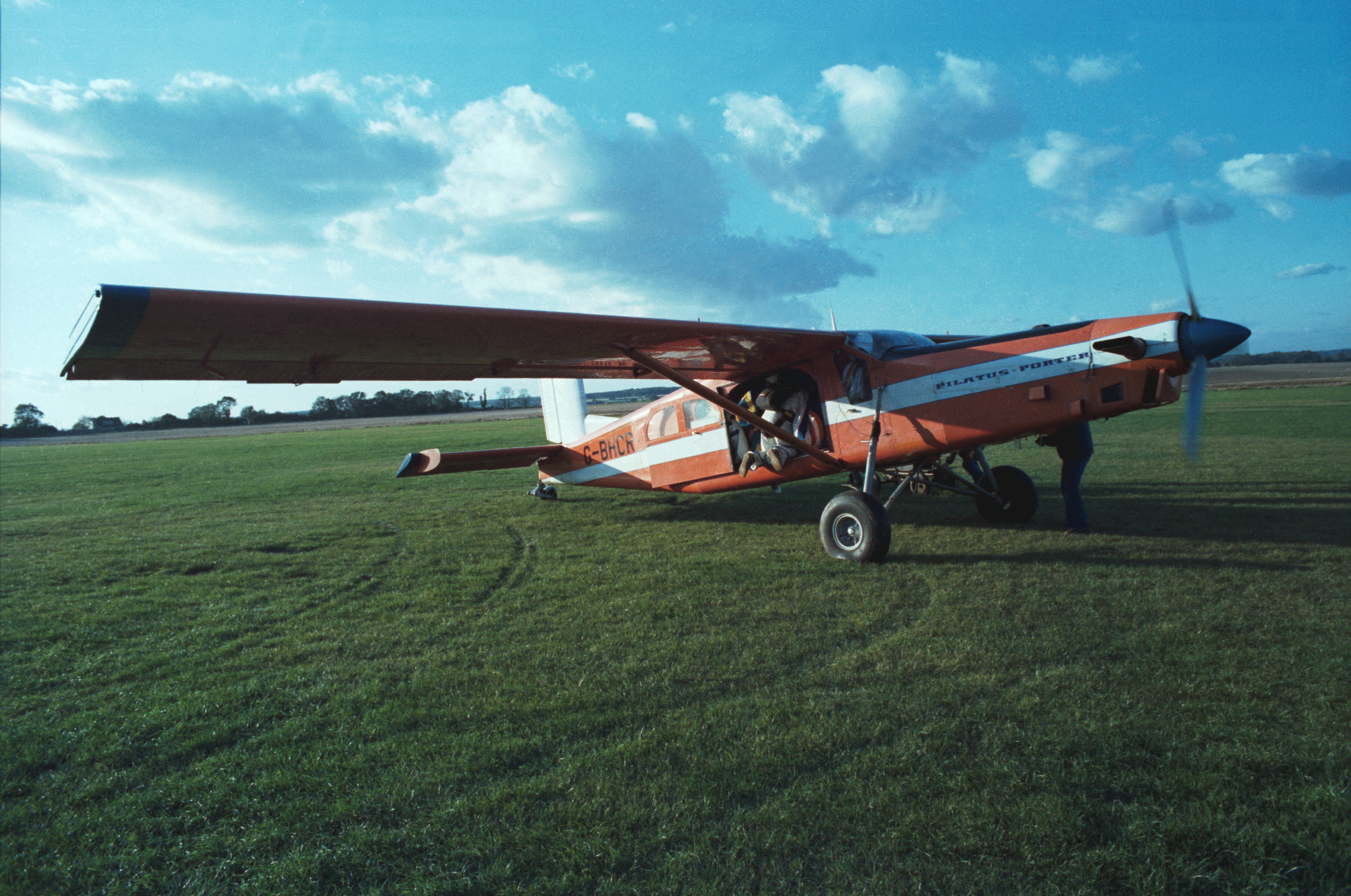
The Pilatus Porter
Melanie Thornton was a soldier. She jumped at RAF Weston-on-the-green mostly but started to come to Sibson and visit us a bit more. What attracted me to her was her soft sexy voice and engaging personality. I seem to have a weak spot for sexy voices. She had a small van that was converted to have a bed in the back where she slept whenever she was at an airfield. I once went to a party at her parents' house just north of Birmingham. It was a beautiful large rambling country farmhouse in a couple of acres. She was obviously well heeled. We lost touch when she was posted abroad.
There were a few other adventures, Joy and Jo are two that spring to mind, but the two girls I should have concentrated my efforts on slipped through my fingers, Debbie, and Lorraine.
Debbie Randall turned up at the airfield one weekend to do a first jump course with her friend Joy. They were both from Boston in Lincolnshire, which was not that far from Peterborough. That weekend Debbie hitched up with one of the instructors, Gary Gnapp, while I got together with Joy. Gary was a serial charmer and always seemed to have a new girl in tow whenever I was there. The next day I was sat next to Debbie, and she leaned over and told me a little about Joy, she had a reputation for being very intense and clingy back in Boston, in fact boys were beginning to avoid her because of it. I think I was already realising this myself, and being not ready for it, I cooled things off between us and she eventually got the message. Debbie liked the skydiving vibe and became a regular, Gary had moved on to new conquests so over the coming year we became great friends although she still accused me with being a cad to Joy. Unfortunately, I left it all too late and she hitched up with another of the instructors, Dave Morris, just when I was seriously falling for her. She hung around in Skydiving for quite a few years, swapping around between various instructors. Last I heard she moved to New England and married a rich older man.
Lorraine Allen had been around almost from the start of my skydiving journey. She was a local from Peterborough and took the weekend course with a friend of hers called Jan. They both became regulars, and I knew them both well. I was good friends with Lorraine, but she was always finding boyfriends elsewhere and discarding them just as quick. She had such a bright personality that she seemed to always be at the centre of anything that was going on. I kept a flame burning on and off through the years though, and we always got on well. There was one jump we did together where we both did a few two-man formations, and I remember falling past some very fluffy little clouds during the dive. At the end of the dive, I did what was called a kiss-pass, where I grabbed her in mid-air and planted a big kiss on her lips at 120 miles per hour, then tracked away to dump. Afterwards I heard that she told people that it was the best skydive she had ever done. There was a time when she was very interested in me, but I was involved elsewhere so that cooled. Even after I stopped jumping at Sibson, she wrote me a couple of nice letters. Remember letter writing? She moved on from skydiving soon after and I never saw her again. She married a local lad and still lives in Peterborough.
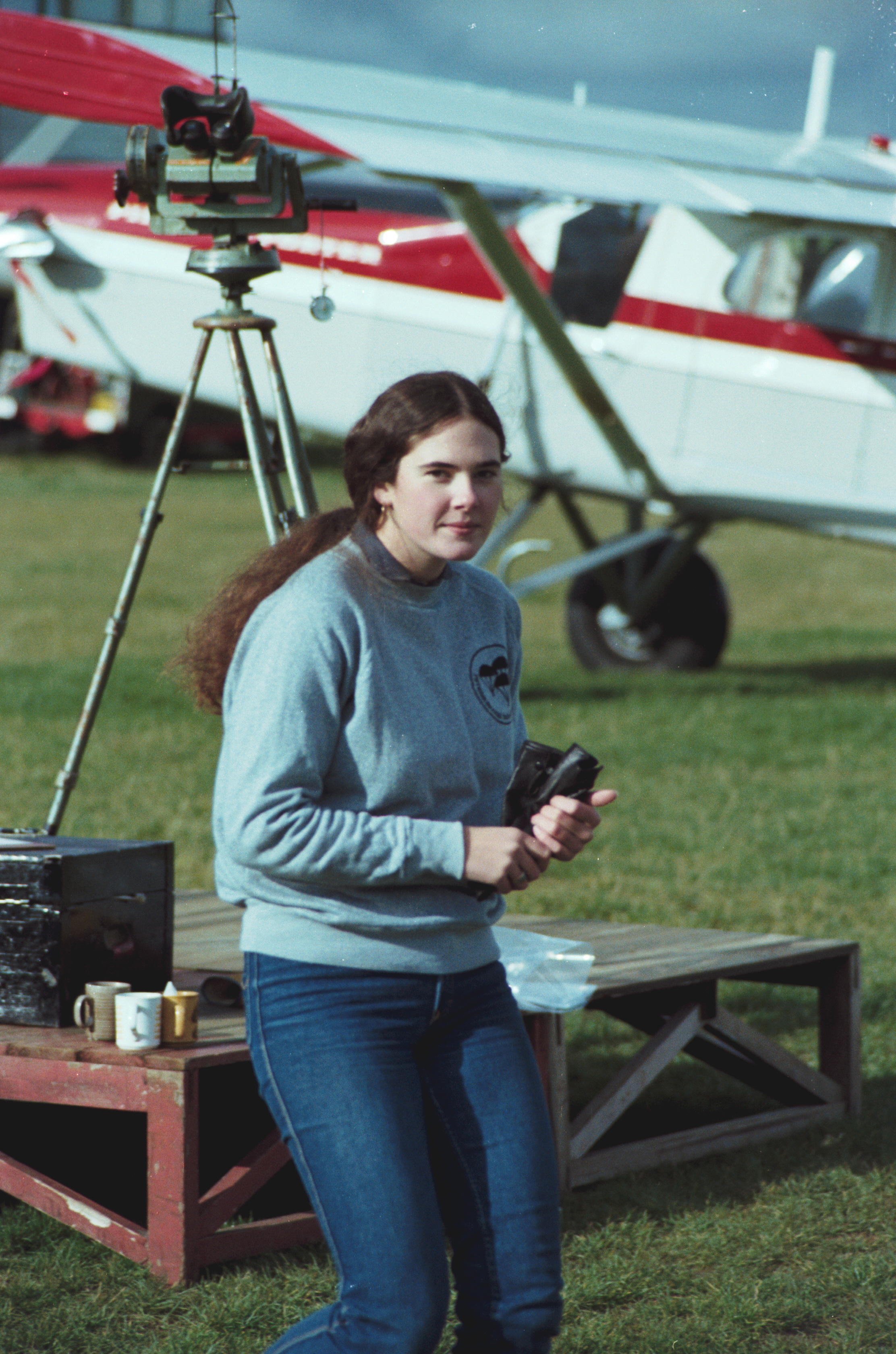
Melanie Thornton
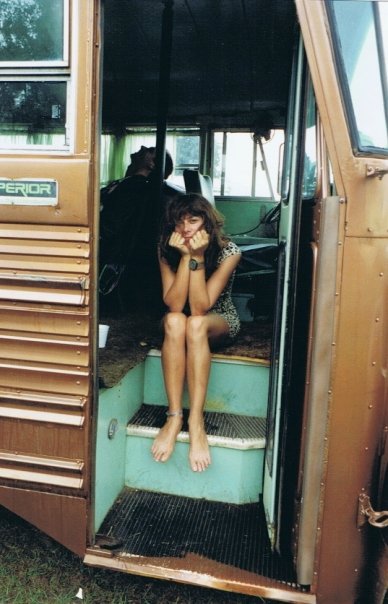
Debbie Randall
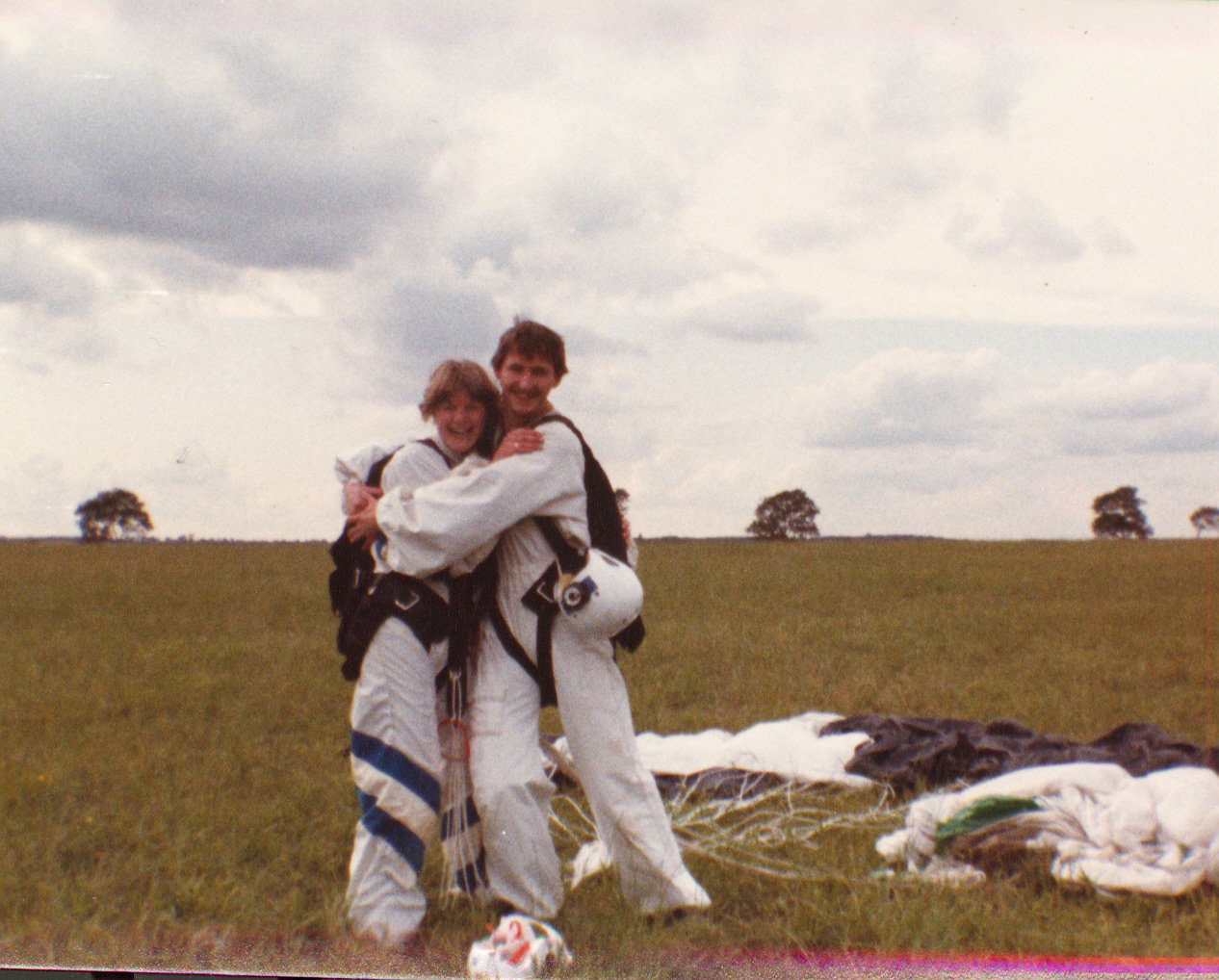
Me and Lorraine
There was one guy I jumped with now and then who had contacts in the corridors of the GLC (Greater London Council). Geoff Hinsley was an organiser and loved to be in the limelight but personally I thought he was a bit uncool and nerdy. Despite this I was invited to do a couple of demonstration jumps into central London with a select group including Paul Smith, Jerry Lanchbury and his girlfriend Penny, although she wasn't jumping. We even got paid a small amount for our efforts.
Our initial event was two jumps in one day. The first was into Brockwell Park in Lambeth and the second was into Battersea Park, right on the river. We met up in central London and were then bussed by Penny to Fairoaks airport near Woking to rendezvous with the aircraft. The plane was an Islander flown by Charlie Shea-Simmons, a big name in the British Parachute Association. An interesting event occurred while we were lying around on the grass at Fairoaks waiting for the plane, Gary Numan of Tubeway Army fame happened by and said hello, well Geoff sprung up immediately and started to charm Gary in his usual way. Gary was a keen flyer and Geoff managed to talk him into doing a parachute jump from Gary's plane as part of a publicity stunt, but that's another story.
We set off for Brockwell Park in the Islander which had some very special permissions to be able to fly over central London right on the flightpath into Heathrow. The jump was fairly uneventful, Jerry ended up landing in a tree, but no harm was done. There were lots of people watching because some sort of event was on. We were invited into the VIP tent and disgraced ourselves by eating too much from the snack table.
The second event that day was into another GLC junket in Battersea Park where Prince Charles was the senior VIP visitor. Again, we were bussed to Fairoaks where the Islander was waiting for us. Because the jump was so close to the Thames, we were required to wear lifejackets and have a rescue boat in the water just in case, so after donning the jackets, we boarded the plane. We flew into town at the designated time and readied for the jump. Because of the wind direction, we needed to exit the plane to the West of the park on the other side of the river, just over Chelsea embankment. Two guys went on the first pass and then it was my turn. Due to the proximity to the Heathrow flightpaths, we were only allowed 2000 feet, usually the minimum is 2500 feet, so we needed to deploy our chutes straight away on exit. I jumped out and pulled, but my chute immediately adopted a sharp spin to the right, and I found myself being pushed hard down into my harness due to the centripetal forces and the world was spinning crazily around me. I think that I tried to clear it for a few seconds by pulling on the brakes and risers but no joy. I maybe hesitated for a second more, then automatic life preservation took over. I thought, or maybe shouted "This is not happening" as I reached for the cutaway handle and the reserve ripcord. I pulled both almost at the same time, making sure that the main chute was gone before the reserve deployed. I also remember that I then had a couple of seconds to look down and noticed that I could see the sides of the blocks of flats below me on Chelsea embankment. Then bang, the reserve opened, and I looked up to see the round yellow reserve canopy above me for the first time. I was by now very low and didn't have much time to think before I realised that I was headed for the river. Perhaps 10 seconds later I splashed down into the Thames just upstream from Battersea Bridge. Almost immediately there was a small boat alongside which I grabbed onto and clambered aboard. I then had to drag the reserve onto the boat since it was stitched to my harness and would drag us under if it caught the current and inflated underwater. I then realised that the boat I was in was not the rescue boat, it was just a random boat passing by at the time. They did not get a choice as to whether I was coming on board or not. The rescue boat then found me, and I transferred over and waved thanks to my saviours in the first boat. The rescue boat had been late because they had stopped to pick up my main parachute which had also landed in the water. I'm glad they had those priorities, parachutes are expensive. Back on shore, I could not find anything wrong with the main, it was just one of those things. While I was standing there drenched to the skin, I spied Geoff walking by while chatting to Prince Charles and ignoring me. I could see where his priorities lay. By the way, nobody investigated this. I would have thought there would have been an inquiry or at least some questions as to why I was under a reserve parachute over central London, but no.
It is with great irony that the next demo jump into London happened on GLC Thames day where we intentionally jumped into the Thames. I had already tasted the earthy Thames water, so I was the most experienced. The arrangements were the same as before in that we flew in an Islander from Fairoaks after travelling by minibus from our meeting place in London. Our landing site was between Westminster and Hungerford bridges, right where the London Eye is today. Because we were to get wet, we were allocated some changing rooms in the bowels of the Festival Hall for afterwards.
The exit point turned out to be right above Big Ben at the houses of parliament which was quite a sight. Despite the low altitude, four of the guys decided to launch a 4-way from the door. I just got out on my own because I was a little bit nervous. Anyway, this time my main opened as it should, and I pointed it towards the watery landing site. You may remember that there is a danger of parachutes inflating underwater and dragging you away, so the landing procedure today was that just before hitting the water, you pull the cutaway handle to detach the main and splash down without it. One boat gets you and another gets the parachute. I was impressed at the number of faces looking up at me from both embankments as I descended, cut away and splashed down uneventfully. The boat picked me up and dropped me at a set of steps, at the top of which I met a couple of young autograph seekers who I obliged by signing their programmes. Famous at last.
We stayed to join in the festivities and had something to eat in the VIP area again. After dark there was an amazing firework display on the Thames. Where we were standing was slightly downwind and the amount of burning paper that descended on us from the fireworks was a bit worrying at times.
This was Geoff's last demo event. It turned out that there were other groups of professional demo jumpers who were upset that Geoff's amateur group were undercutting their prices. They wanted to make a living from it, whereas we did it for love. They somehow persuaded Geoff to give it up.
The frequency that I was jumping decreased gradually until I didn't do regular jumping, I just turned up to the odd event during the year. I was doing other things with my weekends and holidays, so I never did another big skydiving road trip but some of the other guys from the team carried on as before. It just so happened that in May 1987 I had decided to leave my employment at Racal and was starting a new Job in Denmark, so despite the fact that I took my kit to Denmark intending to jump out there, I never did, so my last jumping was at an airfield near Cranfield earlier in the month.
Even though this was my last time jumping, there were still new things to do. It was here that I did my first and only night jump. We were all given chemical lights to put on our kit so that we could be visible in the air, and on the ground, they set up some cars with their headlamps on to illuminate the landing zone. I exited the plane hanging onto the chest strap of a girl I had never met before. I apologised in advance, but she said that she would enjoy the experience more that I was. Even accounting for the chemical lights, the dive was a mess. Nobody could estimate distance or speed so nothing very large happened. What I also didn't consider is that it's freezing cold at altitude at night, and I struggled to find the parachute handle with my numb fingers. I did however find it, and after pulling I noticed from the little lights in the sky that I was the furthest jumper from the landing area, and I wasn't going to make it back. The ground below was inky black, so I couldn't judge how far away it was, or if I was above a field, woods or even a lake. I descended slowly and carefully until just before landing I noticed a hedge out of the corner of my eye and assumed it was the edge of a field and flared, but it was a little bit early, and I hit the ground with a thump but got away with it. Eventually I made it back across the fields just before they were about to send a search party out for me.
By now it was getting late and we all said our goodbyes and left, as if it was just another weekend. I have seen some of the guys in later years for skiing holidays and the like, but the skydiving era was over for me. I had done over 400 jumps and had created a wonderful library of memories that I often find myself browsing through, but times change, and I was ready to move on.
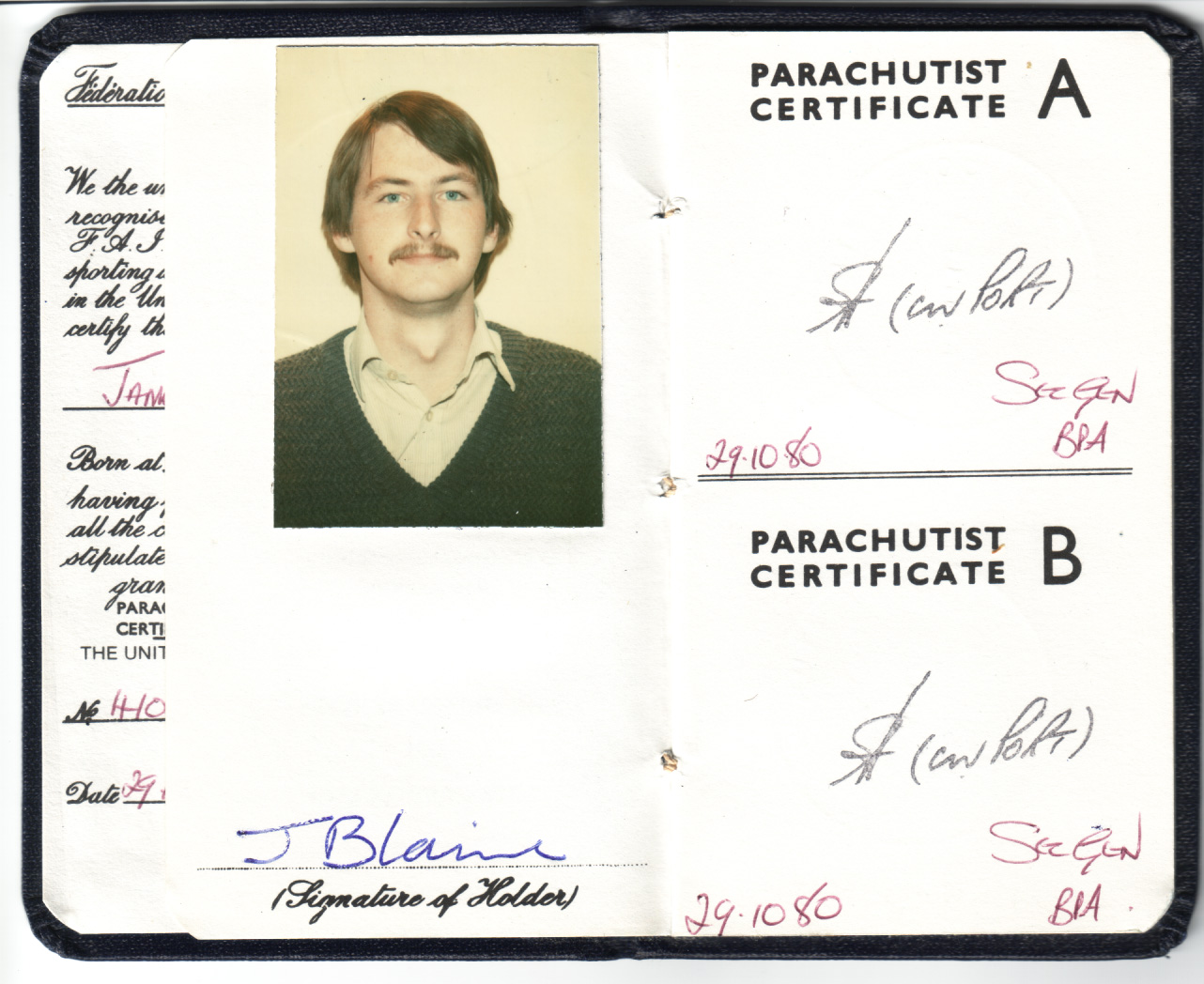
My Parachuting certificate
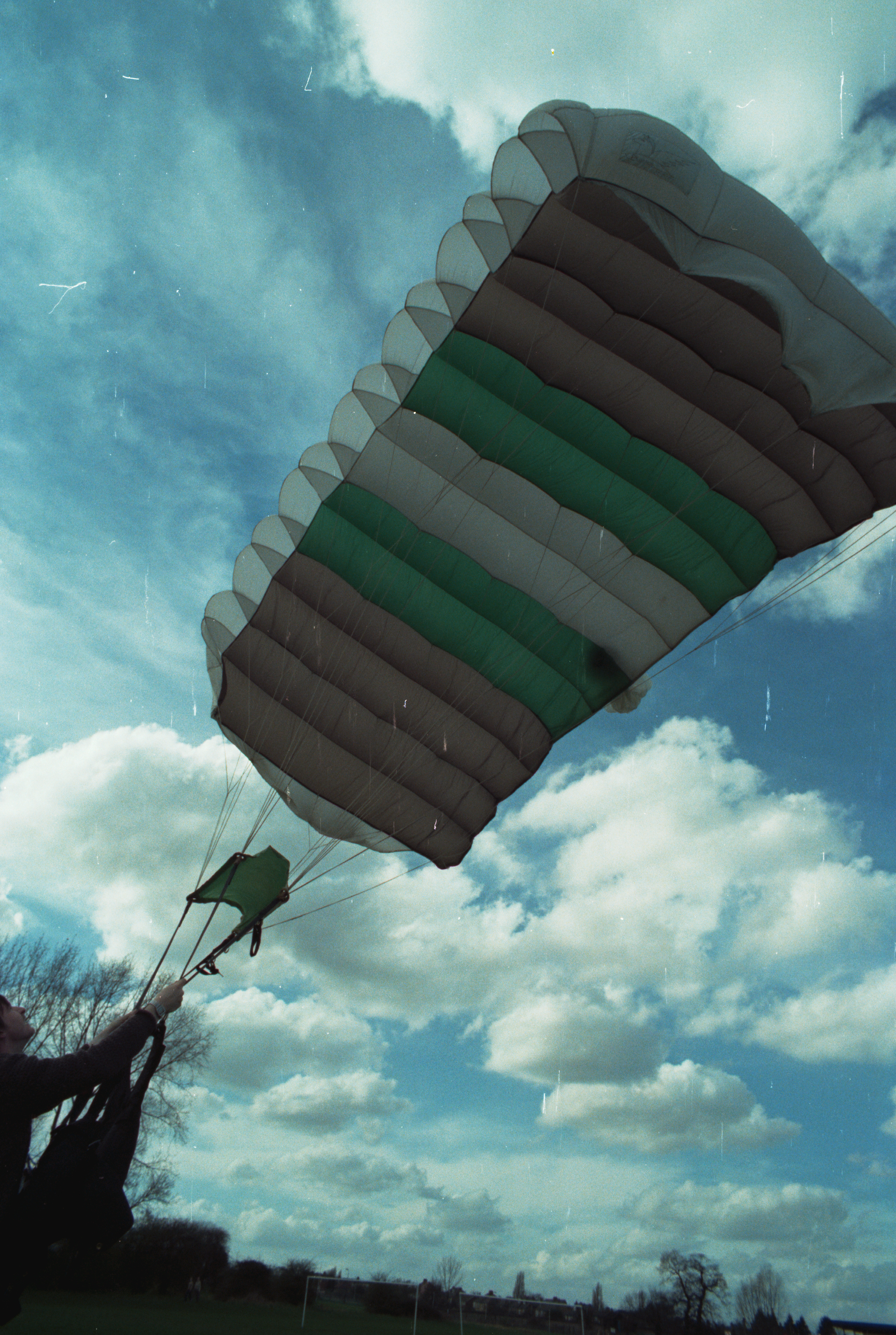
My Pegasus main